


What to Expect: The Asbestos Claim Timeline Explained
How long does an asbestos claim take depends on the type of claim you file — but here’s a quick answer before we dive deeper:
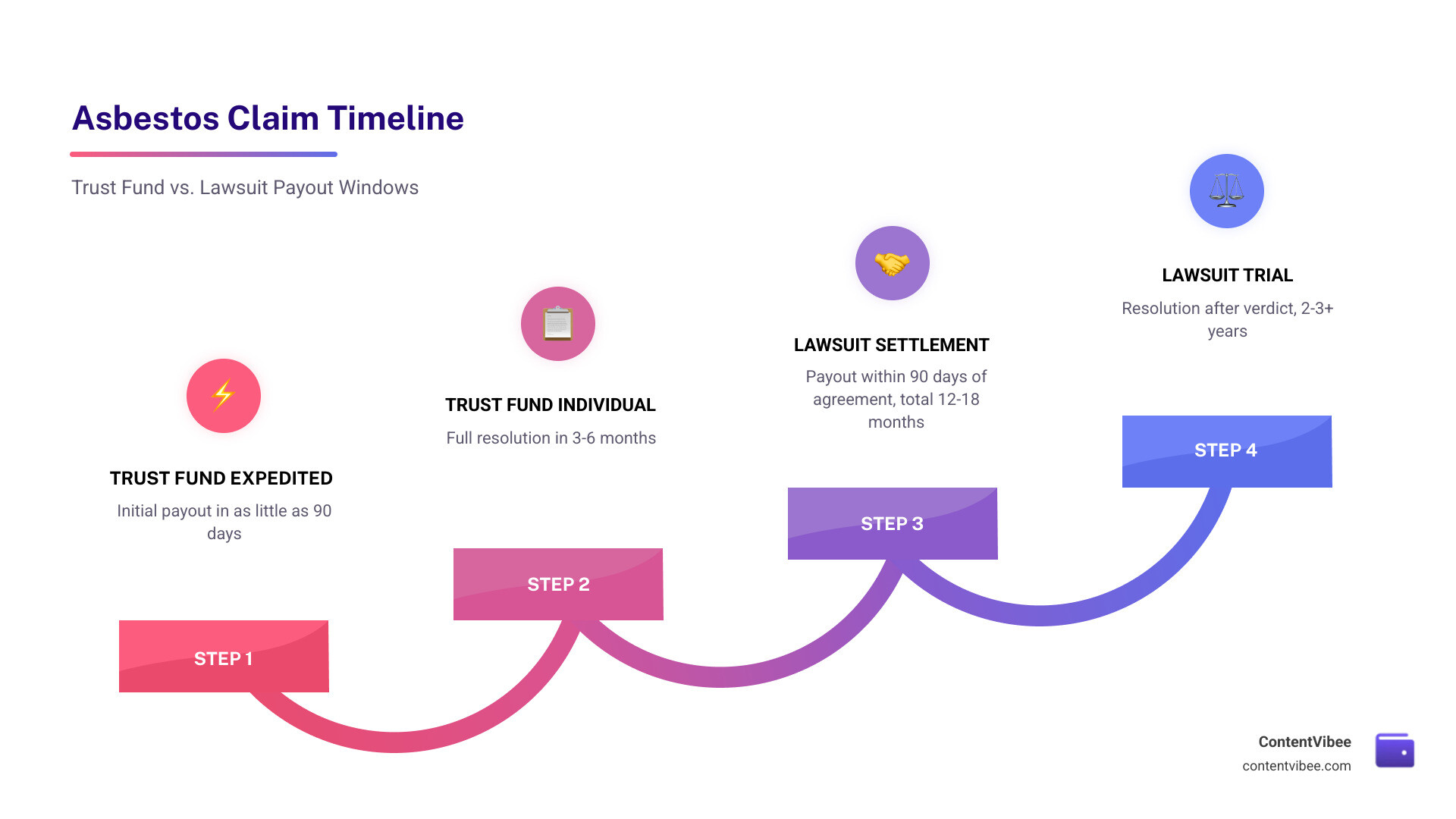
| Claim Type | Initial Payout | Full Resolution |
|---|---|---|
| Asbestos Trust Fund (expedited) | As little as 90 days | 3-6 months |
| Asbestos Trust Fund (individual review) | 6-12 months | Up to 1 year |
| Mesothelioma Lawsuit (settlement) | Within 90 days of settlement | 12-18 months |
| Mesothelioma Lawsuit (trial) | After verdict | 2-3+ years |
For decades, American workers were exposed to asbestos on the job — in shipyards, refineries, construction sites, and military bases. Many are only now receiving diagnoses like mesothelioma or asbestosis, because these diseases can take 10 to 50 years to develop after exposure.
That gap between exposure and diagnosis creates an urgent problem. Medical bills pile up fast. And the legal process can feel overwhelming when you’re already dealing with a serious illness.
The good news: compensation is often available faster than most people expect. Many claimants begin receiving funds within 90 days. Full resolution typically happens within 12 to 18 months for most cases.
How long does an asbestos claim take basics:
How Long Does an Asbestos Claim Take to Pay Out?

When we look at the question of how long does an asbestos claim take, we have to look at the two primary paths to compensation: bankruptcy trust funds and civil lawsuits. In May 2026, the landscape of asbestos litigation remains complex, but the systems designed to pay victims have become more streamlined.
Most mesothelioma cases are fully resolved within 12 to 18 months. However, the first check often arrives much sooner. In straightforward cases, asbestos claim payouts can happen in as little as 90 days. This is particularly true for trust fund claims, which are designed to provide faster relief than the traditional court system.
If you are filing a lawsuit against a company that is still in business (a “solvent” defendant), the timeline is typically longer. Most of these cases settle out of court within 12 to 18 months. If a case goes all the way to a jury trial, it could take two to three years—or even longer if the defendant appeals the verdict.
Understanding the Asbestos Trust Fund Claim Timeline
Because so many asbestos companies filed for bankruptcy to handle their massive legal liabilities, the courts required them to set up trust funds. Today, over $30 billion remains in these funds to compensate victims. This process is generally the fastest way to get money into your bank account.
When filing a trust fund claim, you usually choose between two paths:
- Expedited Review: This is the “fast track.” If you meet specific medical and exposure criteria, the trust pays a fixed, predetermined amount. You can often see funds within 90 days of filing.
- Individual Review: This is for unique cases where the standard payout doesn’t reflect the true impact of the illness. It takes longer—often 6 to 12 months—but can lead to a higher payout.
Once a trust fund offer is accepted, the actual payment usually begins within 90 days. For more details on these steps, see our Understanding the Mesothelioma Claim Process.
Factors That Influence How Long Does an Asbestos Claim Take
No two cases are exactly alike, and several “speed bumps” can affect your timeline. In our experience helping Americans navigate financial hurdles, we’ve seen these four factors play the biggest roles:
- Statutes of Limitations: This is the legal “expiration date” for your claim. In most jurisdictions, including Virginia, the clock starts ticking on the day of your diagnosis, not the day you were exposed. These limits typically range from one to five years. If you miss this window, your claim is “legally dead.”
- The Discovery Phase: This is the part of a lawsuit where both sides exchange evidence. Because asbestos exposure happened decades ago, tracking down old employment records and witnesses can take a year or more.
- Number of Defendants: The average mesothelioma claimant names between 60 and 70 different companies in a single lawsuit. Coordinating with that many legal teams naturally adds time to the process.
- Jurisdiction: Some courts are faster than others. Choosing the right place to file—often where the exposure occurred or where the company is based—can shave months off your wait.
To learn more about what moves the needle, read about Key Factors in Asbestos Litigation Timelines.
Expedited Options for Veterans and Terminally Ill Patients
We know that for many patients, time is the one thing they don’t have. The legal system has built-in “fast lanes” for those in urgent need.
For veterans, VA benefits offer a separate stream of compensation. An initial decision on VA disability typically takes three to six months. Married veterans with mesothelioma can receive over $4,000 a month in tax-free benefits.
In the court system, many states allow for “trial preference” or “expedited dockets.” If a patient is terminally ill, a lawyer can petition the court to move the case to the front of the line. This can compress a two-year timeline into just six to nine months, ensuring the patient receives compensation during their lifetime. Explore these Compensation Resources for Asbestos Victims to see if you qualify for a faster track.
Navigating the Legal Process and Maximizing Your Payout

Maximizing your payout isn’t just about how much you get; it’s about how efficiently you get it. The process is a marathon, but with the right preparation, you can run it faster.
One of the most important things you can do immediately after a diagnosis is to gather your records. This includes pathology reports, imaging, and a detailed work history. If you were in the military, your DD-214 form is a critical piece of evidence.
The Step-by-Step Process of Filing an Asbestos Claim
Understanding the stages of a claim can help reduce the “mystery box” feel of the legal system.
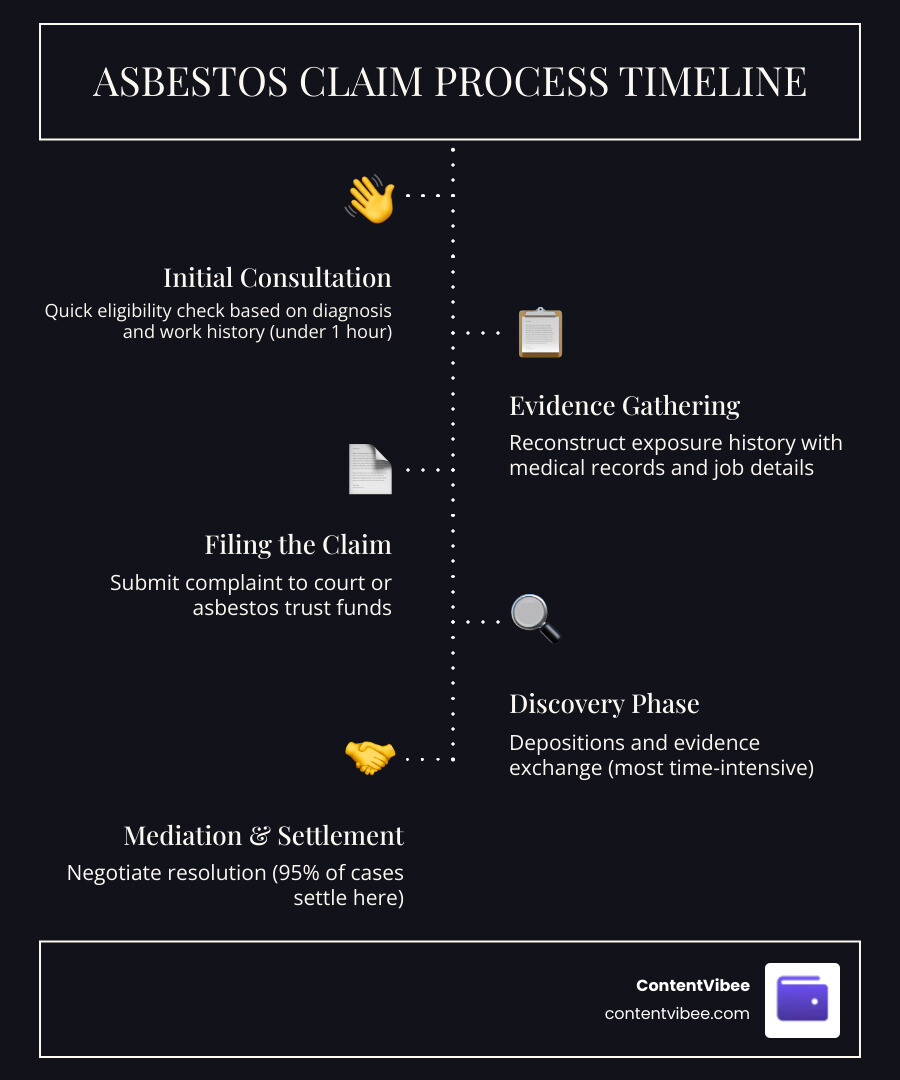
- Initial Consultation: This usually takes less than an hour. A legal professional evaluates your eligibility based on your diagnosis and work history.
- Evidence Gathering: Your team reconstructs your exposure history. They look for the specific brands of insulation, brakes, or tiles you worked with 40 years ago.
- Filing the Claim: Your attorney files the formal complaint in court or submits paperwork to the relevant trust funds.
- Discovery: This is the most time-consuming phase. You may have to give a deposition (testimony under oath) to preserve your story.
- Mediation and Negotiation: Before a trial starts, most parties try to reach a settlement. This is where over 95% of mesothelioma cases end.
Why Legal Expertise Affects How Long Does an Asbestos Claim Take
You might wonder if you can handle a claim yourself. Technically, yes—but it’s often unwise. Specialized asbestos lawyers use proprietary databases of thousands of job sites and asbestos products. They already know which companies used which materials in Virginia shipyards or factories in the 1970s. This eliminates months of research.
Furthermore, most of these professionals work on a contingency fee basis. This means they only get paid if you win, typically taking a percentage (usually 33% to 40%) of the final settlement. This allows you to pursue a claim without any out-of-pocket costs while you’re waiting for your payout.
For a deeper look at what to expect, read What to Expect During Your Asbestos-Injury Case.
Conclusion: Securing Your Financial Future in 2026
Dealing with an asbestos-related diagnosis is one of the hardest challenges a family can face. While no amount of money can restore your health, securing a settlement can provide the financial peace of mind needed to cover experimental treatments, pay off medical debt, and ensure your family’s future is protected.
As of May 2026, the systems for compensation are more robust than ever. Whether you are pursuing a 90-day trust fund payout or a larger lawsuit settlement, the key is to act quickly. The “medical clock” and the “legal clock” are running at the same time, and waiting even a few months can lead to missed deadlines.
At ContentVibee, we believe in giving you the practical tools to manage your money and your future. If you’re ready to take the next step, you can Calculate your potential settlement to see what your claim might be worth.
Don’t let the complexity of the legal system stop you from claiming what you are owed. Start gathering your records today and consult with a professional to ensure you’re on the fastest track to recovery.