


OpenSky Capital vs. OpenSky Credit Cards: A Quick Clarification
OpenSky Capital is not a credit card issuer. It is a private real estate investment firm that markets healthcare and multifamily real estate opportunities to accredited investors. The similarly named OpenSky credit card is a secured credit-building card product offered through a bank.
| Name | What it is | Best for |
|---|---|---|
| OpenSky Capital | Private real estate investment platform | Accredited investors seeking passive real estate deals |
| OpenSky secured card | Secured credit card | People building or rebuilding credit |
| Capital One secured cards | Secured credit card options | Credit rebuilders who want to compare card features and possible upgrades |
For most people comparing OpenSky with Capital One after a financial setback, the relevant product is the OpenSky secured credit card, not OpenSky Capital. A secured card generally requires a refundable security deposit that sets the card’s credit limit. The key habit is simple: use a small portion of the limit and pay every bill on time.
This guide compares OpenSky and Capital One from a credit-rebuilding perspective, including approval approach, deposits, fees, and practical account-management factors. It also clears up the confusing overlap in their names before you make a decision.
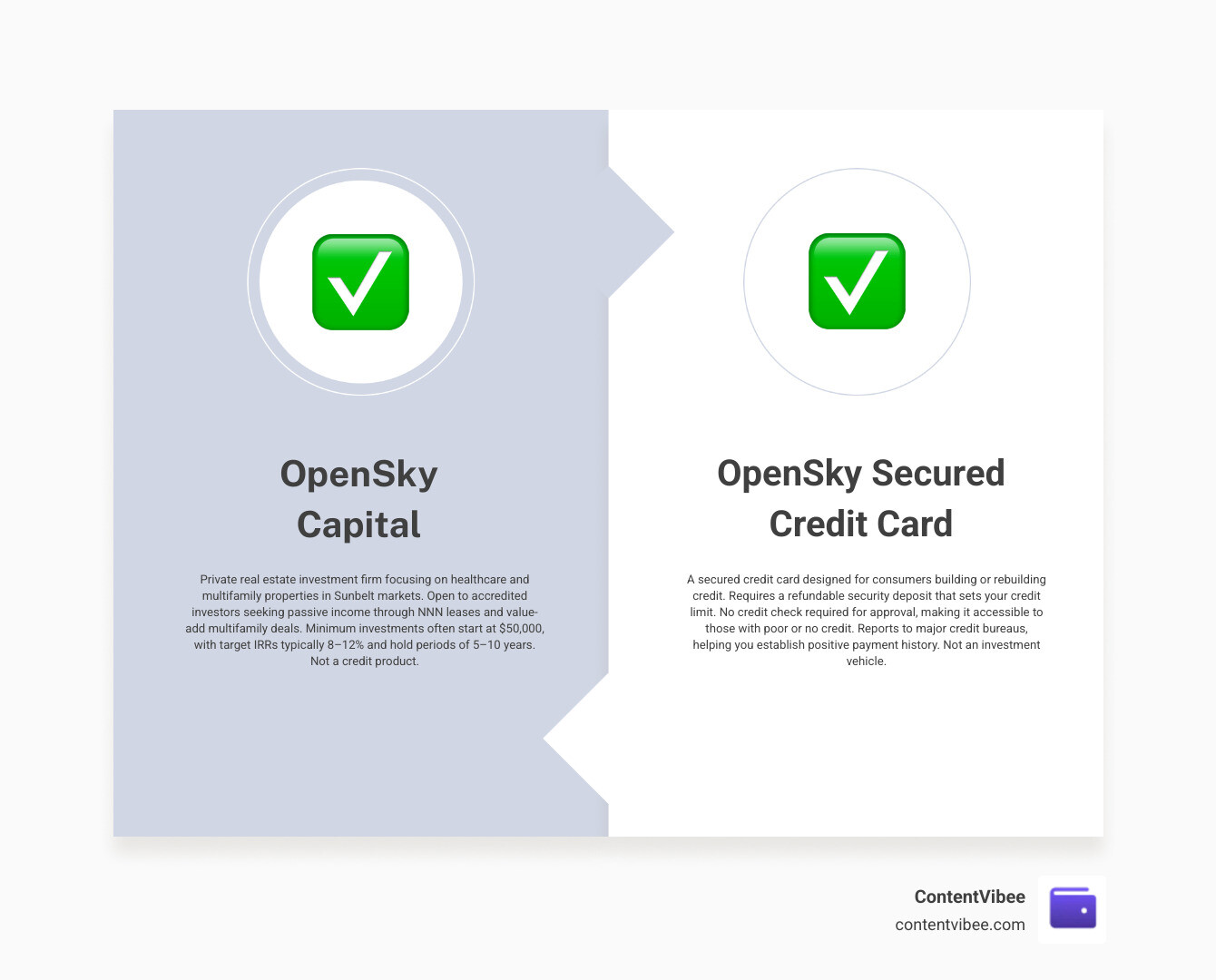
Disambiguating OpenSky Capital: Real Estate Private Equity vs Credit Cards
When consumers search for open sky capital, they often end up at a confusing intersection of personal finance tools and high-net-worth real estate funds. It is easy to see why! The financial services marketplace is crowded, and branding overlaps happen constantly. However, confusing a credit-builder card with a private equity real estate firm could lead you down a completely wrong path.
To help you understand what the open sky credit card is and who its for, we need to draw a clear line between everyday consumer credit cards and institutional real estate syndications like OpenSky Capital — Passive Real Estate Investing.
What is OpenSky Capital and How Does It Differ From Credit Products?
The fundamental difference lies in their business models, regulatory frameworks, and target audiences:
- The OpenSky Secured Credit Card: Issued by Capital Bank, N.A., this product is designed specifically for everyday consumers aiming to build or repair their credit scores. With a reported application approval rate near 86.14% and no hard credit check required to apply, it serves as a gateway to financial recovery. Over 2 million consumers rely on OpenSky card products, with users gaining an average of 50 points on their FICO scores within 6 months of responsible use.
- OpenSky Capital: This entity is a private commercial real estate asset management firm headquartered in Frisco, Texas. Instead of offering line-of-credit accounts or credit-building solutions, OpenSky Capital pools private capital from accredited investors to acquire income-producing commercial real estate assets.
If your goal is fixing past credit stumbles, setting up a secured card is your priority. You can learn more about managing deposits and utilization by reading our guide on demystifying the opensky secured credit card for credit rebuilders.
Comparing OpenSky Capital with OpenSky Ventures and Openspace
To complicate matters further, several prominent investment platforms share similar names. If you are researching alternative asset managers or venture funds in 2026, here is how to distinguish them:
- OpenSky Capital: Focuses exclusively on real estate syndications, specializing in recession-resilient sectors like healthcare NNN (Triple Net) facilities and Sunbelt apartment communities.
- OpenSky Ventures: A Los Angeles-based boutique venture capital firm founded in 2022. According to OpenSky Ventures | Investment Thesis & Preferences | F4, this operator-led firm writes checks ranging from $100,000 to $500,000 for early-stage technology, commerce infrastructure, and consumer packaged goods (CPG) startups. They have deployed capital into over 26 early-stage companies since launch.
- Openspace Capital: A completely separate multi-strategy venture firm focused on Southeast Asia. As detailed by Multi-strategy asset manager focused on Southeast Asia, Openspace manages over $800 million in committed capital across six funds, targeting tech-native startups in Singapore, Indonesia, Thailand, and neighboring markets.
OpenSky Capital Investment Thesis, Target Returns, and Asset Classes
Now that we have separated consumer banking products from commercial investment entities, let’s explore how OpenSky Capital constructs its portfolio and generates passive yield for private investors.
Investment Strategy Behind OpenSky Capital Offerings
OpenSky Capital centers its strategy on four core pillars: capital preservation, steady cash flow, long-term equity growth, and tax efficiency. Rather than speculating on risky turnarounds, the firm targets two specific asset classes across high-growth Sunbelt markets like Texas, Florida, and Arizona:
- Healthcare Real Estate (NNN Leases): The firm acquires medical facilities, outpatient centers, and specialized clinics anchored by corporate operators under Triple Net (NNN) lease agreements. Under NNN leases, tenants pay for property taxes, building maintenance, and insurance directly. This structure insulates investors from variable operating costs while capturing stable rental income from essential medical service providers that cannot be replaced by e-commerce or automated technology.
- Multifamily Housing: Positioned in high-demand Sunbelt submarkets, these residential properties capture demographic migration trends as domestic population moves toward low-tax, job-rich Sunbelt states.
Minimum Investments, Target Returns, and Hold Periods
To participate in OpenSky Capital‘s syndications, investors must meet specific accreditation standards under SEC Regulation D 506(C) rules. Here is a breakdown of the key metrics defining their deal flow:
| Investment Parameter | OpenSky Capital Target / Specification |
|---|---|
| Target Net IRR | 14% to 18% |
| Target Hold Duration | 3 to 5 Years |
| Minimum Investment | $50,000 ($25,000 for returning investors) |
| Assets Under Review | $100M+ in pipeline volume |
| Investor Qualification | Accredited Investors (SEC Rule 501) |
| Tax Reporting | Annual Schedule K-1 |
The firm allows investors to deploy self-directed IRAs or 401(k) accounts to access long-term commercial real estate tax advantages, including bonus depreciation pass-throughs.
Leadership, Deal Sourcing, and Co-Investment Alignment
Evaluating any private equity deal requires taking a close look at sponsor integrity, operational track record, and alignment of financial incentives.
Leadership Profiles and Track Record
The leadership driving OpenSky Capital combines institutional finance expertise with deep real estate development experience:
- Saumil Parekh & Cheryl Kotankar: Bring over 18 years of executive leadership from Fortune 100 platforms, including Citibank and T-Mobile. Their background brings strict corporate underwriting, data analytics, and disciplined procurement strategies to commercial acquisition screening.
- Craig & Kristen Dilley: As highlighted on Our Story | Open Sky Capital, Craig and Kristen bring 13 years of real estate experience alongside 37 years of combined public service. Starting with single-family flips and rentals over a decade ago, they scaled into multi-family value-add developments, taking a hands-on approach to property management and remodeling.
Co-Investment Model, Risk Management, and Portfolio Status
A major feature of OpenSky Capital‘s platform is its direct sponsor co-investment commitment. By putting their own capital into every deal alongside limited partners (LPs), the leadership team ensures their financial outcomes match those of their passive investors.
The firm sources properties off-market through corporate network relationships, subjecting every acquisition to a structured due-diligence review before offering participation slots.
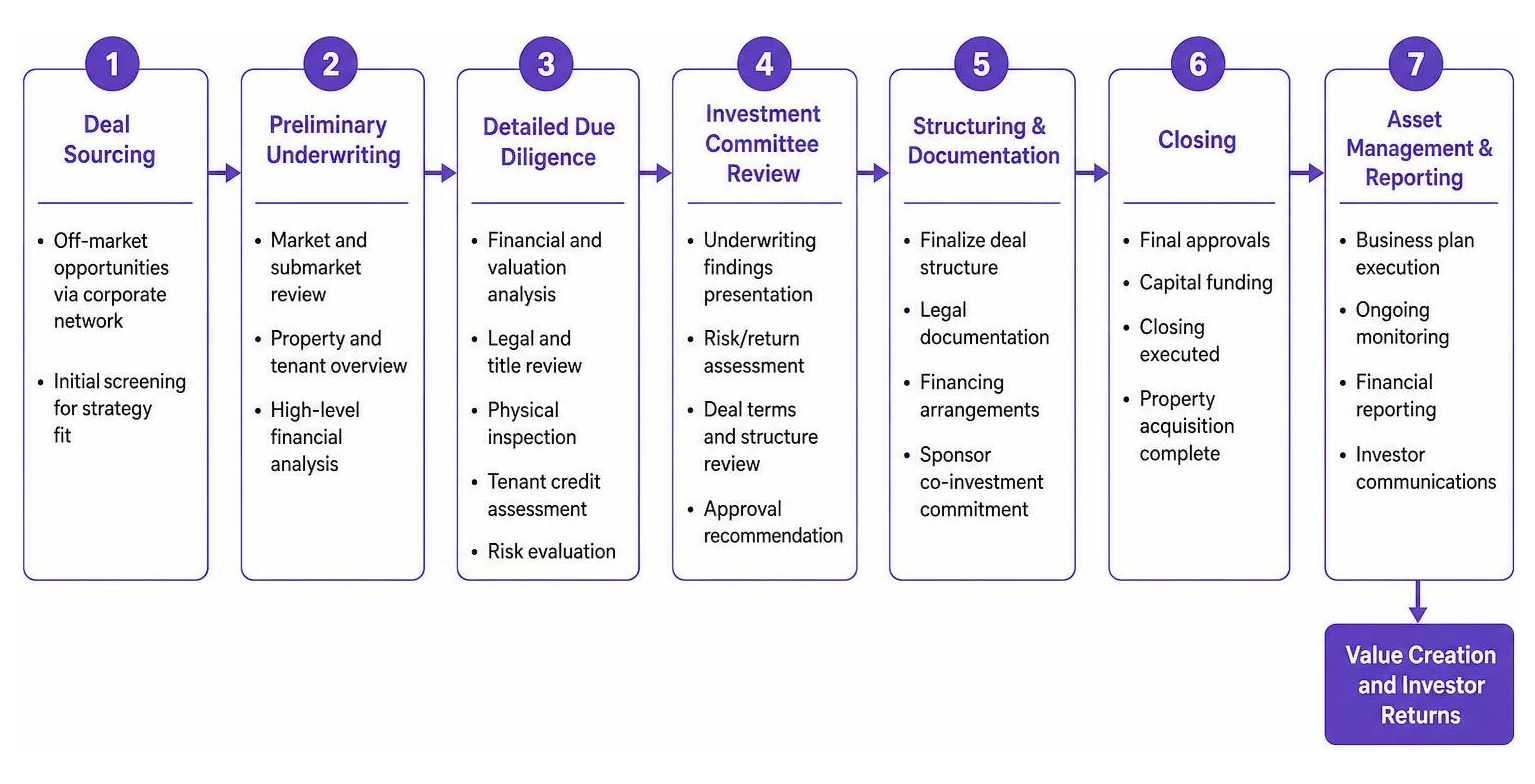
While real estate syndications offer cash flow benefits, investors should remain aware of potential market risks:
- Liquidity Lock-ups: Private deals carry fixed hold periods (typically 3 to 5 years) during which capital cannot be redeemed early.
- Tenant Concentration Risk: On single-tenant healthcare properties, overall returns depend heavily on the creditworthiness and continued solvency of the corporate tenant operator.
- Interest Rate Fluctuation: Refinancing debt at the end of a hold period can impact overall net IRR if macroeconomic interest rate environments shift significantly.
Past acquisitions, such as the Court of Bent Tree property, showcase the firm’s focus on executing value-add improvements to boost effective gross income and long-term asset value.
Frequently Asked Questions About OpenSky Capital and Rebuilding Credit
What is the primary difference between OpenSky credit cards and OpenSky Capital?
OpenSky credit cards are consumer financial tools issued by Capital Bank, N.A., aimed at rebuilding FICO scores through refundable deposit limits. OpenSky Capital is an independent private equity firm that structures commercial real estate investments for accredited high-net-worth investors.
What are the main risks associated with investing in OpenSky Capital offerings?
Key risks include real estate market illiquidity during the 3-to-5-year hold period, potential tenant default on healthcare leases, changes in commercial property valuations, and local economic shifts across Sunbelt markets.
How do investors complete due diligence and qualify for OpenSky Capital deals?
Interested investors submit a brief online questionnaire, review the deal’s 21-slide overview deck, schedule a discovery call with the managing partners, and verify their status as an accredited investor under SEC Rule 501.
Conclusion
Whether you are looking to recover from a past financial setback or diversify your portfolio with commercial real estate, understanding the distinction between consumer credit tools and private equity funds is crucial.
If your primary objective in 2026 is building a stronger credit score, setting up a secured credit card with consistent on-time payments is a proven path forward. On the other hand, if you are an accredited investor looking to build passive income, private sponsors like OpenSky Capital provide direct exposure to essential healthcare assets and Sunbelt apartment communities.
Ready to take control of your financial journey? Explore our detailed personal finance guides and Start building your credit score today with ContentVibee.


