


When You Need a Truck Accident Lawyer in Los Angeles
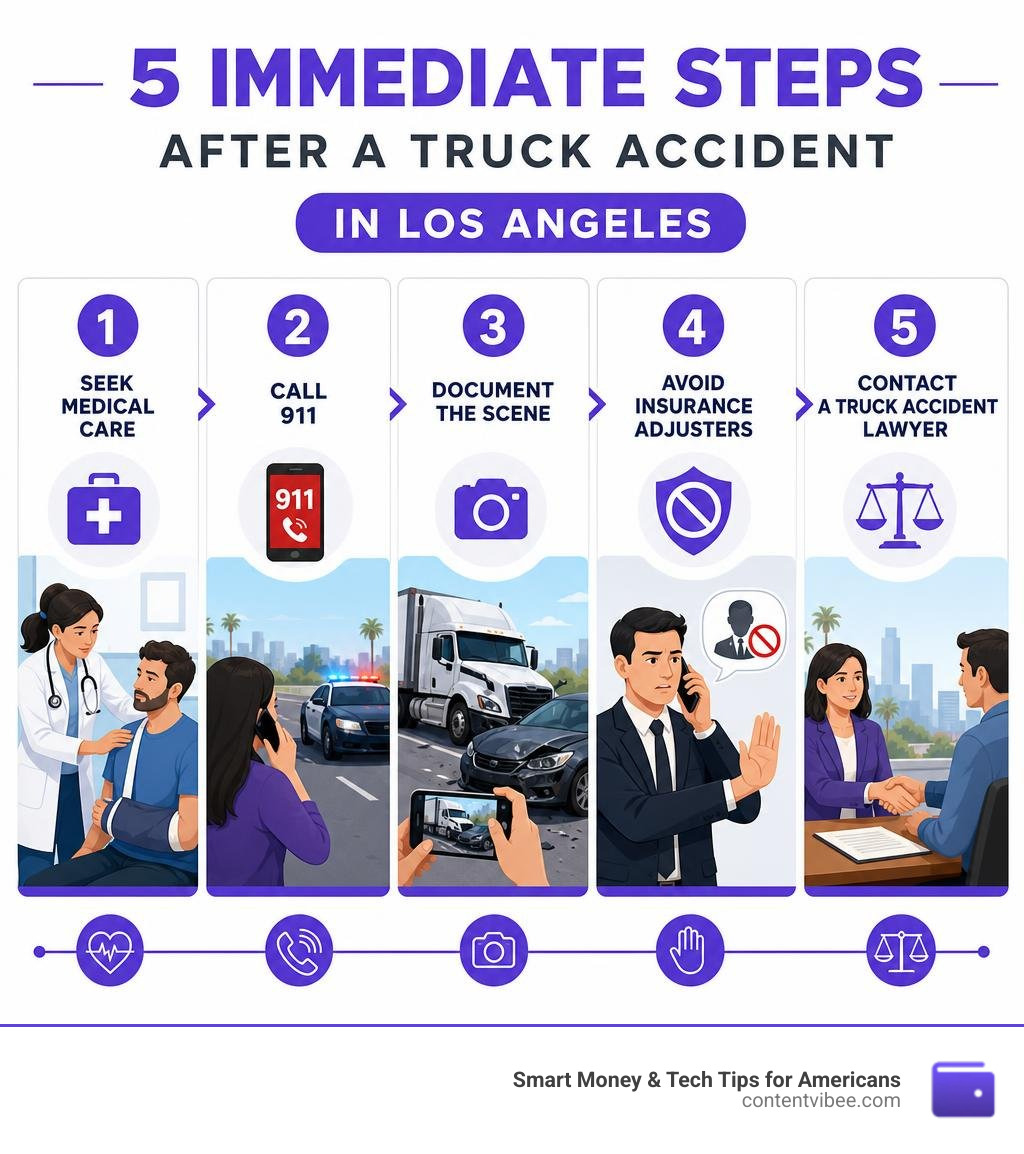
If you’ve been hurt in a crash with a commercial truck, here’s what matters most right now:
Quick answers for truck accident victims in Los Angeles:
- See a doctor immediately — even if you feel fine. Medical records protect your claim.
- Call 911 and get a police report filed at the scene.
- Do not speak to the trucking company’s insurance adjuster before consulting a lawyer.
- You have 2 years to file a personal injury lawsuit in California (California Code of Civil Procedure Section 335.1).
- Most truck accident lawyers work on contingency — no fee unless you win.
Finding a truck accident lawyer in Los Angeles is one of the most important decisions you’ll make after a serious crash. And the stakes are high.
Large commercial trucks can weigh up to 80,000 pounds — more than 20 times the weight of an average passenger car. When something goes wrong on an LA freeway, the people in the smaller vehicle almost always pay the heaviest price. Between 2009 and 2013, California alone averaged 265 fatalities and 7,248 injuries per year from large truck accidents. Nationally, large trucks killed nearly 4,000 people and injured 111,000 more in a single year.
The physical toll is devastating. But the legal and financial battle that follows can feel just as overwhelming — especially when you’re dealing with medical bills, lost income, and insurance companies that are already working to minimize what they pay you.
That’s exactly why this guide exists. We’ll walk you through everything you need to know — from the scene of the crash to settlement day.
Why Commercial Truck Accidents in Southern California Are Unique
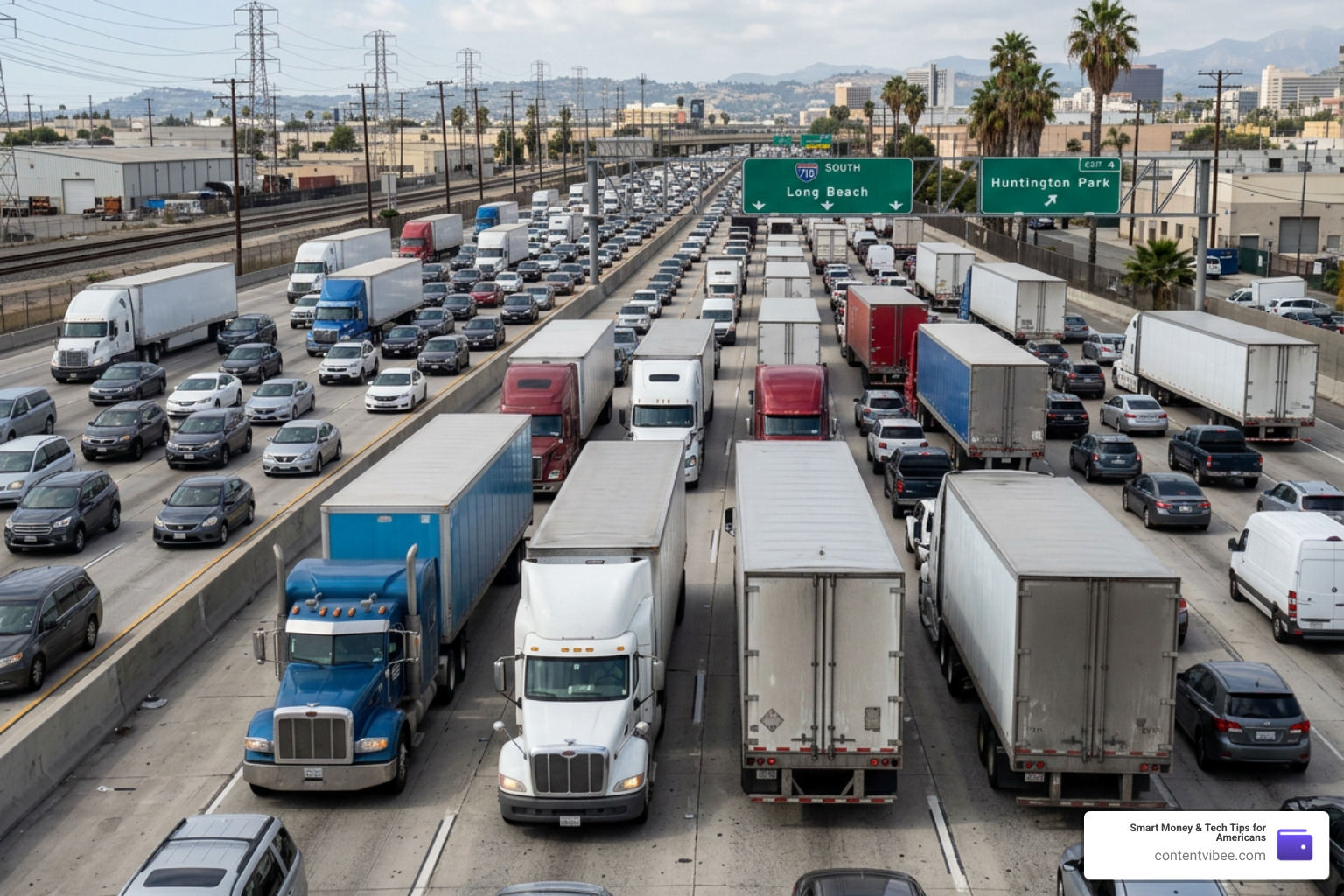
Los Angeles is a beautiful place, but driving next to a massive 18-wheeler on the I-5 or the I-710 can feel like a high-stakes video game where you only have one life. Southern California is a massive global trade hub, meaning our freeways are constantly packed with commercial vehicles.
What makes these accidents so unique—and uniquely dangerous—is a mix of physics, logistics, and federal law.
First, let’s talk about the sheer weight disparity. A fully loaded semi-truck can weigh up to 80,000 pounds, while your average passenger sedan sits at around 4,000 pounds. When these two meet at highway speeds, the laws of physics are incredibly cruel. This massive weight disparity also means trucks need a significantly longer braking distance to come to a complete stop, especially in sudden stop-and-go LA traffic or during our rare (but chaotic) rainy days.
Second, the trucking industry is heavily regulated. Unlike standard car accidents, commercial trucking is governed by a complex web of rules set by the Federal Motor Carrier Safety Administration (FMCSA). These regulations cover everything from cargo securement to how many hours a driver can spend behind the wheel.
Furthermore, our proximity to the Port of Los Angeles and the Port of Long Beach means a massive portion of local traffic consists of port drayage operations. Drayage drivers often operate under high-stress, per-load pay structures, creating a financial incentive to skirt safety rules. Navigating these overlapping state and federal laws is highly complex, which is why having a specialized legal team on your side is critical. To understand how these firms operate, you can read our truck accident law firm complete guide.
Common Causes of Semi-Truck Crashes in LA
While every collision has its own story, we see several recurring patterns when analyzing commercial vehicle crashes in Southern California:
- Driver Fatigue: Despite strict FMCSA hours of service regulations, tight delivery deadlines often push drivers to operate while severely fatigued. Drowsy driving can be just as dangerous as drunk driving.
- Distracted Driving: Truckers spend long, lonely hours on the road. The temptation to check a phone, adjust a GPS, or eat while driving a multi-ton vehicle leads to catastrophic rear-end collisions.
- Mechanical Failure: Brake failures are a leading cause of large-truck crashes. Trucking companies sometimes cut corners on routine maintenance, sending vehicles with worn brake pads or bald tires onto the road.
- Blind Spots: Large trucks have massive blind spots (often called “No-Zones”) on all four sides. When drivers fail to check these areas before changing lanes, they can easily sideswipe or crush adjacent passenger cars.
- Jackknife and Underride Crashes: A jackknife occurs when a truck’s trailer swings out at an angle to the cab. An underride collision occurs when a smaller passenger vehicle slides underneath the trailer chassis, bypassing the car’s safety crumple zones entirely.
How Truck Accidents Differ from Standard Car Accidents
If you are rear-ended by another passenger car, the claim process is usually straightforward: you deal with the other driver and their insurance company. But if you are hit by an 18-wheeler, the rulebook changes completely.
- The Severity of Injuries: Due to the force of the impact, injuries are rarely minor. Victims often suffer traumatic brain injuries (TBIs), spinal cord damage, amputations, or severe orthopedic fractures.
- Multiple Potential Defendants: You aren’t just dealing with the truck driver. Liability can extend to the motor carrier, the cargo loader, the maintenance vendor, or even the truck manufacturer.
- A Web of Federal Laws: Proving a truck accident claim requires demonstrating violations of FMCSA regulations, such as hours of service logs, drug testing requirements, and vehicle inspection reports.
- Electronic Logging Devices (ELDs) and Black Box Data: Modern commercial trucks are equipped with Electronic Control Modules (ECMs)—essentially “black boxes”—that record speed, braking activity, and engine parameters at the moment of impact. This data is incredibly valuable, but it can be easily overwritten if not secured quickly.
Immediate Steps and Legal Timelines After an LA Crash
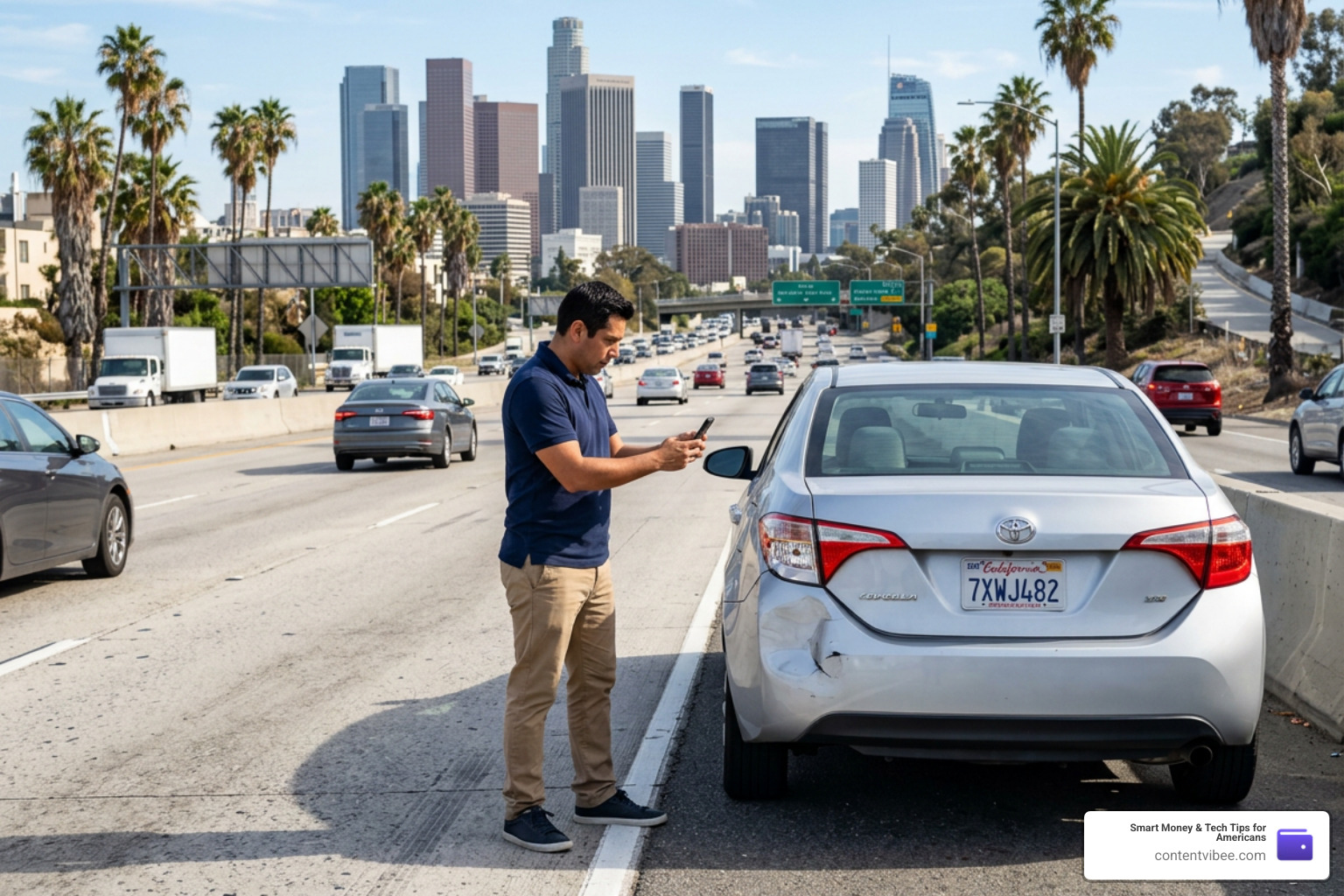
The hours and days following a commercial truck collision are a whirlwind of medical evaluations, phone calls, and stress. However, the actions you take during this critical window can make or break your eventual legal claim. Knowing what to do and finding the right help is crucial; check out our truck accident lawyers near me guide to learn how local representation can protect your rights.
What to Do Immediately After a Truck Accident
If you are involved in a collision with a large commercial vehicle, prioritize these steps to protect your health and your legal rights:
- Safety First: If possible, move your vehicle to a safe area, like the shoulder of the freeway. Turn on your hazard lights.
- Call 911: Request both police officers and medical personnel to the scene. A formal police report is a vital piece of evidence.
- Document the Scene: Take extensive photos and videos of the vehicles, road conditions, skid marks, and traffic signs.
- Exchange Information: Get the truck driver’s name, contact info, commercial driver’s license (CDL) number, and insurance details. Also, note the USDOT number on the side of the truck cab.
- Gather Witness Info: If anyone stopped to help, write down their names and phone numbers. Their unbiased testimony can be incredibly powerful.
- Avoid Admitting Fault: Keep conversations polite but brief. Do not say “I’m sorry” or make statements about who caused the crash.
- Seek Immediate Medical Attention: Let a doctor evaluate you, even if you think your injuries are minor. Adrenaline can mask severe internal injuries or spinal trauma.
California Statute of Limitations for Trucking Claims
In California, you do not have an unlimited amount of time to seek justice. Under California Code of Civil Procedure Section 335.1, the standard statute of limitations for personal injury and wrongful death claims is two years from the date of the accident.
However, there is a massive trap for the unwary: government entity claims. If you were hit by a municipal vehicle—such as a city sanitation truck, a public transit bus, or a state construction vehicle—you must file a formal administrative claim within six months of the accident. Missing this deadline will permanently bar you from recovering compensation. Because of these tight timelines, consulting a qualified attorney immediately is essential.
How to Choose the Best Truck Accident Lawyer Los Angeles
Choosing a legal representative is a personal decision, but it shouldn’t be a guessing game. To narrow down your search, you can read our review of find qualified los angeles truck accident lawyers to see how top-tier local advocates stack up.
Why You Need a Specialized Truck Accident Lawyer Los Angeles
Many personal injury lawyers claim they handle truck accidents, but in reality, they treat them like glorified car accidents. This is a massive mistake.
To win a commercial trucking case, your attorney must understand how to navigate complex multi-party liability, cross-examine corporate safety directors, and dissect federal trucking logs. Trucking companies employ aggressive corporate defense teams and insurance adjusters whose sole job is to minimize your payout or deny your claim entirely.
An experienced truck accident lawyer in Los Angeles knows how to counter these tactics. They will immediately issue spoliation letters to preserve vital evidence, retain independent accident reconstruction experts, and build a trial-ready case. For a deeper look at what to look for, check out our guide on the best truck accident attorney los angeles or visit specialized resources like Los Angeles Truck Accident Lawyers.
Do I Need an Attorney if the Insurance Company Offers a Settlement?
It is highly common for a trucking company’s insurance carrier to contact you within days of a crash. They might offer what seems like a generous lump-sum settlement.
Do not sign anything without consulting a lawyer.
These early offers are almost always “lowball” settlements designed to make your claim go away before you realize the true extent of your injuries. Once you sign a liability waiver, you can never ask for more money—even if you later discover you need a spinal surgery that costs hundreds of thousands of dollars. An attorney will evaluate your future medical needs, calculate your true lost wages, and negotiate a settlement that reflects your actual losses. For more insights on dealing with these companies, see our truck wreck attorney ultimate guide.
Proving Liability and Maximizing Your Financial Recovery
To secure the compensation you deserve, your legal team must establish who was at fault and document the full scope of your damages. Proving negligence in a commercial trucking case is a highly technical process. If you want to understand the broader legal framework of these claims, we recommend reading our comprehensive article on what a truck accident lawyer does to build a winning case.
Who Can Be Held Liable for a Truck Accident?
Unlike passenger car accidents, where liability usually begins and ends with the driver, commercial truck crashes often involve multiple negligent parties:
| Potential Defendant | Why They May Be Liable |
|---|---|
| The Truck Driver | Fatigued driving, speeding, driving under the influence (commercial BAC limit in CA is 0.04%), or distracted driving. |
| The Trucking Company | Negligent hiring, failing to perform drug tests, forcing drivers to exceed hours of service limits, or failing to maintain vehicles. |
| The Cargo Loader | Overloading the trailer or failing to secure cargo, leading to shifts in weight that cause rollover or jackknife crashes. |
| Maintenance Vendors | Performing subpar brake repairs, tire installations, or routine safety inspections. |
| Parts Manufacturers | Designing or manufacturing defective truck parts, such as faulty brakes, steering systems, or tires. |
Under the legal doctrine of respondeat superior (vicarious liability), a trucking company is generally responsible for the negligent actions of its employees while they are on the job.
How a Truck Accident Lawyer Los Angeles Investigates Your Case
A successful claim relies on hard evidence. When you hire a specialized truck accident lawyer in Los Angeles, they will launch an immediate, exhaustive investigation:
- Securing Black Box (ECM) Data: This records critical metrics like speed, engine RPM, and braking seconds before the collision.
- Analyzing Electronic Logging Device (ELD) Data: This tracks the driver’s service hours to prove whether they were driving fatigued or in violation of federal limits.
- Reviewing Maintenance Logs: Checking the truck’s history to see if known mechanical issues were ignored.
- Analyzing Driver Qualification Files: Reviewing the driver’s safety record, training history, and medical certifications.
- Using Accident Reconstructionists: Hiring experts to recreate the physics of the crash to prove exactly how it happened.
For those who want to see how top-tier California firms approach these complex investigations, you can learn more about real-world case strategies from resources like Panish | Shea | Ravipudi LLP.
Types of Compensation and Average Settlement Values
California law allows truck accident victims to recover both economic and non-economic damages.
- Economic Damages: These are objective, calculable financial losses, including medical bills, future rehabilitation costs, lost wages, and loss of earning capacity if you can no longer work in your profession.
- Non-Economic Damages: These compensate you for intangible losses, such as pain and suffering, emotional distress, loss of enjoyment of life, and loss of consortium. Notably, California does not place a cap on non-economic damages for truck accident victims.
- Punitive Damages: In rare cases where the trucking company’s conduct was exceptionally egregious (such as knowingly letting an unlicensed driver operate a truck with failing brakes), a court may award punitive damages to punish the defendant.
Frequently Asked Questions About Los Angeles Truck Accidents
What is the average settlement for a semi-truck accident in Los Angeles?
There is no “average” settlement because every case is entirely unique. However, because commercial trucks carry high-limit insurance policies (often ranging from $750,000 to several million dollars) and the resulting injuries are frequently severe, truck accident settlements and verdicts are typically much higher than standard car accident claims. The final value depends on your medical expenses, future care needs, lost income, and the percentage of liability.
Can I still recover damages if I was partially at fault for the truck accident?
Yes! California operates under a pure comparative fault system (California Civil Code Section 1714). This means you can still recover compensation even if you were 99% at fault for the crash. However, your total financial recovery will be reduced by your percentage of fault. For example, if your damages total $100,000 but a jury finds you were 20% at fault, you will receive $80,000.
What is a black box and how does it help my truck accident claim?
A “black box” is an Electronic Control Module (ECM) installed in modern commercial trucks. It records vital data leading up to a crash, such as how fast the truck was traveling, when the brakes were applied, and whether the driver was using cruise control. This data provides objective, scientific proof of what happened, preventing the trucking company from fabricating a different version of events.
Conclusion
A collision with a commercial truck can change your life in a fraction of a second. Navigating the complex medical, emotional, and legal aftermath is not something you have to do alone.
By partnering with an experienced truck accident lawyer in Los Angeles, you can level the playing field against multi-billion-dollar trucking corporations and their insurance networks. Your attorney will handle the investigation, negotiate with the adjusters, and fight for the maximum compensation you deserve, allowing you to focus entirely on your physical recovery.
If you are ready to explore your legal options and find the right advocate for your case, read our truck accident lawyers los angeles honest review to see how different local firms compare. If your accident involved a standard passenger vehicle, you can also explore our comprehensive resources on finding a qualified car accident lawyer to guide you through the process.