


What to Do When You Need a Car Accident Lawyer
Knowing how to find a lawyer for a car accident can be the difference between a fair settlement and walking away with far less than you deserve. If you’ve just been in a crash in California, here’s the short answer:
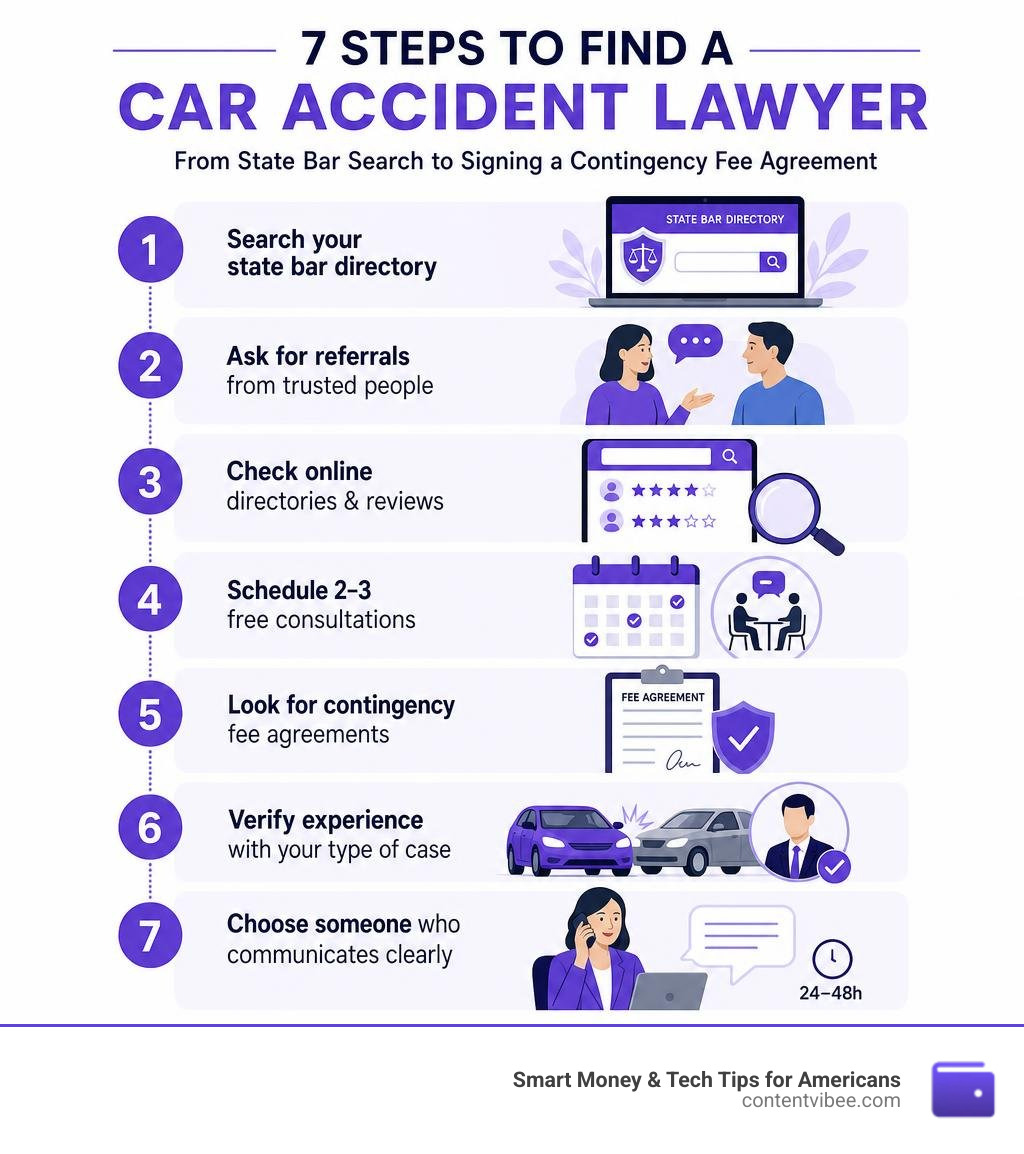
How to find a car accident lawyer — quick steps:
- Search your state bar directory at calbar.ca.gov to find licensed personal injury attorneys near you
- Ask for referrals from friends, family, or your regular attorney
- Check online directories like Avvo, Martindale-Hubbell, or Google Reviews
- Schedule 2–3 free consultations — most car accident lawyers charge nothing upfront
- Look for contingency fee agreements — you pay only if you win, typically 33%–40% of the settlement
- Verify experience with cases like yours (rear-end, rideshare, commercial truck, etc.)
- Choose someone who communicates clearly and responds within 24–48 hours
The stakes are real. People who hire a personal injury lawyer receive settlements about 3.5 times higher than those who go it alone. The average bodily injury claim is around $20,235 — but without the right representation, you may settle for much less before you even know the full cost of your injuries.
And if you’re stressed about legal fees eating your settlement? That’s exactly what this guide addresses.
Immediate Steps and Knowing When You Need a Lawyer
The moments immediately following a car crash are chaotic, stressful, and often physically painful. However, what you do in those first few hours and days can make or break your potential legal claim. Before you even begin researching how to find a lawyer for a car accident, you must take critical steps to protect your health and your legal rights.
Immediate Post-Accident Steps
- Prioritize Safety and Medical Care: Check yourself and your passengers for injuries. Even if you feel perfectly fine, seek medical attention immediately. Adrenaline can mask severe injuries like whiplash, internal bleeding, or soft tissue damage. From a legal standpoint, seeking care on the same day creates an indisputable medical record linking your injuries directly to the crash.
- Call 911: Always request a police officer to the scene, regardless of how minor the accident seems. A formal police report provides unbiased, third-party evidence that insurance companies and courts rely on heavily to establish fault.
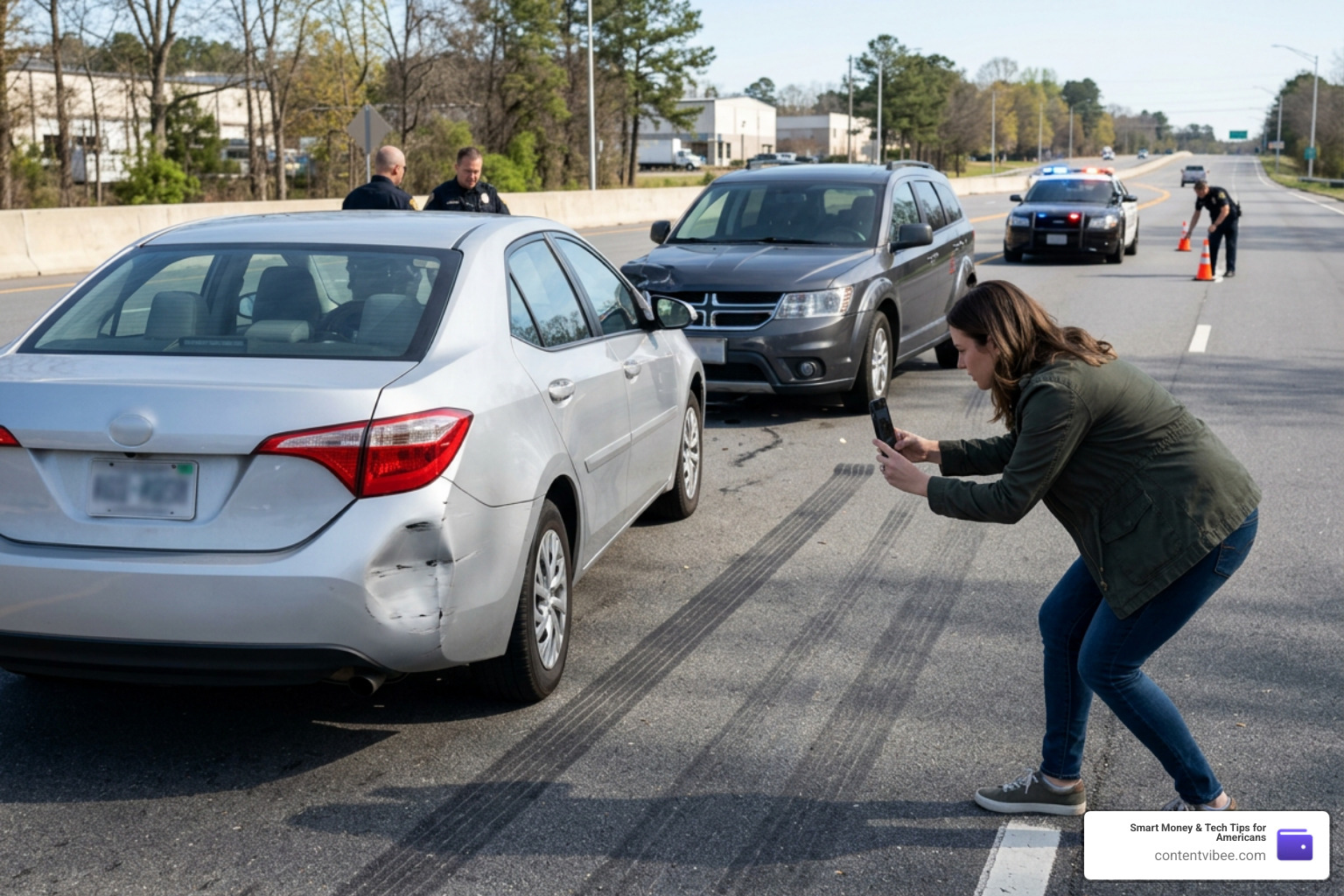
- Collect Comprehensive Evidence: If you are physically able to do so safely, document the scene thoroughly.
- Take photos of vehicle damage, license plates, skid marks, road conditions, traffic signs, and any visible physical injuries.
- Exchange contact, driver’s license, and insurance information with all drivers involved.
- Speak with witnesses and write down their names and phone numbers.
- Keep a written log or daily pain diary to document how you feel and track your recovery.
Common Mistakes to Avoid
The insurance system is highly adversarial. Insurance adjusters may seem friendly, but their primary goal is to minimize payouts. To protect your claim, avoid these common pitfalls:
- Never Apologize or Admit Fault: Even a polite “I’m so sorry” at the scene can be twisted by insurance companies as an admission of legal liability. Stick strictly to the facts when speaking with the police and other drivers.
- Do Not Give Recorded Statements: Avoid speaking with the at-fault driver’s insurance adjuster or giving a recorded statement without a lawyer present. They are trained to ask misleading questions designed to damage your case.
- Avoid Signing Early Settlements: Insurers often rush to offer quick, lowball settlements before the full extent of your injuries and medical costs are known. Once you sign, you waive your right to seek additional compensation forever.
Do You Actually Need a Lawyer?
Not every fender-bender requires legal representation. If you were involved in a minor accident with absolutely no injuries, clear liability, and minimal property damage, you can likely resolve the claim directly with the insurance companies.
However, you absolutely need a qualified attorney if your case involves:
- Severe or Permanent Injuries: If your injuries require ongoing medical treatment, surgery, or cause you to miss significant work.
- Disputed Liability: When the other driver denies responsibility, or the insurance company claims you were at fault.
- Insurance Tactics: If the insurer delays your claim, denies coverage, or pressures you to accept a low settlement.
- Complex Scenarios: Cases involving multiple vehicles, commercial trucks, rideshare drivers, pedestrian accidents, or government entities.
To help you decide, here is a quick comparison of managing a claim yourself versus hiring professional legal representation:
| Aspect | Self-Representation (Pro Se) | Hiring a Car Accident Lawyer |
|---|---|---|
| Average Settlement | Typically much lower | Approximately 3.5 times higher on average |
| Investigation | Limited to evidence you can collect yourself | Full investigation, including accident reconstruction experts |
| Negotiation | High stress; adjusters may use bad-faith tactics | Handled entirely by professionals who know insurer playbooks |
| Trial Readiness | Extremely difficult to navigate court systems | Prepared to take your case to court to demand maximum value |
| Upfront Cost | $0 | $0 (Works on a contingency fee basis) |
Navigating these early stages can feel incredibly overwhelming, but you do not have to carry this burden alone. To understand more about when it makes sense to bring in a professional, read our detailed guide on To Hire or Not to Hire: When a Car Accident Lawyer is Actually Worth It. For a broader perspective on your legal options, you can also consult FindLaw’s guide on How To Find Legal Help After a Car Accident – FindLaw.
How to Find a Lawyer for Car Accident Claims in 2026
The legal landscape has evolved rapidly. In 2026, finding a highly qualified personal injury attorney is easier and more transparent than ever, thanks to a combination of traditional vetting methods and advanced digital tools.
Step-by-Step: How to Find a Lawyer for Car Accident Cases
When starting your search, we recommend focusing on finding local, specialized attorneys who understand your state’s specific traffic laws, court systems, and local judges. Here is how to build your initial list of candidates:
- Leverage Local Bar Associations: Your local or state bar association website is one of the most secure places to start. These directories allow you to confirm that an attorney is licensed, in good standing, and has no history of disciplinary actions.
- Seek Personal Referrals: Reach out to friends, family members, or professional colleagues who have successfully resolved a personal injury claim. Ask about their overall experience, how well the attorney communicated, and whether they felt supported throughout the process.
- Consult Your Trusted Network: If you have worked with a trusted lawyer in another field—such as estate planning, family law, or business—ask them for a referral. Lawyers know who the top-tier litigators are in their local legal communities.
For a comprehensive breakdown of the most effective local search strategies, check out our resource on Auto Accident Lawyers Near Me: 7 Genius Ways to Find the Best.
Digital Tools: How to Find a Lawyer for Car Accident Research
Once you have a list of potential candidates, you can use modern digital tools to vet them thoroughly before scheduling a meeting:
- Analyze Online Reviews for Patterns: Look at platforms like Google Reviews, Avvo, and Martindale-Hubbell. Don’t just look at the overall star rating; read the detailed reviews. Look for patterns in feedback—do clients praise their responsiveness and empathy, or do they complain about radio silence?
- Evaluate Social Media Presence: According to legal industry data, 74% of consumers used social media to research legal services. A firm’s social media channels and blog can give you a great sense of their expertise, community involvement, and overall approachability.
- Take Advantage of Virtual Consultations: In 2026, you don’t have to spend hours driving to law offices for initial meetings. Most reputable firms offer instant video consultations, allowing you to screen multiple lawyers from the comfort of your home.
To learn more about using modern digital platforms to simplify your search, read our detailed guide on How to Find a Lawyer for Car Accidents.
Key Qualities to Look For and What to Expect
Not all lawyers are created equal. To secure the maximum compensation for your medical bills, lost wages, and pain and suffering, you need to identify specific qualities that set top-tier personal injury attorneys apart from general practitioners.
Essential Criteria for Your Selection Process
- Exclusive Focus on Personal Injury: Law is incredibly complex. You do not want a generalist who handles divorces, drafting wills, and the occasional car accident. You want an attorney who specializes exclusively in personal injury and traffic accident cases.
- A Proven Track Record of Success: Ask potential attorneys about their history of settlements and jury verdicts. While most personal injury cases (90-95%) resolve prior to trial, insurance companies know exactly which lawyers are willing to take a case to court. An attorney with a reputation for winning trial verdicts commands far more respect during negotiations, resulting in higher settlement offers.
- Clear and Empathetic Communication: Poor communication is the number one complaint in the legal industry—42% of clients cite it as the primary reason for dissatisfaction with their lawyers, and 72% wish for clearer communication. Choose an attorney who speaks in plain English, explains complex legal concepts without jargon, and commits to a clear communication schedule.
- A Strong Professional Network: A well-established personal injury lawyer has the financial resources and professional network to hire top experts for your case, including accident reconstruction specialists, medical experts, and economists to calculate future lifetime care costs.
For a deeper dive into selecting the absolute best candidate without feeling overwhelmed, read How to Pick the Right Car Accident Lawyer (Without Getting Overwhelmed) and review our Find Car Accident Lawyer: 5 Tips for Choosing the Best checklist.
What to Expect During Your Free Consultation
Almost all reputable car accident lawyers offer a 100% free, no-obligation initial consultation. This meeting is a two-way street: the lawyer is evaluating whether your case is viable, and you are evaluating whether this is the right person to represent you.

During this meeting, the attorney will review your accident reports, medical records, and insurance correspondence to evaluate your case. They will explain your legal options, estimate the potential value of your claim, and present a fee agreement.
To make the most of this meeting, prepare a list of questions to ask, such as:
- Who will actually be handling the day-to-day work on my case?
- What is your success rate with cases similar to mine?
- How do you handle advanced litigation expenses like court filing fees and expert witness costs if we lose?
- What is your preferred method and frequency of communication?
To help you prepare, check out our comprehensive Car Accident Lawyer Free Consultation Guide 2026.
Frequently Asked Questions about Car Accident Lawyers
How much does a car accident lawyer cost?
Almost all reputable car accident lawyers work on a contingency fee basis. This means you pay absolutely nothing upfront and nothing out-of-pocket. The lawyer’s fees are paid as a percentage of your final settlement or court award—typically ranging from 33% to 40%. If your lawyer does not win your case, you owe them nothing for their services.
Additionally, ask if the firm advances litigation expenses (like expert witness fees and court filings) and whether you would be responsible for those costs if the case is unsuccessful.
What is the statute of limitations for filing a car accident lawsuit?
The statute of limitations is a strict legal deadline for filing a lawsuit. If you miss this window, you lose your right to seek compensation forever. These deadlines vary significantly by state and the type of claim:
- Personal Injury: Most states have a personal injury statute of limitations of two to three years from the date of the accident.
- Property Damage: Some states provide a slightly longer window (often three years) for property damage claims.
- Government Entities: If your accident involved a government vehicle (like a city bus or mail truck), you may have as little as six months to file a formal administrative claim.
Because these laws are strict and vary by state, it is vital to consult a lawyer as soon as possible after your crash.
Can I hire a lawyer for a non-injury car accident?
Yes. While personal injury lawyers typically focus on cases involving physical injuries, you can hire a property damage lawyer or insurance litigator if you are facing extensive vehicle damage, disputed liability, or if an insurance company has unfairly denied your property damage claim. If the dispute involves a relatively small amount of money, an attorney can also advise you on how to draft a formal demand letter or represent yourself in small claims court.
Conclusion
Finding yourself in the aftermath of a car accident is incredibly stressful, but you do not have to navigate the complex legal and insurance systems alone. By understanding how to find a lawyer for a car accident, verifying their credentials, and choosing an attorney who communicates clearly and works on a contingency fee basis, you can protect your financial future and focus entirely on your physical recovery.
At ContentVibee, we are dedicated to providing clear, actionable, and trusted legal resources to help Americans make smart financial and legal decisions. If you are ready to take the next step and secure the legal protection you deserve, explore our comprehensive Car Accident Lawyer directory to connect with top-rated personal injury specialists near you today.


