


The pre approval home loan process is how a mortgage lender reviews your finances and tells you — in writing — how much they’re willing to lend you before you start shopping for a home.
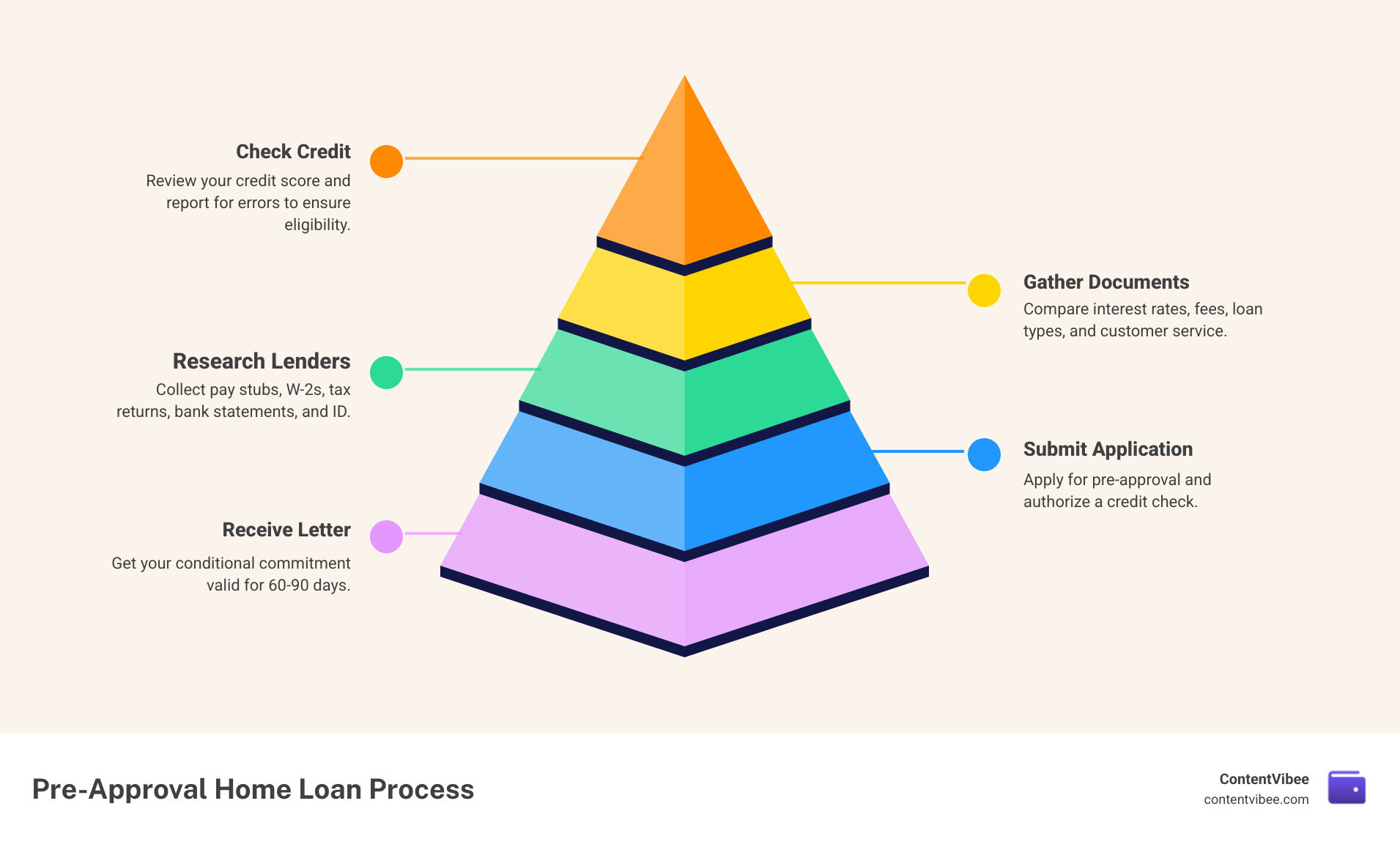
Here’s a quick overview of the steps:
- Check your credit score and review your credit report for errors
- Gather your documents — pay stubs, W-2s, tax returns, bank statements, and ID
- Research and choose lenders — compare rates, fees, and loan types
- Submit your pre-approval application and authorize a credit check
- Receive your pre-approval letter — valid for 60–90 days in most cases
Most first-time buyers make the same mistake: they fall in love with a home before they know what they can actually afford. By the time they apply for financing, the home is gone — or worse, they find out they can’t qualify for that price range at all.
A pre-approval letter changes everything. It tells you your real budget. It tells sellers you’re serious. And in a competitive market, it’s often the difference between your offer being considered or ignored.
Think of it as your entry ticket to the homebuying game. Without it, you’re just browsing.
The process isn’t complicated — but the order matters, and the details matter. This guide walks you through every step so you don’t miss anything.
Mastering the pre approval home loan process

When we talk about the pre approval home loan process, we are talking about your financial “north star.” In the fast-moving market of May 2026, walking into an open house without a pre-approval letter is a bit like going to an auction without a wallet. You might have the desire, but you lack the documented power to act.
Getting pre-approved defines your borrowing power. It moves you from “guessing” what you can afford to “knowing” your exact price range. This clarity prevents the heartbreak of falling for a $600,000 colonial when your actual budget is $525,000. Beyond your own peace of mind, it provides a massive competitive edge. In 2026, many listing agents won’t even present an offer to their sellers unless it is accompanied by a verified letter from a lender.
To understand why this is so important, we have to look at the Difference Between Pre-Qualification and Pre-Approval | CFPB. Many buyers use these terms interchangeably, but they are very different animals.
| Feature | Pre-Qualification | Pre-Approval |
|---|---|---|
| Information Source | Self-reported data | Verified documentation |
| Credit Check | Often a “soft” pull | Always a “hard” pull |
| Lender Commitment | Minimal/Estimated | Conditional commitment |
| Seller Value | Low | High |
| Timeline | Minutes to hours | 1 to 10+ business days |
Defining Mortgage Pre-Approval
A mortgage pre-approval is a conditional commitment from a lender. It isn’t just a friendly chat; it’s a formal process where the lender verifies your income, assets, and credit history. Once they’ve crunched the numbers, they issue an official document stating the maximum loan amount they are willing to provide. While it isn’t a 100% guarantee of the final loan (that requires a property appraisal), it is the closest thing to a “yes” you can get before you actually find a house.
Why Sellers Demand Pre-Approval in 2026
In today’s market, speed is everything. Sellers want the path of least resistance. When they see a pre-approval letter, they see a “serious buyer” who has already cleared the major financial hurdles. It significantly reduces the risk of the deal falling through due to a financing contingency. If two identical offers hit a seller’s desk—one with a pre-approval and one without—the pre-approved buyer wins every single time.
5 Steps to Secure Your Letter

Understanding the Understanding the Real Estate Buying Process is the first step toward homeownership. Once you’re ready to get serious, you need to follow a specific sequence to get that letter in your hand. According to the Consumer Financial Protection Bureau, being prepared with your paperwork is the best way to avoid delays.
Step-by-Step Guide to the pre approval home loan process
- The Credit Check: The lender will perform a “hard” credit pull to see your tri-merge report (data from Equifax, Experian, and TransUnion).
- Document Submission: You’ll hand over the “financial life” folder we’ll detail below.
- Lender Review: An underwriter or loan officer reviews your debt-to-income (DTI) ratio and employment history.
- Conditional Commitment: The lender decides on the loan type (FHA, Conventional, VA) and the maximum amount.
- Letter Issuance: You receive your official pre-approval letter, usually valid for 60 to 90 days.
Choosing the Right Lender
Don’t just go with the first bank that sent you a “pre-approved” credit card offer in the mail. We recommend shopping around. Digital-first lenders can often move lightning-fast, sometimes finishing the pre approval home loan process in 1–3 days. Traditional banks and credit unions might take 10 business days or more, but they often offer more personalized customer service or specialized local programs. Compare interest rates and loan terms from at least three different sources to ensure you’re getting the best deal.
Financial Requirements and the 4 C’s
Lenders evaluate you based on what the industry calls the “4 C’s.” Before you ask Can You Really Buy Investment Property?, you need to make sure your primary residence financing is solid.
- Capacity: Your ability to repay the loan (income vs. debts).
- Capital: The money you have for a down payment and closing costs.
- Collateral: The value of the property (verified later via appraisal).
- Credit: Your track record of paying back borrowed money.
Managing Your Credit During the pre approval home loan process
Your FICO score is the engine of your mortgage. Most conventional loans require a minimum score of 620, though some FHA programs allow scores as low as 500 with a larger down payment.
A common concern is: “Will this hurt my credit score?” A hard inquiry typically drops your score by less than 5 points. However, the credit bureaus allow a “shopping window”—usually 14 to 45 days—where multiple mortgage inquiries count as a single event.
Quick Credit-Boosting Tips:
- Do not open new credit cards.
- Keep your credit card balances below 30% of their limits.
- Don’t close old accounts, as they provide valuable “age” to your credit history.
- Aim for a DTI (Debt-to-Income ratio) below 36% for the best rates.
Essential Documentation Checklist
To speed things up, have these ready in a digital folder:
- Income: W-2 statements and tax returns from the last two years.
- Pay Stubs: Your most recent 30 days of earnings.
- Assets: Two months of bank statements for all accounts.
- Identification: Driver’s license and Social Security number.
- Extras: Gift letters (if family is helping with the down payment) or divorce decrees (if alimony is involved).
Post-Approval Best Practices
Congratulations! You have your letter. But the pre approval home loan process doesn’t end when the paper is signed. You are now in a “financial deep freeze.” Lenders will re-check your credit and employment right before closing. If you change your financial profile now, you could lose the house.
This is especially true if you are looking at specialized scenarios, such as Why Selling Investment Property Capital Gains Tax issues or rental transitions. Stability is your best friend.
What to Avoid After Getting Pre-Approved
- New Debt: Do not buy a new car or finance a new sofa.
- Large Purchases: Avoid draining your savings for anything other than the house.
- Job Changes: Even a move to a higher-paying job can cause a delay while the lender verifies the new income.
- Moving Money: Don’t shift large sums between bank accounts without a clear paper trail.
Handling Pre-Approval Expiration
Pre-approval letters generally expire in 60 to 90 days. If you haven’t found your dream home by then, don’t panic. You’ll just need to provide updated pay stubs and bank statements to your lender. They may need to run a fresh credit report, but the renewal process is typically much faster than the initial application.
Frequently Asked Questions about Pre-Approval
How long does the pre-approval process take?
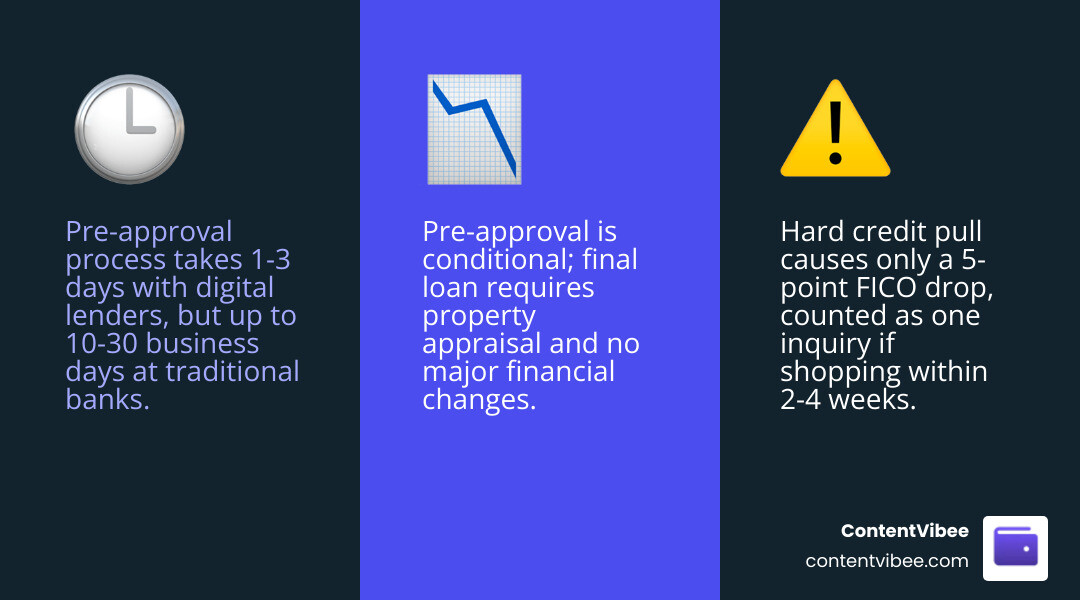
It depends on the lender’s technology. Digital lenders can often provide a decision in 1–3 days. Large traditional banks or credit unions, which may have more manual underwriting steps, can take 10 to 30 business days. To move faster, ensure your documentation is 100% complete before you hit “submit.”
Does getting pre-approved affect my credit score?
Yes, but only slightly. A hard pull usually results in a 5-point drop or less. As long as you do all your lender shopping within a 2–4 week window, the credit bureaus will treat it as one single inquiry. The benefit of knowing your budget far outweighs a temporary 5-point dip.
Is a pre-approval a guarantee of a loan?
No. It is a conditional offer. The final approval happens after you have a contract on a specific house. The lender will then perform a property appraisal to ensure the home is worth what you’re paying and do a final “quality control” check on your finances. If you lose your job or take on a massive car loan after pre-approval, the lender can (and will) rescind the offer.
Conclusion
At ContentVibee, we believe that real estate education is the key to a stress-free homebuying journey. The pre approval home loan process is more than just a hurdle; it’s the foundation of your financial confidence. By taking this step early, you protect yourself from emotional letdowns and position yourself as the most attractive buyer in the room.
Ready to dive deeper into property ownership? Start your journey with our Real Estate guides and let us help you navigate the path to your new front door with ease. Happy house hunting!