


The best balance transfer cards available right now can cut your interest costs to zero for up to 21 months — giving you a real window to pay down debt without watching it grow.
Here are the top picks for 2026:
| Card | Intro APR Period | Balance Transfer Fee | Annual Fee |
|---|---|---|---|
| Wells Fargo Reflect® | 0% for 21 months | 5% | $0 |
| Citi Simplicity® | 0% for 21 months | 3% (first 4 months) | $0 |
| Citi® Diamond Preferred® | 0% for 18 months | 3% (first 4 months) | $0 |
| Citi Double Cash® | 0% intro period | 3% (first 4 months) | $0 |
| Discover it® Cash Back | 0% for 15 months | 3% intro | $0 |
Nearly half of Americans are currently carrying a credit card balance. The average balance hit $6,434 in 2025 — and with average interest rates creeping toward 20%, that debt doesn’t sit still.
The math is sobering. Carrying $6,434 at 21% APR for 18 months costs over $1,100 in interest on top of what you already owe. Move that same balance to a 0% intro card with a 3-5% transfer fee, and your total extra cost drops to roughly $320 — saving you around $800.
That’s the core promise of a balance transfer card: pay a small fee now to avoid a much larger interest bill later.
But not every card is right for every situation. The best pick depends on how much you owe, how fast you can pay it down, and whether you want rewards after the debt is gone.
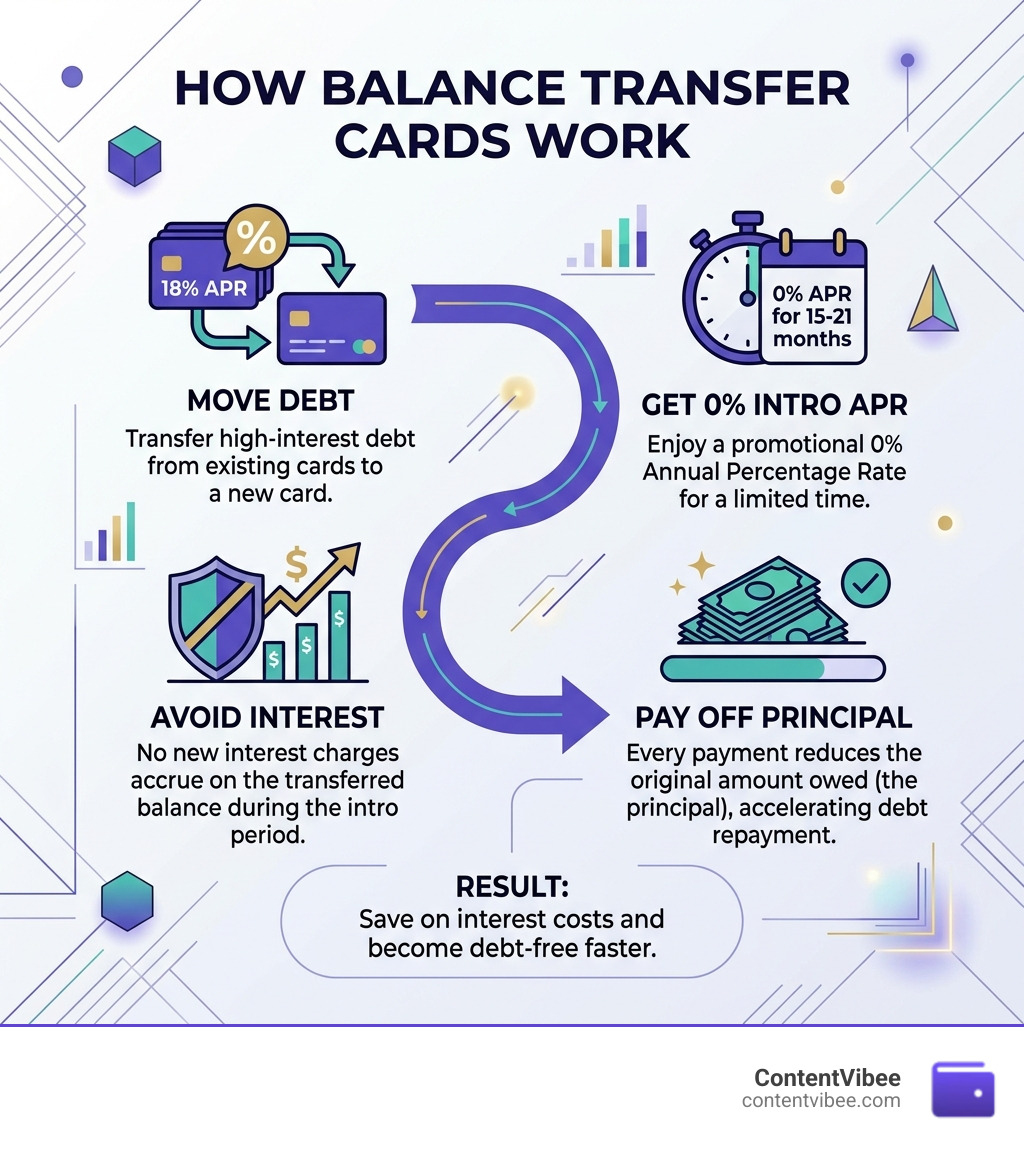
Top Picks for the Best Balance Transfer Cards in 2026
When we look for the best balance transfer cards, we aren’t just looking at the 0% sticker price. We’re looking at the fine print—the fees, the deadlines, and what happens once the “honeymoon phase” ends. Most of these cards require a “Good” to “Excellent” credit score (typically 670 or higher), though some people in the mid-600s might find success with specific issuers.
The Heavy Hitters
Two cards currently dominate the landscape for those who need the maximum amount of time to breathe:
- Reflect Visa® Credit Card With 0% Intro APR | Wells Fargo : This is a “pure” balance transfer card. It doesn’t offer flashy rewards, but it gives you a massive 21-month 0% intro APR window on both purchases and qualifying balance transfers. We love this card for its simplicity and the added perk of up to $600 in cell phone protection (subject to a $25 deductible) when you pay your monthly bill with the card.
- Citi® Diamond Preferred® Card – low intro APR Credit Card | Citi.com : Another dedicated debt-fighter, this card offers 0% intro APR for 18 months on balance transfers. While the window is slightly shorter than the Reflect, it often features a lower introductory balance transfer fee if you move your debt quickly.
After the introductory period ends, these cards revert to a variable APR based on your creditworthiness, which can range anywhere from 17.24% to 28.99%. This is why having a repayment strategy is vital; if you still have a balance when the clock strikes midnight, that high interest rate will come back to haunt you.
Best Balance Transfer Cards for Long Intro APR Windows
If your primary goal is to hide from interest for as long as humanly possible, you want a card that offers 21 months of 0% APR. That is nearly two full years of interest-free living.
The Citi Simplicity® Credit Card with introductory APR | Citi.com is a standout here. It matches the 21-month window and adds a layer of “forgiveness” that we find very appealing: it has no late fees and no penalty APR. While we always recommend paying on time to protect your credit score, it’s nice to know that a single mistake won’t cause your interest rate to jump to 30% overnight.
Repayment Strategy Tip: To make the most of a 21-month card, divide your total debt (including the transfer fee) by 21. If you owe $5,000 and the fee is $250, you need to pay roughly $250 a month. If that number feels too high for your current debt-to-income ratio, you might need to look at supplemental income or a different debt management plan.
Best Balance Transfer Cards with Cash Back Rewards
Some of us want our cake and to eat it, too. If you think you can pay off your debt in a slightly shorter window (15 to 18 months), you might prefer a card that offers long-term value through rewards.
- Citi Double Cash® Credit Card | Citi.com : This is a fan favorite for a reason. It uses a unique “1% when you buy, 1% as you pay” mechanic. While you won’t earn cash back on the transferred balance itself, once you’ve cleared that debt, you’re left with one of the best flat-rate rewards cards on the market.
- Rewards Credit Card – Cash Back Credit Card | Discover : Discover offers a 15-month 0% intro APR and a famous “Cashback Match” where they double all the rewards you earn in your first year. It’s a great way to earn a little something back while you’re working hard to clear your old balances.
- Citi Strata℠ Card | Citi.com : For those who want to earn ThankYou Points, this card offers a solid intro period and customizable rewards categories like supermarkets and gas stations.
If you are currently managing multiple specific retail cards, like a TJ Maxx card, consolidating those high-interest balances onto one of these rewards cards can simplify your life significantly.
How to Qualify and Calculate Your Savings
Qualifying for the best balance transfer cards isn’t just about having a high enough credit score. Lenders also look at your:
- Debt-to-Income (DTI) Ratio: They want to see that you aren’t already drowning in payments.
- Credit Utilization: If your current cards are maxed out at 99%, it might signal a risk, even if your score is decent.
- Recent Inquiries: Too many new applications in a short window can be a red flag.
If your score isn’t quite at the 670 mark yet, you might need to look at cards designed for building credit, like the Open Sky card, before you can qualify for the top-tier 0% offers.
The Savings Math: Let’s say you have $5,000 on a card with 20% APR. You’re currently paying $250 a month. At that rate, it will take you 24 months to pay it off, and you’ll pay $1,100 in interest. If you move that to a card with a 5% fee ($250), and pay $250 a month at 0% APR, you’ll be debt-free in 21 months and save $850. That’s money that stays in your pocket instead of going to the bank’s bottom line.
Strategic Debt Management and Alternatives

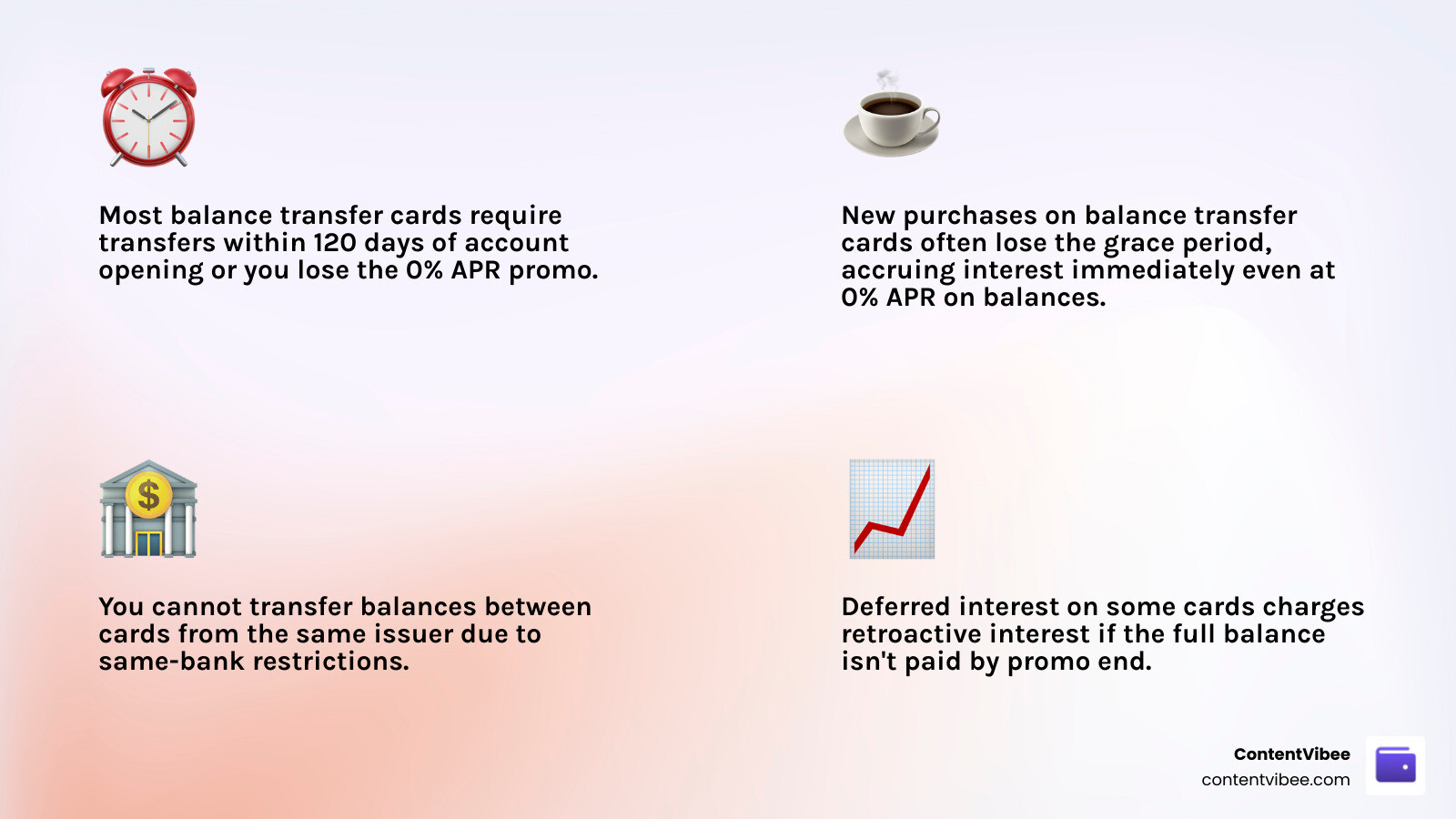
Using a balance transfer card is a bit like using a specialized tool—it works wonders if you use it correctly, but it can be dangerous if you don’t. One of the biggest strategic hurdles is the same-bank restriction. You generally cannot transfer a balance between two cards issued by the same bank. For example, you can’t move debt from one Chase card to another Chase card.
Common Mistakes and Issuer Restrictions
We’ve seen it happen too often: someone gets a great new card and then misses the fine print.
- Missing the Transfer Deadline: Most of the best balance transfer cards require you to request the transfer within a specific window—usually the first 4 months (120 days) of account opening. If you wait until month five, you might lose the 0% offer entirely.
- New Spending Traps: When you transfer a balance, you often lose your “grace period” for new purchases. This means if you buy a coffee on your new balance transfer card, you might start accruing interest on that coffee immediately, even if the transferred balance is at 0%. Our advice? Put the card in a drawer and don’t use it for new spending until the old debt is gone.
- The Merger Factor: With the Capital One and Discover merger finalized, there are new restrictions on moving balances between these two specific brands. Always check the current issuer list before applying.
- Deferred Interest vs. 0% APR: While most major cards listed here offer true 0% APR, some “store cards” use deferred interest. If you don’t pay the entire balance by the end of the period, they charge you interest going back to day one. Ouch.
Is a Balance Transfer Right for Your Financial Goals?
At ContentVibee, we believe that a balance transfer is a powerful “reset button,” but it’s not a permanent solution for overspending. If your debt-to-income ratio is over 40-50%, a single credit card may not have a high enough limit to solve the problem. In those cases, a personal loan with a fixed monthly payment might be a more stable alternative.
However, if you have a solid plan and just need some “breathing room” from high interest rates, these cards are unbeatable. For more Smart Money Finance Tips, we always suggest looking at your total financial health—not just the interest rate.
Final Checklist for Success:
- Check your credit score (aim for 670+).
- Calculate your monthly payment (Total Debt / Intro Months).
- Apply for a card from a different bank than your current debt.
- Transfer the balance within the first 60 days.
- Set up autopay and stop spending on the card.
By following these steps, you can turn a mountain of high-interest debt into a manageable, interest-free molehill. Good luck, and here’s to a debt-free 2026!