


The Real Cost of Health Coverage in Retirement — and How to Plan for It
Health insurance plans for senior citizens are one of the most important financial decisions you’ll make in retirement. Yet most people don’t realize how complex — or how expensive — coverage can be until they’re already in the thick of it.
Here’s a quick look at your main options:
| Plan Type | Who It’s For | Key Benefit |
|---|---|---|
| Medicare Part A & B | Adults 65+, some disabled | Hospital + medical coverage |
| Medicare Advantage (Part C) | Medicare-eligible seniors | Bundles A, B, often D + extras |
| Medicare Supplement (Medigap) | Original Medicare enrollees | Fills cost gaps |
| Medicare Part D | Medicare enrollees | Prescription drug coverage |
| Medicaid | Low-income seniors | Free or low-cost coverage |
| Marketplace (ACA) Plans | Early retirees under 65 | Subsidized private coverage |
The numbers are stark. The average retired couple can expect to spend around $315,000 on healthcare over the course of retirement. That’s not a typo. Even with Medicare — which already covers more than 66 million Americans — out-of-pocket costs add up fast.
Medicare eligibility starts at age 65 for most people, but some qualify earlier due to disability or permanent kidney failure. Until then, you need a plan.
This guide breaks down every major coverage option so you can make a confident, informed choice.
Navigating Health Insurance Plans for Senior Citizens

Choosing the right coverage isn’t just about picking a name you recognize; it’s about timing. If we miss the boat on enrollment, we could face lifelong penalties. In health insurance plans for senior citizens, there are three critical windows to remember:
- Initial Enrollment Period (IEP): This is a seven-month window that begins three months before you turn 65 and ends three months after your birthday month.
- Annual Enrollment Period (AEP): Running from October 15 to December 7 each year, this is your chance to switch from Original Medicare to a Medicare Advantage plan or change your drug coverage.
- Special Enrollment Period (SEP): This is triggered by “Qualifying Life Events,” such as moving to a new address or losing employer-based coverage.
If you don’t sign up for Part B or Part D when you’re first eligible (and you don’t have “creditable” coverage elsewhere), the government adds a permanent penalty to your monthly premiums. For more detailed insights into various insurance services, it’s always wise to stay updated on current regulations.
Understanding Medicare and Health Insurance Plans for Senior Citizens
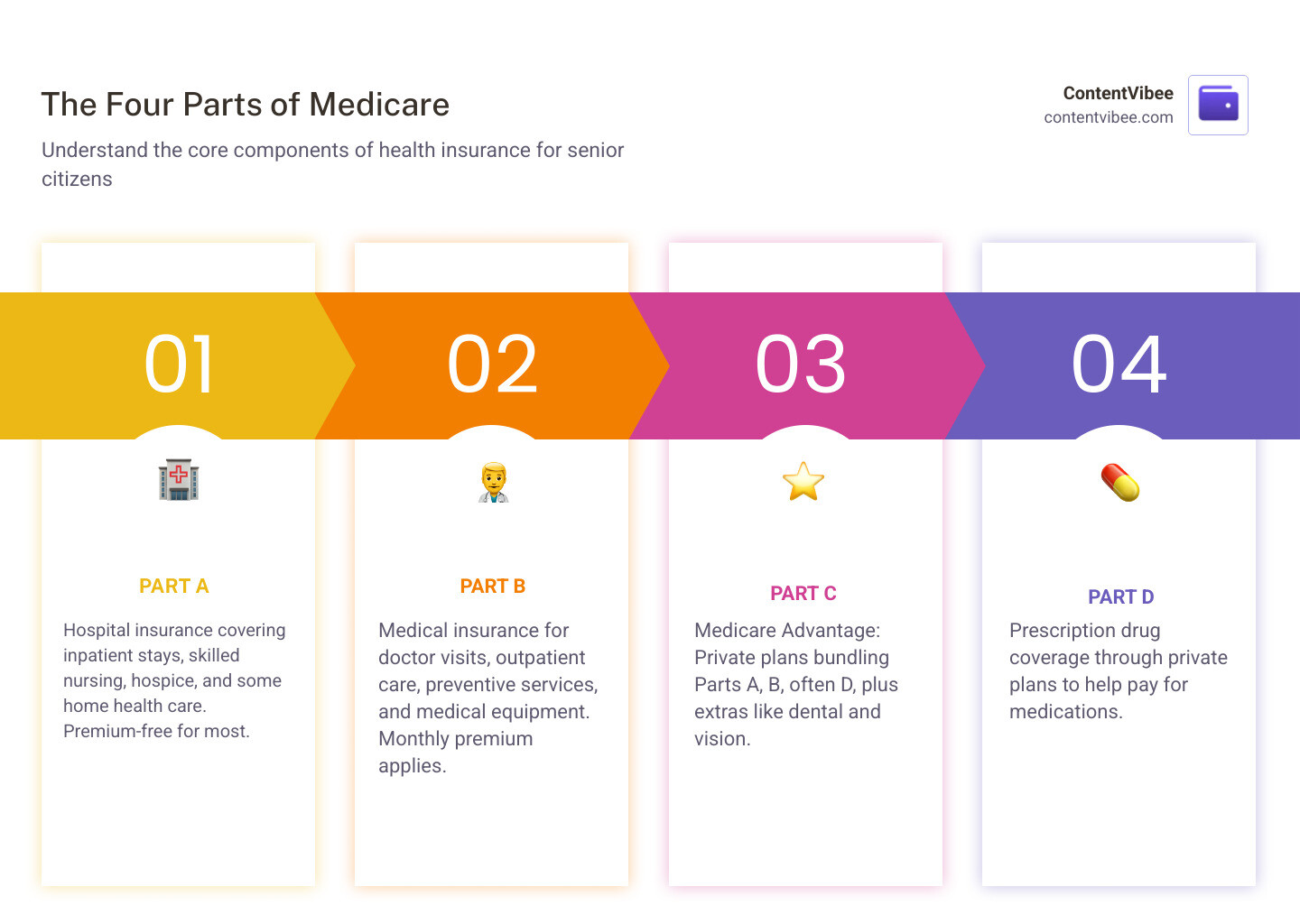
Original Medicare is the foundation for most seniors. It is divided into two primary sections: Part A (Hospital Insurance) and Part B (Medical Insurance).
- Part A: Generally covers inpatient hospital stays, care in a skilled nursing facility, hospice care, and some home health care. For most, Part A is “premium-free” if you or your spouse worked and paid Medicare taxes for at least 10 years.
- Part B: Covers doctor visits, outpatient care, medical supplies, and preventive services. In 2026, the average monthly premium for Part B is approximately $185.
- Part D: This is the prescription drug piece. These plans are sold by private companies but approved by Medicare.
One of the biggest perks of Original Medicare is the network. Parts A and B include 99% of the nation’s doctors in their network, meaning you rarely have to worry about whether your favorite physician is “in-network.” However, Medicare doesn’t cover everything. That is where supplemental options like Medicare Supplement Plan F or Plan G come in.
Plan F is often called the most comprehensive option because it covers both the Part A and Part B deductibles (which total $2,019 in 2026). However, Plan F is only available to those who were eligible for Medicare before January 1, 2020. For everyone else, Plan G is the gold standard, covering everything Plan F does except for the Part B deductible.
Medicare Advantage vs. Original Medicare
If Original Medicare is like a buffet where you pick your own sides, Medicare Advantage (Part C) is the “all-in-one” combo meal. These plans are offered by private companies like UnitedHealthcare, Humana, and Kaiser Permanente.
Medicare Advantage plans must provide at least the same level of coverage as Original Medicare (except hospice, which Part A still covers), but they often bundle in Part D prescription drugs and “extra” benefits like dental, vision, and hearing.
HMO vs. PPO: What’s the difference?
- HMO (Health Maintenance Organization): Usually requires you to see providers within a specific network and get referrals to see specialists. These often have $0 or very low monthly premiums.
- PPO (Preferred Provider Organization): Offers more flexibility to see out-of-network doctors (usually at a higher cost) and typically doesn’t require referrals.
While many Advantage plans boast $0 premiums, you still have to pay your Part B premium to the government. You are essentially trading the vast network of Original Medicare for the bundled perks and potential cost savings of a private plan.
Bridging the Gap with Medigap and Supplemental Coverage
For those who stick with Original Medicare, Medigap (Medicare Supplement) plans are essential for predictable budgeting. These plans are standardized by the government, meaning a “Plan G” with one company offers the exact same core benefits as “Plan G” with another.
- Medicare Supplement Plan C: A comprehensive plan that covers the Part B deductible, popular with those eligible for Medicare before 2020.
- Medicare Supplement Plan L: This is a “cost-sharing” plan. It covers 75% of most out-of-pocket costs until you hit an annual limit (around $4,000 in 2026). It’s a great middle-ground for those who want lower monthly premiums but a safety net for major illnesses.
It is important to note that Original Medicare has significant “gaps,” specifically in dental, vision, and hearing care. We often recommend looking into supplemental policies from providers like Aflac to cover these specific needs. You can explore Health Insurance Options For Every American Family to see how these supplements fit into a broader household budget.
Strategic Planning for 2026 and Beyond
As we look at health insurance plans for senior citizens in 2026, we must account for rising costs. The Part A inpatient hospital deductible is projected to reach $1,736 this year.
For low-income seniors, Medicaid serves as a vital safety net. About 12 million people are “dually eligible,” meaning they qualify for both Medicare and Medicaid. In these cases, Medicaid often covers the premiums and cost-sharing that Medicare leaves behind.
Options for Early Retirees Under Age 65

What if you retire at 62? You aren’t eligible for Medicare yet, and COBRA (which allows you to keep your employer’s plan for 18 months) is notoriously expensive.
For residents in our neck of the woods, Virginia’s Insurance Marketplace is the best place to start. If your income drops significantly after retirement, you may qualify for substantial subsidies (premium tax credits).
When applying, IRA and 401k withdrawals count as household income. This can affect how much of a subsidy you receive. If your spouse is still working, joining their employer-sponsored plan is often the most cost-effective “bridge” until you hit 65.
Managing Costs and Long-Term Care Needs
One of the scariest statistics in retirement planning is the cost of long-term care. A private room in a nursing home can cost over $10,000 per month.
Important Note: Medicare does not cover long-term custodial care (help with dressing, bathing, etc.) if that is the only care you need. It only covers limited stays in a skilled nursing facility following a hospital stay.
To protect your assets, we suggest looking into:
- Long-term care insurance: Best purchased in your 50s or early 60s.
- Hybrid Life Insurance: Policies that allow you to use death benefits to pay for chronic illness care.
- Tax Deductions: Did you know that health insurance premiums for retirees are often tax-deductible? If you itemize, these costs (including Medicare premiums) are considered medical expenses.

Conclusion: Finding the Right Health Insurance Plans for Senior Citizens
At ContentVibee, we believe that smart money tips are the key to a stress-free retirement. Navigating health insurance plans for senior citizens doesn’t have to be a headache if you take it one step at a time.
Start by deciding between the broad network of Original Medicare (paired with a Medigap plan) or the bundled convenience of Medicare Advantage. Check your favorite doctors’ affiliations, tally up your monthly prescriptions, and always keep an eye on those enrollment deadlines to avoid penalties.
Whether you are looking for the best carrier ratings or just trying to keep your monthly costs under control, a little research today goes a long way toward financial peace of mind tomorrow. For more advice on managing your assets in retirement, explore more financial tips on our site.
Your 2026 Enrollment Checklist:
- [ ] Verify your Initial Enrollment Period dates.
- [ ] Compare at least three Medicare Advantage plans if you prefer bundled care.
- [ ] Check if your drugs are on the plan’s “formulary” (approved list).
- [ ] Confirm your doctor accepts the specific plan you are considering.
- [ ] Review your 401k/IRA withdrawal strategy to maximize Marketplace subsidies if under 65.


