


The Quick Answer: Is Life Insurance Taxable?
Is life insurance taxable? The short answer is: usually not — but there are important exceptions every policyholder and beneficiary should know.
Here’s the fast breakdown:
| Scenario | Taxable? |
|---|---|
| Lump-sum death benefit to a named beneficiary | No |
| Interest earned on delayed or installment payments | Yes |
| Cash value withdrawn above your cost basis | Yes |
| Policy surrendered for more than premiums paid | Yes |
| Proceeds included in a large estate (over $13.61M) | Possibly |
| Employer group life insurance under $50,000 | No |
| Employer group life insurance over $50,000 | Partially |
| Policy sold to a third party (life settlement) | Possibly |
Under IRS Code Section 101(a), death benefits paid to a beneficiary are generally excluded from gross income. That means if someone you love passes away and leaves you a $500,000 life insurance payout, you typically owe the IRS nothing on that money.
But “generally excluded” is doing a lot of work in that sentence.
The reality is that how the policy is structured, who owns it, how the benefit is paid out, and what you do with the policy while you’re still alive can all change the tax picture — sometimes significantly.
This guide breaks down every major scenario in plain language, so you know exactly where you stand.
Is Life Insurance Taxable? Understanding the General Rules
When we ask, “is life insurance taxable,” we are usually looking at two different perspectives: the policyholder (the person paying for the insurance) and the beneficiary (the person receiving the money).

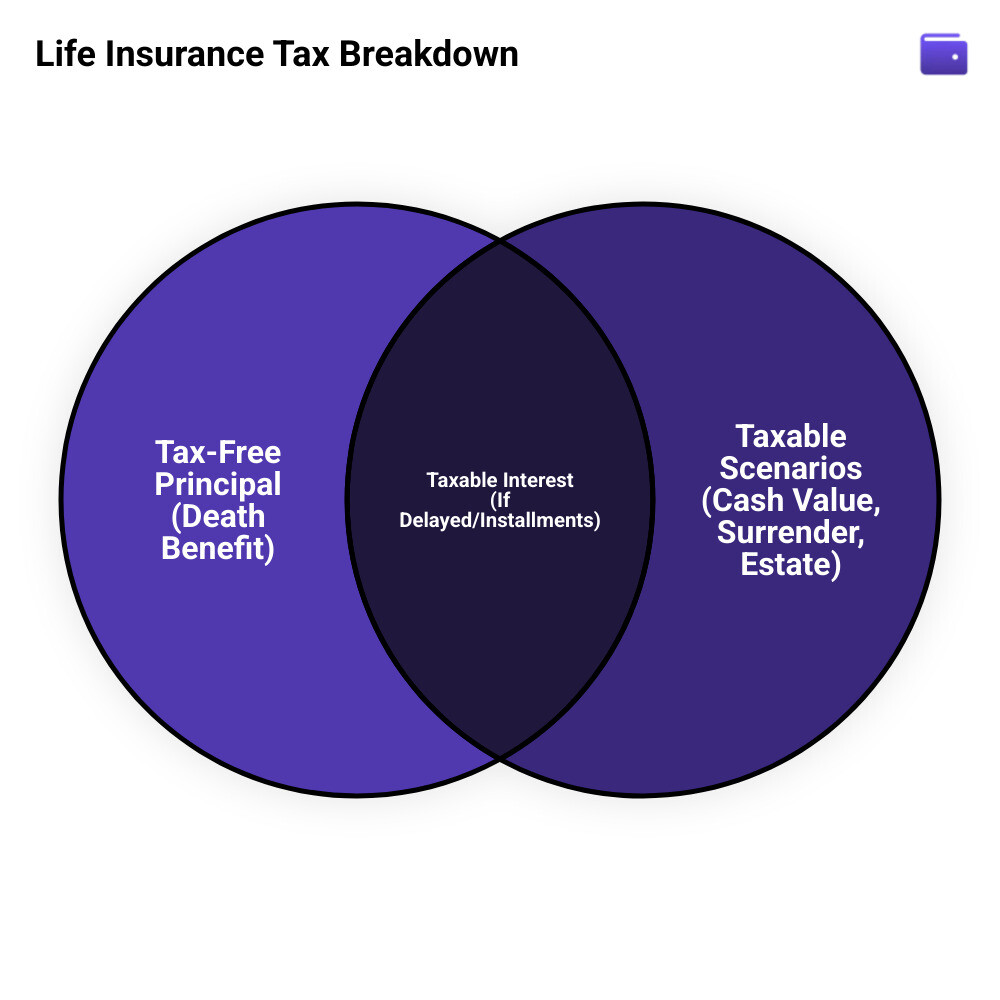
For most Americans, life insurance is a tax-advantaged safe haven. However, the IRS draws a very clear line between the “principal” (the face value of the policy) and “growth” or “interest.” According to IRS guidance on life insurance proceeds, death benefits paid in a lump sum are not included in your gross income. You don’t even have to report them on your tax return in most cases.
But what if you decide to cash out your own policy while you’re still alive? This is called a policy surrender. In this case, the IRS looks at your cost basis—which is essentially the total amount of premiums you’ve paid into the policy. If you surrender a whole life policy and receive $80,000, but you only paid $60,000 in premiums over the years, that $20,000 profit is considered taxable income. To get a definitive answer for your specific situation, the Internal Revenue Service provides an interactive tool to help you determine taxability.
Is Life Insurance Taxable for Beneficiaries?
For beneficiaries, the news is almost always good. The gross income exclusion means that whether you receive $10,000 or $10 million, the federal government generally doesn’t take a cut of the death benefit itself. This is one of the primary reasons is whole life insurance a good investment is a common question; the tax-free nature of the payout offers unparalleled financial security.
By naming specific beneficiaries (like a spouse or child) rather than “the estate,” you also ensure the money bypasses the lengthy and often expensive probate process. This keeps the funds private and puts them in the hands of your loved ones much faster. You can find more detailed insights on how these benefits work at US Life Insurance.
When Interest and Installments Become Taxable
While the death benefit principal is a “freebie” from the IRS, any money that the insurance company earns on top of that principal is fair game for taxation. This usually happens in two ways: delayed payments or installment plans.
| Payout Method | Tax Treatment of Principal | Tax Treatment of Interest |
|---|---|---|
| Lump Sum | Tax-Free | N/A (unless payment is delayed) |
| Installments/Annuity | Tax-Free | Taxable as Ordinary Income |
| Retained Asset Account | Tax-Free | Taxable as Ordinary Income |
If you choose to receive the payout in installments (an annuity), the insurance company holds onto the bulk of the money and pays it out over time. Because they are holding that money, it earns interest. You will receive a Form 1099-INT at the end of the year, and you must report that interest as ordinary income. The same applies to “period-certain” guarantees where a specific amount is guaranteed for a set number of years; the portion representing interest is always taxable.
Estate Taxes and the $13.61 Million Threshold
Now, let’s talk about the “rich person’s tax”—the federal estate tax. For 2026, the federal estate tax exemption is projected to be approximately $13.61 million (following the $13.99 million threshold of 2025). If the total value of your estate—including your house, investments, and life insurance policies—exceeds this limit, the IRS may levy a tax of up to 40% on the excess.
Crucially, life insurance proceeds are included in your estate if you hold any “incidents of ownership” at the time of your death. This means if you had the right to change the beneficiary or borrow against the cash value, the IRS considers that policy yours.
For our friends in Virginia, it is important to note that while Virginia does not currently have a state-level estate or inheritance tax, federal rules still apply. Rulings like 14-112 from Virginia Tax emphasize the importance of following federal guidelines for estate inclusion.
Advanced Tax Scenarios and Mitigation Strategies

As we move into 2026 and 2027, tax laws continue to evolve, especially regarding international beneficiaries and policy transfers. One of the most misunderstood rules is the “Transfer for Value” rule. If you sell your life insurance policy to someone else for cash or something of value, the death benefit may lose its tax-free status. The buyer will eventually owe income tax on the profit (the payout minus what they paid you and the premiums they contributed).
However, there are “living benefits” that remain tax-friendly. Accelerated death benefits—money paid out while the insured is still alive due to a terminal or chronic illness—are generally tax-free under IRC Section 101(g). Similarly, viatical settlements for the terminally ill are typically excluded from federal tax.
For those with international ties, the Foreign Account Tax Compliance Act (FATCA) may require reporting if the policy is issued by a non-U.S. company or if the beneficiary lives abroad. In Virginia, tax commissioners have historically looked at how insurance proceeds interact with state law, as seen in Ruling 14-107, though the primary focus remains on income tax alignment with federal standards.
Is Life Insurance Taxable When Withdrawing Cash Value?
Permanent life insurance (like whole or universal life) builds “cash value” over time. This growth is tax-deferred, meaning you don’t pay taxes on the gains every year as they grow. You can learn more about why life insurance investment cash value growth is such a powerful tool for building wealth.
But what happens when you want to use that money?
- Policy Loans: Generally, taking a loan against your cash value is not taxable, even if the loan amount is more than you paid in premiums. However, if the policy lapses or is surrendered before the loan is paid back, that unpaid loan suddenly becomes taxable income.
- Withdrawals: These are taxed on a “First-In, First-Out” (FIFO) basis. You can withdraw money tax-free up to the amount of premiums you’ve paid (your cost basis). Anything beyond that is taxable.
- MEC Status: If you put too much money into a policy too quickly, it becomes a Modified Endowment Contract (MEC). Once a policy is a MEC, withdrawals are taxed on a “Last-In, First-Out” (LIFO) basis—meaning the taxable gains come out first.
For more on this, check out Aflac’s guide on cash value taxability.
Employer-Provided Coverage and Group Term Limits
Many of us get life insurance through our jobs. It’s a great perk, but it comes with a specific tax rule: the $50,000 limit.
- Under $50,000: The premiums your employer pays are not considered taxable income to you.
- Over $50,000: The “value” of the coverage above $50,000 is considered imputed income. Your employer will calculate this based on IRS “Table I” rates and include it on your W-2. You’ll pay income tax on those premiums, though the death benefit remains tax-free for your beneficiaries.
This is a key consideration when deciding what you need to know about indexed universal or other private policies to supplement your work coverage.
Avoiding Tax Pitfalls with ILITs and Policy Transfers
If you’re worried about your estate exceeding that $13.61 million threshold, there’s a classic strategy: the Irrevocable Life Insurance Trust (ILIT).
By setting up an ILIT to own your policy, you effectively remove the death benefit from your taxable estate. Because the trust owns the policy—not you—you have no “incidents of ownership.” This can save your heirs millions in estate taxes.
You can also use the annual gift tax exclusion (which is $19,000 for 2025 and expected to be similar or slightly higher in 2026) to fund the trust. By gifting the premium money to the trust each year, you reduce your taxable estate while keeping the policy active.
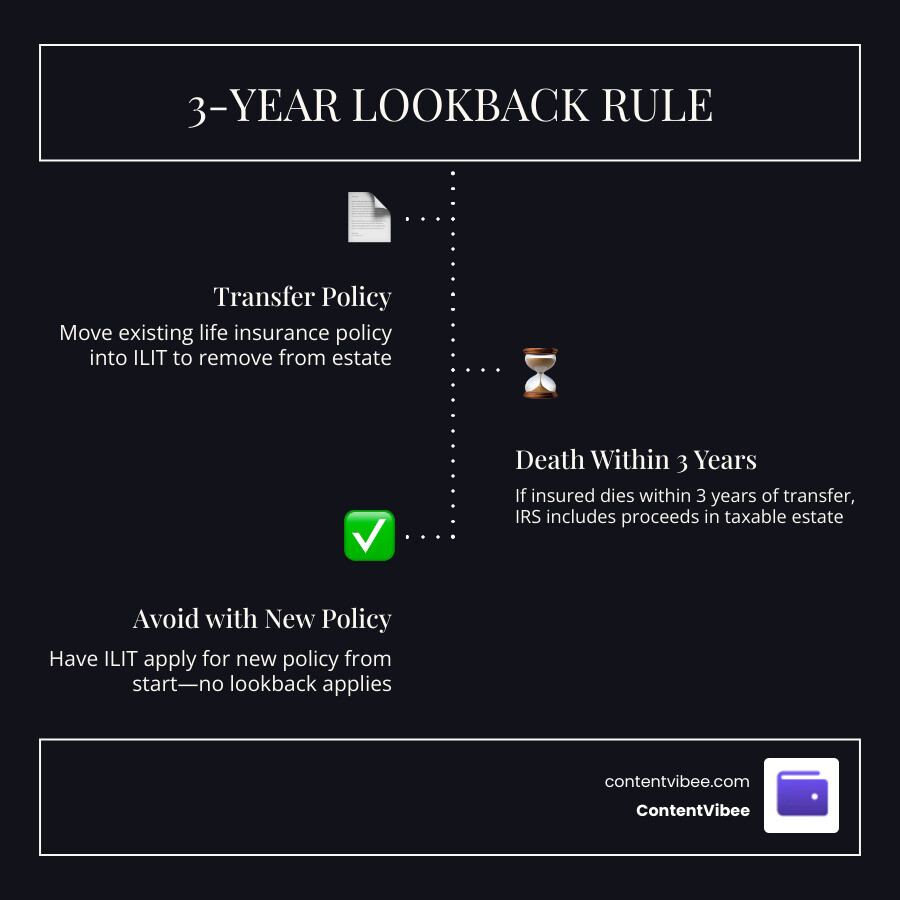
Just be careful of the three-year lookback rule. If you transfer an existing policy into an ILIT and die within three years of the transfer, the IRS will drag that policy back into your estate for tax purposes. It’s always better to have the trust apply for a new policy from the start.
Conclusion
So, is life insurance taxable? In the vast majority of cases, it is one of the most tax-efficient ways to transfer wealth and provide for your family. As long as you name specific beneficiaries, keep an eye on your cash value withdrawals, and understand the limits of employer-provided plans, you can keep the IRS’s hands off your legacy.
At ContentVibee, we believe in making smart money moves easy. Whether you’re looking into real estate or fine-tuning your insurance portfolio, staying informed is the first step toward financial freedom. If you’re dealing with a complex estate or a high-value policy, we always recommend chatting with a tax professional in Virginia to ensure you’re fully compliant with the latest 2026 regulations.
For more tips on protecting your financial future, explore our insurance category.


