


What Does Health Insurance Actually Cost Per Month for One Person?
How much is health insurance per month for one person depends on your age, location, plan type, and income — but here are the key 2026 numbers at a glance:
| Plan Type | Average Monthly Cost (Age 40, Before Subsidies) |
|---|---|
| Bronze | $330 – $380 |
| Silver | $621 – $752 |
| Gold | $580 – $660 |
| Platinum | $740 – $1,012 |
| Employer-Sponsored (employee share) | $114 – $190 |
| After subsidies (eligible individuals) | As low as $0 – $82 |
Note: Costs vary significantly by state, age, and income. A 21-year-old typically pays $290–$360/month, while a 60-year-old may pay $870–$980/month for the same plan.
Health insurance is one of the biggest monthly expenses most people face — and in 2026, it got noticeably more expensive.
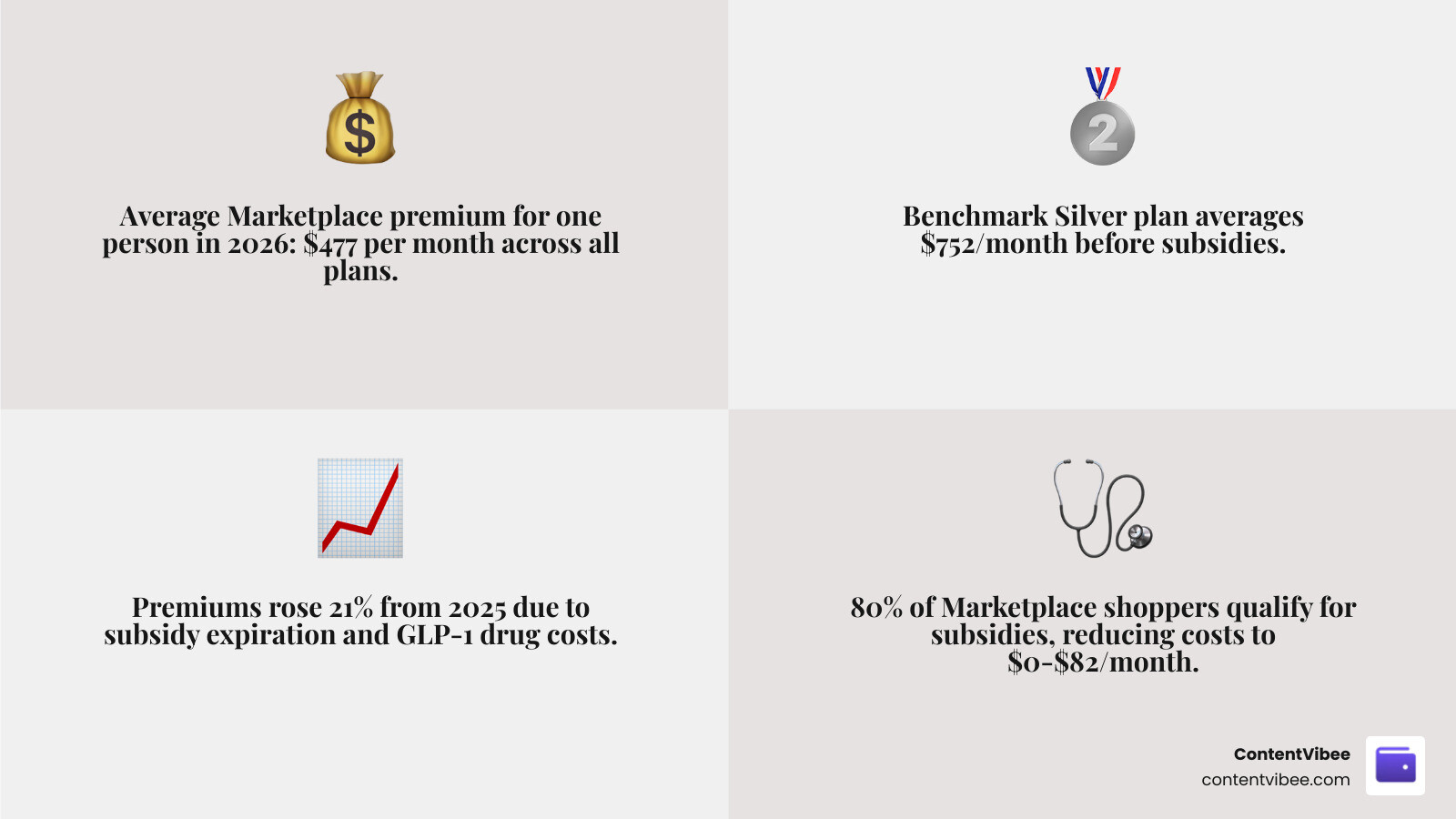
Marketplace premiums rose roughly 21% from 2025 to 2026, the largest single-year jump since the Affordable Care Act (ACA) was introduced. Two big reasons: the expiration of enhanced federal subsidies at the end of 2025, and rising costs for specialty drugs like GLP-1 medications (think Ozempic and Wegovy) driving up insurer costs across the board.
For most people without employer coverage, a Silver plan now averages $752 per month before any subsidies. That’s a number that can feel overwhelming — especially if you’re budgeting carefully.
But here’s the good news: 8 out of 10 people who shop on the ACA Marketplace qualify for financial help to lower that number. And for those with lower incomes, subsidies can cut costs to as little as $82 — or even $0 — per month.
This guide breaks down exactly what you can expect to pay, what drives those costs, and how to bring them down.
How Much is Health Insurance Per Month for One Person in 2026?
As we navigate through May 2026, we’ve seen a significant shift in the insurance landscape. If you are shopping for a plan on the ACA Marketplace (HealthCare.gov or your state exchange), the average monthly health insurance cost for one person is approximately $477 across all plan types. However, if you’re looking specifically at the popular “benchmark” Silver plans, that average jumps to $752 per month before any tax credits are applied.
Why the sudden “price shock”? Beyond the 21% national average increase, we are seeing the effects of “adverse selection.” As prices rise, some healthier individuals have dropped traditional coverage, leaving a riskier pool of enrollees for insurance companies to cover. This, combined with medical inflation that has seen care costs more than double since 2000, keeps premiums on an upward trajectory.
It’s also important to distinguish between Marketplace plans and employer-sponsored insurance. If you’re lucky enough to have a job that offers health benefits, your “sticker price” is much lower. In 2026, the average employee contribution for individual coverage ranges from $130 to $190 per month, while the employer picks up the rest of the tab (which usually totals over $600 per month).
For those living in high-cost areas, the numbers can be even more startling. For example, while the national average is one thing, residents in some regions are seeing premiums that rival a small mortgage payment. You can find more specific details on regional variations in our guide to Everything You Need To Know About Health Insurance Cost Per Month In California/.
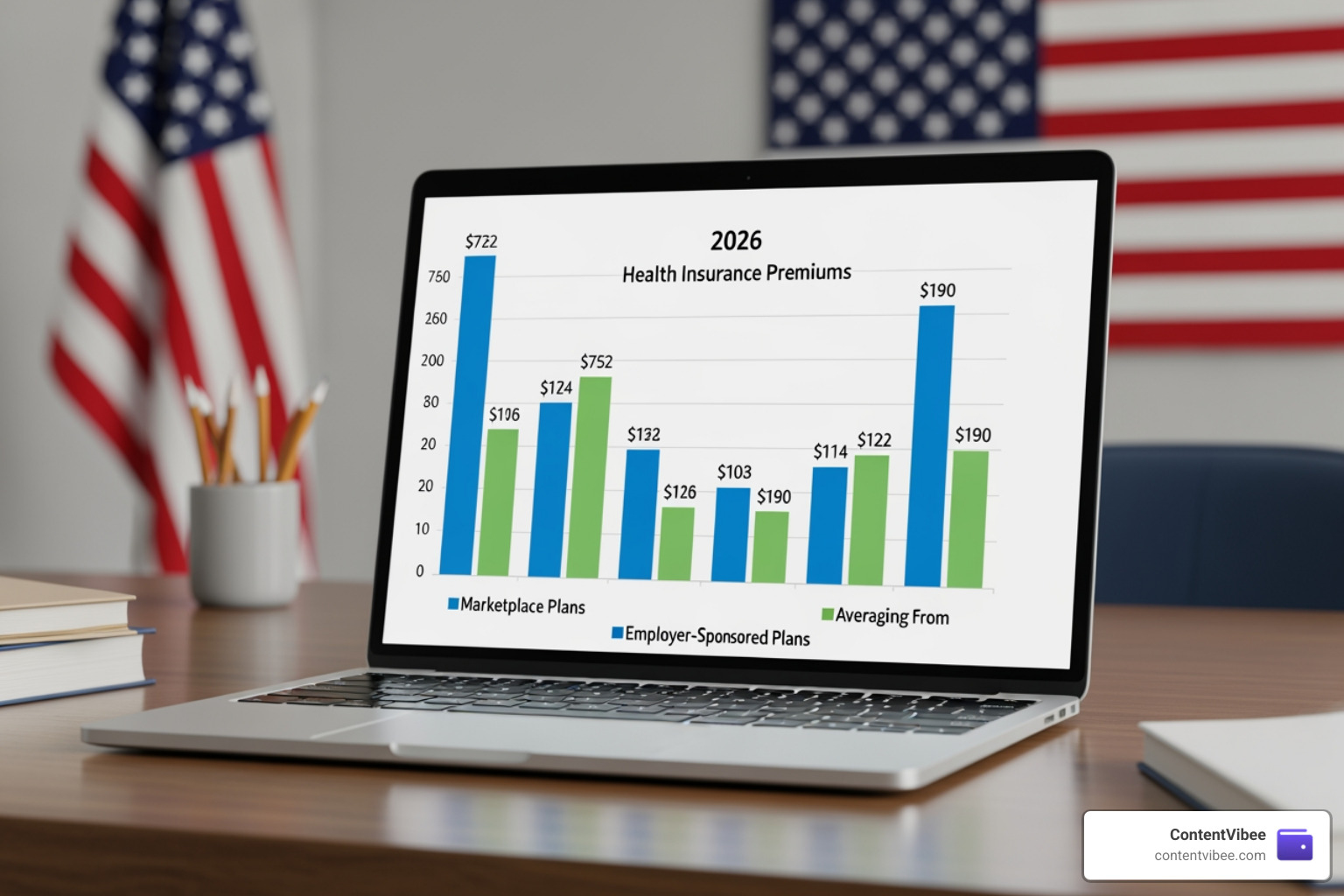
Average Monthly Cost of Health Insurance for One Person by Age
Age is one of the few factors that insurers are legally allowed to use when setting your rates. Under ACA rules, insurers can charge older adults up to three times more than younger individuals for the exact same policy.
Here is how the 2026 pre-subsidy monthly premiums break down by age group:
- Age 21: $290 – $360
- Age 30: $340 – $410
- Age 40: $410 – $490
- Age 50: $650 – $780
- Age 60: $870 – $980
As we get older, our healthcare needs typically increase, and the premiums reflect that risk. For those approaching retirement, the jump from age 50 to 60 can be a major hurdle in financial planning. If you are helping a family member navigate these later years, check out Everything You Need To Know About Health Insurance Plans For Senior Citizens/ for more specialized advice.
Comparing Metal Tiers and Plan Types
When you shop for insurance, you’ll encounter the “metal tiers”: Bronze, Silver, Gold, and Platinum. These don’t refer to the quality of care, but rather how you and the insurance company split the costs.
| Metal Tier | What It Pays | What You Pay | Best For… |
|---|---|---|---|
| Bronze | 60% | 40% | Healthy people who want a “safety net” and low premiums. |
| Silver | 70% | 30% | Moderate users; only tier that qualifies for Cost-Sharing Reductions. |
| Gold | 80% | 20% | People who see the doctor often or have chronic conditions. |
| Platinum | 90% | 10% | High medical needs; very high premiums but very low out-of-pocket costs. |
Beyond the tiers, the plan type also dictates how much is health insurance per month for one person.
- HMO (Health Maintenance Organization): Usually the cheapest. You must stay in-network and need referrals for specialists.
- PPO (Preferred Provider Organization): More expensive, but you can see out-of-network doctors and don’t need referrals.
- EPO (Exclusive Provider Organization): A middle ground; no out-of-network coverage, but usually no referral needed for specialists.
Choosing between these requires a balance. A Bronze HMO might save you $200 a month in premiums, but a single ER visit could cost you $7,500 out of pocket due to a high deductible. For a deeper dive into these trade-offs, read A Comprehensive Guide To Health Insurance Plans Comparison/.
State-by-State Variations in Monthly Premiums
Location is everything. Your ZIP code determines which insurance carriers are available and what the local hospitals charge.
As a company based in Virginia, we see how local regulations impact your wallet. Virginia’s insurance marketplace has generally been more affordable than the national average. In 2026, the average monthly premium for a 40-year-old in Virginia is approximately $390, which is significantly lower than the national Silver plan average.
Compare that to other states:
- New Hampshire: Often the lowest in the nation, averaging around $325.
- Maryland: Also very competitive at approximately $365.
- Vermont: On the high end, with premiums reaching $1,224 for a Silver plan.
State-level reinsurance programs and the number of competing insurers in a specific county are the primary drivers of these differences. In Virginia, the presence of major carriers like Anthem and the state-run Virginia’s Insurance Marketplace helps keep options available for residents.
Strategies to Lower Your Monthly Health Insurance Expenses
If the numbers above gave you a bit of a fright, don’t panic. Very few people actually pay the full “sticker price” for health insurance. There are several ways to shave hundreds of dollars off your monthly bill.

Maximizing Subsidies and Premium Tax Credits
The most powerful tool for lowering your costs is the Premium Tax Credit. These are subsidies provided by the federal government to help you pay your monthly premium.
Who qualifies in 2026? Generally, if your income falls between 100% and 400% of the Federal Poverty Level (FPL), you are eligible. For a single person in 2026, that income range is roughly $15,650 to $62,600.
If you earn 150% of the FPL, you might find a Silver plan for as little as $82 per month, regardless of whether you are 21 or 40. The government pays the difference directly to the insurance company.
Pro-Tip: If you qualify for subsidies, look specifically at Silver plans. They are the only plans that offer “Cost-Sharing Reductions” (CSRs). These extra discounts lower your deductible and copays, making the plan act like a Gold or Platinum plan for a Silver price. This is especially vital for the self-employed who have to manage their own benefits.
If you’re ready to see what you qualify for, you can learn more about the enrollment process in The Easiest Way To Enroll In Health Insurance/.
Using HSAs to Reduce Health Insurance Cost Per Month for One Person
If you are generally healthy and don’t visit the doctor often, a High-Deductible Health Plan (HDHP) paired with a Health Savings Account (HSA) is a “smart money” move.
HDHPs have the lowest monthly premiums. In exchange, you pay more out of pocket before insurance kicks in. However, the HSA allows you to:
- Put money in tax-free (lowering your taxable income).
- Grow the money tax-free through investments.
- Take the money out tax-free for medical expenses.
It’s a triple tax benefit that we highly recommend for young professionals and healthy individuals. By choosing a Bronze HDHP, you might save $150 a month in premiums, which you can then deposit directly into your HSA. Over time, this builds a “medical nest egg” that stays with you even if you change jobs.
To see if the math works for your specific budget, try our Fsa Vs Hsa Calculator/.
Conclusion: Finding the Right Balance for Your Budget
Answering the question of how much is health insurance per month for one person is just the first step. The real goal is finding a plan that offers financial protection without draining your bank account.
At ContentVibee, we’ve seen that the “cheapest” plan is rarely the best value. A $300 Bronze plan with a $9,000 deductible might look good on paper, but if you have an accident, that $9,000 bill could be devastating. Conversely, paying $1,000 a month for a Platinum plan when you only see the doctor once a year is simply leaving money on the table.
We recommend an annual review of your coverage. Since premiums and subsidies change every year (as we saw with the 21% jump in 2026), what worked last year might not be the best deal today. Check your network adequacy to ensure your favorite doctors are still included, and always model your “total annual cost” (Premiums + Expected Out-of-Pocket) rather than just looking at the monthly bill.
For more tips on managing your household budget and navigating personal finance, explore our more info about personal finance and real estate services. Stay informed, stay covered, and keep your budget on track!


