


Why a Semi Truck Accident Attorney in Arkansas Can Protect Your Claim
A semi truck accident attorney Arkansas can help protect critical evidence, identify every party that may be responsible, and pursue compensation before key deadlines or records disappear.
In 2024, Arkansas reported 2,614 crashes involving large trucks. Those crashes included 66 fatal wrecks and 71 deaths. Heavy freight traffic on corridors such as I-40 and I-30 means a serious collision can happen quickly – and the legal issues afterward can become complex just as fast.
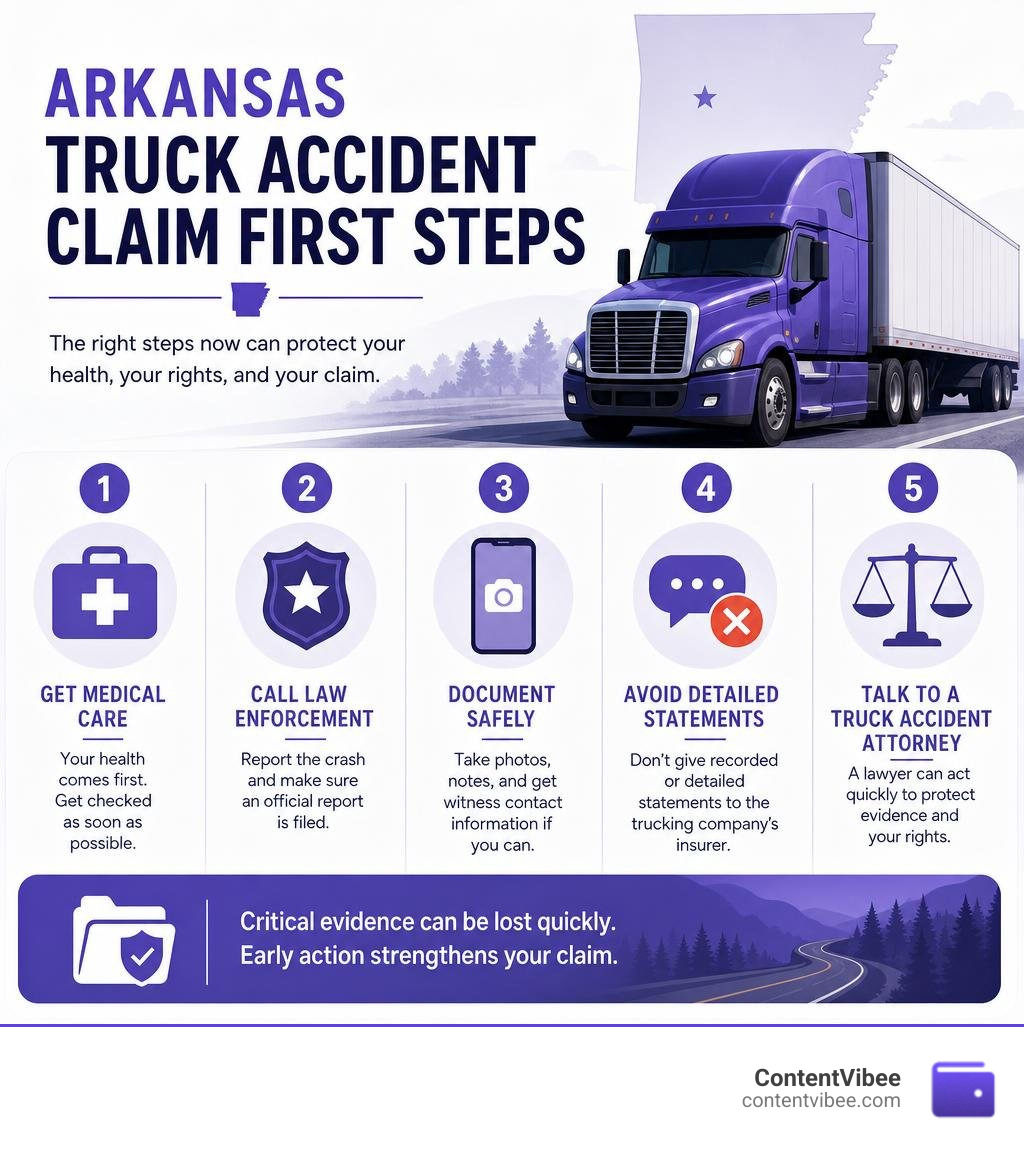
Quick answer: After a truck crash, get medical care, call law enforcement, document what you safely can, and avoid detailed or recorded statements to the trucking company’s insurer. A lawyer with commercial-truck experience can move quickly to seek preservation of records such as electronic logging device data, onboard event data, maintenance files, and driver records.
Truck cases are different from ordinary car wreck claims. A crash may involve the driver, the motor carrier, a cargo-loading company, a repair vendor, or another business. Arkansas law also applies a modified comparative fault rule, meaning an injured person generally must be less than 50% at fault to recover damages.
This guide explains the steps, deadlines, evidence, and Arkansas-specific rules that can affect your rights after a semi-truck collision.
Immediate Actions to Preserve Your Claim After an Arkansas Truck Wreck
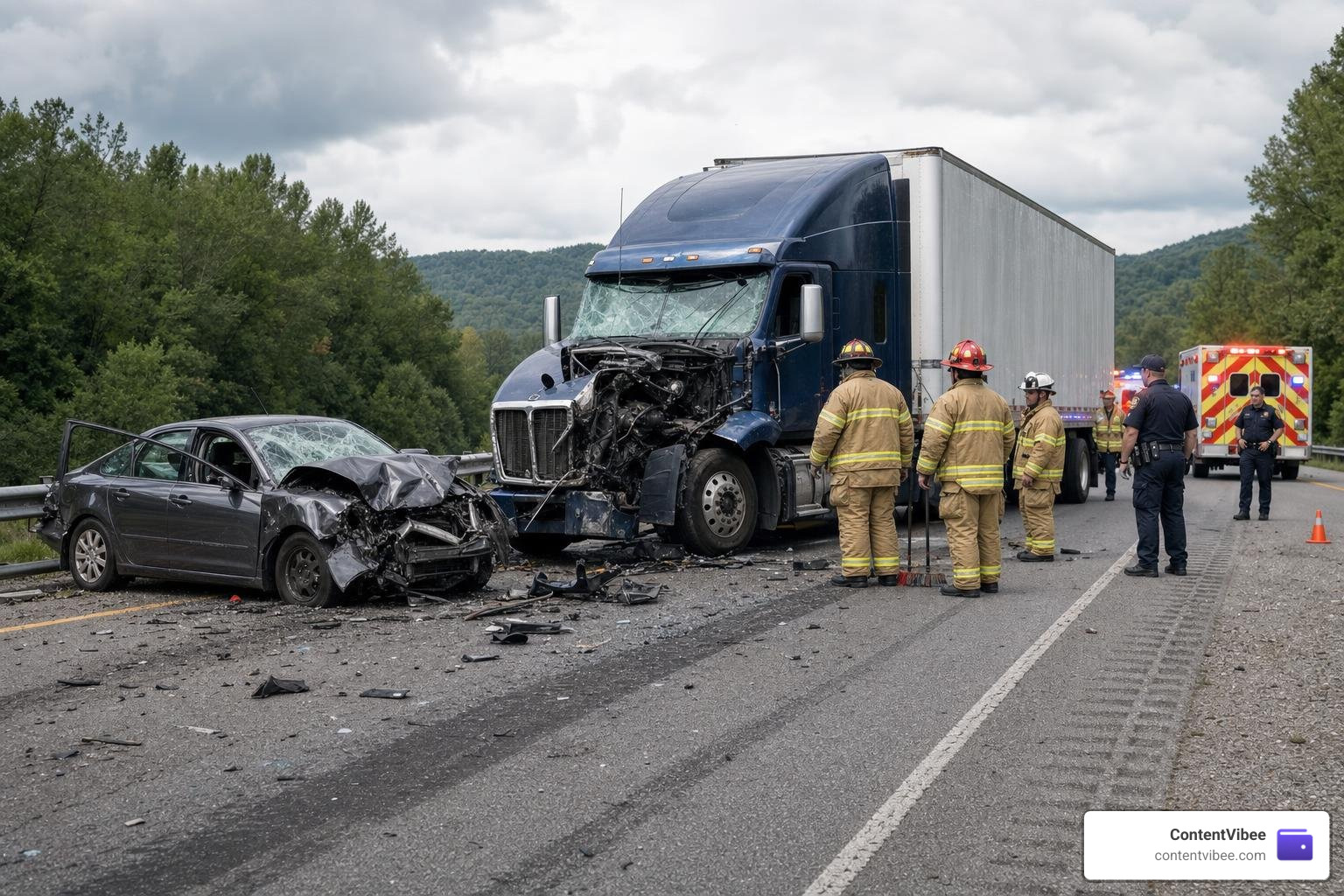
When an 80,000-pound commercial tractor-trailer collides with a passenger vehicle on busy state freight routes like I-40, I-30, I-49, or the heavily congested I-630/I-430 interchange in Little Rock, the results are often life-altering. The actions you take immediately following a crash are vital to protecting your health and your legal rights.
Here are the essential steps you should take at the scene and in the days immediately following a wreck:
- Ensure Scene Safety and Call 911: Prioritize your physical safety. If possible, remain in a safe location until emergency personnel and the police arrive.
- Obtain Immediate Medical Attention: Seek emergency medical care immediately, even if you feel fine on scene. Internal injuries, whiplash, soft tissue damage, or traumatic brain injuries may not present clear symptoms right away.
- Report the Crash to Police: Ensure the responding Arkansas Highway Police or local police officer documents the crash and drafts an official police crash report.
- Gather Photographic and Scene Evidence: Take photographs of all damaged vehicles, road debris, skid marks, traffic signs, weather conditions, and visible injuries.
- Collect Information: Exchange names, contact details, driver’s license numbers, and insurance info with the truck driver. Note down the trucking company’s name, USDOT number, and license plate numbers for both the tractor and trailer. Collect contact details from any eyewitnesses on scene.
- Do Not Remove Scene Items: Leave all vehicle parts and personal items in place until officers have inspected and documented the scene.
- Avoid Admitting Fault: Keep conversations strictly factual when talking to officers. Do not apologize or speculate on crash causes.
Role of a Semi Truck Accident Attorney Arkansas in Securing Evidence
Commercial trucking companies often send risk management teams and legal representatives to severe crash scenes within hours. Their primary goal is to gather information and limit their liability. Having an experienced semi truck accident attorney Arkansas on your side levels the playing field.
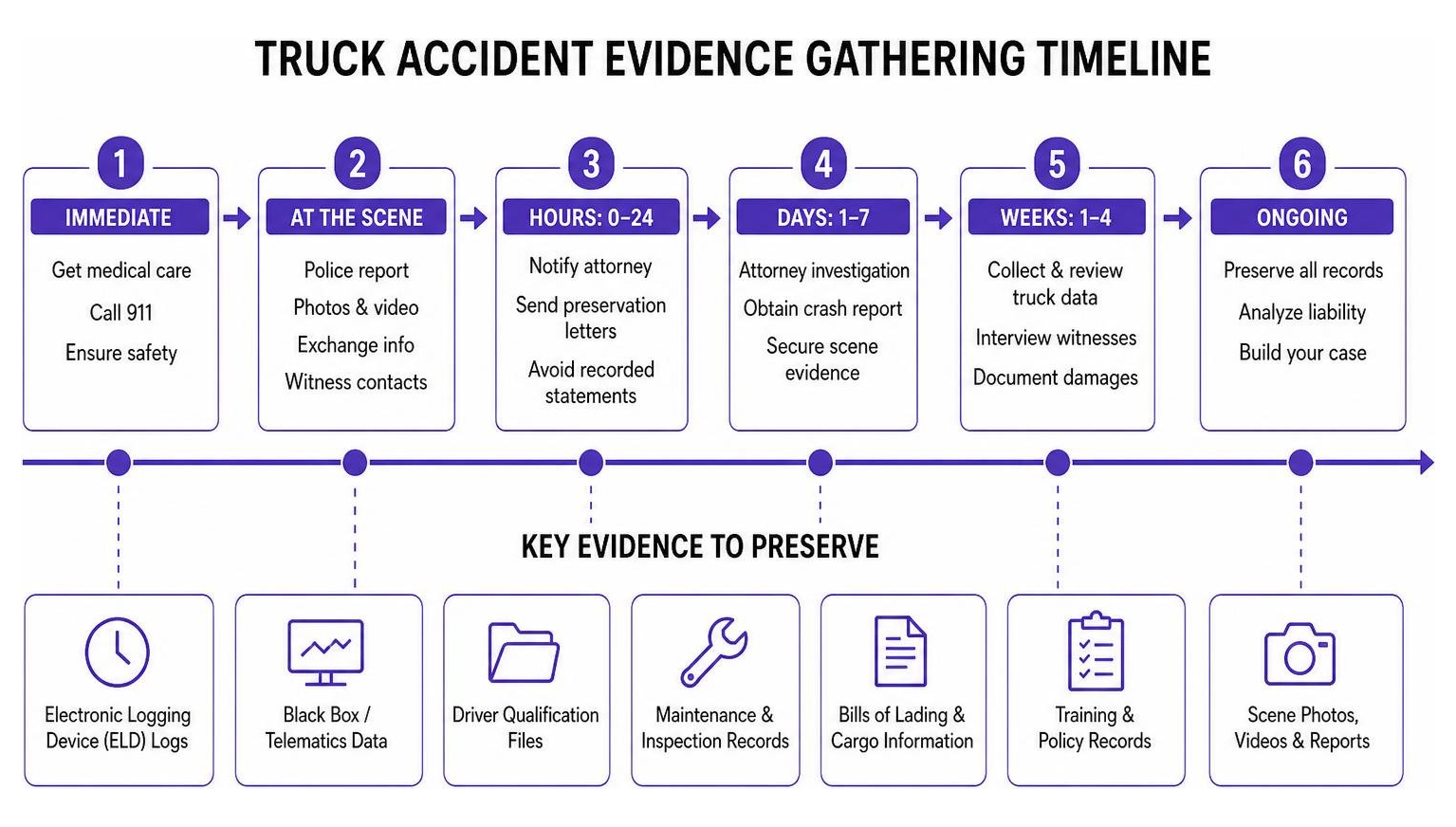
One of the first actions an attorney takes is issuing formal spoliation demand letters to the motor carrier. These legal notices mandate that the trucking company preserve essential physical and digital evidence, such as:
- Electronic Logging Device (ELD) Logs: ELD records track the driver’s service hours, driving time, mandatory rest breaks, and potential hours-of-service (HOS) violations.
- Black Box / Telematics Data: Commercial trucks feature onboard event data recorders that log hard braking, speed immediately prior to impact, throttle position, and steering angles.
- Driver Qualification Files: These files include driver background checks, medical certificates, drug and alcohol test results, and prior traffic violations.
- Maintenance and Inspection Records: Files documenting brake checks, tire wear, steering mechanism repairs, and overall vehicle roadworthiness.
Without formal intervention, black box data can be overwritten in weeks, and ELD records are routinely deleted after set retention periods. To learn more about how swift legal action protects your case, read our guide on 6 insider tips for truck accident claim success.
Avoiding Mistakes When Dealing with Insurance Adjusters
In the aftermath of a wreck, insurance adjusters for the motor carrier may contact you quickly. They often sound warm and friendly, appearing eager to assist with your initial medical bills. However, their main goal is to reduce the insurance carrier’s financial payouts.
To avoid compromising your claim:
- Refuse Recorded Statements: You are not legally obligated to give a recorded statement to the trucking company’s insurer without your attorney present.
- Avoid Speculating or Admitting Fault: Never apologize, guess your driving speed, or offer opinions on what occurred.
- Do Not Discuss Injury Extent Early: Refrain from stating that you are “fine” or “recovering well.” The full financial impact of catastrophic injuries takes time to diagnose accurately.
- Reject Fast Lowball Settlement Offers: Initial settlement offers rarely cover long-term rehabilitation, lost future earnings, or pain and suffering.
- Direct Communication to Your Lawyer: Request that all adjusters direct their inquiries directly to your attorney.
Understanding Arkansas Laws and Regulations Governing Commercial Trucks
Commercial trucking operations in Arkansas fall under a combination of federal and state regulatory bodies. While interstate commercial carriers are subject to federal rules established by the Federal Motor Carrier Safety Administration (FMCSA), intrastate transport operations within state borders are overseen by the Arkansas Department of Transportation (ARDOT) and enforced by the Arkansas Highway Police.
| Regulatory Area | Federal FMCSA Regulations | Arkansas State Trucking Statutes |
|---|---|---|
| Primary Oversight | Interstate Commerce (FMCSA) | Intrastate Traffic (ARDOT & Highway Police) |
| Mandatory Following Distance | Must maintain safe, reasonable distance | Mandates explicit 200-foot following rule outside business/residential zones (Ark. Code § 27-51-305) |
| Statute of Limitations | Varies by state jurisdiction | Strict 3-Year Deadline (Ark. Code Ann. § 16-56-105) |
| Fault Allocation Standard | Dependent on forum state laws | Modified Comparative Fault with 50% Bar Threshold |
Arkansas Modified Comparative Fault Rule and Statute of Limitations
Navigating an injury claim requires understanding how state fault rules impact your potential recovery. Under Arkansas law, financial recovery is governed by a modified comparative fault rule with a 50 percent threshold.
Under this rule, you can seek financial damages from other negligent parties as long as you are determined to be less than 50% at fault for the crash. However, your total financial recovery will be reduced proportionally by your percentage of assigned fault. For instance, if a court determines you were 10% responsible for a collision and your total damages equal $100,000, your final award will be reduced by 10% to $90,000. If you are found to be 50% or more at fault, you are legally barred from recovering any compensation.
In addition, Arkansas sets a strict timeline for filing personal injury claims. Under Ark. Code Ann. § 16-56-105, you generally have three years from the date of the accident to file a personal injury lawsuit. Missing this deadline usually forfeits your right to seek legal recovery in court.
Arkansas Specific Statutes and Mandatory Following Distances
Arkansas maintains specific traffic safety statutes tailored to heavy commercial vehicles. Under Arkansas Code § 27-51-305, motor trucks or motor vehicles drawing another vehicle outside of business or residential districts are legally required to maintain a minimum following distance of 200 feet from any truck traveling in front of them.
This 200-foot following rule gives heavy trucks sufficient braking distance to stop safely. Demonstrating that a truck driver violated this specific state statutory duty provides compelling evidence of driver negligence in personal injury litigation.
Why You Need a Semi Truck Accident Attorney Arkansas to Identify Liable Parties

Commercial truck wrecks differ significantly from passenger car collisions because liability rarely stops with the truck driver. Complex supply chains and commercial transportation contracts mean multiple entities can share legal liability.
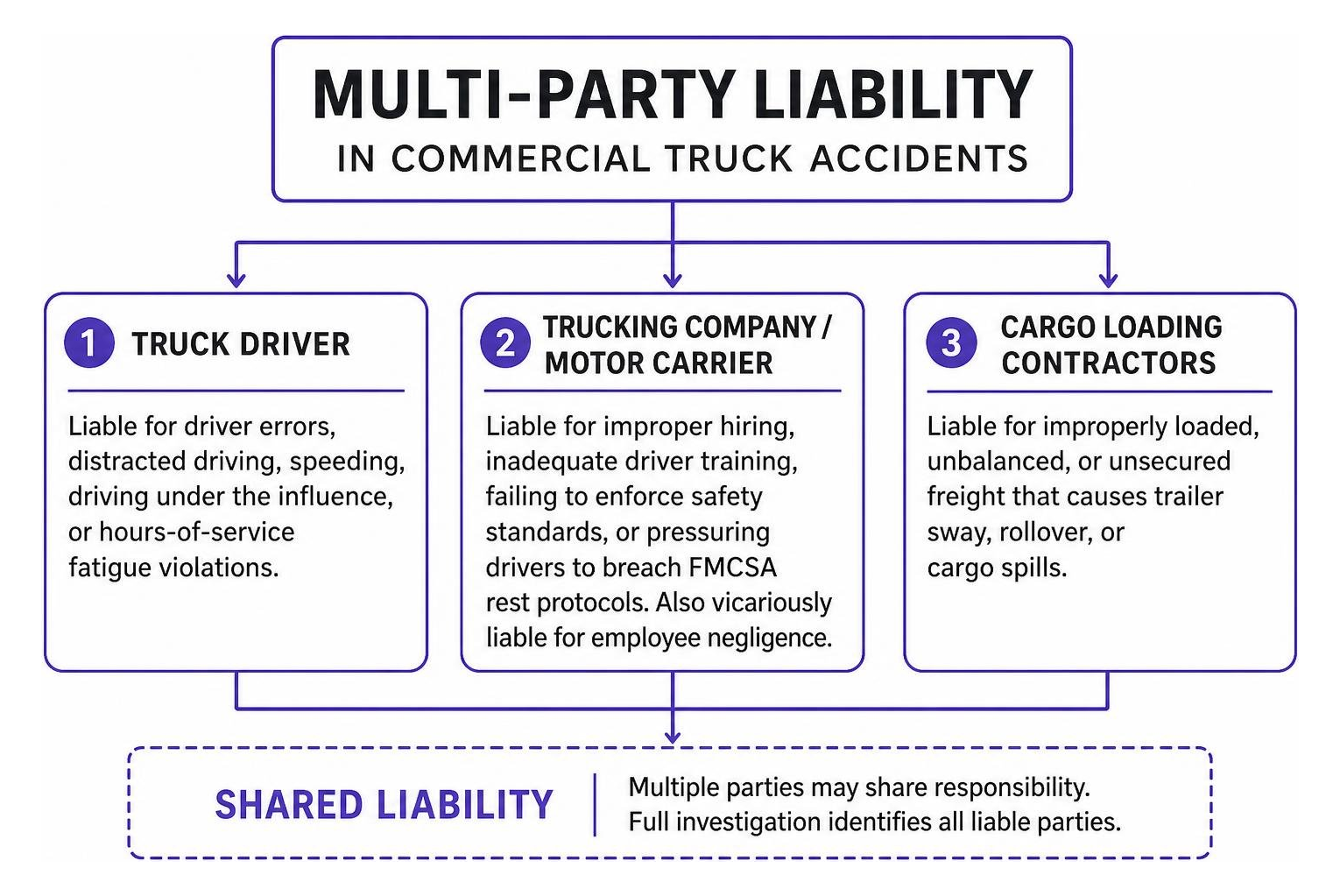
A comprehensive investigation by a semi truck accident attorney Arkansas helps identify all potential defendants, including:
- The Commercial Truck Driver: Liable for driver errors, distracted driving, speeding, driving under the influence, or hours-of-service fatigue violations.
- The Trucking Company / Motor Carrier: Held directly liable for improper hiring, inadequate driver training, failing to enforce safety standards, or pressuring drivers to breach FMCSA rest protocols. Carriers can also be held vicariously liable for employee negligence.
- Cargo Loading Contractors: Third-party logistics firms responsible for improperly loaded, unbalanced, or unsecured freight that causes trailer sway, rollover, or cargo spills.
- Maintenance and Repair Vendors: Mechanics or service companies that fail to maintain critical systems, perform required safety inspections, or fix known brake, tire, or steering faults.
- Parts and Component Manufacturers: Companies that manufacture defective tires, faulty brake assemblies, or malfunctioning hitches.
Identifying every responsible party helps ensure adequate insurance coverage is available to address your full medical and financial losses. For detailed advice on selecting qualified counsel, review our guide on everything you need to know about choosing a truck accident lawyer.
How a Semi Truck Accident Attorney Arkansas Evaluates Your Case Worth
Calculating the full financial value of a commercial truck claim requires analyzing both economic and non-economic damages. Because heavy truck crashes frequently cause severe injuries, case values often reflect substantial past and future financial impacts.
Economic and non-economic damages evaluated include:
- Past and Future Medical Expenses: Hospitalization, emergency surgery, intensive care, physical therapy, prescription medication, and ongoing medical care.
- Lifetime Medical and Life Care Plans: Lifetime care planning, home modifications, and specialized medical assistance for catastrophic injuries like traumatic brain injury (TBI), paralysis, spinal cord damage, or disfigurement.
- Lost Wages and Earned Income: Income lost during recovery from missed work.
- Loss of Future Earning Capacity: Compensation for diminished future income potential if injuries prevent a return to your prior occupation.
- Non-Economic Damages: Pain and suffering, emotional distress, loss of enjoyment of life, physical impairment, and loss of consortium.
Experienced legal teams work alongside medical experts, vocational specialists, and economists to build a detailed valuation of your long-term losses. To compare firm capabilities and client feedback, visit our resource on finding top semi truck accident legal reviews.
Recovering Full Compensation and Navigating Claim Timelines
Resolving a commercial truck claim involves an extensive investigation, thorough damage documentation, formal negotiations, and, when necessary, trial preparation.
Throughout this process, medical providers and health insurance carriers may assert liens against your prospective recovery to recoup money paid for your care. Knowledgeable attorneys negotiate directly with lienholders to reduce health insurance reimbursement demands, keeping more of the settlement proceeds in your hands.
Most commercial truck attorneys operate on a contingency fee basis. Under this structure, you pay no upfront legal fees or out-of-pocket expenses. Attorney fees are paid as an agreed-upon percentage of the financial recovery only after your case is successfully won or settled.
Factors That Impact How Long Your Truck Accident Claim Takes
Settlement timelines vary based on the specific facts of each case. Straightforward claims with clear liability can resolve in several months, while complex matters involving severe injuries can take a year or longer.
Key timeline factors include:
- Duration of Medical Treatment: It is critical to reach Maximum Medical Improvement (MMI) before finalizing a claim, ensuring all long-term medical needs are fully understood.
- Complexity of Evidence Gathering: Downloading black box data, analyzing ELD logs, and conducting expert accident reconstructions takes time.
- Number of Liable Defendants: Coordinating with multiple corporate defendants and their separate insurance carriers adds time to negotiations.
- Disputed Liability or Fault: If insurance companies dispute fault or invoke modified comparative negligence rules, cases often proceed to formal litigation and pre-trial discovery.
Frequently Asked Questions About Arkansas Truck Wrecks
What is the statute of limitations for a semi-truck accident in Arkansas?
In Arkansas, under Ark. Code Ann. § 16-56-105, the statute of limitations for filing a personal injury lawsuit following a semi-truck crash is three years from the date of the accident. However, critical digital evidence like ELD logs and black box telematics can be routinely overwritten within weeks, making it vital to act quickly long before formal legal deadlines pass.
Can I recover compensation if I was partially at fault for the accident?
Yes. Arkansas uses a 50 percent modified comparative fault rule. You can recover compensation as long as you are determined to be less than 50% at fault for the collision. Your final recovery payout will be reduced in proportion to your percentage of fault. If you are found 50% or more responsible, you cannot recover damages under state law.
Who can be held liable in an Arkansas commercial truck collision?
Multiple parties can share legal responsibility in a commercial truck wreck, including:
- The commercial truck driver
- The trucking company or motor carrier
- Cargo loading vendors
- Maintenance and vehicle inspection providers
- Parts and equipment manufacturers
Conclusion
A commercial truck collision on major state corridors like I-40 or I-30 can turn your life upside down in seconds. Navigating complex state and federal regulations, tracking down critical evidence before it disappears, and fighting against corporate legal teams requires clear guidance and aggressive representation. Protecting your rights starts with taking early action to preserve digital evidence, secure witness accounts, and calculate the full value of your injuries.
At ContentVibee, we are committed to providing you with clear legal guides and practical financial resources so you can make confident, informed decisions. For a deeper look into selecting the right legal advocate for your needs, read our analysis on why semi truck accident lawyers are a top choice and explore top rated semi truck accident attorneys today.


