


What Happens After a Car Accident? Why Finding the Right Lawyer Matters
Knowing how to find a lawyer for car accident cases can make the difference between a fair settlement and getting shortchanged by an insurance company.
Here’s a quick overview of how to find a car accident lawyer:
- Ask for referrals from friends, family, or coworkers who’ve used a car accident attorney
- Search legal directories like Avvo, FindLaw, or your state bar association’s website
- Check credentials — verify the lawyer is licensed and has experience with your type of case
- Read reviews on Google, Avvo, or Yelp, focusing on cases similar to yours
- Schedule free consultations with 2-3 attorneys before deciding
- Confirm the fee structure — most car accident lawyers work on contingency (no win, no fee)
Car accidents happen at a staggering scale in the United States. Every year, more than 38,000 people are killed and 4.4 million are seriously injured in crashes nationwide. In New York City alone, there are over 250 accidents every single day — that’s more than 97,000 crashes recorded in 2021, resulting in over 31,000 injuries.
The financial and emotional toll hits fast. Medical bills pile up. Your car is damaged. You may miss work. And then an insurance adjuster calls — often trying to settle your claim quickly and cheaply.
That’s exactly when having the right legal advocate in your corner matters most.
Whether you were seriously injured or just dealing with property damage, this guide walks you through every step — from the scene of the accident to finding qualified legal help you can actually afford.
How to find a lawyer for car accident terms you need:
Immediate Steps to Protect Your Legal Claim
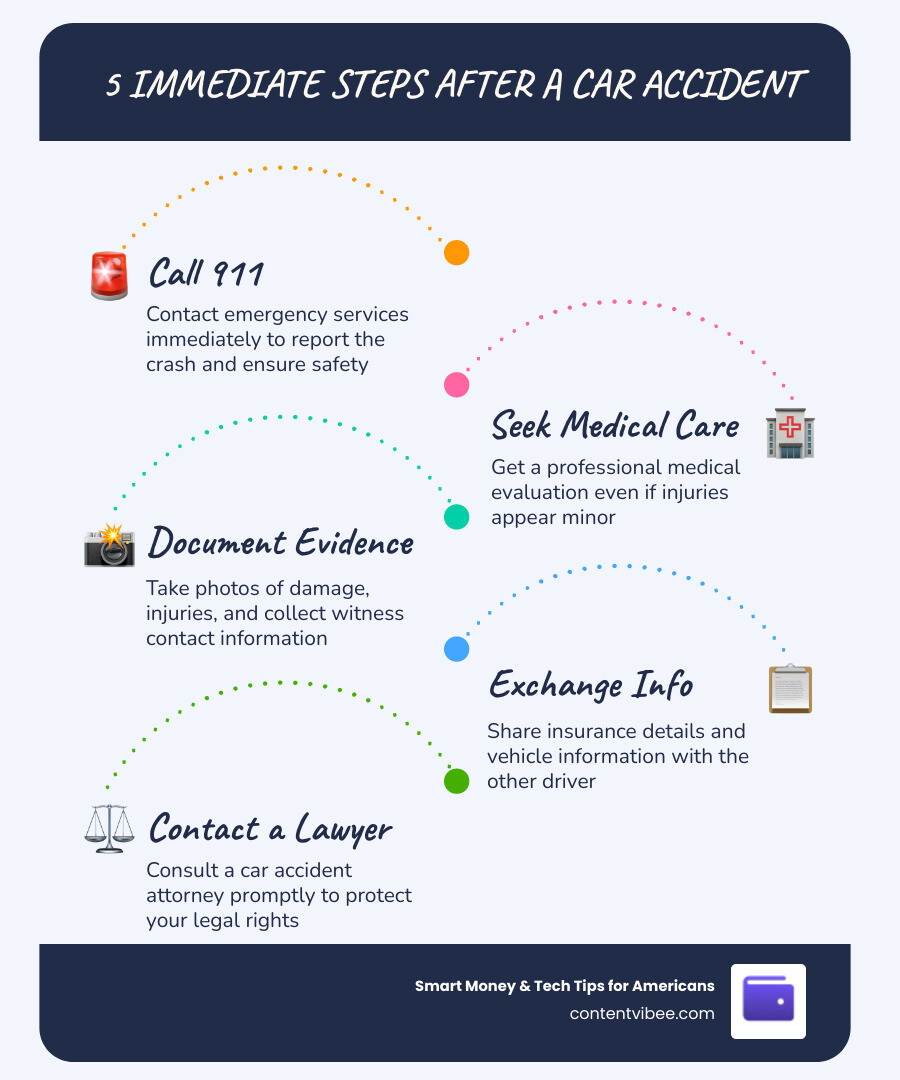
In the chaotic moments after a collision, your adrenaline is pumping, and your brain might feel like a browser with 50 tabs open. However, the actions we take in these first few minutes can dictate the success of a future legal claim.
First and foremost: Call 911. Even if the accident seems minor, a police report is a foundational piece of evidence. In states like California, having an official record of the scene, the parties involved, and the officer’s initial observations is vital. When the officer arrives, stick to the facts. Don’t apologize—even if you’re just being polite—as insurance companies often twist “I’m sorry” into an admission of fault.
Next, seek medical attention immediately. Even if you feel “fine,” many injuries like whiplash or internal bruising don’t manifest until the adrenaline wears off. Establishing a medical record on the day of the accident links your injuries directly to the crash.
While waiting for the police, gather your own evidence. Use your smartphone to take photos of:
- Vehicle damage (both yours and the other party’s)
- The position of the cars on the road
- Skid marks or debris
- Traffic signs and signals
- The other driver’s license and insurance card
If there are witnesses, grab their contact information. A neutral third party’s statement can be the “smoking gun” that proves you weren’t at fault. We also recommend checking for dashcam footage—yours or from nearby businesses—as video evidence is incredibly hard for insurance companies to dispute.
Documenting Property Damage and Injuries
Building a strong case is all about the “paper trail.” We know, filing paperwork isn’t exactly a fun weekend activity, but it’s how we ensure you get every penny you’re owed.
Start a dedicated folder (physical or digital) for the following:
- Medical Documentation: Keep every bill, discharge summary, and prescription receipt.
- Repair Estimates: Get at least two quotes for your vehicle repairs to show the true cost of the damage.
- Lost Wage Logs: If you had to miss work for doctor appointments or recovery, track those hours and get a letter from your employer confirming your pay rate.
- The “Pain Diary”: Write down how you feel each day. Did your back pain keep you from playing with your kids? Note it. This helps prove “pain and suffering” later on.
To get a ballpark idea of what your case might be worth, you can use a Car Accident Settlement Calculator to help visualize potential recovery for medical bills and property loss.
How to Find a Lawyer for Car Accident Cases in 2026
It’s May 2026, and the way we find legal help has evolved, but the core principles remain the same: you need someone with a proven track record who makes you feel heard.

When researching how to find a lawyer for car accident claims, start with the State Bar Association. In California, you can search their directory to ensure an attorney is in good standing and hasn’t been disciplined.
Peer referrals are still gold. Ask friends or family: “Did your lawyer communicate well? Did they get you a fair settlement?” If you don’t have a personal connection, online testimonials on platforms like FindLaw Directory or Avvo provide a window into other clients’ experiences. Look for patterns—if multiple reviews mention that the lawyer is hard to reach, believe them.
Don’t just look for “personal injury” generalists. You want a specialist. A lawyer who primarily handles medical malpractice might not be as sharp on the nuances of California’s vehicle codes as a dedicated car accident attorney.
How to Find a Lawyer for Car Accident Property Damage
What if you aren’t hurt, but your $50,000 electric truck is totaled and the insurance company is lowballing you? Finding a lawyer for property-only claims can be a bit trickier because the “payout” is smaller, meaning many contingency-based lawyers might decline the case.
However, you still have options:
- Property Damage Specialists: Some firms handle high-end property disputes for a flat fee or a smaller percentage.
- Insurance Dispute Attorneys: If your own insurance company is acting in “bad faith” (refusing to pay a valid claim), these lawyers can help.
- Small Claims Court: In California, the small claims limit is generally $12,500 for individuals. If your damages fall under this, you might not even need a lawyer, though consulting one for a “demand letter” is often a smart move.
Using Digital Tools to Learn How to Find a Lawyer for Car Accident Claims
In 2026, we have incredible tech at our fingertips. Use it! Digital tools like LegalMatch or FindLaw allow you to filter lawyers by specific experience, such as rideshare accidents or commercial trucking collisions.
Many modern firms now offer:
- Instant Video Consultations: No need to drive across town with a busted bumper.
- Public Record Access: You can often research a firm’s past trial wins or settlement histories through local court portals.
- Specialization Verification: Ensure they have experience with specific local laws, such as the nuances of California’s comparative negligence rules.
Understanding Contingency Fees and Legal Costs
One of the biggest myths we hear is: “I can’t afford a lawyer.” In car accidents, that’s almost never true. Most personal injury lawyers work on a contingency fee basis.
What does this mean for your wallet?
- No Upfront Fees: You don’t pay a retainer or hourly rate.
- The “No-Win, No-Fee” Guarantee: If the lawyer doesn’t recover money for you, you owe them $0 in legal fees.
- Percentage-Based Pay: If they win, they typically take a percentage (usually 33% to 40%) of the final settlement.
It’s important to distinguish between “fees” and “costs.” Fees are what the lawyer earns for their time. Costs are expenses like filing fees, hiring expert witnesses, or obtaining medical records. Make sure to ask if you are responsible for these costs if the case is lost (most “no-win, no-fee” firms cover these, but always check the fine print).
For a deeper dive into these numbers, check out our guides on How Much Does A Personal Injury Lawyer Cost? and How Much Do Lawyers Charge For Accident Claims?.
When to Hire a Professional vs. Self-Representation
You don’t always need a lawyer for a “fender bender” where everyone is polite and the insurance company pays up immediately. However, you should definitely hire a professional if:
- There are serious injuries: If you have broken bones, surgery, or long-term pain, a lawyer can often secure 3x to 4x more compensation than you could alone.
- Liability is disputed: If the other driver says it was your fault (and you know it wasn’t), you need an advocate to prove it.
- Commercial vehicles are involved: Accidents with Amazon vans or big rigs involve complex federal laws and massive insurance policies.
- Insurance Bad Faith: If the insurer is ignoring your calls or offering a laughably low settlement, a lawyer’s letterhead usually gets them to take you seriously.
Navigating No-Fault Insurance and Recoverable Damages
While our headquarters are in California—a “fault” state—many of our readers are in “no-fault” states like New York. Understanding the difference is crucial for your recovery.
In a No-Fault state (like NY), your own insurance (Personal Injury Protection or PIP) pays for your medical bills and lost wages up to a certain limit (usually $50,000), regardless of who caused the crash. You can only sue the other driver for “pain and suffering” if your injuries meet a “serious injury threshold.”
In a Fault state (like CA), the person who caused the accident is responsible for all damages. California uses a Pure Comparative Negligence rule. This means if you are found 20% at fault for the accident, your total compensation is reduced by 20%.
Recoverable Damages Table
| Type of Damage | What it Covers |
|---|---|
| Economic Damages | Medical bills, future medical care, lost wages, car repairs, and transportation costs to doctors. |
| Non-Economic Damages | Pain and suffering, emotional distress, loss of enjoyment of life, and loss of consortium (impact on relationships). |
| Punitive Damages | Rarely awarded; meant to punish the defendant for extreme recklessness (like Drunk Driving). |
Statute of Limitations and Filing Deadlines
Time is not your friend after a car accident. Every state has a “Statute of Limitations”—a ticking clock that, once it runs out, bars you from ever filing a lawsuit.
- California: Generally, you have two years from the date of the accident to file a personal injury lawsuit and three years for property damage.
- New York: Typically, you have three years for personal injury claims.
There are exceptions. If you’re suing a government entity (like a city bus), you might only have 6 months to file a formal claim. This is why early legal consultation is so vital—missing a deadline by even one day can cost you your entire case.
What to Expect During Your Free Consultation
Most reputable firms, including those like Wilshire Law Firm or GJEL Attorneys, offer free consultations. Think of this as a “job interview” where you are the boss.

During this meeting, the lawyer will:
- Evaluate the Merits: They’ll look at the police report and your photos to see if the case is winnable.
- Explain the Process: They should walk you through the timeline (which can take months or even years).
- Discuss Communication: Ask how often you’ll get updates. Will you talk to the lawyer or a paralegal?
- Review the Fee Agreement: They should explain exactly how they get paid.
Everything you say in this meeting is protected by attorney-client privilege, even if you don’t end up hiring them. So, be 100% honest about everything—including if you weren’t wearing a seatbelt or if you were slightly speeding.
Frequently Asked Questions about Car Accident Attorneys
Can I hire a lawyer for a non-injury car accident?
Yes, especially if there is a dispute over who caused the accident or if the vehicle damage is extensive. While many personal injury lawyers focus on bodily injury, “Property Damage” lawyers or insurance litigators can help you fight for the true value of your car.
How long does a typical car accident lawsuit take in 2026?
It varies wildly. A simple case where liability is clear might settle in 4 to 6 months. However, if the case goes to trial or involves complex injuries, it can easily take 2 to 3 years. We always recommend patience; settling too early often means leaving money on the table before your full medical costs are known.
What if the other driver is uninsured or underinsured?
This is a common nightmare. In these cases, you would turn to your own insurance policy’s Uninsured/Underinsured Motorist (UM/UIM) coverage. Your lawyer will essentially “sue” your own insurance company to make sure they pay out the benefits you’ve been paying premiums for.
Conclusion
Finding the right legal help doesn’t have to be another source of trauma. By following these steps and using the digital tools available in 2026, you can take control of your financial recovery. At Smart Money & Tech Tips for Americans, we believe that being informed is your best defense against predatory insurance tactics.
Whether you’re dealing with a totaled car in Los Angeles or a complex injury claim in Manhattan, the right lawyer acts as your shield and your sword. They handle the phone calls, the paperwork, and the aggressive adjusters so you can focus on what actually matters: getting your life back on track.
For more information on managing legal costs in other areas of life, check out our guide on how much divorce lawyer fees really cost. Stay safe out there!


