


Zacks Investment Research Subscription Cost vs Value is one of the most searched questions among self-directed investors — and for good reason. At $249/year for Premium and up to $2,995/year for Ultimate, the stakes are real.
Here’s the quick answer:
| Tier | Cost | Best For |
|---|---|---|
| Free | $0 | Checking individual stock ranks |
| Zacks Premium | $249/year | Systematic stock screeners, #1 Rank List |
| Investor Collection | $495/year ($59/month) | Multiple research services bundled |
| Zacks Ultimate | $2,995/year ($299/month) | Active traders wanting 21+ services |
Bottom line up front:
- Zacks Premium can be worth it for data-driven, systematic investors
- The free tier covers basic rank lookups for casual investors
- Historical returns look impressive (24.3% annual vs. S&P 500’s 10.5% since 1988) — but real-world results have important caveats
- Trustpilot scores sit at a low 1.6/5, signaling real user frustration
Zacks has been around since 1978, founded by MIT-trained researcher Len Zacks. His core discovery was simple but powerful: earnings estimate revisions — not the estimates themselves — are what drive stock prices. That insight built a 36-year quantitative system still used by millions today.
But markets have changed. Information that was rare in 1978 is now freely available everywhere. So the question isn’t just “what does Zacks cost?” — it’s whether the edge still holds in April 2026.
This guide breaks down every tier, every feature, and every red flag so you can decide with confidence.
The Core Mechanics: How the Zacks Rank Drives Performance
At its heart, Zacks isn’t about “gut feelings” or charismatic gurus. It is a cold, hard quantitative engine. The system is built on the observation that when Wall Street analysts change their minds about a company’s future profits, the stock price eventually follows.
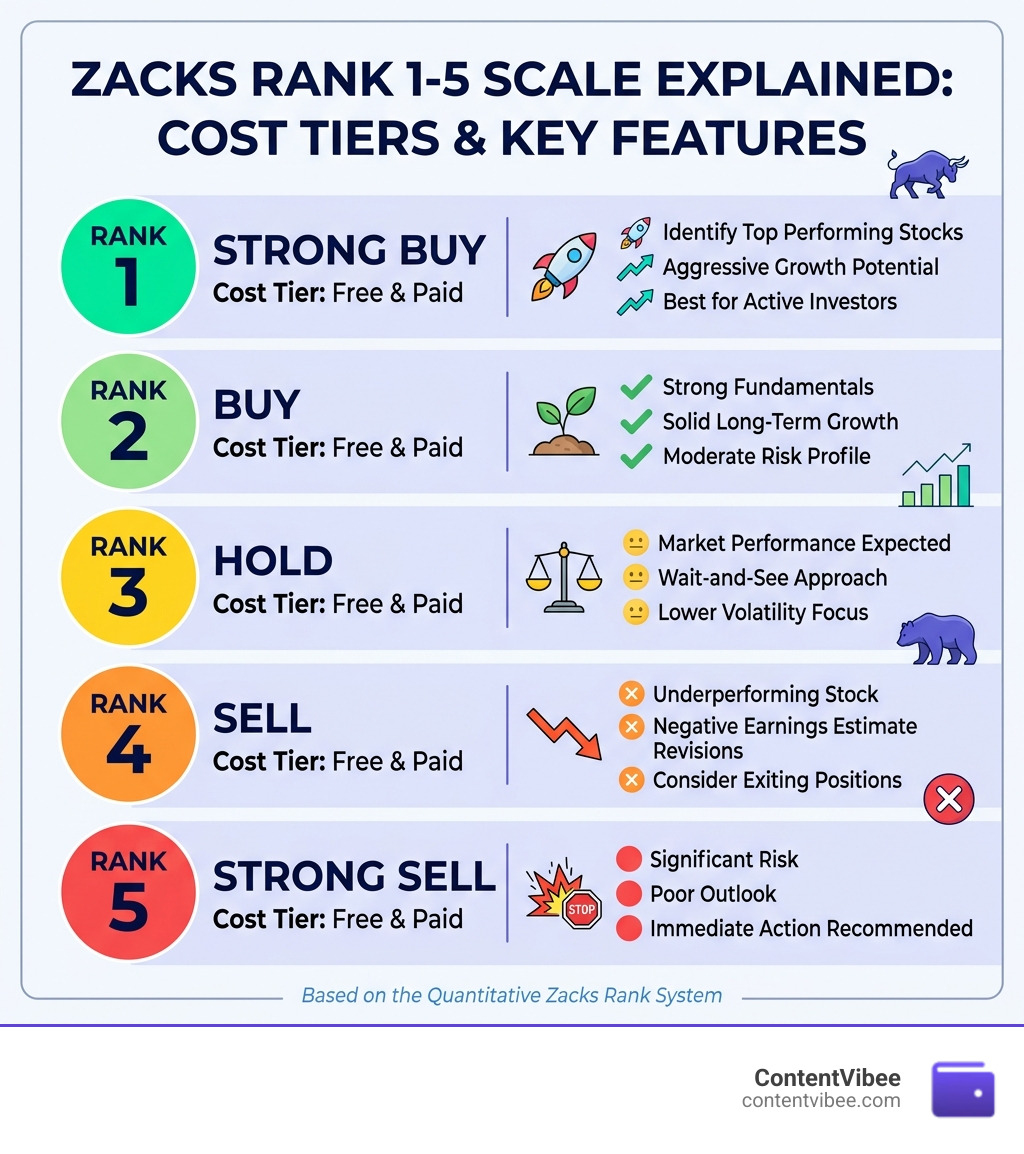
The Zacks Rank operates on a simple 1 to 5 scale:
- #1 Strong Buy: The top 5% of stocks.
- #2 Buy: The next 15%.
- #3 Hold: The middle 60%.
- #4 Sell: The bottom 15%.
- #5 Strong Sell: The bottom 5%.
But how does a computer decide these ranks? It looks at four specific factors related to analyst revisions:
- Agreement: Are most analysts moving their estimates in the same direction?
- Magnitude: How big is the change? A 10% upward revision is a much stronger signal than a 1% tweak.
- Upside: Is the most recent estimate higher than the consensus? This suggests more upgrades are coming.
- Surprise: Does the company have a history of beating expectations?
In Zacks Review: Is Zacks Premium Worth It in 2026? , experts note that while these quantitative algorithms were in the 1970s, the modern market is much more efficient. By April 2026, many of these “surprises” are priced into the stock within milliseconds of an analyst report hitting the wire. This means the “edge” provided by the rank system might be narrower than it was thirty years ago, though the fundamental logic of following earnings momentum remains a cornerstone of professional trading.
Zacks Investment Research Subscription Cost vs Value: Tiered Pricing Breakdown
Understanding the Zacks Investment Research Subscription Cost vs Value equation requires looking at what you actually get for your money. Zacks offers several distinct paths for investors, ranging from “budget-friendly” to “institutional-level” pricing.
| Feature | Free Tier | Zacks Premium | Investor Collection | Zacks Ultimate |
|---|---|---|---|---|
| Annual Cost | $0 | $249 | $495 | $2,995 |
| Monthly Option | N/A | N/A | $59 | $299 |
| #1 Rank List | No | Yes | Yes | Yes |
| Research Reports | Limited | Full Access | Full Access | Full Access |
| Premium Screens | No | Yes | Yes | Yes |
| Special Services | No | No | 8 Services | 21 Services |
| Trial Offer | N/A | 30-Day Free | $1 for 30 Days | $1 for 30 Days |
The Value Proposition of Each Tier
The Membership Benefits – Zacks Investment Research page highlights that the Premium tier ($249/year) is the “sweet spot” for most. It unlocks the list of ~220 Strong Buy stocks and advanced screening tools.
If you want more hand-holding, the Investor Collection ($495/year) adds specialized newsletters like Value Investor (which gained 58% over the last three years) and Top 10 Stocks (up 31% as of early April 2026).
Finally, Zacks Ultimate is the “everything” package. At nearly $3,000 a year, it’s designed for high-net-worth individuals or professional traders who want real-time alerts and access to every niche portfolio Zacks manages, from “Stocks Under $10” to “Blockchain Innovators.”
To mitigate the risk, Zacks offers a 90-day money-back guarantee on Premium subscriptions, which is significantly more generous than many competitors.
Premium Features: Does the Edge Justify the Expense?
When you pay for Premium, you aren’t just buying a list of stocks; you’re buying a suite of tools designed to filter out the noise. According to Zacks Premium Review (2026): Is It Worth $249/Year? , several key features stand out:
- The #1 Rank List: A daily-updated list of the top 5% of stocks. This is the “secret sauce” that has historically outperformed the market.
- Earnings ESP (Expected Surprise Prediction) Filter: This tool identifies stocks with a high probability of beating earnings estimates before they report. Zacks claims this filter has a 70% accuracy rate in predicting positive surprises.
- Premium Stock Screens: Instead of manually searching, you can use pre-built screens like “Small-Cap Growth” or “Big-Yield Value” that only show stocks with a Zacks Rank of #1 or #2.
- Zacks Industry Rank: We know that half of a stock’s price movement can be attributed to its industry. This tool ranks over 250 industry groups, helping you find the strongest sectors to invest in.
- The Focus List: A curated list of 50 long-term stocks chosen for their earnings momentum and fundamental strength.
Top Premium Tools at a Glance:
- Style Scores: A-F grades for Value, Growth, and Momentum to help you refine the #1 Rank list.
- Equity Research Reports: In-depth, 10-page reports on over 1,000 stocks, providing more context than just a numerical rank.
- Portfolio Tracker: Real-time monitoring of your holdings with instant alerts if a stock’s rank drops.
Evaluating Zacks Investment Research Subscription Cost vs Value for Beginners
For those just starting out, the Zacks Investment Research Subscription Cost vs Value might lean toward “not worth it” initially. The free version of the site allows you to search for any individual ticker and see its current rank. If you only own five or ten stocks, you can check them manually for free every morning.
However, beginners often struggle with finding new stocks. The free version doesn’t give you the list of 220 Strong Buys; it only lets you check what you already know. For educational resources on how to manage your finances before diving into individual stock picking, we recommend checking out our guides on Money & Credit.
Maximizing Zacks Investment Research Subscription Cost vs Value for Active Traders
If you are an active trader, the Earnings ESP filter alone might justify the $249 cost. Predicting an earnings beat can lead to rapid short-term gains. Traders who use these quantitative signals often find they can pay for their annual subscription with just one or two well-timed trades. Managing your trading expenses is just as important as managing your household bills — for example, keeping up with your TJ Maxx Credit Card Payment: Pay Online & Phone ensures your credit remains healthy so you can access capital when market opportunities arise.
Real-World Performance vs. Historical Claims in 2026
Zacks is famous for its “24.3% average annual return” claim for its #1 Strong Buy stocks since 1988. Compared to the S&P 500’s average of roughly 10.5%, that is a staggering 13.8% annual outperformance.
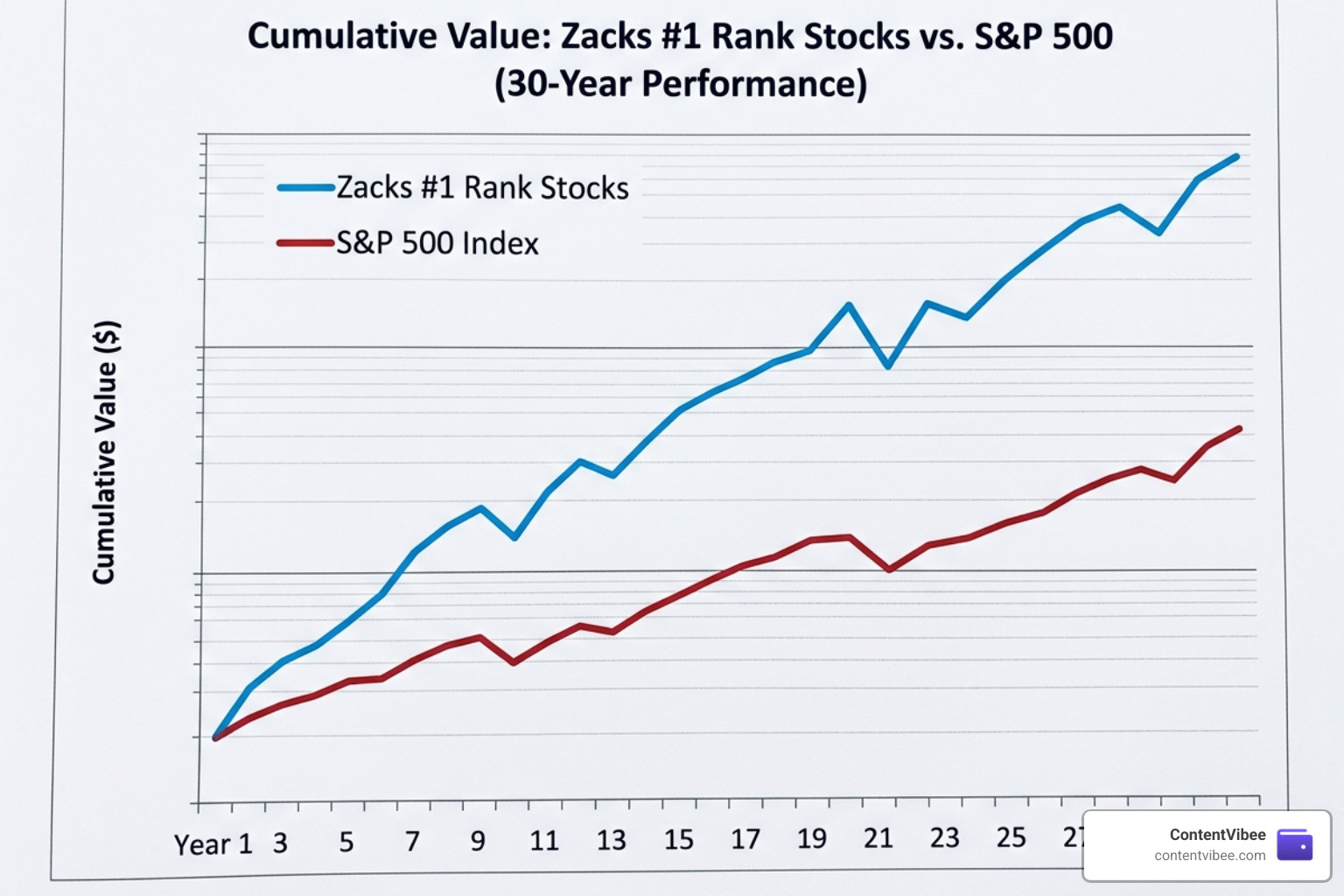
However, we must look at the fine print. These returns are based on a backtest that assumes:
- Monthly Rebalancing: You sell stocks that drop out of the #1 rank and buy new ones every single month.
- Zero Commissions: While many brokers are $0 commission now, this wasn’t true for most of the last 30 years.
- No Slippage: It assumes you can buy and sell exactly at the closing price, which isn’t always possible with smaller stocks.
Furthermore, user sentiment doesn’t always match the marketing. On Trustpilot, Zacks holds a 1.6/5 rating. Common complaints include the website’s “dated” interface (which many users describe as feeling like a relic from the early 2000s) and aggressive upselling for the more expensive Ultimate tier. In Zacks Review: Should You Pay for Premium in 2026? , critics point out that because the #1 Rank list contains over 200 stocks, it can lead to “information overload” for investors who don’t have a systematic way to filter that list down further.
Strategic Implementation: Who Should Subscribe?
Is Zacks right for you? It depends on your “investor DNA.”
Subscribe if:
- You are a Systematic Investor: You like rules. You want a “buy” signal based on data, not a news headline.
- You Have Significant Capital: If you have a $5,000 portfolio, a $249 subscription eats up 5% of your total value before you even buy a stock. If you have $50,000 or more, the cost becomes negligible (0.5%).
- You Value Quantitative Data: You prefer earnings revisions and mathematical models over “narrative” investing.
Skip if:
- You Want Curated “Picks”: Zacks gives you a massive list of 220 stocks. If you want someone to tell you “buy these two stocks on Tuesday,” you might prefer a service like Motley Fool.
- You are a Buy-and-Hold Purist: The Zacks Rank changes frequently. If you don’t want to check your portfolio at least once a month, the rank system won’t work for you.
- You are Sensitive to UX: If a clunky, ad-heavy website frustrates you, you will likely prefer modern platforms like Seeking Alpha.
For those looking for entry-level financial products to build their investment capital, understanding What the Open Sky Credit Card Is and Who It’s For can be a good first step in establishing the credit needed for a robust financial life.
Frequently Asked Questions about Zacks Subscriptions
Is Zacks Premium worth $249 per year?
For many, yes. If you use the screeners to find just one or two winners a year, the service pays for itself. However, if you are a casual investor who only buys index funds, it is an unnecessary expense. The value is found in the tools, not just the rank.
How do I cancel my Zacks subscription?
This is a major pain point for users. Zacks generally requires you to call their customer service line to cancel. Unlike many modern SaaS companies that offer a “one-click cancel” button, Zacks retains a more traditional (and some say frustrating) cancellation process.
Does the Zacks Rank still work in 2026?
The core logic — that earnings drive prices — is timeless. However, because so many people now have access to this data, the “alpha” (excess return) is harder to capture. You cannot simply buy all 220 stocks and expect a 24% return; you must use the Premium filters to find the best of the best.
Conclusion
The Zacks Investment Research Subscription Cost vs Value debate ultimately comes down to your personal investment style. If you are a data-driven investor with at least $25,000 to $50,000 in active capital, Zacks Premium provides a powerful quantitative edge that is hard to find elsewhere for $249.
While the website interface is aging and the customer service reviews are lackluster, the underlying data remains some of the best in the industry. The Zacks Rank has survived 36 years of market crashes, tech bubbles, and interest rate spikes because it focuses on the one thing that truly moves stocks: the bottom line.
At ContentVibee, we believe that accessible information is the key to financial justice. Whether you choose to pay for a premium research service or stick to free tools, the goal is the same: making informed decisions that grow your wealth over time. For more tips on managing your financial health, explore our More info about money and credit services section.
Final Verdict: Try the 30-day free trial. If you find yourself using the #1 Rank list and the Earnings ESP filter to discover stocks you wouldn’t have found otherwise, the subscription is a “Strong Buy.” If you find the list overwhelming, stick to the free individual rank lookups.


