


The best portfolio management tools available in 2026 provide visibility across diverse asset classes and project types. Whether you are looking for enterprise-grade collaboration or individual investment tracking, the right platform ensures your resources are aligned with your strategic goals and risk tolerance.
Most investors assume portfolio management is just about picking the right stocks. It’s not.
Whether you’re managing a collection of projects inside a company or tracking your own investments, the tools you use determine how much money you keep — and how much quietly slips away.
Here’s the uncomfortable truth: research shows that 30% of the $1–2 trillion invested annually in North American IT deployments is wasted — that’s up to $600 billion gone because organizations aren’t doing the right work. For individual investors, the story isn’t much different. Hidden fees, redundant subscriptions, and unmonitored drift can erode returns just as silently.
Portfolio management tools fix this by giving you visibility and control — across projects, assets, risks, and performance — all in one place.
There are two main types to know about:
- Project Portfolio Management (PPM) tools — for businesses managing multiple projects and aligning them with company strategy. Many organizations utilize Project Portfolio Management frameworks to ensure every initiative delivers measurable value.
- Investment portfolio management tools — for individuals or advisors tracking assets, performance, dividends, and risk
Both serve the same core purpose: making sure your resources go where they create the most value.
Why Organizations Need Portfolio Management Tools to Reduce Financial Waste

In the corporate world, “doing the right work” is often harder than it sounds. We’ve seen that out of the $1 to $2 trillion invested in IT deployments annually in North America, a staggering 30%—or $300 to $600 billion—is wasted. This isn’t usually because the projects were executed poorly; it’s because the projects shouldn’t have been started in the first place.
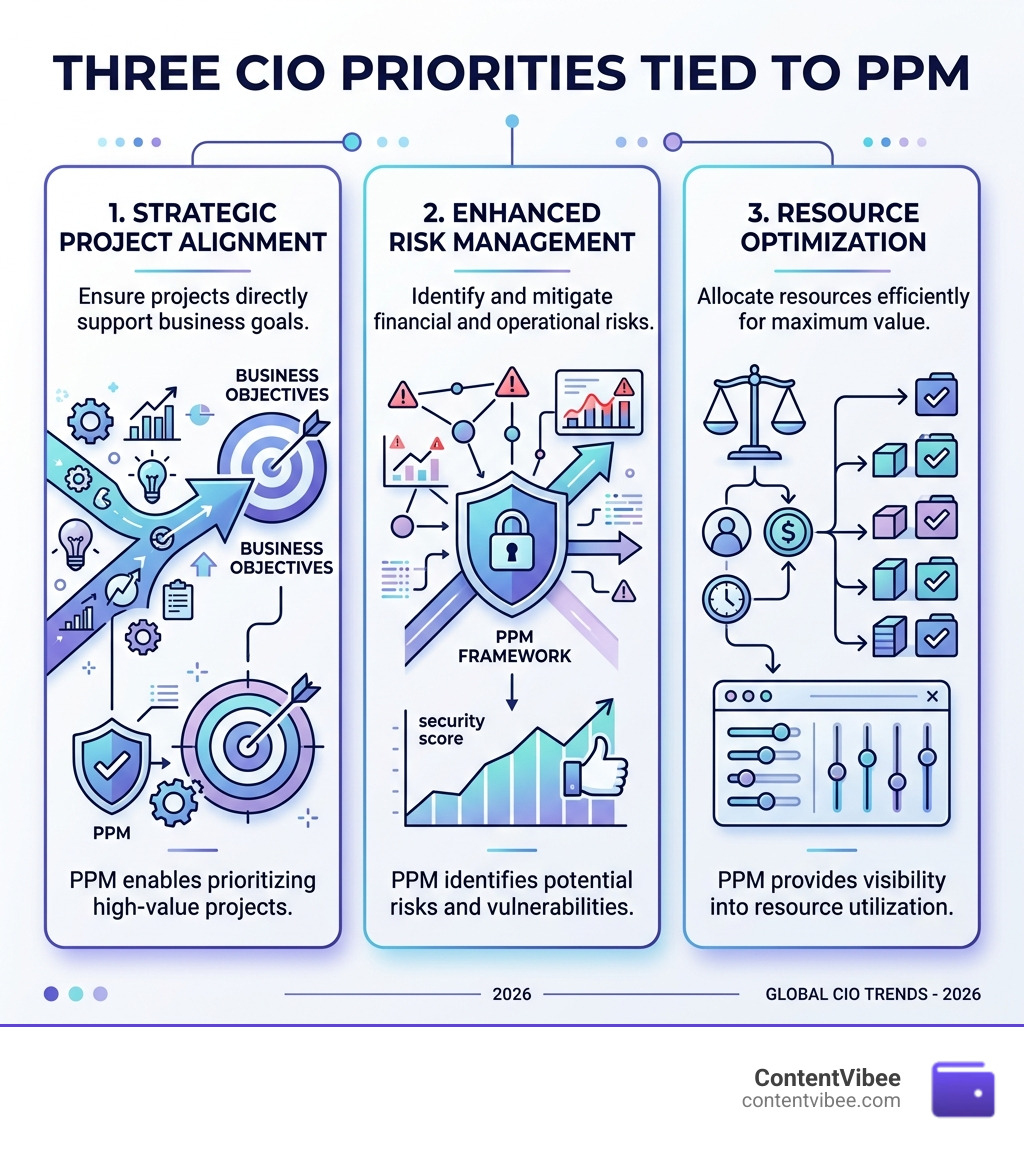
This is where portfolio management tools become the ultimate financial shield. According to Gartner, three of the top ten priorities for CIOs are directly tied to Project and Portfolio Management (PPM). Without these tools, organizations fall into the trap of “sponsor influence,” where the person with the loudest voice gets their project funded, rather than the project that offers the highest strategic value.
To stop the bleeding, a Project Office is often essential. Research from the META Group suggests that a centralized office provides the organizational-wide perspective needed to balance competing departmental needs. When you have an established method of PPM applied consistently—something only 20% of top-performing companies currently do—you transform from a reactive organization into a proactive powerhouse.
But financial waste isn’t just a corporate problem. For the individual, waste comes in the form of fraud or mismanagement. If you’ve encountered an unauthorized bank transaction how to dispute and recover money USA 2026, you know that visibility is your best defense. Just as a company uses PPM to kill “zombie projects,” you can use these tools to identify unauthorized leaks in your own financial ecosystem.
How Portfolio Management Tools Bridge the Gap Between Strategy and Execution
The biggest challenge for any leader is making sure that daily tasks actually move the needle on long-term goals. PPM tools act as the bridge between high-level strategy and ground-level execution. By using these platforms, we can ensure that every dollar spent is an investment in our future, not just an expense.
These tools allow for:
- Portfolio Balancing: Arranging prioritized components into a mix that supports strategic goals without overextending resources.
- Capacity Planning: Understanding exactly how much work your team (or your capital) can handle before performance drops.
- Automated Risk Assessment: Identifying potential pitfalls before they become disasters.
If you’re wondering, Is Automated Portfolio Management Right For You?, the answer usually lies in your desire for efficiency. Automation takes the guesswork out of prioritization, using data-driven models to monitor performance and adjust course in real-time.
Recovering from Financial Waste: How Portfolio Management Tools Prevent Loss
In North America, the scale of IT waste is breathtaking. When we talk about $600 billion in annual loss, we are talking about a systemic failure to align work with value. Portfolio management tools help recover this lost investment by providing “stop-loss” mechanisms for projects.
Beyond corporate projects, digital financial security is a major component of modern portfolio management. In an era where identity theft credit report fraud how to fix and protect your score USA is a constant threat, your portfolio tool should double as a security monitor. By identifying hidden fees, redundant subscriptions, and unauthorized account access, these tools help you maintain a “top-performer” status in your personal finances.
Essential Features of Investment Portfolio Management Tools for 2026

As we move through 2026, the landscape for portfolio management tools has shifted toward heavy integration of Artificial Intelligence and real-time data aggregation. It’s no longer enough to just see your balance; you need to understand the “why” behind the numbers.
Modern platforms now offer advanced AI assistants that allow you to ask questions like, “What is driving the performance in my alternatives allocation?” and get an instant, data-grounded answer.
Key features you should look for in 2026 include:
- Asset Aggregation: The ability to see your stocks, ETFs, real estate, and even collectibles in one unified view.
- Real-Time Drift Alerts: Notifications when your portfolio moves away from your target risk profile.
- Tax-Aware Trading: Implementing tax loss harvesting automatically to improve after-tax returns.
- Rules-Based Rebalancing: Ensuring you buy low and sell high without emotional interference.
Understanding Why Investment Manager Software Fees Matter is also critical. A tool that costs $500 a year but saves you $5,000 in taxes and prevents one major fraud event is a bargain. We always recommend looking at the “cost-worthiness” of a tool—does the feature set justify the price tag?
Unauthorized Portfolio Access: How to Detect and Recover Assets USA 2026
Digital security is the cornerstone of portfolio management in 2026. If you are a wire transfer fraud victim what to do and recovery options USA 2026, your first priority is recovery. Modern portfolio tools now integrate with identity theft protection services to provide account access alerts and unauthorized transaction monitoring.
When evaluating a tool, consider its benefit/cost ratio not just in terms of ROI, but in terms of “Peace of Mind” (POM). High-end tools provide:
- Digital Financial Security: Encrypted connections to all your banking and brokerage accounts.
- Fraud Recovery Assistance: Built-in workflows to help you dispute unauthorized charges.
- Risk Scoring: Just as projects are scored in PPM, your personal financial health should have a “security score” that alerts you to vulnerabilities.
Why Investment Accounting Software Cost is an Investment in Security. Spending more on a platform that offers robust fraud detection is often cheaper than the legal fees required to recover stolen assets.
Implementing PPM Standards to Align Projects and Prevent Strategic Fraud
For businesses, the Project Management Institute (PMI) provides a structure for managing portfolios that prevents “strategic fraud”—the act of continuing projects that provide no value just to satisfy a budget.
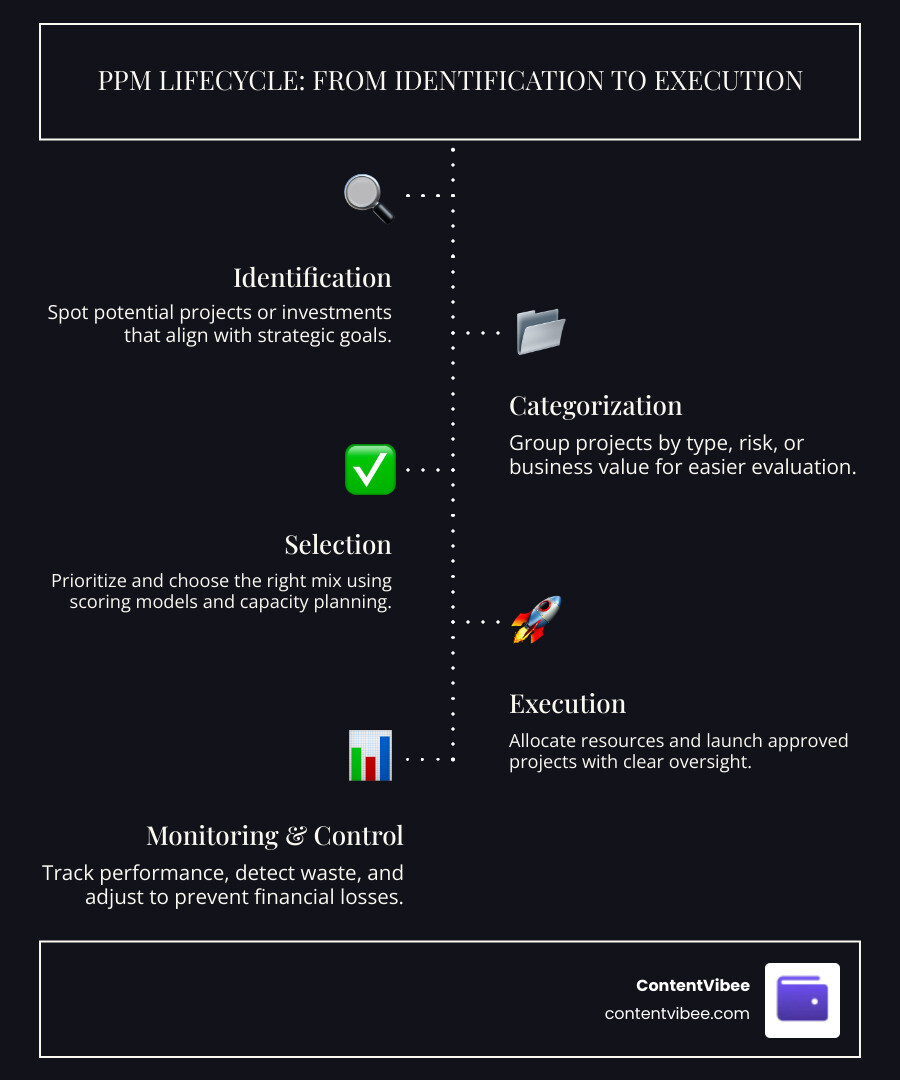
The PPM lifecycle is generally split into two main groups:
- The Aligning Process Group: This involves identifying new opportunities, categorizing them (e.g., “Keep the Lights On” vs. “Strategic Growth”), and evaluating them against a scoring model.
- The Monitoring and Controlling Process Group: This is the “watchdog” phase where we look at performance indicators and ensure the portfolio stays balanced.
This structure is vital for preventing internal losses. For example, if you are worried about an irs tax refund scam how to claim loss and prevent identity theft USA, a well-managed personal portfolio would flag the discrepancy between your expected return and the fraudulent filing immediately.
Success stories from organizations like Tourism Australia and Fujitsu show that when you have C-level buy-in and a high level of project management maturity, PPM tools can transform a struggling department into a profit center.
Frequently Asked Questions about Portfolio Management
What is the difference between project management and PPM?
While they sound similar, they have very different goals. Project management is about “doing work right”—focusing on deadlines, budgets, and specific deliverables. Project Portfolio Management (PPM) is about “doing the right work.” It asks the question: “Should we even be doing this project at all?” PPM is the strategic layer that prevents financial leakage by ensuring only the most valuable projects move forward.
How do portfolio management tools help reduce financial waste?
They provide a “single source of truth.” By centralizing all project and investment data, these tools allow us to spot redundancies and underperforming assets. For example, in a personal finance context, these tools can help with zelle fraud transaction recovery steps and bank protection options USA by providing the documentation needed to prove a transaction was unauthorized. In a business context, they help redirect resources from “zombie projects” to high-impact strategic goals.
What are the key phases of the PPM lifecycle?
The lifecycle is structured to ensure continuous improvement. It starts with the Aligning Process Group, which includes identifying, categorizing, and selecting projects based on their risk/reward profile. It then moves to the Monitoring and Controlling Process Group, which involves regular performance reporting, risk assessment, and change management. This lifecycle ensures that the portfolio remains healthy and aligned with the overall strategy.
Conclusion
Navigating portfolio management tools can feel overwhelming, but it’s the most important step you can take toward financial security. At ContentVibee, we believe that visibility is the key to wealth.
Whether you are an enterprise leader trying to reduce IT waste or a self-directed investor looking for an edge, the right tools bridge the gap between where you are and where you want to be. For those who want a more hands-off approach, the Autopilot investment app offers automated portfolio management specifically for self-directed investors. We provide comprehensive fee, risk, and management reviews to ensure your investments are truly cost-worthy.
Don’t let your hard-earned money slip through the cracks of unmonitored portfolios. More info about investment categories can help you decide which tools fit your specific needs. Secure your financial future today by choosing a platform that prioritizes both performance and protection.


 A **robo advisor fees comparison** is the fastest way to see how much automated investing actually costs — and how much you could save over time. According to the [SEC Investor Bulletin](https://www.sec.gov/investor/alerts/ib_robo-advisers.pdf), understanding these costs is vital for long-term success. Here's a quick snapshot of the major fee tiers in 2026: | Service Tier | Management Fee | Avg. ETF Expense Ratio | Account Minimum | |---|---|---|---| | **Entry-Level Digital** | 0% (under $25K) / 0.35% above | ~0% | $0 | | **Standard Automated** | 0.25% | 0.03–0.12% | $500 | | **Low-Cost Index** | ~0.15–0.20% | Low (credits ER) | $100 | | **Cash-Heavy Model** | 0% | ~0.12% | $5,000 | | **Premium Hybrid** | 0.49–0.89% | Varies | $100,000 | **Bottom line:** Most robo-advisors charge between 0% and 0.35% per year in management fees, plus 0.03%–0.17% in underlying fund costs. That puts total all-in costs at roughly **$30–$60 per $10,000 invested annually** — far below a traditional human advisor's typical all-in cost of 1.50–1.75%. Fees are one of the few things in investing you can actually control. Markets go up and down. But a 1% fee quietly compounds against you for decades. Think about this: on a $100,000 portfolio growing at 7% annually with $12,000 in yearly contributions, a robo-advisor costing 0.30% leaves you with roughly **$575,000 after 20 years**. A human advisor charging 1.65% all-in? You'd end up closer to **$467,000** — a difference of over $110,000, simply from fees. That's not a small rounding error. *That's a decade of retirement income.* But not all robo-advisors are as cheap as their headline fees suggest. Some platforms advertise 0% management fees — yet their requirement to hold 6%–29% of your portfolio in cash creates an effective drag of around **0.74% per year**. Flat monthly fees sound modest, but on a $24,000 balance, a $5/month fee equals a 2.5% effective rate — *higher than most human advisors charge*. The goal of this guide is simple: cut through the marketing and show you the **real all-in cost** of today's top robo-advisors, broken down by account size, fee structure, and what you actually get for what you pay. 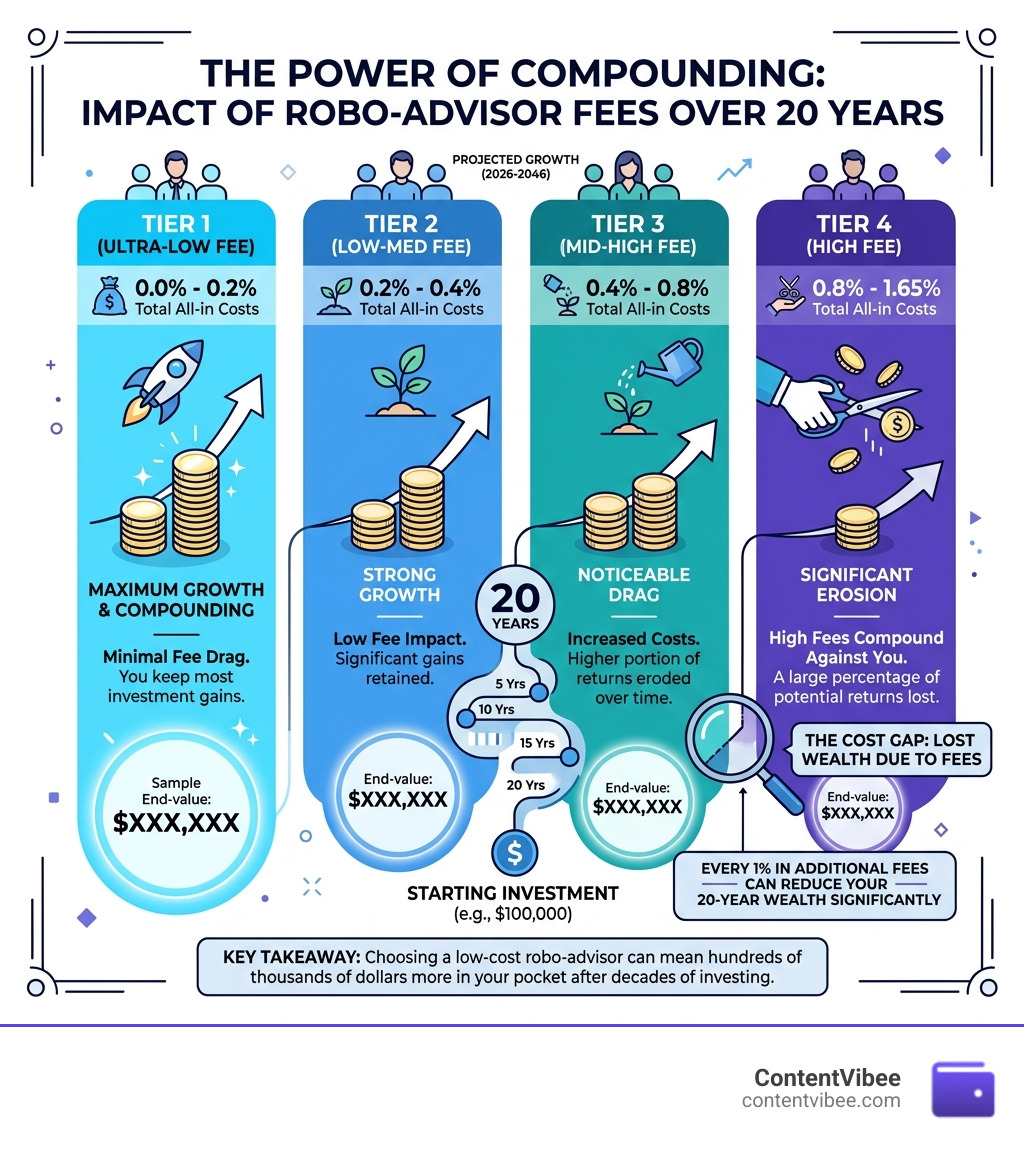 ## The True Cost of Automated Investing vs. Traditional Advice When we look at a **robo advisor fees comparison**, the most striking takeaway is the massive price gap between algorithms and humans. Traditional financial advisors often charge a standard 1.0% advisory fee. However, that is rarely the "out-the-door" price. Once you add in platform fees and the expense ratios of the funds they pick, the total cost often balloons to 1.50% or even 1.75%. In contrast, the median robo-advisor advisory fee sits at just 0.25%. Even when you include the underlying ETF expenses, the all-in cost typically stays between 0.30% and 0.60%. For a $50,000 portfolio, we are talking about $125 a year for a robo-advisor versus $750 or more for a human. Why the discrepancy? Robots don't have mahogany-filled offices or require expensive lunches. They use algorithms to build and manage portfolios based on your risk tolerance. While humans offer empathy and complex planning, many investors in the "accumulation phase" (building wealth under $250,000) simply don't need that level of overhead yet. You can learn more about these differences in our guide on Robo vs Human Financial Advisor: Cost Comparison 2026. However, it is vital to understand [What are Wealth Management Fees](https://contentvibee.com/what-are-wealth-management-fees/) before signing up. Fees aren't just a line item; they are a drag on your compounding interest. Over 20 or 30 years, that 1% difference can cost you hundreds of thousands of dollars in lost growth. ## Robo Advisor Fees Comparison: Analyzing All-In Costs for 2026 To perform a fair **robo advisor fees comparison**, we have to look at "all-in" costs. This means adding the management fee (what you pay the platform) to the ETF expense ratios (what you pay the fund managers like Vanguard or iShares). For a standard 60/40 stock-to-bond portfolio in April 2026, the costs look remarkably different depending on where you park your cash. | Provider Tier | Management Fee | ETF Expense Ratio | Total Annual Cost (per $10k) | |---|---|---|---| | Standard Digital | 0.25% | 0.08% | $33 | | Tiered Pricing | 0.35%* | 0.00% | $35* | | Low-Cost Leader | 0.15% | 0.05% | $20 | *\*Some tiered models are $0 for balances under $25,000, making them the price leader for beginners.* It is clear that Analyzing standard 0.25% fee structures is the baseline for the industry. If you are paying more than 0.40% all-in for a basic automated portfolio, you might be overpaying unless you are getting premium features like unlimited access to a Certified Financial Planner (CFP). ### How Account Size Impacts Your Robo Advisor Fees Comparison One of the biggest "gotchas" in the industry is how fees change as your balance grows. A "cheap" advisor at $5,000 might be the most expensive at $500,000. For example, some entry-level platforms are the undisputed king for small accounts. If you have $5,000, your management fee is $0. However, once you cross a certain threshold (often $25,000), they may charge 0.35% on the entire balance. Suddenly, a flat 0.25% fee looks a lot more attractive. On the flip side, some providers use flat monthly fees. A $5 per month fee is great if you have $20,000 (0.30% effective rate), but it is a disaster if you only have $1,000, as that $60 a year represents a 6% annual fee! We’ve seen that Tiered fee models for large balances are designed to reward loyalty, but you must do the math at your specific deposit level. ### The Role of ETF Expense Ratios in a Robo Advisor Fees Comparison Don't let a "0% management fee" headline fool you. Every robo-advisor builds your portfolio using Exchange Traded Funds (ETFs), and those funds have their own internal costs. A robo-advisor might claim to be free but then stuff your portfolio with "house" funds that have higher expense ratios. This is why [Why Brokerage Firm Investment Fees and Account Costs Matter](https://contentvibee.com/why-brokerage-firm-investment-fees-and-account/) so much. Some providers are cheaper overall because they credit the fund expenses back against their advisory fee, ensuring you aren't "double-dipped." In 2026, the gold standard for a blended ETF expense ratio is between 0.05% and 0.15%. If your robo-advisor's underlying funds cost more than 0.20%, they are likely using niche or actively managed funds that may not be necessary for a long-term index strategy. ## Protecting Your Wealth: Security Risks and Fraud Recovery in Automated Investing  As we move our wealth into automated systems, the conversation shouldn't just be about a **robo advisor fees comparison**; it must also cover security. While robos are generally safer than keeping money under a mattress ([SIPC insurance](https://www.sipc.org/for-investors/what-sipc-protects) covers up to $500,000 in brokerage insolvency), digital platforms are targets for identity theft and SSN misuse. A low fee is worthless if a hacker drains your account through an unauthorized wire transfer. We believe that Robo-Advisor Fees: Comparing Costs and Security Features should be evaluated together. Look for platforms that offer two-factor authentication (2FA), biometric logins, and "withdrawal locks" that require a secondary approval before money leaves the account. ### Unauthorized bank transaction how to dispute and recover money USA 2026 If you discover an unauthorized transaction in your investment account, time is your greatest enemy. In the USA, the Electronic Fund Transfer Act (Regulation E) provides protections, but they are stricter for investment accounts than for standard checking accounts. If you are a wire transfer fraud victim, knowing what to do and recovery options in the USA 2026 is critical. You must notify the institution within two business days of learning about the fraud to limit your liability to $50. If you wait longer, that liability can jump to $500 or even the full amount of the loss. **Steps to recover funds:** 1. **Freeze the account:** Immediately stop all outgoing transfers. 2. **File a formal dispute:** Do this in writing, not just over the phone. 3. **Police Report:** Essential for identity theft claims. 4. **FTC Affidavit:** Use IdentityTheft.gov to create an official record. ### Identity theft credit report fraud how to fix and protect your score USA Identity theft doesn't just put your cash at risk; it can wreck your credit score, making it impossible to get a mortgage or car loan. If someone uses your SSN to open a fraudulent brokerage account or credit line, you need to act fast. Learning how to fix credit after identity theft involves placing a "Security Freeze" on your reports at Equifax, Experian, and TransUnion. This prevents anyone from opening new accounts in your name. In 2026, many robo-advisors are integrating credit monitoring directly into their apps to help you spot these red flags early. For more detailed steps, check out identity theft credit report fraud: how to fix and protect your score in the USA. ## Advanced Features That Justify Higher Management Fees Is it ever worth paying a higher fee? Sometimes, yes. While a **robo advisor fees comparison** helps you find the lowest price, the "cheapest" option isn't always the one that makes you the most money. The secret sauce is often **Tax-Loss Harvesting (TLH)**. This is a strategy where the algorithm sells "loser" investments to offset capital gains and up to $3,000 of ordinary income on your taxes. Leading automated platforms are pioneers here. Studies suggest TLH can add 0.5% to 1.5% in "tax alpha" (annualized after-tax returns). If a robo-advisor charges 0.25% but saves you 1.0% on your taxes, the service effectively pays for itself. You should ask yourself [Is Automated Portfolio Management Right for You](https://contentvibee.com/is-automated-portfolio-management-right-for-you/) based on whether you have a taxable brokerage account. If you are only investing in a Roth IRA, tax-loss harvesting provides zero benefit, and you should stick to the lowest-fee provider possible. ### Hidden Costs and Cash Drag in a Robo Advisor Fees Comparison We have to talk about the elephant in the room: **Cash Drag**. Some "free" robo-advisors make their money by keeping a portion of your portfolio in cash. Certain models, for instance, require a cash allocation of 6% to 29%. While they don't charge a management fee, that cash is often earning a lower interest rate than if it were invested in the market. In a bull market, this "drag" can cost you significantly more than a 0.25% fee would. If the market returns 10% and 10% of your money is sitting in cash earning 4%, you've just lost 0.60% in potential gains. Evaluating automated management cost-worthiness requires looking at the "opportunity cost" of this uninvested capital. 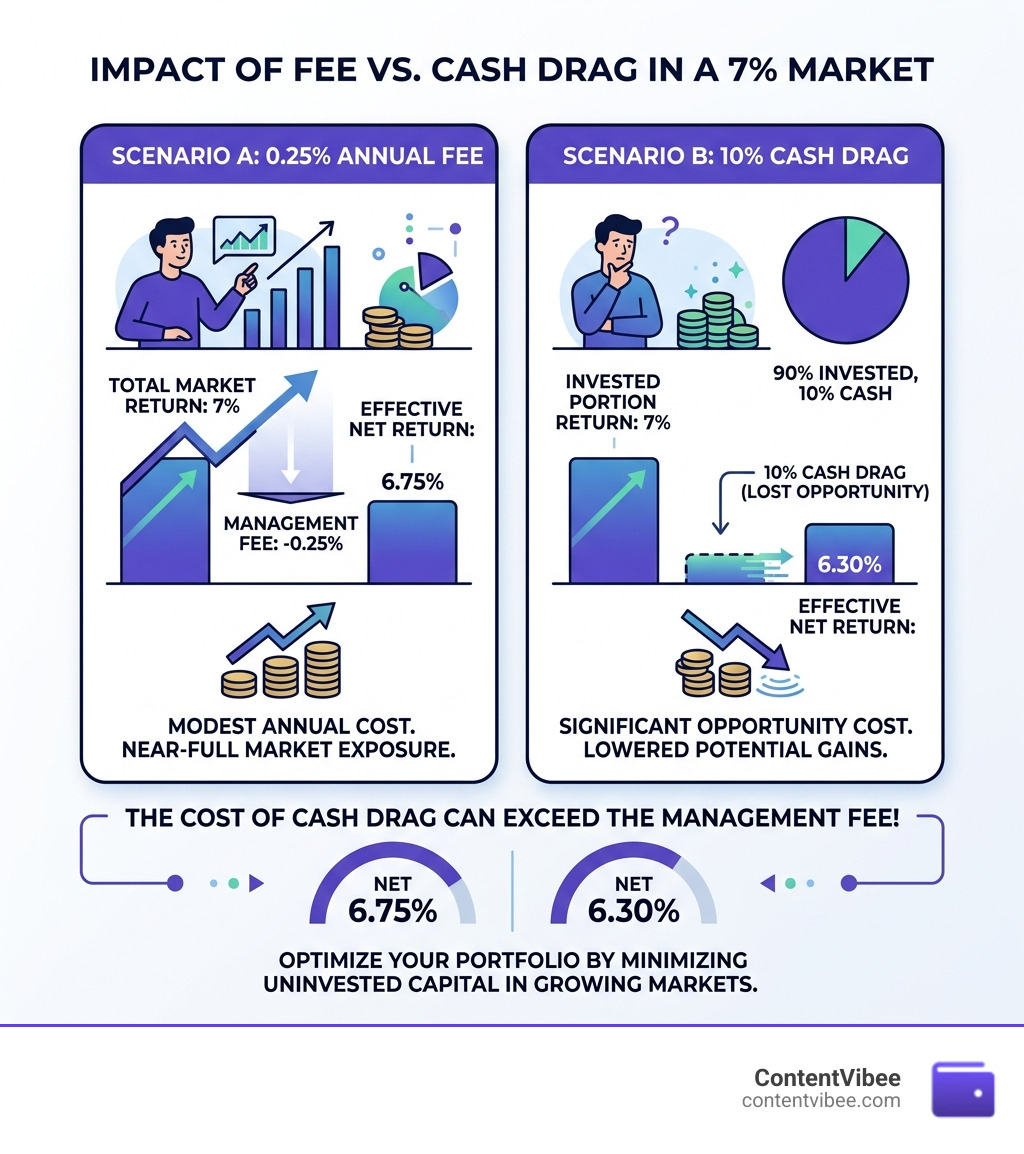 ## Frequently Asked Questions about Robo-Advisor Costs ### Which robo-advisor has the lowest all-in fees in 2026? For portfolios under $25,000, entry-level platforms with $0 management fees and zero-expense-ratio funds are generally the cheapest. For larger portfolios, providers that credit fund expenses back against their advisory fee often win on a total cost basis (roughly 0.20% all-in). ### Is a robo-advisor worth the fee for a small portfolio? Yes, but be careful with flat fees. If you have $1,000, avoid any provider charging a monthly dollar amount. Stick to percentage-based fees or $0-minimum providers. The automation of rebalancing alone is usually worth the 0.25% fee for beginners. ### How do hidden cash drags impact my total returns? Cash drag acts like an invisible fee. If a provider keeps 10% of your money in cash during a year where the market is up 15%, that drag "costs" you 1.5% in lost returns. This is often much more expensive than paying a transparent 0.25% advisory fee. ## Conclusion A thorough **robo advisor fees comparison** proves that you don't need to be a millionaire to get professional-grade portfolio management. By choosing an automated partner, you can slash your investment costs by 70% or more compared to traditional human advisors. However, the "cheapest" headline isn't always the best deal. You have to account for account minimums, ETF expenses, and the impact of cash drag. At ContentVibee, our **Autopilot** tool is designed to help you navigate these waters. We offer comprehensive fee, risk, and management reviews to evaluate the true cost-worthiness of your investments. Don't let high fees erode your future. Whether you are just starting with $500 or managing a $500,000 retirement nest egg, small changes in your fee structure today lead to massive differences tomorrow. [Explore our full range of financial security and investment guides](https://contentvibee.com/categories/) to keep your wealth growing and protected.](https://contentvibee.com/wp-content/uploads/2026/04/image-65-400x225.jpeg)