


Investment Accounting Software Cost and Compliance Risk Analysis is the process of evaluating what you’ll pay for financial portfolio management tools — and what you risk if those tools fall short of regulatory standards.
Here’s a quick summary if you need it fast:
| What You Want to Know | Quick Answer |
|---|---|
| Entry-level software cost | $3–$60+ per user/month |
| Enterprise/custom development | $200,000–$600,000+ |
| Typical ROI | Up to 190%, ~1-year payback |
| Key compliance standards | Reg BI, GASB 31/40/72, SEC EDGAR, IFRS, GAAP |
| Biggest risk of NOT upgrading | Manual errors, audit failures, key-person dependency |
| Who needs it most | RIAs, broker-dealers, banks, nonprofits, government entities |
Still with us? Good — because the full picture is more nuanced.
Right now, 65% of companies face compliance risks due to outdated processes, and 75% of finance teams still manually track investment performance. That’s a lot of exposure hiding inside spreadsheets.
The stakes are high. Regulators are watching more closely than ever. Reg BI enforcement is tightening. SEC EDGAR filing volumes are growing. And GASB standards for public sector entities keep evolving. One missed requirement can trigger audits, penalties, or worse.
At the same time, software costs vary wildly — from affordable SaaS subscriptions to six-figure custom builds. Picking the wrong option means either overpaying for features you don’t need or underpaying for protection you can’t afford to skip.
This guide breaks it all down: what things cost, what risks you’re carrying, and how to close the gap between the two.
Investment Accounting Software Cost and Compliance Risk Analysis

Investment accounting is the backbone of any financial institution. It isn’t just about tallying numbers; it’s about maintaining a “system of record” that stands up to the scrutiny of the SEC and other governing bodies. When we look at Investment Accounting Software Cost and Compliance Risk Analysis, we have to consider the massive regulatory net cast over the industry in 2026.
For Registered Investment Advisors (RIAs) and broker-dealers, the primary focus is often Reg BI (Regulation Best Interest). This requires firms to not only act in the client’s best interest but to prove it with a defensible paper trail. Meanwhile, government and nonprofit organizations must navigate GASB standards (31, 40, and 72), which dictate how investment disclosures and fair value measurements are reported.
If your firm is still using manual processes, your financial exposure is significant. A single typo in an SEC EDGAR filing—of which there are over 170,000 annually—can lead to a “comment letter” or a full-blown audit. Advanced investment accounting software acts as a shield, automating the data flow from custodians directly into your financial statements.
Beyond basic reporting, understanding why 401K investment companies fees and retirement structures are scrutinized helps firms realize that transparency is no longer optional—it’s a survival requirement.
Mitigating Wire Transfer Fraud and SEC Compliance Risks
In 2026, the risk of unauthorized transactions is at an all-time high. Wire transfer fraud recovery options USA 2026 is a search term no CFO wants to be typing into Google after a breach. Modern investment accounting software mitigates this by using multi-factor authentication (MFA) and data encryption to secure the movement of funds and the reporting of assets.
By using platforms that offer a “single source of truth,” firms can ensure that their SEC filings are consistent with their internal ledgers. This reduces the risk of “reconciliation gaps” that often trigger regulatory red flags. Robust accounting tools help financial institutions maintain this level of audit readiness.
Reducing Risk Through Real-Time Monitoring and Automation
The days of “monthly reviews” are over. In the current regulatory climate, you need continuous oversight. Modern software provides real-time monitoring of suitability standards, ensuring that every trade aligns with the client’s risk profile as it happens.
Automation reduces human error by up to 90%. When a system automatically captures the “decision rationale” at the moment of a trade, it creates an automated documentation trail. This means that when an examiner walks through your door, you aren’t scrambling to find old emails; you’re simply hitting “export” on a compliance report. Industry data shows that what used to take three weeks in a spreadsheet can now be done in just over four minutes.
Pricing Structures and Total Cost of Ownership in 2026

When we talk about the Investment Accounting Software Cost and Compliance Risk Analysis, we have to look at the bill. Pricing isn’t a one-size-fits-all model. In 2026, most firms opt for one of three main structures:
- Per-User/Per-Month (SaaS): Ideal for small to mid-sized RIAs. Entry-level plans typically range from $3 to $60+ per user.
- Enterprise Tiers: Scalable pricing based on Assets Under Management (AUM) or total transaction volume.
- Custom Development: For massive institutions with unique needs, a custom build can cost between $200,000 and $600,000+.
Subscription vs. Enterprise Investment Accounting Software Cost
Subscription models are popular because they include cloud hosting and automatic updates for new regulations. This is vital because it ensures you are always compliant with the latest IFRS or GAAP changes without having to manually patch your system.
Enterprise models, however, offer deeper integrations. If you need your investment accounting to talk to your debt management and cash forecasting tools, a unified enterprise platform provides that essential operating layer.
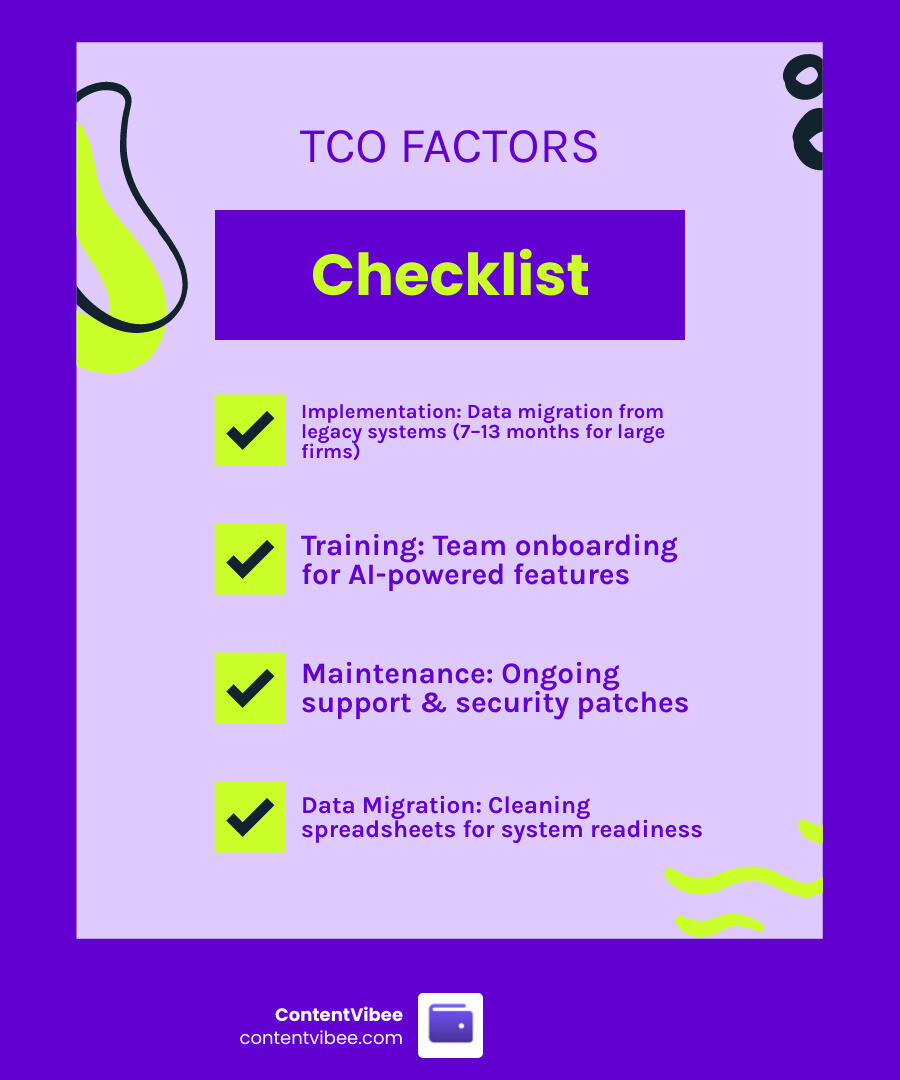
Factors Influencing Total Cost of Ownership (TCO)
The “sticker price” of the software is only about 60% of the actual cost. To calculate the Total Cost of Ownership (TCO), we must include:
- Implementation: Moving data from legacy systems can take 7–13 months for large firms.
- Training: Ensuring your team knows how to use AI-powered features.
- Maintenance: Ongoing support and security patches.
- Data Migration: The cost of cleaning up old spreadsheet data so it’s “system-ready.”
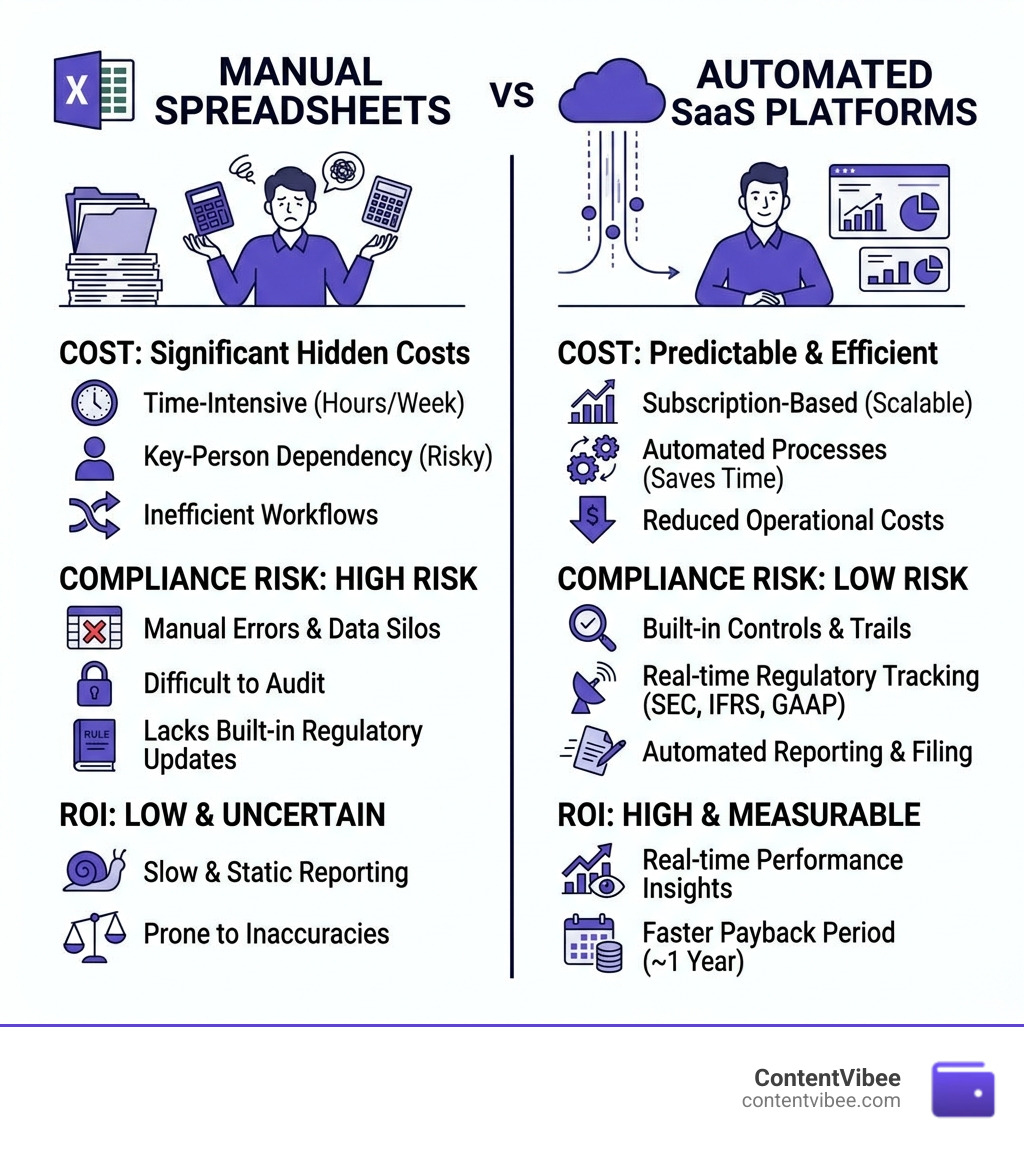
ROI: Modern SaaS vs. Legacy Manual Processes
Legacy manual processes are an “operational drag.” They slow down your ability to launch new funds and increase your exposure to “key-person risk”—the danger that if your “Excel wizard” leaves, your entire accounting department collapses.
Modern software offers an annual ROI of up to 190%. How? By eliminating up to 95% of manual routines. When your team isn’t spending 40 hours a week reconciling bank statements, they can spend that time on portfolio strategy and client acquisition. Market analysis notes that the payback period for these systems is often just one year.
Calculating the Investment Accounting Software Cost and Compliance Risk Analysis for RIAs
For RIAs, the calculation is simple: what is the cost of a failed SEC exam? Between legal fees, fines, and reputational damage, the cost is almost always higher than the software subscription. As firms grow, the complexity of managing “households” and multi-tier carried interest makes manual tracking impossible. Understanding why brokerage firm investment fees and account structures are so complex is the first step in realizing why you need a tool to manage them.
Identity Theft Protection and Audit Readiness in 2026
In 2026, investment accounting software also acts as a security perimeter. Identity theft credit report fraud how to fix and protect your score USA is a concern for your clients, and they expect you to protect their data.
Essential security features for 2026 include:
- Immutable Audit Logs: Blockchain-based records that cannot be altered, ensuring a perfect trail for auditors.
- AI-Powered Alerts: Systems that flag “out-of-pattern” transactions that could indicate SSN misuse or account takeovers.
- Multi-Factor Authentication (MFA): Mandatory for all user access levels.
- Auto-Redaction: For secure document sharing during M&A or audits.
Modern high-end platforms now include these features as standard to ensure comprehensive data protection and audit readiness.
Frequently Asked Questions about Investment Accounting Software
How much does investment accounting software cost in 2026?
For most small to mid-sized firms, you can expect to pay between $3 and $60 per user, per month for entry-level SaaS tools. However, enterprise-grade solutions that handle complex multi-currency and multi-book accounting often require custom quotes. Implementation fees can range from a few thousand dollars to over $100,000 depending on the volume of data being migrated.
How does software reduce compliance risk for financial firms?
It replaces “reactive” compliance (checking things after they happen) with “preventive” compliance. By embedding Reg BI and suitability checks directly into the workflow, the software prevents non-compliant trades from being executed. It also generates an immutable audit trail, making the firm “exam-ready” at all times.
Can AI lower the long-term costs of investment accounting?
Yes. AI handles the “heavy lifting” of data reconciliation and tax optimization. For example, AI can automatically identify opportunities for tax-loss harvesting across thousands of accounts in seconds—a task that would take a human team weeks. This reduces the need for additional back-office headcount even as the firm scales.
Conclusion
Navigating Investment Accounting Software Cost and Compliance Risk Analysis doesn’t have to be a headache. Whether you are a small RIA looking to protect your clients or a large bank needing to satisfy the SEC, the right software is an investment that pays for itself through risk reduction and operational speed.
Don’t let legacy spreadsheets be the “weak link” in your financial security. It’s time to trade manual errors for automated accuracy and ensure your firm is protected for 2026 and beyond.
Take control of your financial recovery and protection by exploring our latest guides on credit monitoring and fraud prevention. At ContentVibee, we’re here to help you bridge the gap between complex financial tech and real-world security.


