


The Best CRM Software for Small Business in 2026: A Quick Answer
Finding the best CRM software for small business doesn’t have to be overwhelming. Here’s a fast look at the top options to match different needs and budgets:
| CRM | Best For | Starting Price |
|---|---|---|
| HubSpot CRM | Overall free option | Free (paid from $15/user/mo) |
| Less Annoying CRM | Simplicity | $15/user/month |
| Zoho CRM | Customization | Free tier available |
| Salesforce Starter | Scalability | Free up to 2 users |
| monday CRM | Visual pipelines | Paid plans |
| Bigin by Zoho | Micro-businesses | $7/user/month |
| Freshsales | Sales automation | $15/user/month |
Running a small business means wearing a lot of hats. Sales, customer service, follow-ups, marketing — it’s a lot to track manually. That’s where CRM software comes in.
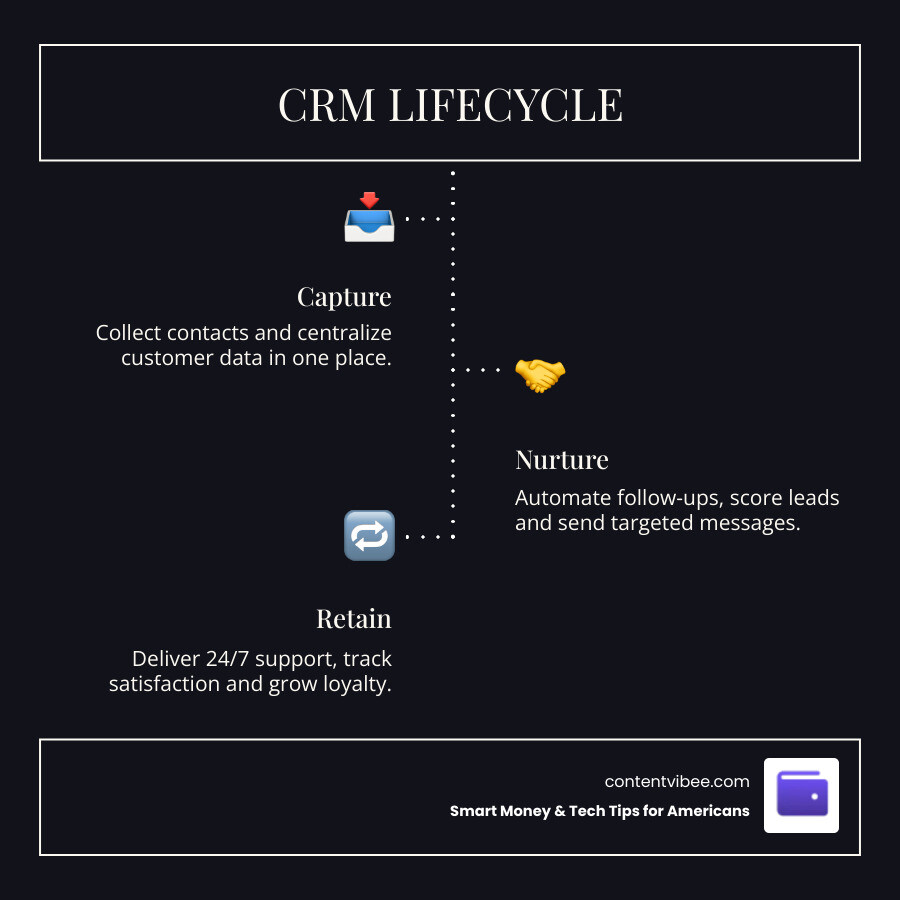
A CRM (Customer Relationship Management) tool gives you one place to store customer data, track deals, and automate the repetitive work that eats up your day. Think of it as a business memory bank — one that never forgets a follow-up or loses a contact.
Here’s why this matters right now: 63% of small business leaders say a CRM helped them deliver better or faster customer service. And retaining existing customers costs up to 20 times less than winning new ones.
Whether you’re managing five clients or five hundred, the right CRM can be the difference between chasing leads and closing them.
Why Your Company Needs the best CRM software for small business in 2026
As we navigate the business landscape of 2026, the era of “winging it” with spreadsheets and sticky notes is officially over. For those of us running small businesses in California, staying competitive means having a crystal-clear view of our customers. A CRM isn’t just a database; it is a strategic asset that helps us grow without losing that personal touch our customers love.
The primary driver for adopting the best CRM software for small business is customer retention. Research consistently shows that keeping a customer is 6 to 20 times cheaper than acquiring a new one. When we use a platform like CRM Software for Small Business | Free CRM | HubSpot, we aren’t just storing phone numbers. We are building a “memory bank” of every interaction, preference, and purchase.
Centralized data is the secret sauce here. Imagine a scenario where a sales rep leaves your company. Without a CRM, their knowledge of client relationships walks out the door with them. With a CRM, your team has a single source of truth. This visibility allows for a more organized sales pipeline, ensuring no deal falls through the cracks.
The statistics are hard to ignore. About 63% of small and mid-size business leaders report that a CRM helps them provide faster or better customer service. Furthermore, tools like Small Business CRM Software | monday CRM for SMBs allow us to visualize our sales progress in real-time, moving us from reactive firefighting to proactive growth.
Essential Features to Look for in Modern CRM Solutions
When we look for the best CRM software for small business, we shouldn’t just look for the most features—we should look for the right features. In 2026, mobility is non-negotiable. With 99% of IT leaders agreeing that businesses must be mobile-enabled to survive, your CRM must have a robust app that allows your team to update records while on the go in Los Angeles or San Francisco.
Workflow automation is another heavy hitter. Roughly 64% of small business owners rate automation as “extremely important.” This includes things like automatic lead scoring, where the software tells you which potential clients are most likely to buy, and automated follow-up emails that keep your brand top-of-mind without manual effort.
Feature Comparison: Cloud vs. On-Premise
| Feature | Cloud-Based CRM | On-Premise CRM |
|---|---|---|
| Setup Time | Minutes to hours | Weeks to months |
| Accessibility | Anywhere with internet | Office-only (usually) |
| Maintenance | Handled by provider | Handled by your IT team |
| Cost Structure | Monthly subscription | Large upfront license |
| Data Security | Encrypted, cloud backups | Local server security |
For most of us, cloud-based is the way to go. It offers better scalability and integrates more easily with our existing tech stacks. Speaking of integration, platforms like Small Business Software: All-in-One CRM | Salesforce are designed to grow with you, offering enterprise-grade security like multi-factor authentication and encryption to keep your sensitive data safe.
How to Choose a Platform Based on Your Budget and Needs
Choosing the best CRM software for small business requires a balance between what you need today and where you want to be in three years. Scalability is the keyword. You don’t want to spend months importing data into a system only to outgrow it in a year.
We recommend starting with a needs assessment. Ask yourself:
- How many users will need access?
- Do we need to sync with our accounting software?
- Is our team tech-savvy, or do we need something with a very shallow learning curve?
Implementation costs aren’t just the monthly fee. You also have to consider the time spent on training and data migration. Check out resources like Best CRM Software for Small Business in 2026: Honest Rankings to see how different platforms rank in terms of user adoption. If your team finds the software too difficult to use, they won’t use it, and your ROI will plummet.
Evaluating Free and Low-Cost best CRM software for small business Options
For startups and solo entrepreneurs, the “free forever” model is incredibly enticing. Tools like Free CRM for Small Business | HubSpot CRM offer a robust starting point with no expiration date. However, always look at the “feature gating.” Often, a free tier will let you store unlimited contacts but might charge you once you want to use automated email sequences or advanced reporting.
Data portability is another crucial factor. Ensure that any low-cost CRM you choose allows you to export your data easily in a CSV format. You don’t want your customer list held hostage if you decide to switch providers later.
Integrating AI and Automation into the best CRM software for small business
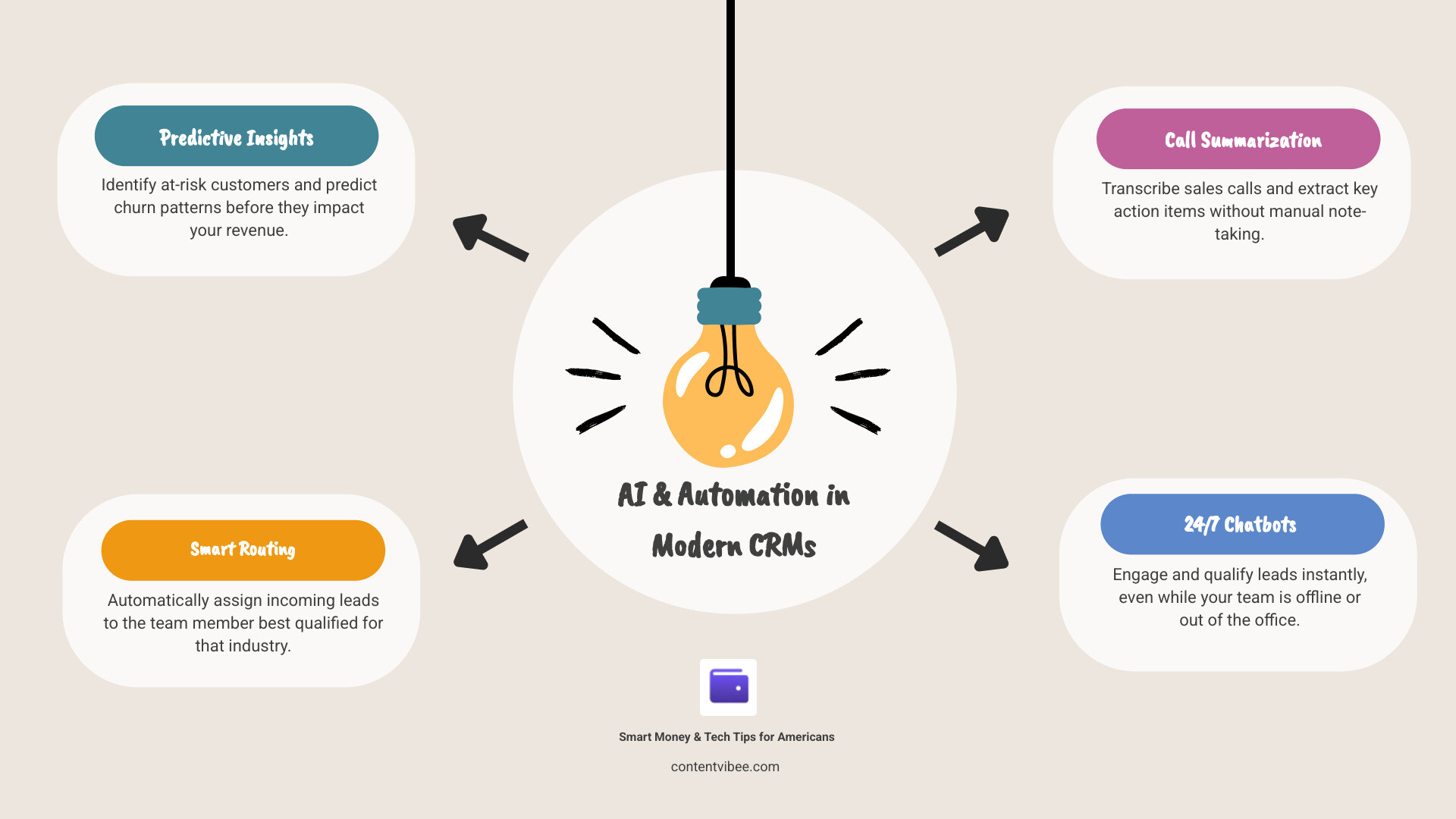
By 2026, AI is no longer a luxury; it’s a standard component of the best CRM software for small business. Modern CRMs use AI for:
- Predictive Insights: Identifying which customers are likely to “churn” (leave) before they actually do.
- Smart Routing: Automatically sending a lead to the salesperson best qualified to handle that specific industry.
- Call Summarization: Tools like the AI assistant in Best CRM for Small Business | Close can transcribe your sales calls and summarize the key action items automatically.
- 24/7 Chatbots: Handling routine customer queries even while your team is asleep, ensuring you never miss a lead.
Overcoming Implementation Challenges and Maximizing ROI
The biggest challenge in CRM implementation isn’t the software—it’s the data. If you put “garbage” data in, you’ll get “garbage” insights out. Before migrating, we suggest a thorough cleanup. Remove duplicate contacts, standardize your naming conventions (e.g., decide if it’s “St.” or “Street”), and verify email addresses.
To maximize your ROI, which should ideally be realized within 3 to 6 months, integration is key. Your CRM should “talk” to your other tools. For example, syncing your CRM with your accounting software allows you to see which customers are actually your most profitable, not just the ones who talk the most.
If you are managing a professional services firm, you might be looking at various costs, from software to legal fees. For instance, just as you’d want to know more info about how much divorce lawyer fees really cost to manage a personal budget, you need to understand the total cost of ownership for your CRM to protect your business’s bottom line.
Encouraging team adoption is the final hurdle. We’ve found that the best way to get a team on board is to show them how it makes their lives easier. Show the sales team how the CRM automatically logs their emails so they don’t have to type out notes after every call. When they see the time savings, they’ll become your biggest advocates.
Frequently Asked Questions about Small Business CRMs
Is a free CRM enough for a growing startup?
A free CRM is often a fantastic starting point. Many platforms offer enough core functionality—like contact management and deal tracking—to support a small team for a long time. However, as you grow, you may hit “feature gates” or contact limits. For example, some free tiers limit you to 1,000 contacts or restrict access to advanced automation. When your sales process becomes more complex, upgrading to a paid tier is usually a natural and profitable step.
How long does it take to set up a new CRM system?
For most small businesses, a cloud-based CRM can be up and running in a single day. The bulk of the time is spent importing your existing contacts from a spreadsheet and customizing your sales pipeline stages (e.g., “Lead,” “Qualified,” “Proposal Sent,” “Closed Won”). If you have clean data, the technical setup is remarkably fast.
Can CRM software help reduce operational costs?
Absolutely. By automating routine tasks like data entry, meeting scheduling, and follow-up reminders, a CRM allows your team to handle a higher volume of work without hiring additional staff. It also reduces the “cost of error”—like forgetting to follow up on a high-value quote—which can save your business thousands of dollars in lost revenue.
Conclusion
At Smart Money & Tech Tips for Americans, we believe that the best CRM software for small business is the one that your team actually uses. Whether you choose a powerhouse like Salesforce, a visual tool like monday.com, or a simple solution like Less Annoying CRM, the goal is the same: building stronger, more profitable relationships.
Strategic planning today ensures your business is future-proofed for tomorrow. By centralizing your data and leveraging AI-driven insights, you can move away from the chaos of manual tracking and toward a scalable, efficient future.
Managing a business budget is all about understanding where every dollar goes. To get a better handle on your overall financial planning, you might also want to explore how much divorce lawyer fees really cost to better manage your professional service budget or other legal expenses that can impact your cash flow. Start with a free trial, get your team involved, and watch your small business reach new heights in 2026.


