


A car claim lawyer is a personal injury attorney who helps accident victims fight insurance companies for fair compensation — whether your claim was denied, underpaid, or disputed.
Here’s a quick answer if you’re in a hurry:
- Your claim was denied or underpaid → A lawyer can challenge the denial and negotiate a higher settlement
- You were seriously injured → Legal help is critical to recover full medical costs, lost wages, and pain and suffering
- Fault is disputed → An attorney gathers evidence to prove the other party’s negligence
- The other driver had no insurance → A lawyer can pursue uninsured/underinsured motorist benefits
- The insurance company is acting in bad faith → You may be able to sue for additional damages beyond your original claim
The bottom line: People who hire a lawyer for car accident claims receive an average of $77,600 in compensation, compared to just $17,600 for those who go it alone — and over 90% receive a payout versus only 51% without legal help.
Car accidents are devastating — and the stress doesn’t end at the scene. Over 40,000 people died in U.S. traffic crashes in 2023 alone, and tens of thousands more suffered life-altering injuries. After the crash comes the hard part: dealing with insurance companies whose business model depends on paying out as little as possible.
Insurance companies are for-profit businesses. They use specialized claim-valuation software, experienced legal teams, and delay tactics to minimize what they owe you. Most accident victims don’t realize this until they’re already holding a lowball offer — or a denial letter.
That’s where a car claim lawyer changes everything.
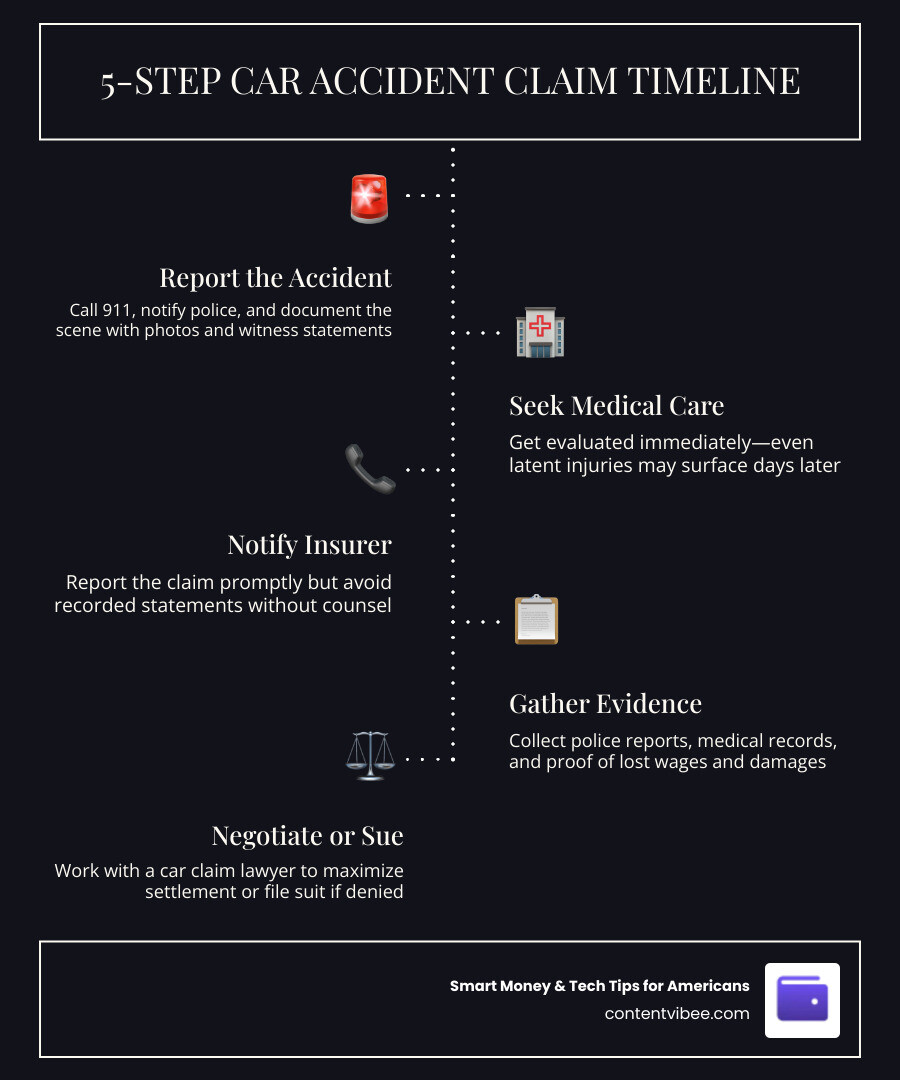
Car claim lawyer word roundup:
Understanding Your Rights and Insurance Coverage
Before we dive into the “how-to” of hiring a car claim lawyer, we need to talk about the paperwork sitting in your glove box. In California, understanding your insurance policy is like knowing the rules of engagement. If you don’t know what you’re entitled to, you can bet the insurance adjuster isn’t going to volunteer that information.

The Main Types of Coverage
Most of us just pay our premiums and hope for the best, but when an accident happens, these terms become your lifeline:
- Liability Coverage: This is mandatory in California. It pays for injuries or property damage you cause to others. However, it does nothing for your own bills.
- Collision Insurance: This covers damage to your vehicle regardless of who was at fault. If you hit a pole or another car, this gets your ride back on the road.
- Comprehensive Protection: This is for the “acts of God” or bad luck—theft, fire, vandalism, or a tree falling on your car.
- Personal Injury Protection (PIP) / Medical Payments (MedPay): While California isn’t a “no-fault” state, MedPay is a common add-on that covers immediate medical expenses for you and your passengers, regardless of fault.
- Uninsured/Underinsured Motorist (UM/UIM): This is vital. If you get hit by someone without insurance—or someone whose limits are too low to cover your $100,000 hospital bill—this coverage kicks in to protect you.
Policy Limits and the “Fine Print”
Every policy has a “limit”—the maximum amount the insurer will pay. In California, the minimum liability limits are often too low to cover a serious accident. If your damages exceed the other driver’s limits, a car claim lawyer can help you look for other sources of recovery, such as your own UIM policy or even the at-fault driver’s personal assets.
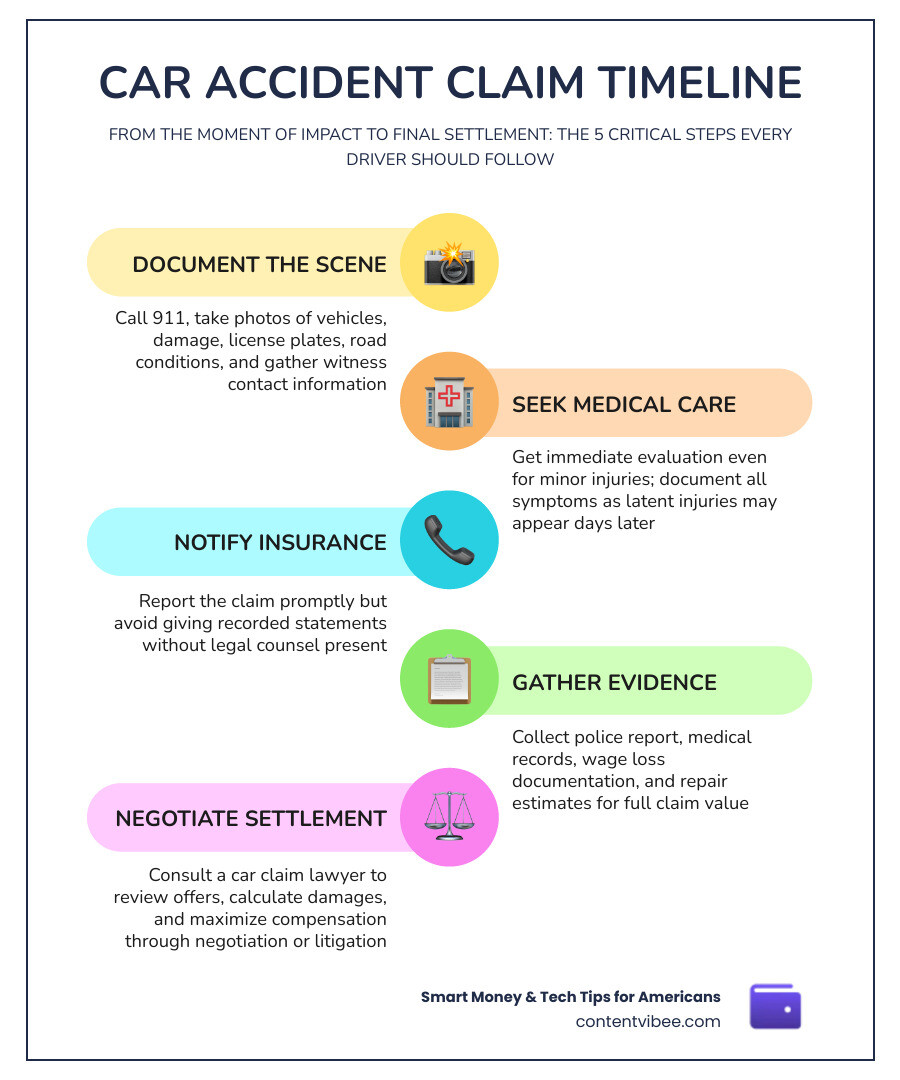
Immediate Steps to Strengthen Your Case
What you do in the sixty minutes following a crash can make or break your eventual settlement. Think of yourself as a temporary forensic investigator. While your adrenaline is pumping, you need to secure the evidence that a car claim lawyer will later use to win your case.
1. The 911 Call and Police Report
Even if the other driver says, “Hey, let’s just handle this ourselves,” don’t listen. You need an official police report. In California, police reports provide a neutral third-party account of the scene, weather conditions, and initial statements of fault. Without it, the insurance company can easily claim the accident never happened the way you said it did.
2. Evidence Collection: Your Smartphone is Your Best Friend
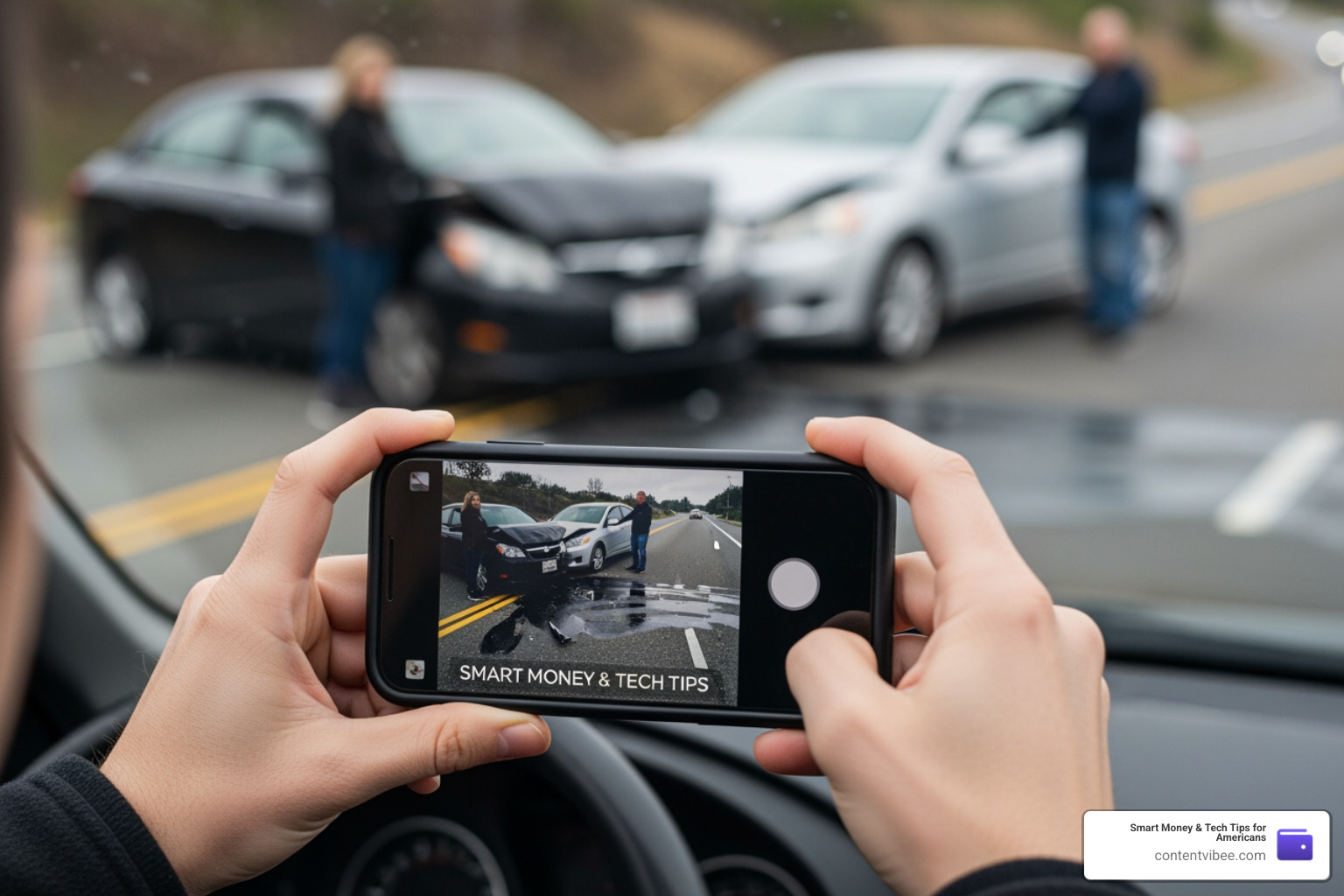
Take photos of everything. And we mean everything.
- The damage to all vehicles (close-ups and wide shots).
- The position of the cars relative to the road and intersections.
- Skid marks, broken glass, or damaged guardrails.
- The other driver’s license, insurance card, and license plate.
3. Witness Statements
If anyone stopped to help, get their name and phone number. Witness testimony is gold because they don’t have “skin in the game” like you or the other driver.
4. Medical Evaluation (The “I’m Fine” Trap)
Many people walk away from a crash feeling “fine” only to wake up three days later unable to move their neck. Adrenaline masks pain. Furthermore, insurance adjusters love to argue that if you didn’t go to the doctor immediately, you weren’t actually hurt. Seek a medical evaluation within 24 hours to document any latent injuries like whiplash or internal bruising.
If you’re wondering what your case might be worth based on your injuries and damage, check out this Car Accident Settlement Calculator.
Why You Need a Car Claim Lawyer to Fight Denials
If insurance companies played fair, we wouldn’t need to write this guide. Unfortunately, they often engage in “bad faith” practices. This isn’t just a buzzword; it’s a legal term for when an insurance company fails to fulfill its contractual obligations.
The Lowball Offer Strategy
Within days of your accident, you might get a friendly call from an adjuster offering you a check for $2,000. They’ll say it’s a “fast settlement” to help you out. Do not sign it. This is a lowball offer designed to get you to waive your right to sue before you even know the full extent of your medical bills.
The Role of Colossus and Valuation Software
Most major insurers use software like “Colossus” to determine the value of your claim. These programs are designed to minimize payouts by categorizing injuries into rigid boxes that don’t account for your actual human experience or pain. A car claim lawyer knows how to “input” the right data—meaning they provide the specific medical coding and documentation—to force the software to recognize the true value of your claim.
Liability Disputes
In California, we follow “comparative negligence” rules. This means the insurance company will try to shift even 10% or 20% of the fault onto you to reduce their payout. If they can prove you were speeding slightly, they save thousands. Your lawyer’s job is to shut down these disputes by using accident reconstruction experts and dashcam footage.
To understand the financial side of this, read about How Much Do Lawyers Charge for Accident Claims.
Maximizing Compensation and Recoverable Damages
When we talk about “damages,” we aren’t just talking about a crumpled bumper. We’re talking about your life being put back together. A skilled car claim lawyer looks at the “whole picture” of your losses.
Economic Damages (The Receipts)
These are easy to calculate because they come with a paper trail:
- Medical Expenses: Past, present, and future surgeries, physical therapy, and medications.
- Lost Wages: The money you lost while you were in the hospital or recovering at home.
- Lost Earning Capacity: If your injuries prevent you from returning to your high-paying job, you are entitled to the difference in lifetime earnings.
Non-Economic Damages (The Human Cost)
This is where the real fight happens. How do you put a price on the fact that you can no longer pick up your toddler or run a marathon?
- Pain and Suffering: Compensation for the physical pain you’ve endured.
- Emotional Distress: For the anxiety, PTSD, or depression that often follows a violent crash.
- Loss of Consortium: The impact the injury has on your relationship with your spouse.
Property-Specific Claims
Don’t forget Diminished Value and Loss of Use. Even after your car is perfectly repaired, it’s worth less because it has an accident history on its Carfax report. You can claim that loss in value! Additionally, if you didn’t have a rental car provided, you can claim “loss of use” for the days you were without a vehicle.
For more on the costs of securing this compensation, see How Much Does a Personal Injury Lawyer Cost.
Navigating the Legal Process and Timelines
The legal system isn’t known for its speed. In California, the process follows a specific rhythm, and missing a beat can cost you everything.
The Statute of Limitations
In California, you generally have two years from the date of the accident to file a lawsuit for personal injury. If you’re only claiming property damage, you have three years. However, if the accident involved a government vehicle (like a city bus), that window shrinks to just six months. A car claim lawyer ensures you don’t miss these critical deadlines.
The Discovery Rule
Sometimes, an injury doesn’t show up right away. The “discovery rule” can occasionally extend the statute of limitations if a reasonable person wouldn’t have known they were injured until later. But don’t count on this—it’s a complex legal hurdle that requires an expert to clear.
The Road to Settlement
- Investigation: Your lawyer gathers all the evidence we discussed earlier.
- Demand Letter: Your lawyer sends a formal “demand” to the insurance company, outlining the facts and the amount needed to settle.
- Negotiation: The “back and forth” where the adjuster tries to lowball and your lawyer holds firm.
- Mediation: A neutral third party helps both sides reach an agreement without a trial.
- Litigation: If the insurer won’t budge, your lawyer files a formal lawsuit and prepares for court.
Check out How Much Does a Personal Injury Lawyer Charge to see how these timelines affect your final take-home amount.
Frequently Asked Questions about Car Claim Lawyers
When should I hire a car claim lawyer?
You don’t need a lawyer for a tiny “fender bender” where no one is hurt and the insurance company pays for the bumper. However, you should call a car claim lawyer immediately if:
- There are serious injuries or a death.
- Fault is being contested or the police report is inaccurate.
- The accident involved a commercial truck, a rideshare (Uber/Lyft), or a government entity.
- You are overwhelmed. Handling a claim yourself can take 12-20 hours of personal time—time you should be using to heal.
What if the at-fault driver is uninsured?
This happens more often than you’d think in California. If you have Uninsured Motorist (UM) coverage, your own insurance company “steps into the shoes” of the at-fault driver. They become your adversary, trying to pay you as little as possible. You still need a car claim lawyer to negotiate with your own insurance company in these cases. If you don’t have UM coverage, you may have to sue the driver personally, though this is only effective if they have significant assets.
How long does a car claim lawyer take to settle?
There is no “standard” time, but most cases take between 4 and 12 months. If the case is complex or goes to trial, it can take two years or more. The duration depends on:
- Medical Improvement: You shouldn’t settle until you’ve reached “Maximum Medical Improvement” (MMI). If you settle too early, you can’t go back for more money if you need another surgery later.
- Insurance Cooperation: Some companies are “easier” to work with than others.
- Court Backlogs: If you have to file a lawsuit, the schedule of the California courts will dictate your timeline.
Conclusion
Navigating a car accident claim in California is like trying to find your way through a forest in the dark — the insurance companies have the flashlights, and they aren’t sharing. At Smart Money & Tech Tips for Americans, we believe that legal advocacy shouldn’t be a luxury.
Hiring a car claim lawyer on a contingency fee basis means you pay nothing upfront. They only get paid if you win. This levels the playing field, allowing you to focus on your physical recovery while a professional handles the financial recovery. Whether you’re dealing with a denied claim or a lowball offer, you have the right to fight for every penny you’re owed.
For those looking at the broader picture of legal expenses in life, you might also be interested in How Much Do Divorce Lawyer Fees Really Cost.
Additional Resources for California Drivers:
- California Department of Insurance
- National Highway Traffic Safety Administration (NHTSA)
- Insurance Information Institute
Stay safe on the roads, document everything, and don’t let the insurance companies dictate your worth!


