


The Real Cost of Not Knowing Your Legal Rights
Legal advice online is more accessible than ever — and for most common civil issues, you don’t need to pay a lawyer hundreds of dollars per hour to get help.
Here are the best free and low-cost options to get started right now:
| Option | Best For | Cost |
|---|---|---|
| ABA Free Legal Answers | Civil legal questions, low-income users | Free |
| LawHelp.org | Finding local legal aid by state | Free |
| Avvo | Quick anonymous Q&A with attorneys | Free |
| Rocket Lawyer | Documents + attorney consultations | Free trial, then ~$20/mo |
| LegalShield | Ongoing personal or business legal needs | From ~$36/mo |
| Minnesota/Wisconsin/Illinois state portals | Residents needing local civil legal help | Free (income-based) |
Here’s an uncomfortable truth: more than half of people believe hiring a lawyer is simply too expensive. So most people do nothing — and that can make a bad situation much worse.
The good news? A growing network of free platforms, pro bono attorneys, and AI-powered tools means you no longer have to face legal problems alone, even on a tight budget.
Every five seconds, someone gets free legal advice through platforms like Avvo alone. Lawyers across the country have already answered over 17 million questions online. The help is out there — you just need to know where to look.
This guide breaks down your best options, who qualifies, and what to watch out for.
Comparing Top Online Resources for Legal Advice
When you’re staring down a legal notice or a complicated contract, the first instinct is often panic. But before you start searching for coins under the couch cushions to pay a retainer, we want to help you understand that the digital landscape has changed the game. Finding legal advice online isn’t just about a quick Google search; it’s about connecting with verified professionals who can point you in the right direction.

Platforms Offering Pro Bono Assistance
The heavy hitter in free help is ABA Free Legal Answers. Think of it as a virtual legal clinic. It’s a national pro bono portal run by the American Bar Association, but it functions on a state-by-state basis. You don’t have to show up at a physical office or wait in a long line at a community center. Instead, you post your civil legal question to your state’s specific website, and a volunteer lawyer provides basic information and advice.
Another cornerstone is LawHelp.org. This isn’t just one site; it’s a massive directory of nonprofit legal aid providers. If you are facing something life-altering like housing instability or a disaster, this is often the best place to find a human being who can help you for free or very low cost.
Paid Memberships vs. Free Advice
Not everyone qualifies for free legal aid (usually based on income), and that’s where services like Rocket Lawyer and LegalShield come in. These are “prepaid” or subscription-based models.
For a flat monthly fee—often less than the cost of a couple of pizzas—you get access to a law firm. LegalShield, for example, offers personal plans starting around $35.95 per month. This eliminates the “billable hour” anxiety. You know exactly what you’re paying, and you get a lawyer on your side for things like traffic tickets, contract reviews, or estate planning.
The Rise of AI Tools
Then there’s the new kid on the block: AI. Platforms like Ask a Lawyer offer a hybrid model. You can chat with an AI lawyer for immediate, basic answers—sometimes up to 30 chats a day for free—or upgrade to speak with a verified human attorney. It’s fast, it’s 24/7, and it’s surprisingly effective for getting the “lay of the land” before you take formal legal steps.
| Feature | Free Volunteer Advice | Paid Membership Services | AI-Powered Tools |
|---|---|---|---|
| Cost | $0 | $20 – $50/month | Free to $49/month |
| Best For | Low-income civil issues | Small business/Ongoing personal needs | Instant general info |
| Speed | 1-5 days | Within 1 business day | Instant |
| Personalization | High (State-specific) | High (Direct consultation) | Medium (General law) |
Discover various online legal support options to see which one fits your specific needs. Whether you need a pro bono hero or a digital document assistant, the choice depends on your income and the complexity of your case.
Getting Started with Free Legal Advice Online
So, you’ve decided to take the plunge. How do you actually start? Most people are surprised to find that it’s not as simple as “Type question, get answer.” There’s a bit of a screening process involved to ensure the right people are getting the right help.
The Screening Process Most free platforms, especially state-run ones like Minnesota Legal Advice Online or Illinois Legal Aid, will start with a series of questions. They’ll ask about your zip code, your household size, and your pre-tax income. Why? Because these services are often funded by grants intended for low-income individuals.
For example, in Illinois, when counting your household size, you include yourself, your kids, and other adults you support—but you usually exclude a spouse if the legal issue is actually against them (like in a divorce or domestic battery case).
Writing Your Question When you finally get to the “Ask a Question” box, brevity is your best friend. Lawyers on sites like Avvo or ABA Free Legal Answers are volunteers. They don’t want to read a 10-page manifesto. Provide the key details, be concise, and state clearly what you want to achieve.
User Success Stories Real user reviews show that these platforms can be life-savers. One user reported saving over $1,000 on a financial legal issue by using a prepaid service instead of an hourly attorney. Another mentioned how a quick answer on Avvo helped them realize they didn’t actually need to go to court for a minor dispute, saving them weeks of stress.
If your legal issue involves debt or credit disputes, you might also want to check out our guide on Money & Credit for additional tips on managing your financial health while navigating legal hurdles.
Understanding the Scope of Legal Advice Online
It’s important to manage expectations. You probably won’t find a lawyer to represent you in a three-week murder trial for free over the internet. Most legal advice online platforms focus on civil law.
Common Issues Handled:
- Family Law: Divorce, child custody, and child support are some of the most searched topics.
- Housing: If you’re facing eviction or have a landlord who refuses to fix a leaky roof, sites like LawHelp.org have specific guides for “Rent and Eviction Help.”
- Bankruptcy: Thousands of people use online Q&A forums to understand if Chapter 7 or Chapter 13 is right for them.
- Disaster Relief: After a major storm or fire, legal aid organizations often set up dedicated portals to help victims appeal FEMA decisions.
One of the most powerful tools available is LawHelp Interactive. Instead of just giving you advice, it actually helps you create the legal documents you need. It’s an interview-style process that fills out the forms for you, making self-representation a lot less intimidating.
How Virtual Clinics and AI Tools Provide Legal Support
The “virtual clinic” model is the backbone of modern pro bono work. It’s a win-win: lawyers can volunteer from their couch at 10 PM, and you can get help without leaving your house.
The Pro Bono Engine
The American Bar Association has been a leader in this space. Their Website Redesign Report: ABA Free Legal Answers highlights how they’ve streamlined the process to make it more user-friendly. When you submit a question, it doesn’t just go into a void. It sits in a queue where state-licensed attorneys—who have been verified as being in good standing—can pick it up and answer it.
Document Creation and Contract Review
Paid services like Rocket Lawyer take it a step further. They offer “Rocket Copilot,” an AI-driven tool that helps you personalize documents for your unique situation. Whether it’s an NDA, a Lease Agreement, or a Last Will and Testament, you can create, e-sign, and store these documents online.
One of their standout features is the Contract Review. Before you sign a business deal or a lease, you can have a “Legal Pro” look it over for red flags. According to surveys, over 50% of people think hiring a lawyer is too expensive, but a monthly membership that includes contract reviews can prevent a $10,000 mistake for the price of a gym membership.
AI vs. Human Nuance
While AI is great for finding a specific statute or drafting a basic letter, it lacks the “strategy” a human lawyer provides. A human lawyer will tell you, “The law says X, but in this specific county, Judge Y usually prefers Z.” That nuance is why the most successful platforms use a hybrid approach—AI for speed, humans for the “heavy lifting.”
Eligibility Requirements and State-Specific Resources
Because many of these services are pro bono (free), they have strict rules about who can use them. They want to make sure the help goes to those who truly cannot afford a private attorney.
Income and Residency
Generally, to qualify for free services like Minnesota Legal Advice Online, you must:
- Be a resident of that state.
- Have a household income below a certain threshold (often 125% to 200% of the Federal Poverty Guidelines).
- Be at least 14 to 18 years old (depending on the state).
State-Specific Highlights
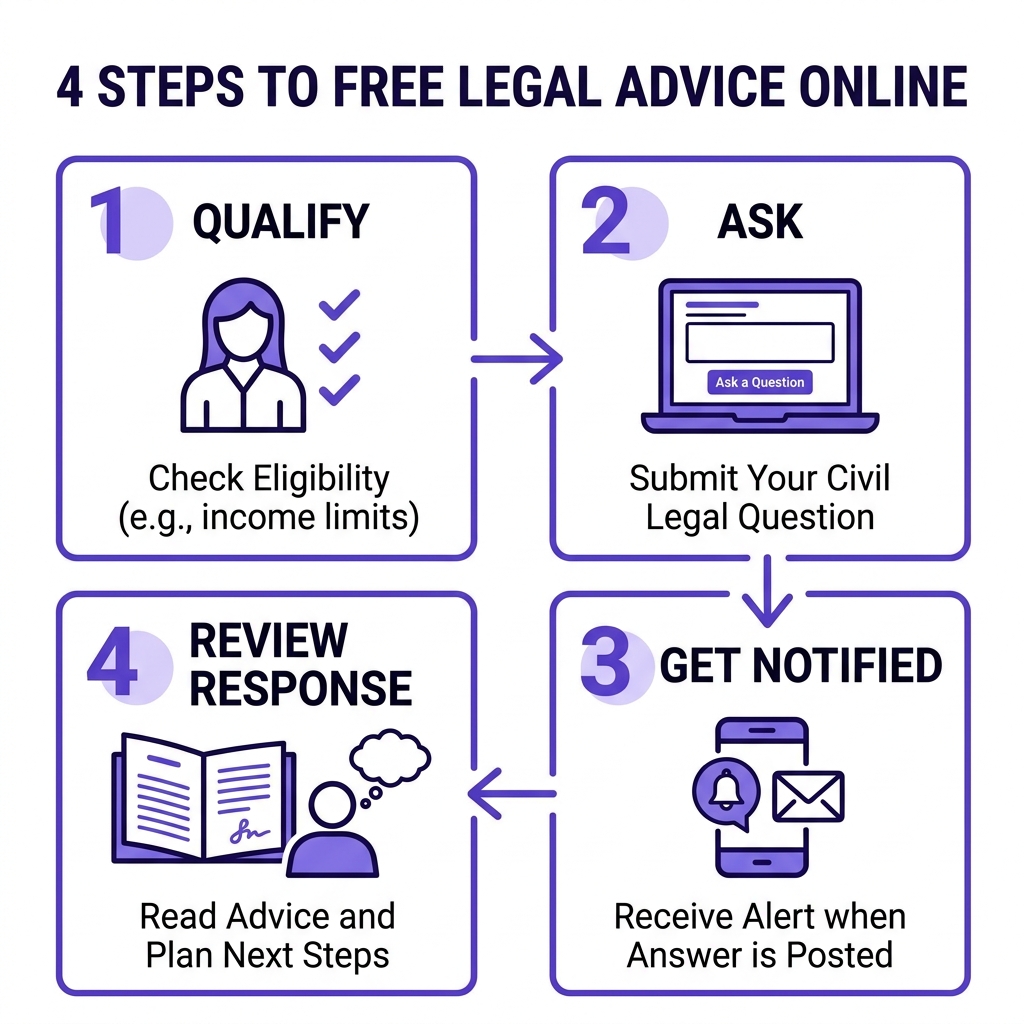
- Wisconsin: Uses the ABA Free Legal Answers portal. It’s a simple four-step process: See if you qualify, ask a question, check your email, and log back in to see the response.
- Minnesota: Their portal is run by a coalition of legal services. It’s highly confidential, and every lawyer is verified to be licensed in MN.
- Illinois: Illinois Legal Aid Online is a powerhouse. They have self-help centers in all 102 counties, often located in courthouses or public libraries. These centers provide computers, printers, and sometimes “Lawyer in the Library” programs where you can get face-to-face help.
If you’re looking for ways to build your credit while managing legal costs, you might find our article on What the Open Sky Credit Card Is and Who It’s For helpful. Managing your finances often goes hand-in-hand with resolving legal disputes.
Privacy, Trust, and the Limitations of Digital Consultations
We live in an era of data breaches, so it’s natural to wonder: is my legal dirty laundry safe online?
Confidentiality and Privilege
When you use a site like Avvo, your initial question is often anonymous and public. This means you should never include names, social security numbers, or specific addresses in the public box.
There is also a big difference between legal information and legal advice.
- Legal Information: “In Illinois, the law says you must give 30 days’ notice for an eviction.” (Generally not covered by attorney-client privilege).
- Legal Advice: “Based on your specific lease, you should send this specific letter to your landlord on Tuesday.” (This requires a formal attorney-client relationship).
Most free platforms provide information and basic advice but explicitly state they are not your long-term representatives. They won’t go to court with you unless you sign a separate agreement.
Lawyer Verification and Hidden Fees
“Free” should mean free. Reputable sites like ABA Free Legal Answers or LawHelp.org have no hidden fees. They verify their lawyers through state bar records. However, be wary of “free” sites that immediately ask for a credit card for a “trial” that’s hard to cancel. Stick to the verified names we’ve mentioned here to avoid scams.
Frequently Asked Questions about Online Help
Are there hidden fees on “free” legal websites?
On legitimate pro bono sites like ABA Free Legal Answers or LawHelp.org, there are no hidden fees. These are funded by the American Bar Association and various legal aid grants. However, on “freemium” sites, you might get a basic answer for free but be asked to pay for a follow-up call or document review. Always read the fine print before clicking “Submit.”
How do platforms verify the qualifications of volunteer lawyers?
Platforms like Avvo and ABA FLA use a lawyer’s State Bar ID to verify their status. Avvo, for example, has a proprietary rating algorithm from 1 to 10 that evaluates a lawyer’s background, years of experience, and disciplinary history. This rating cannot be bought or manipulated by the lawyers themselves.
Can online platforms help with criminal law cases?
Most free online advice portals are strictly for civil matters (housing, family, debt, etc.). If you are facing criminal charges and cannot afford a lawyer, you have a constitutional right to a public defender. You should contact your local Public Defender’s office immediately rather than waiting for an online response.
Conclusion
At ContentVibee, we believe that access to justice shouldn’t depend on the size of your bank account. The “justice gap” is a real problem, but the rise of legal advice online is helping to bridge it. Whether you are a low-income resident in Illinois looking for a self-help center or a small business owner needing a quick contract review, the tools are at your fingertips.
Don’t let a legal problem fester because you’re afraid of the cost. Start with a free Q&A, check your eligibility for state-specific aid, and empower yourself with the information you need to move forward.
Explore our full range of legal and financial guides to keep your life and business running smoothly. From understanding credit card payments to navigating the latest tech tools, we’re here to help you stay informed and in control.


