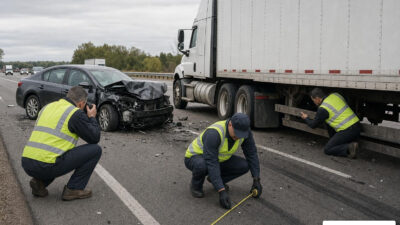


Federal Hours-of-Service Regulations and Carrier Liability
Federal regulations govern how long commercial drivers can operate their vehicles. The Federal Motor Carrier Safety Administration (FMCSA) sets strict rules under the Federal Motor Carrier Safety Regulations (FMCSR) to keep exhausted drivers off public highways. When motor carriers fail to enforce driver oversight, they put everyone on the road at serious risk.
How Hours-of-Service Violations Prove Negligence
Under 49 CFR § 395.3, federal rules limit property-carrying commercial drivers to a maximum of 11 hours of driving time after 10 consecutive hours off duty. Additionally, drivers cannot drive beyond the 14th consecutive hour after coming on duty. The regulations also mandate a 30-minute break after 8 cumulative hours of driving and cap total weekly driving at 60 hours over 7 consecutive days (or 70 hours over 8 consecutive days).
When a commercial driver violates these rules and causes a collision, it establishes negligence per se. This legal doctrine means the court can presume the driver acted negligently because they violated a safety statute designed specifically to prevent such harm. Working with a team experienced in these claims helps establish this connection; learn more in our In-Depth Guide to Serious Truck Accident Lawyer.
Why You Need a Driver Fatigue Accident Lawyer Even When Regulations Are Met
A driver can comply perfectly with hourly limits and still be dangerously exhausted. Federal regulation 49 CFR § 392.3 explicitly prohibits a driver from operating a commercial motor vehicle while their ability or alertness is impaired by fatigue, illness, or any other cause.
Carriers frequently design pay-per-mile incentive schemes that encourage drivers to push past physical exhaustion. In these cases, liability extends to layered carrier practices, including:
- Negligent Dispatch: Forcing unrealistic delivery timelines that demand driving without rest.
- Negligent Supervision: Tolerating chronic exhaustion or ignoring health conditions like sleep apnea.
- Negligent Retention: Keeping drivers with documented histories of log violations on active routes.
Consulting a driver fatigue accident lawyer allows victims to pursue both the driver and the parent trucking firm.
Layered Insurance Structures in Commercial Trucking Accidents
Under 49 C.F.R. § 387.9, interstate commercial motor carriers must maintain minimum public liability coverage of $750,000. However, severe crashes routinely exceed this floor. Most major motor carriers carry primary and excess liability policies worth millions of dollars.
To learn more about navigating complex liability limits, see our Commercial Vehicle Accident Lawyers Guide 2026. Beyond the primary carrier, third-party entities like freight brokers and shipping agents may also carry secondary insurance policies if their dispatch demands directly caused the fatigue violation.
How a Driver Fatigue Accident Lawyer Uses ELD, Telematics, and Sleep Science
Modern litigation relies heavily on digital forensics and medical research to demonstrate driver impairment.
Securing ELD Records and Telematics Evidence Before Spoliation
Electronic Logging Devices (ELDs) automatically capture driving status, engine hours, speed, and location data. Under 49 CFR § 395.8(k), motor carriers are only required to retain ELD data and supporting documents for 6 months.
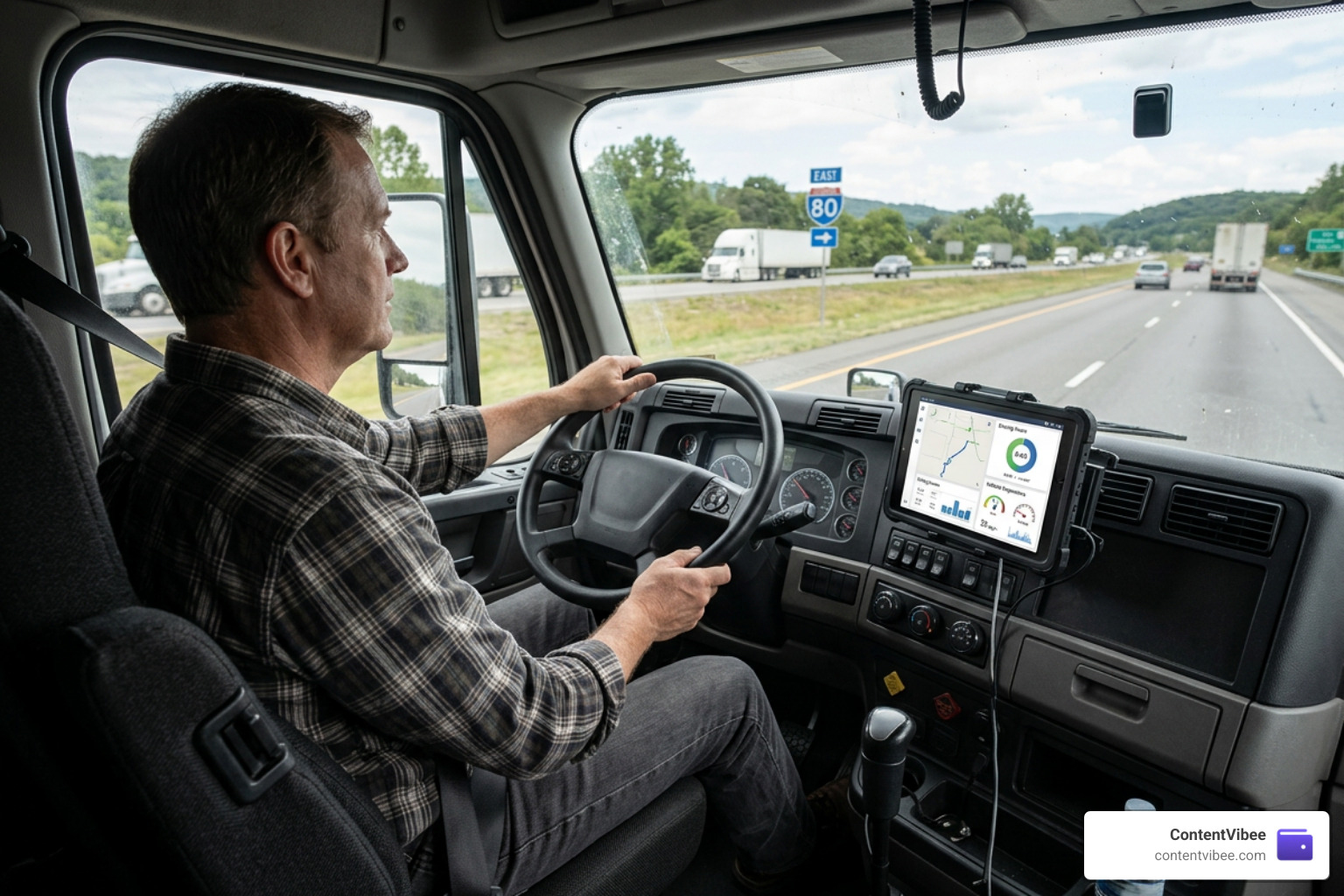
To prevent crucial evidence from being routinely overwritten, a driver fatigue accident lawyer must issue formal spoliation letters within 24 to 72 hours of the crash. These legal notices demand the immediate preservation of:
- Onboard telematics and Engine Control Module (ECM) “black box” data.
- Electronic logging device entries and audit trails.
- Driver Vehicle Inspection Reports (DVIR).
- In-cab dash cam footage and dispatch communications.
Overcoming Carrier Discovery Objections Under Federal Privacy Laws
When carriers resist producing fleet telematics data during discovery, they frequently invoke the Stored Communications Act (18 U.S.C. § 2701 et seq.) or raise Fourth Amendment privacy arguments on behalf of third-party technology vendors.
Attorneys overcome these defense tactics by serving targeted third-party subpoenas, demonstrating that the carrier possesses constructive control over the vendor’s data, and securing court orders. Additional strategies are detailed in our guide on How Commercial Vehicle Accident Lawyers Can Help You.
Sleep Science Experts and Biomechanical Crash Signatures
Without a chemical breathalyzer test for tiredness, sleep science experts use objective metrics to quantify exhaustion. Software like the Fatigue Avoidance Scheduling Tool (FAST)—originally designed for military aviation—analyzes shift schedules, Circadian rhythms, and sleep debt to calculate cognitive performance impairment.
Research shows that severe sleep deprivation mirrors alcohol intoxication:
| Hours Awake | Equivalent Blood Alcohol Concentration (BAC) | Legal Status Standard |
|---|---|---|
| 18 Consecutive Hours | 0.05% BAC | Exceeds commercial impairment thresholds |
| 24 Consecutive Hours | 0.10% BAC | Exceeds legal limits for all drivers (0.08% / 0.04% commercial) |
Accident reconstructionists also look for the “biomechanical signature” of a fatigue crash: a total lack of pre-collision braking or evasive swerving, proving the driver was asleep or unconscious at impact.
Georgia Tort Law, Damages, and Criminal Liability in Fatigue Crashes
Georgia law provides clear legal pathways to hold negligent commercial drivers and trucking companies liable for severe injuries or loss of life.
Comparative Fault and Defeating Carrier Defenses in Georgia
Under Georgia’s comparative fault statute (O.C.G.A. § 51-12-33), an injured victim can recover damages as long as they are less than 50 percent at fault for the accident. Trucking company insurers often try to shift blame onto passenger vehicle drivers. However, showing a complete lack of evasive maneuvers from the truck—proving the driver fell asleep—effectively shuts down these comparative fault defenses.
Victims must also strictly observe filing timelines. Georgia’s personal injury and wrongful death statute of limitations (O.C.G.A. § 9-3-33) allows two years from the date of the crash to file suit. If a government entity or municipal vehicle is involved, ante litem notices must be filed in as few as six months. For general auto injury procedures, review our Car Accident Lawyer Guide 2026.
Recovering Compensatory and Punitive Damages
Victims of commercial vehicle collisions are entitled to seek both economic and non-economic compensatory damages. When severe driver exhaustion or intentional log falsification is proven, Georgia law also permits punitive damages under O.C.G.A. § 51-12-5.1.
Available damages in fatigue claims include:
- Current and future medical expenses.
- Lost wages and reduced earnings capacity.
- Physical pain, emotional suffering, and loss of enjoyment of life.
- Wrongful death damages (for surviving family members).
- Punitive damages to penalize willful misconduct, gross negligence, or systemic log falsification.
Criminal Reckless Driving and Vehicular Homicide Charges
A fatigued truck driver who causes a catastrophic accident can face criminal charges alongside civil litigation. Under O.C.G.A. § 40-6-393, driving while knowingly impaired by extreme exhaustion after gross hours-of-service violations can support felony vehicular homicide or reckless driving charges.
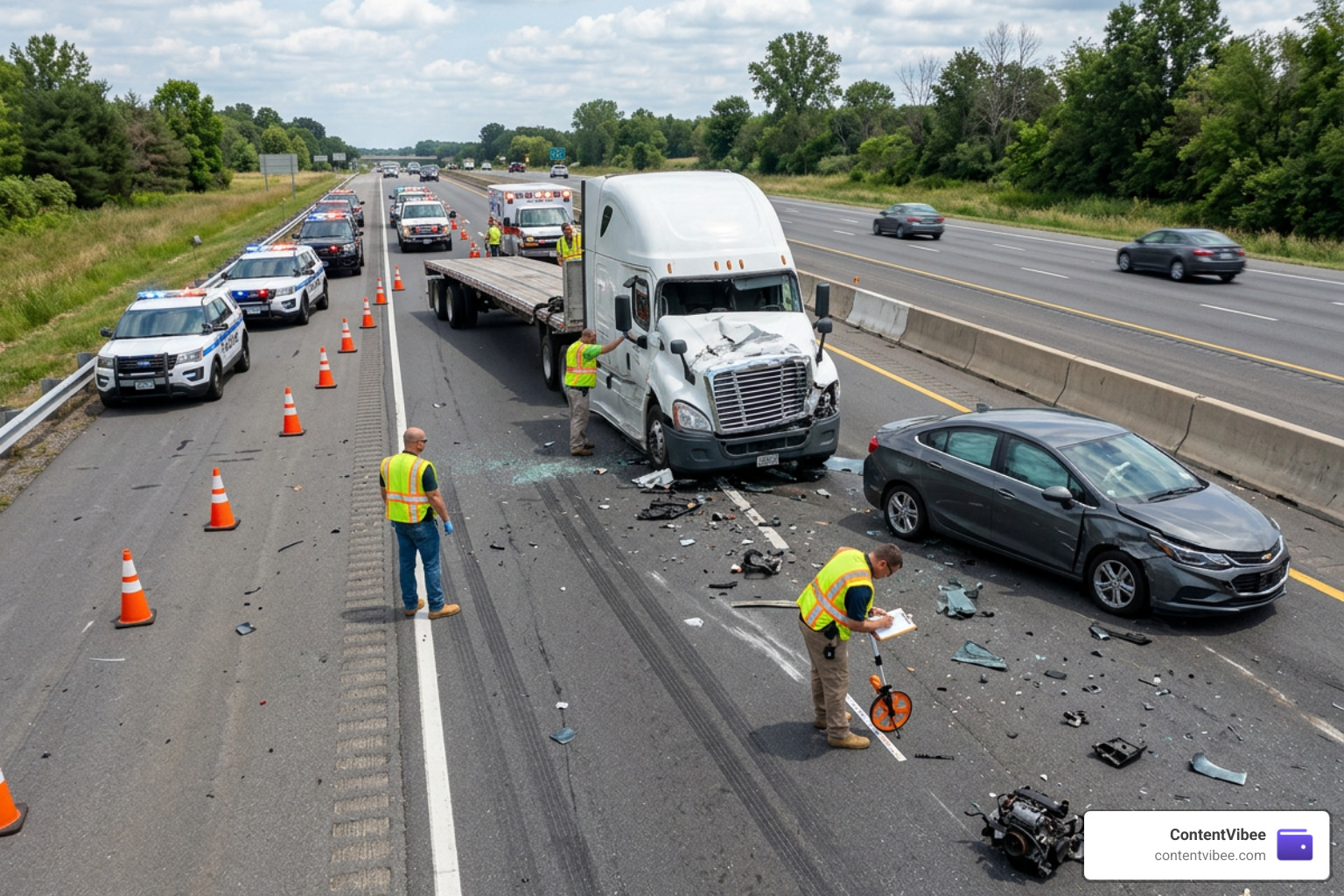
Civil proceedings often run parallel to criminal prosecutions, where criminal evidence can help establish civil liability.
Immediate Action Steps to Take After a Fatigue Truck Crash
Taking fast, organized action after a commercial vehicle crash protects both your health and your legal rights.
Steps to Take at the Scene and Hiring a Driver Fatigue Accident Lawyer
- Seek Immediate Medical Attention: Get evaluated at a Level-I trauma center or emergency room immediately, even if injuries are not instantly obvious.
- Document the Crash Scene: Take photographs of vehicle positions, road conditions, skid marks (or the lack thereof), and truck license plates.
- Contact Law Enforcement: Ensure responding officers complete an official state accident report and record any statements made by the truck driver.
- Avoid Giving Recorded Statements: Do not speak to the motor carrier’s insurance adjusters without legal representation.
- Retain Specialized Counsel: Retain a personal injury firm immediately to issue preservation demands to the trucking company.
To understand what happens next, consult our walkthrough on What to Expect When Hiring a Commercial Truck Injury Lawyer.
Frequently Asked Questions About Driver Fatigue Truck Claims
How long do I have to file a claim after a truck accident in Georgia?
Under O.C.G.A. § 9-3-33, you generally have two years from the crash date to file a personal injury or wrongful death lawsuit. However, if state or local government entities are involved, mandatory ante litem notice deadlines can shorten this window to six months.
What happens if a truck driver falsified their ELD logbook entries?
Falsifying ELD logs violates 49 CFR § 395.8(e). Uncovering intentional falsifications provides strong evidence of gross negligence and fraud, directly supporting punitive damage awards against both the driver and the motor carrier.
Can a freight broker or shipper be held liable for driver fatigue?
Yes. Under precedents like Sperl v. C.H. Robinson, brokers and shippers can be held liable if they negligently selected an unsafe carrier or imposed delivery schedules that forced the driver to violate federal rest requirements.
Conclusion
Commercial truck driver fatigue leads to preventable, devastating highway accidents. Navigating federal trucking regulations, preserving digital ELD evidence, and pursuing fair financial compensation requires quick, decisive legal action.
If you or a loved one were injured in a crash, consult our comprehensive Commercial Vehicle Accident Lawyers Guide 2026 to learn more about protecting your rights and securing the recovery you deserve.