


Why Getting the Right Auto Insurance Quotes in California Can Save You Thousands
If you’re shopping for auto insurance quotes in California, here’s what you need to know right now:
Quick Answer: California Auto Insurance at a Glance (May 2026)
| Coverage Type | Average Monthly Cost | Average Annual Cost |
|---|---|---|
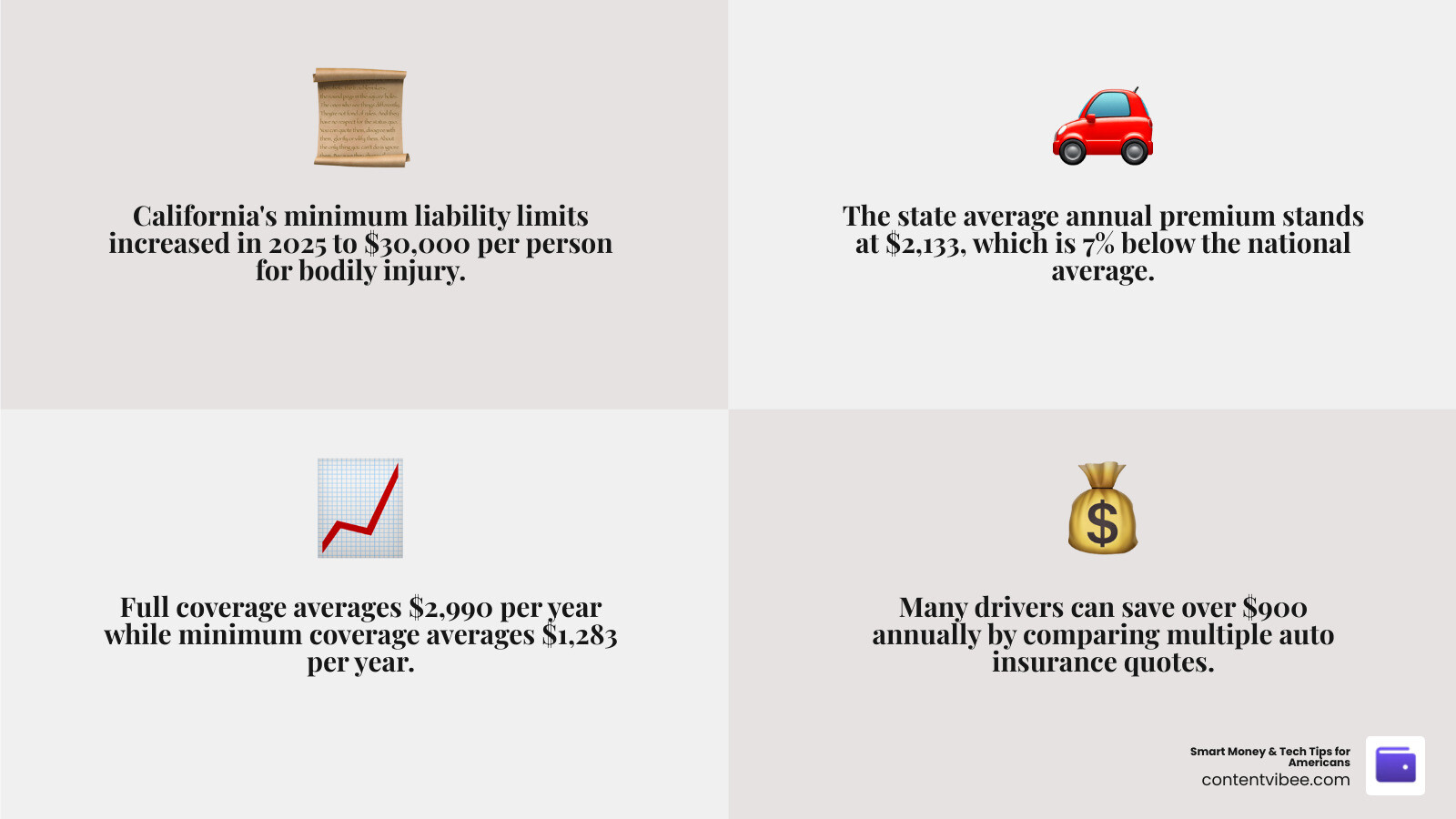
| Minimum coverage | ~$107/month | ~$1,283/year |
| Full coverage | ~$249/month | ~$2,990/year |
| State average (all policies) | ~$178/month | ~$2,133/year |
California’s minimum required coverage (as of 2025):
- $30,000 bodily injury per person
- $60,000 bodily injury per accident
- $15,000 property damage per accident
California is one of the most expensive — and complicated — states for car insurance. Rates vary wildly depending on where you live, what you drive, and your driving history.
Here’s the reality: the state raised its minimum liability limits in 2025, which pushed premiums up for many drivers — especially those who were carrying the old, lower minimums.
The good news? California’s average annual premium of $2,133 is actually 7% below the national average. And with the right strategy, many drivers save hundreds — sometimes over $900 — just by comparing quotes.
Whether you’re a long-time resident or recently moved here, understanding how California’s auto insurance market works is the first step to making a smart, money-saving decision.
Understanding California’s Minimum Auto Insurance Requirements
Navigating the legal landscape of the Golden State requires more than just a valid driver’s license. To legally operate a motor vehicle, you must meet California’s financial responsibility laws. While most people satisfy this through an insurance policy, the state also allows for a $35,000 cash deposit or a surety bond with the DMV.
However, for the vast majority of us, getting California Car Insurance: Get a Quote is the standard path. It is important to remember that California is an “at-fault” state. This means if you cause an accident, you are financially responsible for the other party’s medical bills and property repairs.
Mandatory Liability Limits for 2026
In a significant shift for California drivers, Senate Bill 1107 went into effect in early 2025, effectively doubling the previous minimum requirements. As of May 2026, every driver must carry at least:
- $30,000 for bodily injury or death to one person.
- $60,000 for bodily injury or death to more than one person per accident.
- $15,000 for property damage.
These 30/60/15 limits are designed to better reflect the modern costs of medical care and vehicle repairs. Falling below these limits can lead to severe legal penalties and leave you personally liable for damages that exceed your coverage.
Proof of Insurance and Vehicle Registration
When you head to the DMV to register a vehicle, you must provide proof of insurance. If you are a new resident, California law is quite strict: you must register your vehicle within 20 days of establishing residency.
To complete the process, you’ll typically need to submit an Application for Title or Registration (REG 343), provide a smog certification (if applicable), and show your insurance ID card. Many providers now offer Auto Insurance Quotes in California that include instant electronic ID cards via mobile apps, making it much easier to prove coverage at the DMV or during a traffic stop.
How Much Do Auto Insurance Quotes California Typically Cost?
The price you pay for auto insurance quotes in California is influenced by a cocktail of factors, from the state’s high traffic density to its exposure to natural disasters. As of May 2026, the average cost for full coverage in the state is $2,990 per year, though many drivers find more affordable rates by shopping around.
Just like managing your health—where you might look into Everything You Need to Know About Health Insurance Cost Per Month in California—car insurance requires a balance between monthly premiums and out-of-pocket costs.
Factors Influencing Auto Insurance Quotes California
In California, insurance companies use specific “rating factors” to determine your premium. Interestingly, California law limits the use of certain factors that are common in other states. For example, your driving record, years of experience, and annual mileage are the primary drivers of your rate.
- Driving Record: A clean record for three years often qualifies you for a “Good Driver” discount.
- Vehicle Type: High-tech EVs or luxury cars often cost more to insure due to expensive parts.
- Location: Where you park your car at night matters significantly.
For those looking for localized service, checking California Car Insurance: Get an Auto Quote can provide insights into how regional risks affect your specific neighborhood.
Regional Price Variations Across the Golden State
Where you live in California is one of the biggest predictors of your insurance cost. Urban centers like Los Angeles see higher premiums—averaging around $253 per month—due to heavy congestion and higher accident rates. Conversely, cities like Fresno often enjoy lower rates, averaging closer to $158 per month.
Much like the variation seen in The Ins and Outs of Health Insurance Cost Per Month, geography dictates risk. If you live in a high-traffic area like the Bay Area or San Diego, expect to pay a “congestion premium” compared to drivers in the Central Valley.
Strategies to Compare and Save on Your Premiums

Saving money on auto insurance quotes in California isn’t just about finding the cheapest provider; it’s about maximizing value. We always recommend reviewing your policy annually to ensure you aren’t overpaying for coverage you no longer need.
How to Compare Auto Insurance Quotes California Effectively
To get an “apples-to-apples” comparison, you must ensure you are looking at the same limits and deductibles across different companies. For instance, if you get a quote for Car Insurance | Get an Auto Insurance Quote | Liberty Mutual, make sure those limits match the ones you requested from other carriers.
Using a strategy similar to a A Comprehensive Guide to Health Insurance Plans Comparison, look at the total cost of ownership. A lower premium might come with a much higher deductible, which could hurt your wallet if you actually need to file a claim.
Common Discounts for California Drivers
Discounts are the “secret sauce” to lowering your premiums. Most California insurers offer a variety of ways to shave off 5% to 25% of your bill:
- Bundling: You can often save an average of 15% when you bundle home and car insurance. Check Car Insurance – Get a Free Auto Insurance Quote – Nationwide for bundling options.
- Good Driver: Mandated by California law, this discount is for those with clean records.
- Usage-Based Programs: Apps that track your driving (like SmartRide or RightTrack) can offer significant savings for safe habits.
- Affinity Groups: Discounts for certain professions or alumni associations are common through California Car Insurance | Online Quotes | 21st.com.
Essential Coverage Beyond the Legal Minimums
While the state minimums keep you legal, they rarely provide enough protection for your own assets. If you have a car loan or lease, your lender will likely require “Full Coverage,” which includes Comprehensive and Collision insurance.
Protecting Against Natural Disasters and Theft
California drivers face unique risks. Comprehensive coverage is essential for protection against:
- Wildfires and Mudslides: Standard in many California regions.
- Theft: California has seen a rise in catalytic converter thefts and vehicle break-ins.
- Glass Damage: Navigating the 10 Freeway or the hills of San Francisco often leads to chipped windshields.
Comprehensive coverage ensures that if a tree falls on your car during a storm or it’s damaged in a fire, you aren’t left paying for the repairs out of pocket. You can find more details on these protections at Auto Insurance Quotes in California.
The Importance of Uninsured Motorist Protection
Did you know that roughly 17% of California drivers are uninsured? If one of these drivers hits you, your standard liability policy won’t pay for your repairs. Uninsured Motorist (UM) coverage is vital. While you can reject it in writing, we strongly advise against it. California also offers a “Deductible Waiver,” where your insurer pays your collision deductible if an uninsured driver is at fault.
Frequently Asked Questions about Auto Insurance Quotes California
Is California a no-fault state?
No, California is an at-fault state. This means the person responsible for the accident pays for the damages. California also follows a “pure comparative negligence” rule, meaning if you are 20% at fault, your recovery amount is reduced by 20%.
How do California car insurance laws affect teen drivers?
Teens in California must follow a graduated licensing process. They must hold a provisional permit for six months and complete professional driver training. To save money, look for “Good Student” discounts, which often require a 3.0 GPA or higher.
What are the penalties for driving without insurance in California?
The consequences are steep. For a first offense, fines can exceed $450 after penalty assessments. More importantly, the DMV may suspend your driver’s license and impound your vehicle. You may also be required to file an SR-22 (proof of financial responsibility) for several years, which significantly increases your future auto insurance quotes in California.
Conclusion
Managing your finances in the Golden State requires a proactive approach. At Smart Money & Tech Tips for Americans, we believe that understanding the nuances of insurance is just as important as knowing how to Maximize your household budget with a Social Security spousal benefit. By comparing quotes annually, taking advantage of California-specific discounts, and choosing coverage that protects against local risks like wildfires, you can drive with confidence and keep more money in your pocket.


