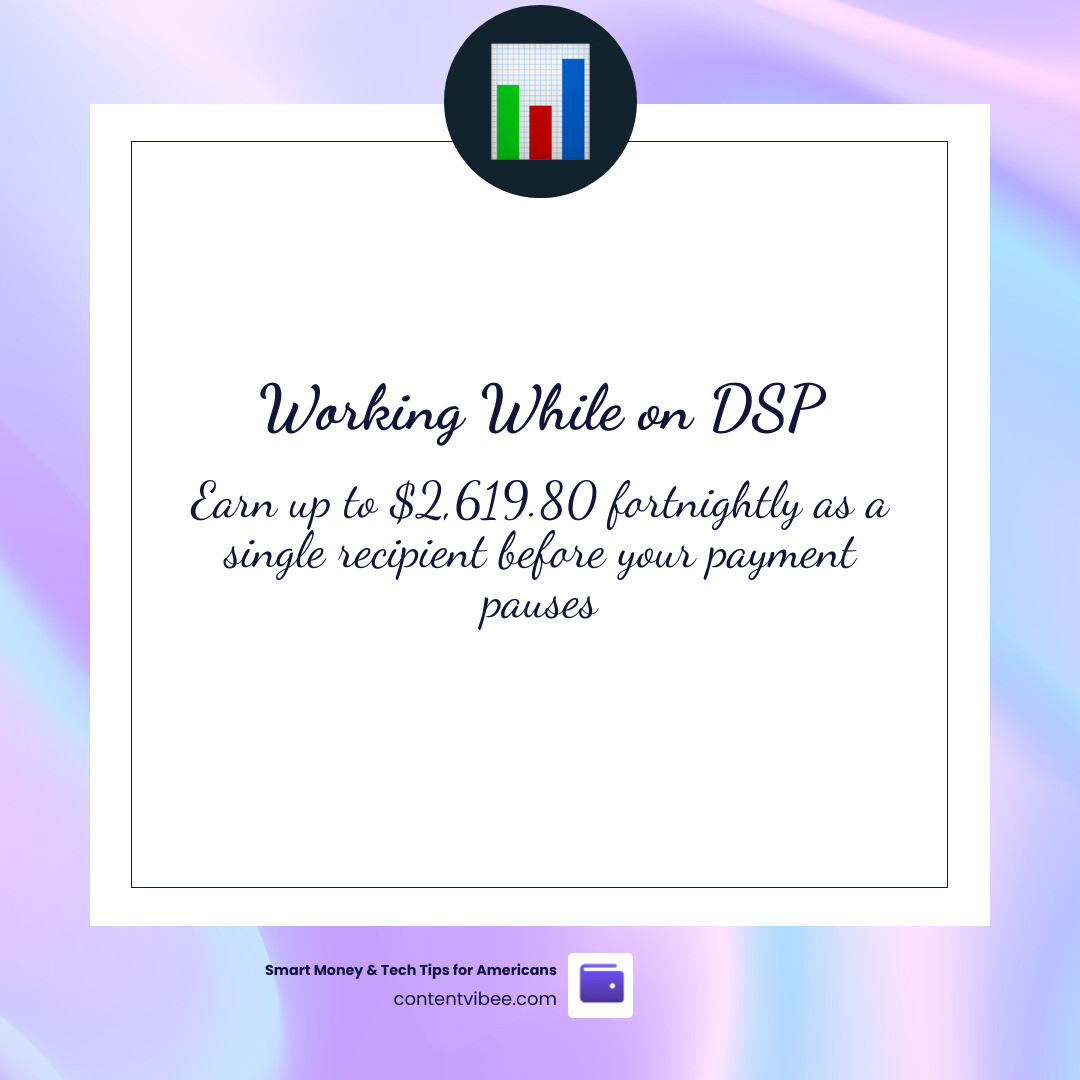


Can You Earn Money While on a Disability Pension? Here’s What You Need to Know
How much you can earn on the disability pension depends on your relationship status, age, and which country’s system applies to you — but the short answer is: yes, you can earn income and still receive payments.
Here’s a quick overview of the key earning limits for Australian DSP recipients:
| Situation | Income-Free Area (per fortnight) | Payment Cuts Off At |
|---|---|---|
| Single (21+) | $218 | $2,619.80 |
| Couple (living together) | $380 combined | $4,000.80 combined |
| Couple (living apart, ill health) | $380 combined | $5,094.80 combined |
How the reduction works:
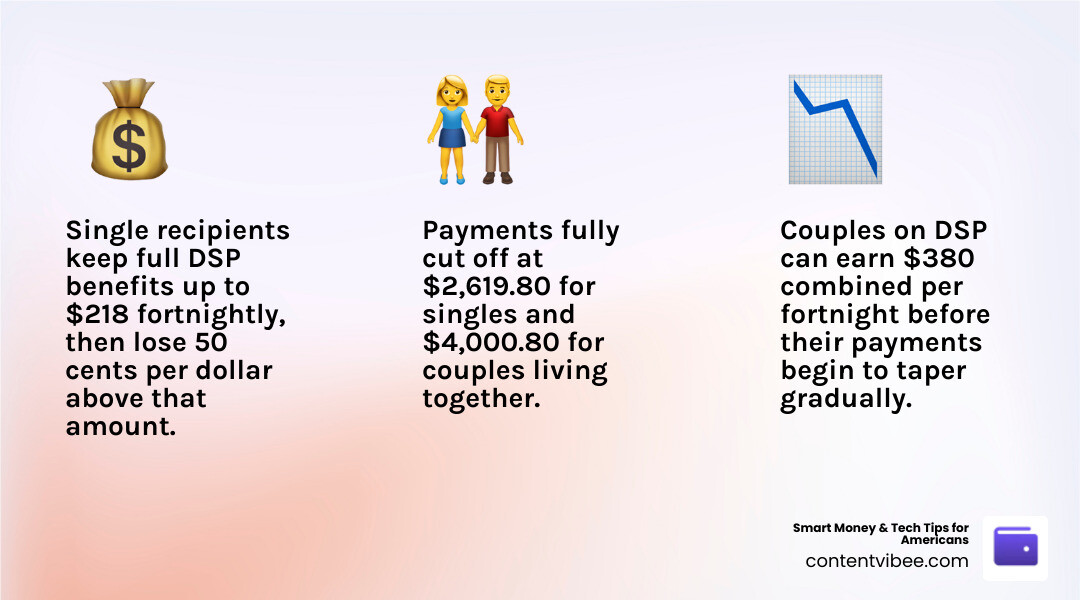
- Single recipients lose 50 cents for every dollar earned over $218 per fortnight
- Couples lose 25 cents per dollar over the $380 combined threshold
- If income drops back below the cut-off, payments can restart
Many people on disability pensions assume earning any income means losing their benefits entirely. That’s a costly myth.
In Australia, the Disability Support Pension (DSP) uses a gradual “taper” system — your payment reduces slowly as income rises, rather than stopping abruptly. In the US, Social Security has a Trial Work Period that lets you test employment without immediately losing benefits. Canada’s CPP disability program has its own earnings thresholds before benefits are affected.
The key is knowing exactly where your limits are — and how to stay on the right side of them.
Understanding the Disability Support Pension (DSP) and Eligibility
The Disability Support Pension (DSP) is designed for individuals with a permanent physical, intellectual, or psychiatric condition that prevents them from working. However, “unable to work” doesn’t necessarily mean you can’t work at all. Under the current rules, you are generally eligible if your condition stops you from working at least 15 hours per week at or above the relevant minimum wage for the next two years.
To qualify, you must meet both medical and non-medical rules. Non-medical rules include being aged between 16 and the Age Pension age (which is 67 as of May 2026) and meeting specific residency requirements. On the medical side, your condition must be fully diagnosed, treated, and stabilized.
Some people qualify under “manifest conditions.” These are specific diagnoses—such as permanent blindness, terminal illness with a life expectancy of less than two years, or an IQ below 70—that allow for faster approval without the need for a full Program of Support. For more details on the base rates, you can check How much you can get – Disability Support Pension.
How Much Can You Earn on the Disability Pension Without Losing Benefits?
We often get asked if it’s “worth it” to work while on a pension. In almost every case, the answer is yes. Because of the way the income test is structured, you will end up with more money in your pocket overall, even if your pension payment is reduced.
The “income-free area” is the amount you can earn before your pension starts to drop. For every dollar you earn above this threshold, your pension reduces by a set rate. This is known as the taper rate. It’s a way to encourage work without pulling the safety net out from under you. You can find the full breakdown of these rules at the Income test for Disability Support Payment.
How much can you earn on the disability pension as a single person?
If you are a single person aged 21 or over, you can earn up to $218 per fortnight without losing a single cent of your pension. Once you earn more than that, your pension reduces by 50 cents for every dollar over that limit.
For example, if you earn $400 in a fortnight:
- We subtract the $218 free area, leaving $182.
- We take 50% of that $182, which is $91.
- Your pension is reduced by $91 for that fortnight.
Even with this reduction, you are still $309 ahead ($400 earnings minus $91 reduction). Your pension only hits $0 once your fortnightly income reaches $2,619.80. Plus, even if your payment goes to zero, you often get to keep your Pensioner Concession Card for up to two years, which helps with medical costs and utilities.
How much can you earn on the disability pension if you have a partner?
When you have a partner, Centrelink looks at your combined income. The income-free area for a couple living together is $380 per fortnight. For every dollar the two of you earn above this combined amount, your pension reduces by 25 cents.
This “partner income test” can be complex, especially if your spouse also receives a benefit. If you’re trying to figure out how your household income stacks up, our Social Security Spousal Benefit Calculator can help you visualize how different income streams interact.
If you and your partner are living apart due to ill health (for example, one person is in aged care), the system treats you more like two single people, offering a higher combined cut-off point of $5,094.80.
Navigating Income Cut-Off Points and Reporting Requirements
To keep your payments accurate, you must report your gross earnings (the amount before tax) to Centrelink every fortnight. Even if you earn $0 in a particular period, you still need to report. Most people find it easiest to use the digital reporting apps or online accounts.

It’s also important to watch your hours. Generally, you can work up to 29 hours per week without losing your DSP eligibility. If you consistently work 30 hours or more, your payment may be suspended, regardless of how much you earn.
We also need to mention deeming rules. If you have financial assets like savings accounts or shares, Centrelink “deems” that you are earning a certain amount of interest on them, even if the actual return is lower. This deemed income is added to your employment earnings when calculating your pension reduction. For those curious about how marriage affects these calculations, check out What is a Social Security Spousal Benefit?.
Global Comparisons: Work Incentives in the US and Canada
The “Earn vs. Burn” struggle isn’t unique to Australia. Our neighbors in the US and Canada have similar systems, though the rules can feel like a different language.

In the US, the Social Security Administration (SSA) provides strong incentives to return to work. You can learn more about these at Try returning to work without losing Disability | SSA. Similarly, the Canada Pension Plan disability benefits program allows for specific earnings before benefits are terminated.
US Social Security Disability (SSDI) vs. SSI Rules
In the United States, the rules depend on whether you are on Social Security Disability Insurance (SSDI) or Supplemental Security Income (SSI).
For SSDI recipients, there is a Trial Work Period (TWP). This is a 9-month window (within a 60-month period) where you can earn as much as you want without losing your benefits. In 2026, any month where you earn over $1,210 counts as a trial month. After the 9 months, the SSA looks at Substantial Gainful Activity (SGA). In 2026, if you earn over $1,690 per month ($2,830 if you are blind), you are generally considered to be performing SGA, and your benefits may stop.
SSI works more like the Australian system. The first $85 of your monthly gross earnings is usually ignored, and then your SSI payment is reduced by 50 cents for every dollar earned over that amount. For more on these transitions, see Continuing disability benefits while working | USAGov.
Canadian CPP Disability and the Canada Disability Benefit
Canada operates with two main federal supports. The CPP Disability benefit is based on your past contributions. In 2026, you must contact Service Canada once you earn $7,400 (before tax). If your earnings exceed $20,971.45, you are considered to be in a “substantially gainful occupation,” and your benefits will likely cease.
There is also the new Canada Disability Benefit, which provides a maximum of $2,400 annually ($200 per month). This is income-tested based on your family’s net income from the previous year. Singles can earn up to $10,000 in working income before this benefit begins to reduce. You can find the specific calculation steps at How much you could receive – Canada Disability Benefit.
Frequently Asked Questions about Disability Earnings
Can I work more than 29 hours per week on DSP?
If you work 30 hours or more per week, your DSP payment will usually be suspended. However, this isn’t necessarily a “permanent” exit. Your payment is paused, and if your hours drop back below 30 within two years, you can often have your pension reinstated without a full new medical assessment.
What happens if I earn over the cut-off point for multiple fortnights?
If your income exceeds the cut-off point ($2,619.80 for singles), your payment for that fortnight will be $0. If this happens for more than 12 consecutive fortnights, your pension will be cancelled. It’s vital to report accurately to avoid “overpayment debts,” which happen when you are paid a pension you weren’t entitled to based on your actual earnings.
Are there special rules for permanently blind recipients?
Yes! If you are receiving the DSP and are permanently blind, you are generally exempt from the income and assets test. This means you can earn a high income and still receive the full basic rate of the pension. However, if you claim Rent Assistance, an income test may apply to that specific portion of your payment.
Conclusion
At Smart Money & Tech Tips for Americans, we believe that financial literacy is the best tool for independence. Understanding how much you can earn on the disability pension allows you to plan your career and your finances without the fear of unexpected debt or lost benefits.
Whether you are navigating the Australian DSP, the US Social Security system, or Canadian benefits, the golden rule is the same: report early and report often. Accurate reporting protects your payments and ensures you get every dollar you’re entitled to. For more tips on managing household benefits, see our guide on Do Both Spouses Collect Social Security?.