


Canadian Oil Sector Investment Returns and Dividend Yield Analysis is one of the most important topics for income investors right now — and the data makes it easy to see why.
Here is a quick snapshot of what the sector is delivering as of May 2026:
| Stock / ETF | Dividend Yield | Key Metric |
|---|---|---|
| ENCC ETF | 11.30% | 1-year return: 47.19% |
| InPlay Oil (TSX: IPO) | 12.4% | Monthly payout |
| Meren Energy (TSX: MER) | 11.3% | Debt-to-equity: 0.41 |
| Cardinal Energy (TSX: CJ) | 8.54% | 5-year expected return: 10.6% |
| Parex Resources (TSX: PXT) | 8.63% | Debt-to-equity: 0.01 |
| Canadian Natural Resources | ~4.2% | 26 consecutive years of dividend growth |
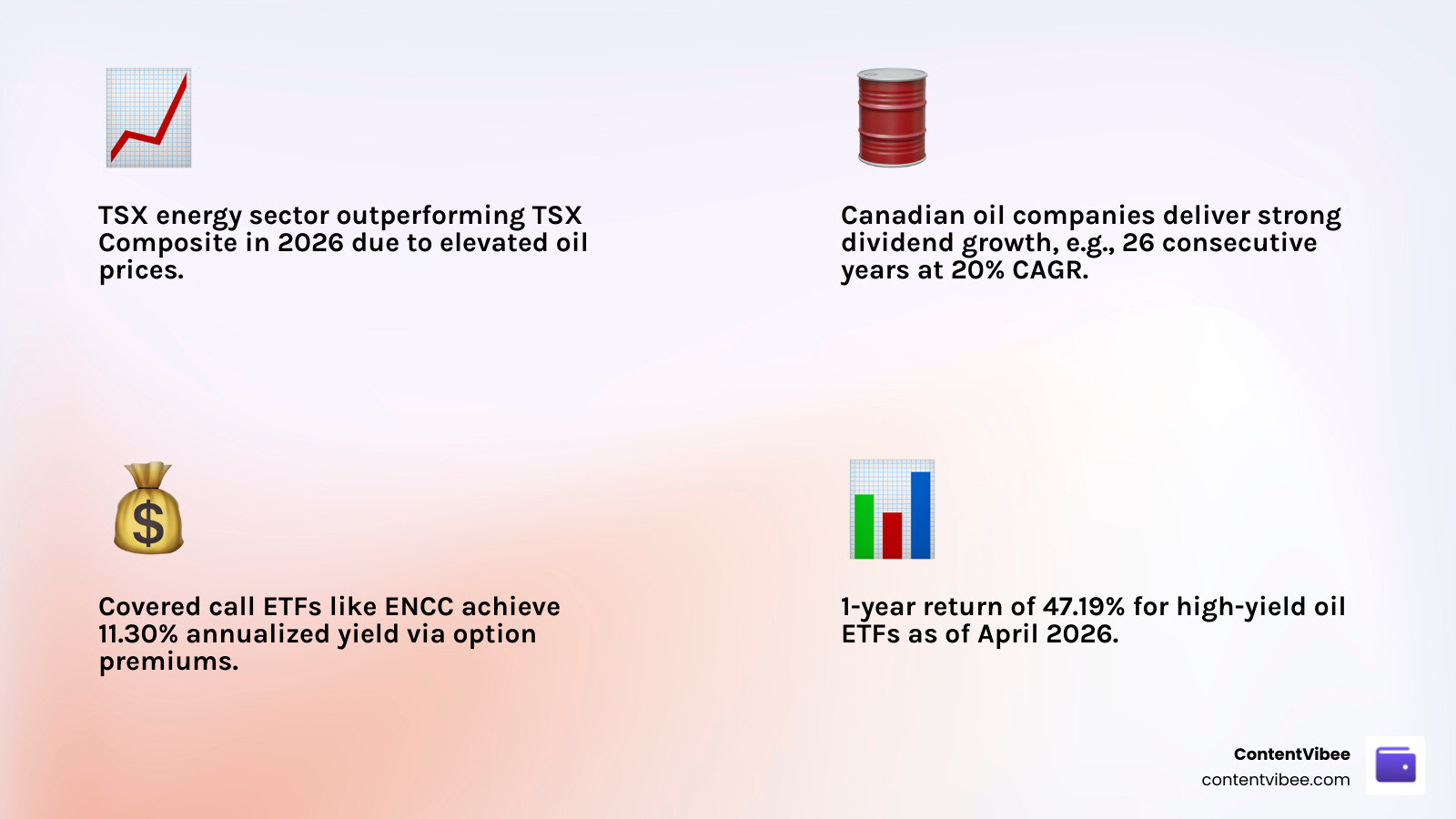
The TSX energy sector is outperforming the broader TSX Composite in 2026, driven by elevated oil prices, geopolitical tensions, and disciplined capital allocation from Canada’s top producers.
Canadian oil companies have quietly built some of the strongest dividend track records in the world. Canadian Natural Resources, for example, has raised its dividend for 26 straight years at a 20% compound annual growth rate. That is rare in any sector — almost unheard of in energy.
Meanwhile, covered call ETFs like ENCC are delivering double-digit yields by layering option income on top of the sector’s already-generous dividends.
This guide breaks down exactly where the best returns and yields are coming from, which companies have the balance sheet strength to sustain them, and what risks to watch in a volatile commodity market.
Analyzing the ENCC ETF: High Yields and Covered Call Strategies
For investors seeking immediate cash flow without picking individual stocks, the Global X Canadian Oil and Gas Equity Covered Call ETF (ENCC) has become a 2026 standout. As of April 30, 2026, the fund boasts an annualized distribution yield of 11.30%.
But how does it achieve such a high number when the underlying stocks often yield between 3% and 5%? The secret lies in its “covered call” strategy. We see this as a way to trade potential “moonshot” gains for steady, reliable income. The ETF writes (sells) call options on a portion of its portfolio. In exchange for capping some of the upside potential during massive price spikes, the fund collects “premiums” that are paid out to us as monthly distributions.
This strategy is particularly effective in the volatile energy sector. When oil prices bounce around, option premiums tend to rise, allowing the ETF to generate higher yields precisely when the market feels most uncertain. If you’re comparing this to broad-market dividend funds, you might find our Why Schd Dividend Etf Yield Analysis And Long Term helpful to see how specialized energy strategies differ from traditional dividend growth.
Canadian Oil Sector Investment Returns and Dividend Yield Analysis of ENCC
The performance data for ENCC as of May 2026 is nothing short of impressive. Over the past year (ending April 30, 2026), the ETF delivered a 1-year annualized performance of 47.19%. Even looking at longer timelines, the numbers remain robust:
- 3-Year Annualized Performance: 20.57%
- 5-Year Annualized Performance: 27.92%
The fund tracks the Mirae Asset Equal Weight Canadian Oil & Gas Index, meaning it doesn’t just load up on the biggest players. It provides balanced exposure to the giants and the mid-tier producers alike. With a recent distribution of $0.12 per unit in April 2026, it remains a primary tool for those prioritizing monthly income. However, we must remember that covered call strategies provide “downside protection” through the premiums collected, but they will lag behind individual stocks during a vertical “bull run” where prices skyrocket past the option strike prices.
Top-Performing Canadian Oil Stocks by Yield and Total Return
While ETFs offer convenience, individual stocks are where the real “alpha” (market-beating returns) often hides. In 2026, Canadian energy companies are being recognized for their “shareholder-first” mentality. Unlike the “growth-at-all-costs” era of the past, today’s producers are focused on returning free cash flow to us.

According to recent rankings from The Top 8 Canadian Oil Stocks, Ranked In Order – Sure Dividend, the sector is currently undervalued compared to its historical averages, creating a unique entry point for value-conscious investors. The list of Top 5 Canadian Oil and Gas Dividend Stocks in 2026 | INN highlights that the best performers aren’t just those with the highest yields, but those with the strongest balance sheets.
High-Yield Leaders: InPlay Oil and Cardinal Energy
If you are hunting for the absolute highest yields in the Canadian Oil Sector Investment Returns and Dividend Yield Analysis, you’ll likely land on names like InPlay Oil (TSX: IPO) and Cardinal Energy (TSX: CJ).
InPlay Oil recently showcased a staggering 12.4% dividend yield. This small-cap light oil producer managed to double its production year-over-year in late 2025, providing the necessary cash flow to support such a high payout.
Cardinal Energy, on the other hand, is a favorite for those who love monthly checks. It offers an 8.54% yield and focuses on “low-decline” conventional assets. Unlike shale wells that see production drop off a cliff after a year, Cardinal’s assets in Alberta and Saskatchewan decline slowly, making their 10.6% expected 5-year annual return feel much more sustainable. For a deeper dive, check out the Cardinal Energy CJ.TO: 8% Monthly Dividend, Low Decline Rate analysis.
Blue-Chip Stability: Canadian Natural Resources and Suncor
For investors who prefer “sleep-at-night” stability, the industry titans are the way to go. Canadian Natural Resources (CNRL) is the undisputed king of Canadian dividends. It has a 26-year streak of dividend increases, surviving the 2008 crash, the 2014 oil collapse, and the 2020 pandemic without ever cutting its payout.
CNRL’s secret is its “zero-decline” oil sands mining assets. Once the mine is built, it produces oil for decades with very little extra capital required. This makes CNRL more like a high-yield utility than a risky driller. As noted in A 4.2% Dividend Stock That Now a Standout Buy in 2026 | The Motley Fool Canada, its break-even price in the low-to-mid US$40s makes its dividend safe even if oil prices take a temporary dip.
Suncor Energy also provides a “safety net” through its integrated model. Because Suncor owns refineries (where oil is turned into gasoline and jet fuel), it can often maintain high margins even when the price of raw crude is volatile.
Canadian Oil Sector Investment Returns and Dividend Yield Analysis: Key Metrics
When we analyze these stocks, we don’t just look at the yield. A high yield is meaningless if the company is drowning in debt. We look for a debt-to-equity ratio of 0.61 or less. This ensures that the company isn’t just borrowing money to pay its shareholders.
For a comparison of how these Canadian giants stack up against international peers, our guide on Et Vs Enbridge Dividend Yield And Risk Comparison offers great context on the risk profiles of midstream (pipeline) vs. upstream (production) companies.
Canadian Oil Sector Investment Returns and Dividend Yield Analysis: Upstream vs. Integrated
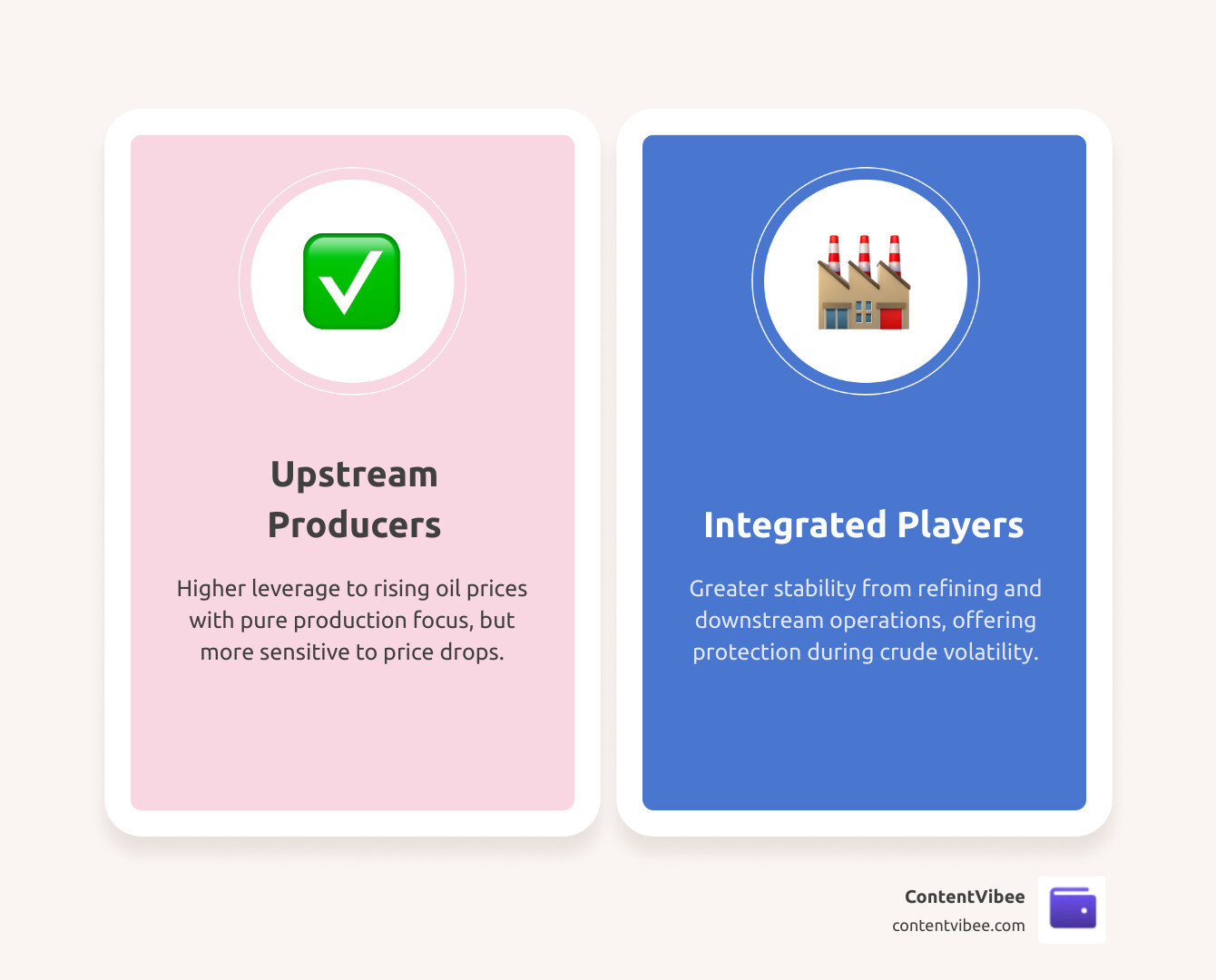
In 2026, the “Upstream” producers (those who just pump oil) like Whitecap Resources or Parex Resources offer higher leverage to oil prices. If oil goes to $100, these stocks usually fly. However, “Integrated” players like Imperial Oil (majority-owned by Exxon) offer more stability.
One metric we love is the Reserve Life Index. CNRL, for example, has enough oil in the ground to keep producing at current levels for over 30 years. That is triple the industry average! This longevity is a massive factor in our Canadian Oil Sector Investment Returns and Dividend Yield Analysis, as it guarantees that the company won’t have to spend billions on “lucky” new discoveries just to keep the lights on.
Macroeconomic Drivers and Sector Risks in 2026
Why is the TSX energy sector doing so well in May 2026? It’s a perfect storm of factors.
First, geopolitical tensions in the Middle East have kept a “risk premium” on oil prices. Supply risks in the Strait of Hormuz, which handles up to 30% of global oil flows, mean that Canadian oil—produced in a stable, democratic country—is more valuable than ever.
Second, the Trans Mountain Pipeline (TMX) expansion, which began full service recently, has changed the game. By allowing more Canadian oil to reach Asian markets, it has narrowed the “WCS-to-WTI” discount. In plain English: Canadian producers are getting more dollars for every barrel they sell.
However, we must remain aware of the risks. As discussed in Energy Sector Dividends — Are TSX Oil & Gas Stocks Still Worth It?, the global energy transition and carbon pricing remain long-term headwinds.

Commodity Volatility and Capital Return Frameworks
The most exciting development in 2026 is the new “Capital Return Framework.” Many Canadian companies have hit their debt reduction targets. For instance, CNRL has a policy where 100% of its free cash flow is returned to us via dividends and buybacks once net debt hits a certain threshold ($13 billion). This “variable dividend” model means that in good years, we get massive bonus checks, and in lean years, the base dividend remains protected.
Frequently Asked Questions about Canadian Energy Investments
What is the current annualized distribution yield of the ENCC ETF in May 2026?
As of April/May 2026, the ENCC ETF offers an annualized distribution yield of 11.30%. This is driven by a combination of dividends from its underlying holdings and premiums earned from its covered call writing strategy.
Which Canadian oil stocks offer the highest dividend yields above 8%?
In 2026, several stocks exceed the 8% mark, including InPlay Oil (12.4%), Meren Energy (11.3%), Parex Resources (8.63%), and Cardinal Energy (8.54%). These companies generally maintain a debt-to-equity ratio below 0.61 to ensure these high payouts are sustainable.
How does the Trans Mountain Pipeline expansion impact 2026 investment returns?
The TMX expansion has significantly reduced the price discount previously applied to Canadian heavy crude. By providing access to global tidewater markets, it has improved “netbacks” (profit per barrel) for producers, leading to higher free cash flow and increased dividend capacity across the sector.
Conclusion
At ContentVibee, we believe that understanding the Canadian Oil Sector Investment Returns and Dividend Yield Analysis is key to building a resilient, income-producing portfolio in 2026. While the sector is known for its “rollercoaster” price swings, the current era of capital discipline and high-yield payouts offers a rare opportunity for long-term wealth creation.
Whether you prefer the high-octane yield of the ENCC ETF or the blue-chip reliability of Canadian Natural Resources, the Canadian energy sector remains a powerhouse for dividend seekers. Just remember to keep an eye on those debt-to-equity ratios and stay diversified!
For more insights on building your financial future, check out More info about finance and investment services.


