


Alphabet AI infrastructure investment is reshaping how the world’s largest technology companies compete — and it’s happening at a scale never seen before.
Here’s what you need to know right now:
| Key Fact | Detail |
|---|---|
| 2026 Capex Target | $175 billion to $185 billion |
| Vs. 2025 Spending | More than double ($91.45 billion in 2025) |
| Anthropic Investment | Up to $40 billion ($10B initial + $30B milestone-based) |
| Bond Issuance | $20 billion, including a rare 100-year bond |
| Google Cloud Backlog | $240 billion (up 55% sequentially) |
| Gemini Monthly Users | 750 million |
| Big Tech Combined Capex | ~$700 billion in 2026 |
This is not a gradual ramp-up. It’s a step change.
Sundar Pichai, Alphabet’s CEO, has publicly acknowledged that compute capacity — including power, land, and supply chain constraints — is what keeps him up at night. And yet, Alphabet is pressing forward with the largest single-year infrastructure investment in its history.
The core reason is simple: whoever controls the compute infrastructure controls the AI economy. Google Cloud’s revenue grew 48% year-over-year to $17.7 billion in Q4 2025. The demand is real. The backlog is massive. And falling behind is not an option.
This guide breaks down exactly where the money is going, why it matters, who benefits, and what risks investors should watch closely.
The Scale and Structure of Alphabet AI Infrastructure Investment
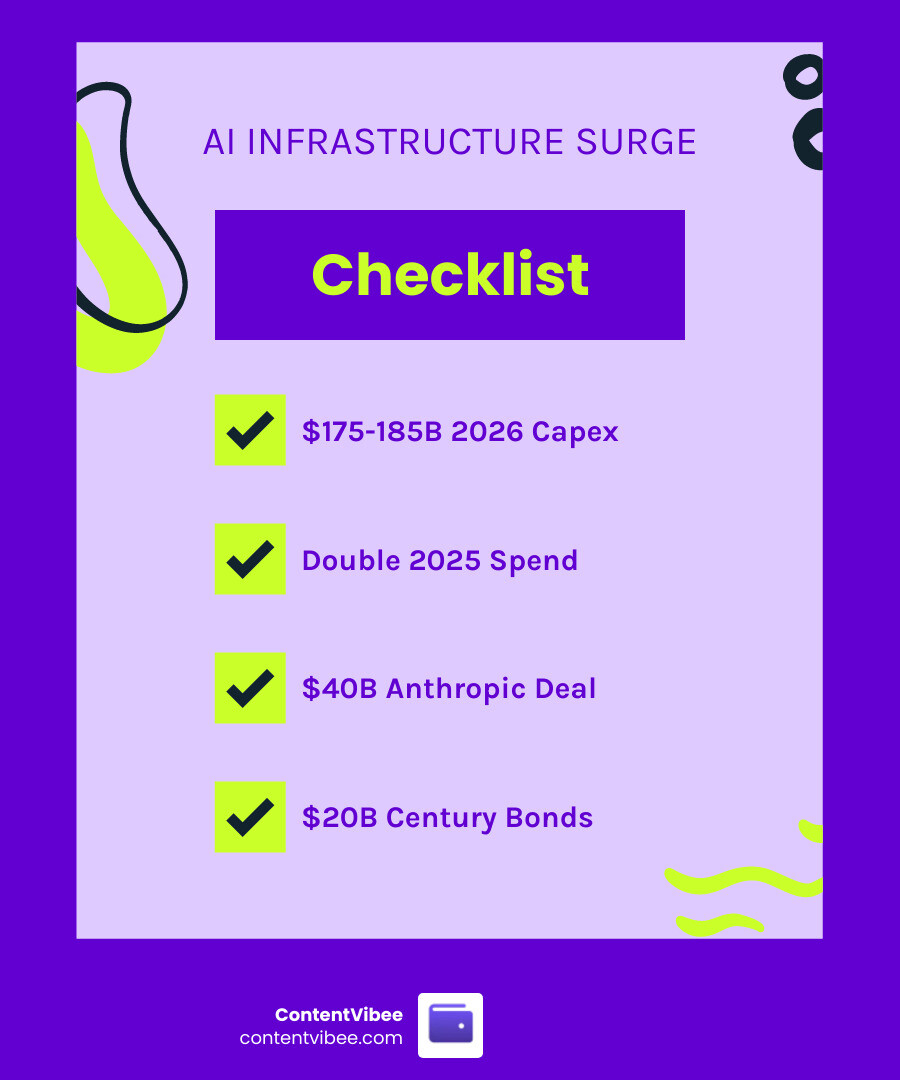
We are witnessing a financial pivot that is truly historic. Alphabet has signaled that its 2026 capital expenditure (capex) will land between $175 billion and $185 billion. To put that in perspective, this is more than double what the company spent in 2025. It’s a clear message to the market: the era of “asset-light” software growth is over, and the era of heavy-duty industrial AI has begun.
According to Alphabet’s $185 Billion Bet: Riding the AI Infrastructure S-Curve, this spending isn’t just about maintenance; it’s a foundational bet on the exponential growth of AI. While the market sometimes reacts with jitters to such massive outlays, the underlying numbers suggest a calculated move to capture a surging market.
| Company | Projected 2026 Capex |
|---|---|
| Alphabet | $175B – $185B |
| Meta | $115B – $135B |
| Amazon | ~$100B+ |
| Microsoft | Included in ~$700B industry total |
As Alphabet says capital spending in 2026 could double, cloud business booms | Reuters reports, this surge is driven by a “code red” competitive environment. Alphabet is no longer just a search company; it is a “legitimate hyperscaler” that must outbuild its rivals to survive.
Primary Components of the Alphabet AI Infrastructure Investment
Where exactly does $185 billion go? It isn’t just spent on one thing. We can break down the alphabet ai infrastructure investment into three primary buckets:
- Servers (60%): This is the “brain” of the operation. It includes the procurement of high-end GPUs (like Nvidia’s H300-series) and Alphabet’s own custom-designed chips.
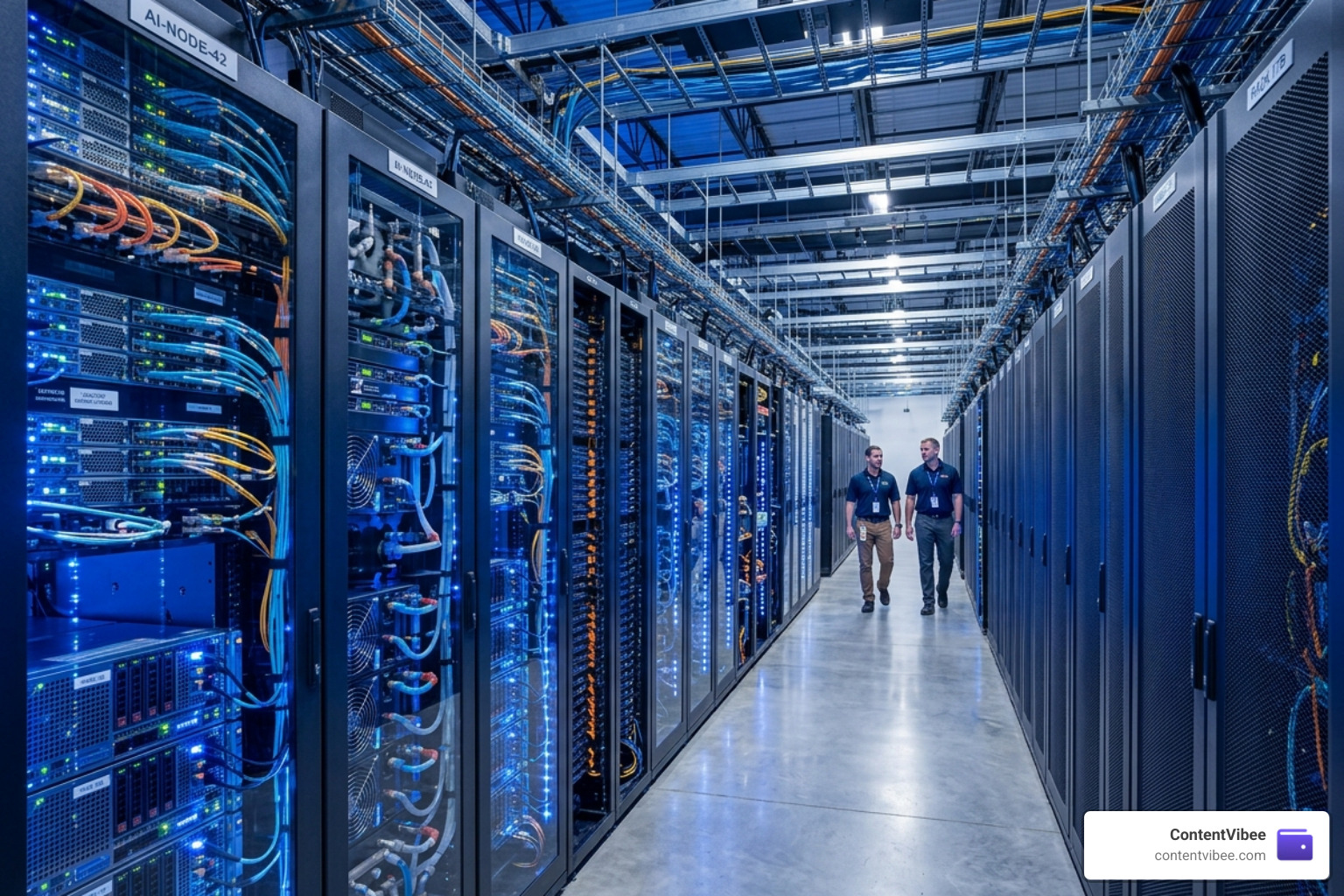
- Data Centers and Networking (40%): This represents the “body.” It involves the physical construction of massive facilities, the specialized cooling systems required for AI workloads, and the high-speed fiber that connects them.
- Custom TPUs: A major differentiator for us to watch is the Tensor Processing Unit (TPU). By designing its own silicon, Alphabet reduces its reliance on third-party suppliers and optimizes its hardware specifically for its Gemini models.
Strategic Stakes in the Alphabet AI Infrastructure Investment
Beyond building its own walls, Alphabet is securing its place in the ecosystem through massive partnerships. One of the most talked-about moves is the reported $40 billion investment in Anthropic.
As detailed in Alphabet to invest $40 billion in thriving AI company – AOL.com, this deal is structured strategically. It includes an initial $10 billion commitment, with the remaining $30 billion tied to performance milestones. This valuation places Anthropic at roughly $350 billion. By anchoring one of the world’s leading LLM developers to its infrastructure, Alphabet ensures a steady stream of demand for its cloud services.
Financing the Future: Century Bonds and Capital Strategy
How do we pay for a $185 billion bill? Alphabet recently executed a financial masterstroke by raising $20 billion through a multi-tranche bond offering. The most fascinating part? The inclusion of a rare 100-year “century bond.”
As explained in Alphabet’s $20 Billion AI Infrastructure Play: The Rise of the Century Bond, these bonds won’t mature until the year 2126. This type of debt is usually reserved for governments or utilities. By using it, Alphabet is signaling to the world that it views AI not as a passing trend, but as a permanent, foundational utility for the next century.
Alphabet launches $20B bond to fund AI expansion – YouTube highlights that this strategy allows the company to lock in long-term capital at a 6.125% coupon rate, providing the financial runway needed to build out the “Gigawatt Supercycle” without depleting its immediate cash reserves.
Why Alphabet is Investing Now
You might wonder why we are seeing this frantic pace. The answer lies in Why Alphabet Ai Infrastructure Investment. Currently, Alphabet is “supply-constrained.” This means they actually have more demand for AI compute than they have physical capacity to provide it.
The bottlenecks are real:
- Power Grid Limits: AI data centers consume massive amounts of electricity.
- Land Acquisition: Finding the right locations with existing infrastructure is becoming a competitive sport.
- Supply Chain: Getting enough chips and networking equipment is a constant battle.
Market Impact and the Gigawatt Supercycle
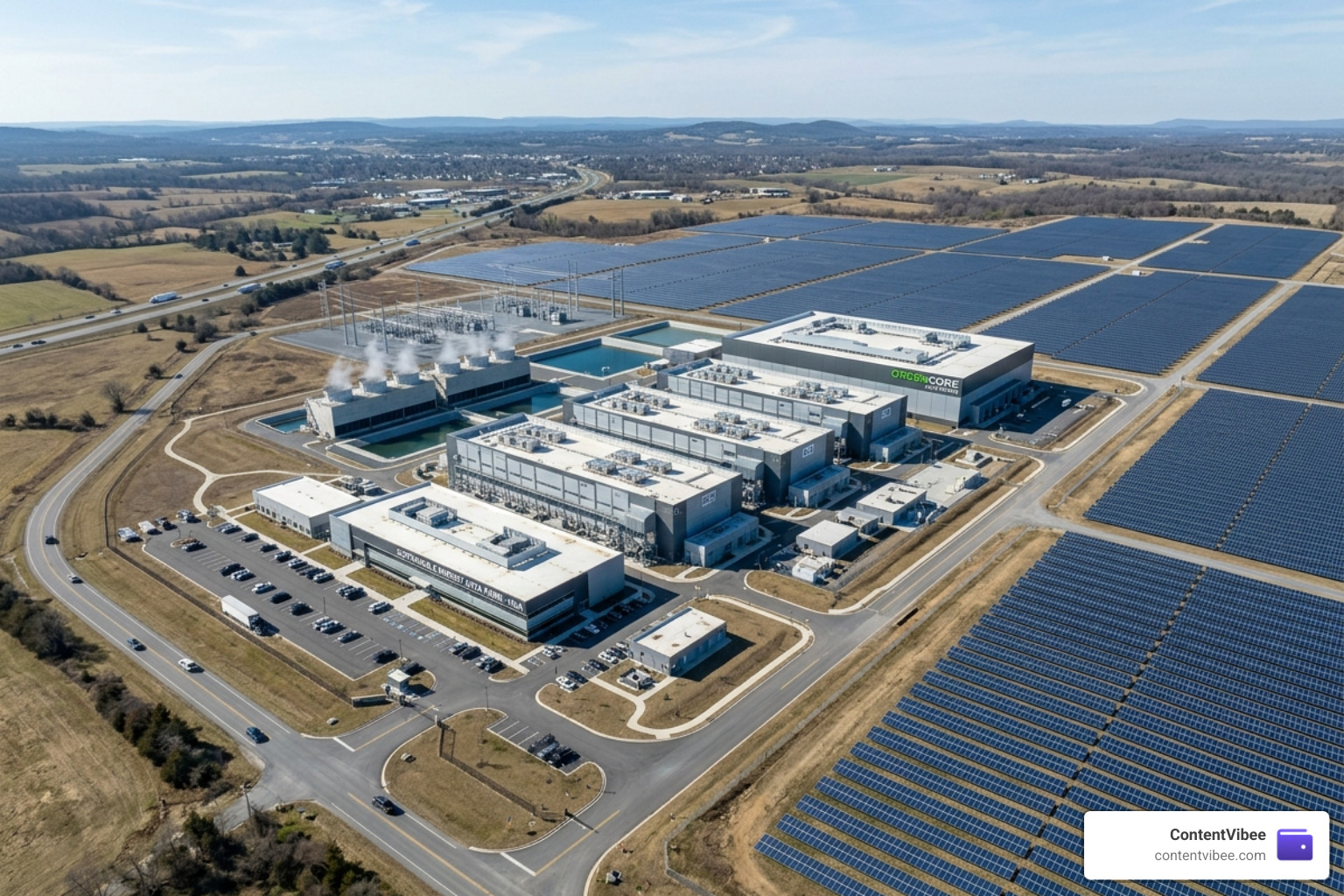
The term “Gigawatt Supercycle” refers to the shift where power and land become the primary barriers to tech revenue. Alphabet isn’t just buying chips; they are buying energy. We saw this clearly with the $4.75 billion acquisition of the data center company Intersect Power. This move secures clean energy sources to bypass overstretched public grids.
As Alphabet spends $185 billion for AI data centres, infrastructure notes, this spending creates a massive “trickle-down” effect for the semiconductor industry. Companies like TSMC (which manufactures 90% of advanced AI processors) and Broadcom (which co-designs Alphabet’s TPUs) stand to be the biggest winners of this capital spree.
Demonstrating ROI and Cloud Growth
Investors often ask: “Is this spending actually working?” The data says yes. Google Cloud revenue surged 48% to $17.7 billion in late 2025. Even more impressive is the backlog, which has reached a staggering $240 billion.
According to Alphabet Confirms Massive 2026 CapEx Plan, Directing Over Half of AI Compute to Google Cloud | DailyAlpha, more than half of the new AI compute is being directed to external cloud customers. This mitigates the risk of the investment being a “black hole” and turns it into a direct revenue driver. Furthermore, the Gemini AI app has reached 750 million monthly active users, proving that consumer adoption is scaling alongside the infrastructure.
Potential Risks and Execution Challenges
No investment of this size is without risk. As we analyze the alphabet ai infrastructure investment, we must consider the pressure on free cash flow. While Alphabet is highly profitable, doubling capex can limit stock buybacks and dividend growth in the short term.
Alphabet’s $175 Billion AI Infrastructure Plan: Scaling Search, Cloud and Beyond – TechBullion points out several execution risks:
- Stranded Assets: If AI architectures shift significantly, today’s hardware could become obsolete sooner than expected.
- Energy Consumption: The environmental impact of a 30x surge in power demand by 2035 is a major regulatory and social hurdle.
- Supply Chain Volatility: Any disruption in the semiconductor supply chain could stall billions of dollars in construction.
Long-Term Vision for Alphabet AI Infrastructure Investment
The long-term goal is to move from “index-based” search to “inference-based” search. In the old days, Google showed you a list of links. In the AI era, Google thinks and provides a direct answer. This requires vastly more compute power, but it also makes search more valuable.
Alphabet is also using AI to improve its own internal efficiency. Currently, 50% of the company’s code is AI-generated (and then reviewed by humans). This allows the company to scale its infrastructure without needing to double its headcount, creating massive operational leverage.
Frequently Asked Questions about Alphabet AI Infrastructure Investment
What is the total capex for Alphabet in 2026?
Alphabet has guided for a total capital expenditure of $175 billion to $185 billion for 2026. This represents a significant jump from the $91.45 billion spent in 2025, primarily focused on AI servers and data center expansion.
Why did Alphabet issue a 100-year century bond?
Alphabet issued the 100-year bond to lock in long-term capital for its massive infrastructure projects. It signals to investors that the company views AI as a permanent, utility-like fixture of the global economy, similar to how railroads or power grids were viewed in the past.
How does the $40 billion Anthropic investment work?
The investment is performance-based. Alphabet committed an initial $10 billion, with an additional $30 billion tied to specific milestones. This structure protects Alphabet while ensuring that Anthropic—a major user of Google Cloud—has the resources to scale its AI models.
Conclusion
The alphabet ai infrastructure investment is more than just a line item on a balance sheet; it is an existential move to secure the future of the internet. By doubling down on data centers, custom silicon, and strategic partnerships like Anthropic, Alphabet is positioning itself as the backbone of the AI era.
At ContentVibee, we believe that understanding these massive shifts in the tech landscape is essential for any modern investor or professional. Just as we provide essential tips for navigating the real estate market, we aim to equip you with the insights needed to understand the “digital real estate” of the future.
For more insights into how these big tech moves affect the broader economy, check out our analysis on Why Alphabet Spacex Investment Value or Explore Finance Insights to stay ahead of the curve. The AI race is a marathon, but the infrastructure is being built at a sprint. Stay tuned with us as we track every gigawatt and every billion.