


Yes, Both Spouses Can Collect Social Security — Here’s What You Need to Know
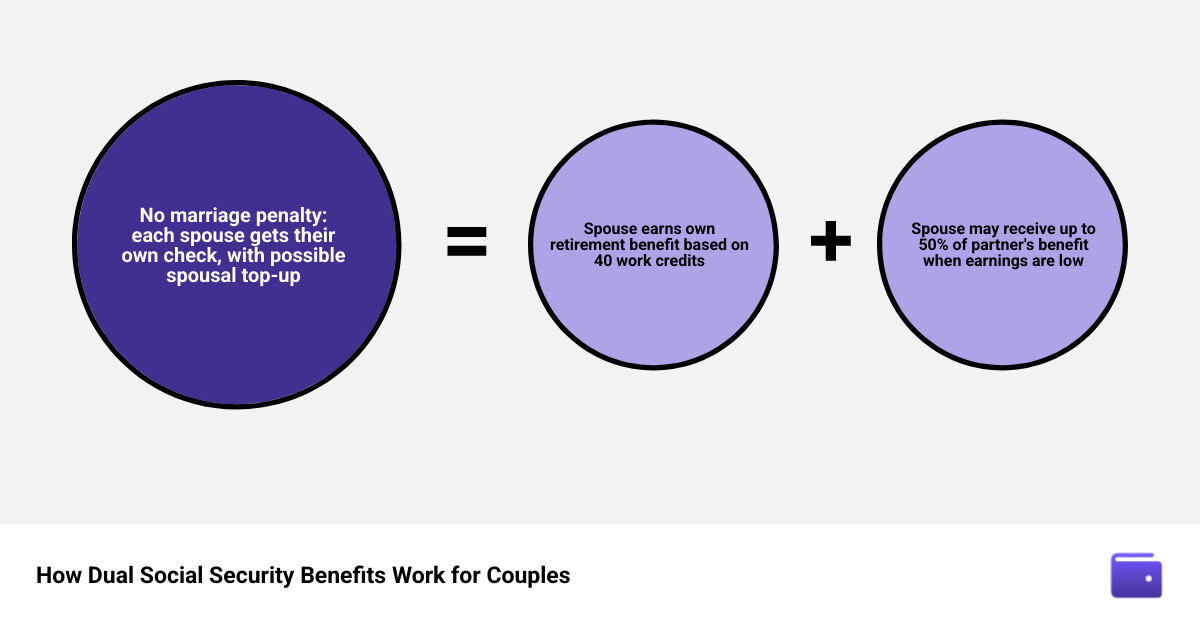
Do both spouses collect Social Security? Yes — and there is no marriage penalty. Each spouse can receive their own benefit, and in some cases, one spouse can also receive a payment based on the other’s earnings record.
Here’s the quick answer:
| Situation | What Happens |
|---|---|
| Both spouses worked and earned benefits | Each receives their own separate monthly check |
| One spouse earned little or nothing | They may qualify for up to 50% of the higher earner’s benefit |
| One spouse passes away | The survivor can receive up to 100% of the deceased’s benefit |
| Divorced after 10+ years of marriage | Ex-spouse may still claim on the former partner’s record |
As of May 2026, roughly 66 million people receive Social Security benefits each month. About 4.7 million of those receive spousal benefits — meaning they collect based on a partner’s or ex-partner’s earnings record, not just their own.
The system is more flexible than most people realize. But the rules around timing, eligibility, and benefit calculations can get complicated fast — especially when you’re dealing with a divorce, a big age gap between spouses, or very different earnings histories.
This guide breaks it all down in plain language.
Do both spouses collect Social Security at the same time?

The short answer is a resounding “Yes!” There is no “winner takes all” rule in the Social Security Administration (SSA) playbook. If both you and your spouse have worked and paid into the system, you are both entitled to your own retirement benefits simultaneously.
In fact, more than 90% of married couples receive benefits based on both spouses’ earnings records rather than just one. This means two separate checks arriving in the household every month. To qualify for your own retirement benefit, you generally need to have earned at least 40 work credits, which usually takes about 10 years of work.
One of the biggest myths we hear at Smart Money & Tech Tips for Americans is that there is a “marriage penalty.” Fortunately, that isn’t the case here. If Spouse A is entitled to $1,200 and Spouse B is entitled to $1,400 based on their respective work histories, the household receives a combined $2,600. The SSA does not reduce your individual check just because you are married.
According to Kiplinger, the ability for both spouses to collect is a cornerstone of household income maximization. By treating your Social Security as a joint asset, you can coordinate when each of you files to ensure the highest possible lifetime payout for the family.
How Spousal Benefits Work with Your Own Earnings Record
While both can collect, the amount you get might be influenced by your spouse’s history. This is where the “Spousal Benefit” comes into play.
Your retirement benefit is based on your Primary Insurance Amount (PIA), which is the amount you would receive if you wait until your Full Retirement Age (FRA) to claim. The SSA looks at your 35 highest-earning years to calculate this. However, if your spouse earned significantly more than you, you might be eligible for a “top-up.”
A spousal benefit can be worth up to 50% of your partner’s PIA. If your own retirement benefit (based on your work) is lower than 50% of your spouse’s, the SSA will effectively “bump you up” to that higher amount. For a deeper dive into the mechanics, you can read more about What is a Social Security Spousal Benefit?.
| Benefit Type | Calculation Basis | Maximum Amount |
|---|---|---|
| Personal Retirement | Your 35 highest-earning years | 100% of your PIA (at FRA) |
| Spousal Benefit | Your spouse’s work record | 50% of spouse’s PIA (at FRA) |
| Combined “Top-Up” | Both records | The higher of the two amounts |
Understanding how do both spouses collect social security when one has a lower income
If you have a lower income or a shorter work history, you don’t have to choose between your benefit and your spouse’s. The SSA handles this through a process called “dual entitlement.”
When you apply, the SSA first pays your own retirement benefit. If you are also eligible for a higher spousal benefit, they add a supplemental amount to your check so that the total equals the higher spousal rate. This is often triggered by “deemed filing.” As explained by the SSA FAQ, when you file for one benefit, you are “deemed” to have filed for all benefits you are eligible for. You can’t just pick the spousal benefit and let your own grow; the system automatically gives you the highest amount available to you at that time.
The impact of the 50% rule on household planning
The “50% rule” is the gold standard for spousal benefits, but there’s a catch: you only get that full 50% if you wait until your own Full Retirement Age (which is 67 for anyone born in 1960 or later) to claim.
If you claim spousal benefits early—say at age 62—the amount is permanently reduced. Instead of 50%, you might only receive about 32.5% of your spouse’s PIA. This reduction is calculated using specific formulas (25/36 of 1% for the first 36 months and 5/12 of 1% for any additional months).
According to the Social Security Administration, there is one major exception: if you are caring for a “qualifying child” (a child under 16 or a child who became disabled before age 22), you can receive full spousal benefits regardless of your age, and the early filing reduction does not apply.
Strategic Timing: Maximizing Your Combined Household Income
Deciding when to claim is perhaps the most important financial decision a couple will make. While you can both claim at age 62, it might not be the smartest move for your long-term bank account.
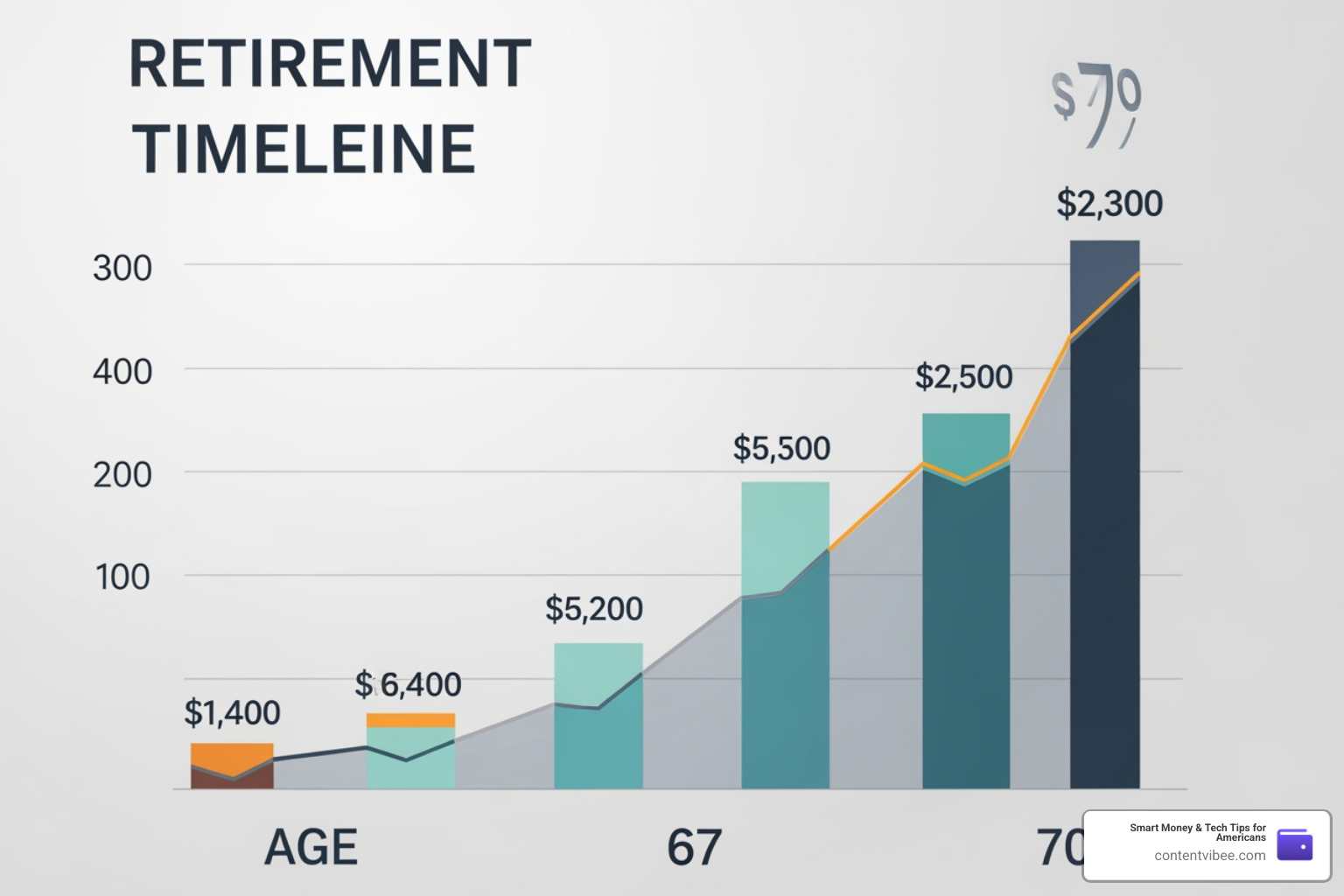
Social Security benefits grow by about 8% for every year you delay past your Full Retirement Age, up until age 70. This means a person with an FRA of 67 who waits until 70 will receive a check that is 124% of their base amount.
The Motley Fool suggests that couples should look at their health, life expectancy, and total assets before jumping in. If one spouse is in poor health, claiming early might make sense. If both expect to live into their 90s, delaying until 70 is often the winner.
Maximizing strategies for when do both spouses collect social security
A popular approach is the “Split Strategy.” In this scenario, the lower-earning spouse claims their benefit early (perhaps at age 62 or FRA) to provide immediate cash flow for the household. Meanwhile, the higher-earning spouse delays their claim until age 70.
Why does the higher earner delay? Two reasons:
- It maximizes the monthly check while they are alive.
- It maximizes the survivor benefit for the other spouse later on (more on that in a moment).
To see how these numbers play out for your specific situation, we recommend using a Social Security Spousal Benefit Calculator. It can help you visualize the “break-even” point where delaying finally pays off.
Avoiding the early filing penalty
We cannot stress this enough: claiming early is a permanent decision. If you claim at 62, your monthly check could be 30% smaller than if you had waited until 67.
As AARP points out, many people don’t realize that filing early for your own benefit also limits your spousal benefit if you become eligible for one later. Before you file, perform a break-even analysis. This calculation shows you the age at which the total money received from waiting (larger checks) surpasses the total money received from starting early (more checks). For most healthy couples, that age is usually in the late 70s.
Special Circumstances: Survivor Benefits, Divorce, and Remarriage
Life is messy, and the SSA has rules to cover almost every scenario, including the end of a marriage or the death of a spouse.
Survivor benefits vs. spousal benefits
There is a massive difference between a spousal benefit and a survivor benefit. While a spouse is alive, you can get up to 50% of their benefit. Once they pass away, you can “step into their shoes” and receive up to 100% of their monthly payment as a survivor benefit.
- Eligibility: You can claim survivor benefits as early as age 60 (or 50 if you have a disability).
- The “Top-Up” Rule: Just like spousal benefits, you don’t get both checks combined. You get the higher of your own retirement benefit or the survivor benefit.
- Lump Sum: There is also a one-time death payment of $255 available to a surviving spouse living with the deceased at the time of death.
For more details on protecting your family, check the SSA Family Benefits page.
Rights for divorced spouses
If you were married for at least 10 years and have been divorced for at least two years, you may still be able to collect benefits based on your ex-spouse’s earnings record.
Here are the critical facts about divorced benefits:
- No Impact on the Ex: Your claim does not reduce the benefit your ex-spouse (or their new spouse) receives.
- Independence: You don’t even need your ex-spouse’s permission to apply. As long as you meet the 10-year rule and are currently unmarried, you can claim.
- Remarriage: If you remarry, you generally lose the right to claim on your ex-spouse’s record (unless the second marriage also ends). However, if you remarry after age 60, you may still be eligible for survivor benefits from a deceased ex-spouse.
Frequently Asked Questions about Spousal Social Security
Does claiming on my spouse’s record reduce their monthly check?
No. This is a common fear, but it is entirely unfounded. Your spouse worked for their benefit, and it is theirs to keep. The spousal benefit is an additional payment provided by the system; it is not “taken” from your partner’s check. Independent of how many people claim on a worker’s record (including ex-spouses), the worker’s own check remains the same.
Can I switch from my own benefit to a spousal benefit later?
Because of “deemed filing” rules implemented for those born after January 1, 1954, you generally cannot “switch” in the way people used to. When you apply for benefits, the SSA automatically looks at both your record and your spouse’s record and gives you the highest amount.
However, if your spouse hasn’t retired yet, you might start on your own record and then receive a “top-up” later once your spouse finally files for their own retirement.
What is the maximum benefit for a married couple in 2026?
In 2026, if both spouses were high earners who reached the maximum taxable earnings limit and delayed their claims until age 70, the combined monthly household benefit could reach approximately $10,860. This represents the absolute ceiling for a dual-income household where both partners maximized their contributions and delayed filing to the limit.
Conclusion
At Smart Money & Tech Tips for Americans, we believe that understanding do both spouses collect social security is the first step toward a stable retirement. It isn’t a “winner takes all” situation; it’s a “coordinate to win” situation.
By looking at your Social Security as a joint household strategy rather than two individual choices, you can protect the higher-earning spouse’s benefit for the survivor, avoid permanent early-filing penalties, and ensure you aren’t leaving money on the table.
Ready to see what your household could be bringing in? Calculate your potential household income with our Social Security Spousal Benefit Calculator and start planning your golden years with confidence.