


To build a portfolio that survives the ups and downs of the 2026 market, we have to look past the “hot tip” of the week. Instead, we focus on the structural integrity of the portfolio. This is where Investment Asset Classes Allocation Strategy and Risk Management comes into play. Think of asset allocation as the architectural blueprint of your house, while individual stocks are just the color of the paint on the walls.
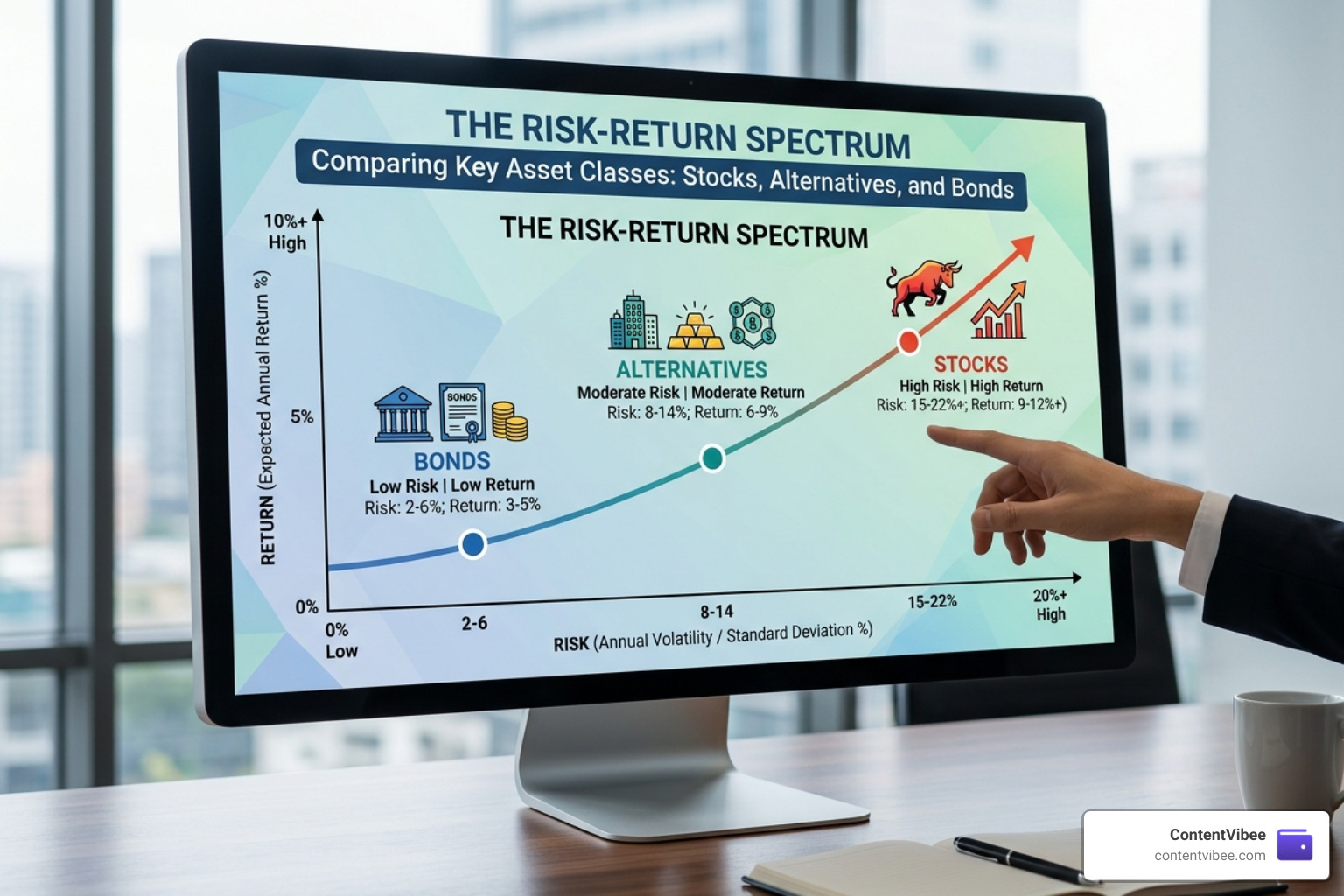
The variability of your returns is almost entirely dictated by how much you lean into “growth” assets versus “preservation” assets. For instance, large-cap stocks historically offer an average annual return of 10.2%, but they come with a “price of admission”—volatility. With a standard deviation of 19.8%, these stocks have seen worst-case years dropping over 43%.
Before you commit a single dollar, you must assess three personal pillars:
- Risk Tolerance: Your emotional ability to watch your account balance drop without panic-selling.
- Risk Capacity: Your financial ability to sustain a loss without changing your lifestyle.
- Time Horizon: How long until you need the money? A 25-year-old has a different strategy than someone retiring in 2028.
For a deeper dive into the fundamentals, the SEC.gov | Beginners’ Guide to Asset Allocation, Diversification, and Rebalancing provides an excellent neutral starting point for understanding these trade-offs.
Building a Resilient Investment Asset Classes Allocation Strategy
We categorize investments into “buckets” called asset classes. Each bucket behaves differently under various economic conditions.
- Equities (Stocks): These are your growth engines. They represent ownership in companies and offer the highest long-term potential but the highest “heart-attack” factor during market crashes.
- Fixed Income (Bonds): These act as the “ballast” on a ship. They provide regular interest payments and generally move in the opposite direction of stocks, though 2022 proved that isn’t always a guarantee.
- Cash Equivalents: Think T-bills or high-yield money market accounts. They offer safety and liquidity but rarely keep up with inflation.
- Alternatives: This includes REITs, gold, and commodities. These are used to “uncorrelate” your portfolio from the standard stock/bond mix.
Understanding the nuance between managing these assets is vital. You can explore Why Asset Management Vs Investment Management to see how professional oversight differs from simple security selection.
Historical Risk-Return Profiles of Major Assets
Data doesn’t lie, and looking at the period from 1928 to 2023 gives us a clear picture of what to expect. Small-cap stocks, for example, have the highest average return (12.1%) but are a wild ride, with a standard deviation of nearly 30%. In their best year, they skyrocketed 142%; in their worst, they plummeted 58%.
By contrast, 10-year Treasuries (Bonds) averaged 5.1% with a much smoother standard deviation of 7.6%. While they won’t make you a millionaire overnight, they rarely experience the gut-wrenching 40% drops seen in equities.
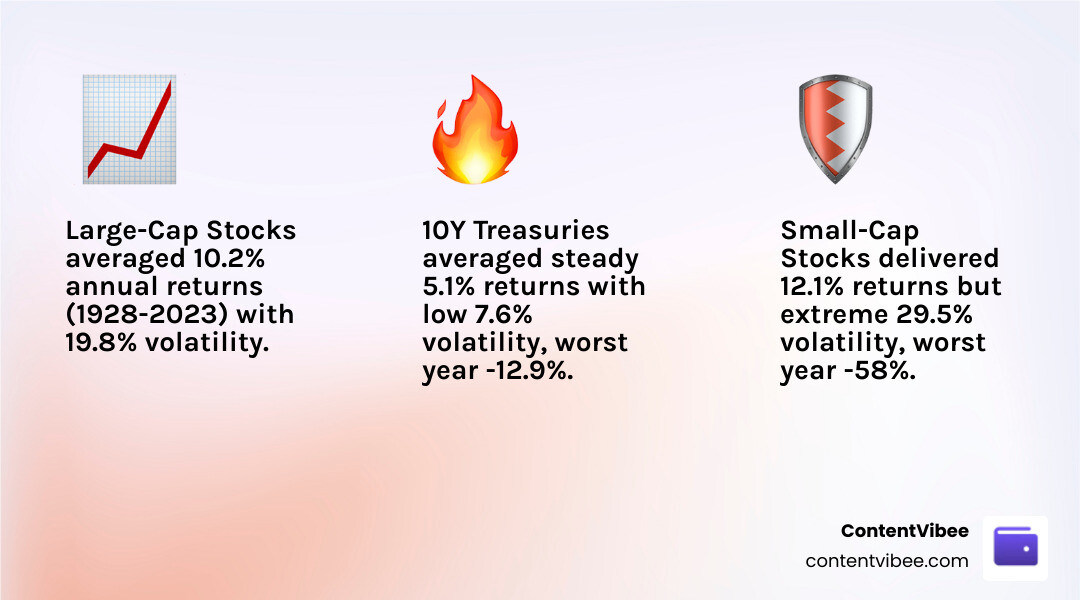
| Asset Class | Avg. Annual Return | Volatility (Std Dev) | Worst Year | Best Year |
|---|---|---|---|---|
| Large-Cap Stocks | 10.2% | 19.8% | -43.3% | 54.2% |
| Small-Cap Stocks | 12.1% | 29.5% | -58.0% | 142.9% |
| 10Y Treasuries | 5.1% | 7.6% | -12.9% | 32.6% |
| Real Estate (REITs) | 9.4% | 22.3% | -67.6% | N/A |
Strategic vs. Tactical: Choosing Your Portfolio Framework
Once we know what the assets are, we need a “rulebook” for how to manage them. There are two primary schools of thought: the disciplined marathon runner (Strategic) and the agile sprinter (Tactical).
Strategic Asset Allocation (SAA)
Strategic allocation is the “set it and forget it” (with a caveat) approach. We establish a target mix—say, 60% stocks and 40% bonds—based on your long-term goals. We don’t change this mix because of a scary headline or a sudden market rally. Instead, we use a “buy-and-hold” mentality, only intervening to rebalance back to those original percentages.
This method is supported by Modern Portfolio Theory, which suggests that a diversified, consistent mix provides the best risk-adjusted return over decades. For a comprehensive look at this, check out The Ultimate Guide to Strategic Asset Allocation for Long-Term Wealth – Finance, Trading, and Wealth Management.
Tactical and Dynamic Allocation Methods
Tactical allocation is for those who want to be more “hands-on.” It allows for short-term deviations from the strategic plan to capitalize on market opportunities. If we believe tech stocks are undervalued in April 2026, we might temporarily bump our tech exposure from 10% to 15%.
Dynamic allocation takes this a step further by using rules-based quantitative signals. For example, a dynamic strategy might automatically reduce stock exposure if market volatility exceeds a certain threshold. While these sound exciting, they often come with higher fees and tax implications. You can learn more about how costs impact these decisions in our guide on Why Brokerage Firm Investment Fees And Account structures.
If you are interested in moving beyond the basics, Understanding Traditional Vs Alternative Investments explains how to layer in sophisticated assets like private equity or hedge-fund-style strategies to these frameworks.
Risk Management Through Diversification and Rebalancing
Risk management isn’t about avoiding risk—it’s about getting paid for the risks you do take. The “only free lunch in investing” is diversification. By spreading your money across assets that don’t move in lockstep (low correlation), you can actually lower your portfolio’s total volatility without necessarily sacrificing return.
Monitoring Your Investment Asset Classes Allocation Strategy and Risk Management
The biggest enemy of a good strategy is “drift.” If your stocks have a great year, they might grow from 60% of your portfolio to 80%. Suddenly, you are carrying way more risk than you intended. Rebalancing is the process of selling high (the winners) and buying low (the underperformers) to get back to your target.
We generally recommend two types of rebalancing triggers:
- Calendar Rebalancing: Checking in every six or twelve months.
- Threshold Rebalancing: Rebalancing only when an asset class drifts by more than 5% from its target.
Managing these risks requires a long-term view. For instance, Why Energyx Investment Risk Analysis Long Term highlights how analyzing specific sector risks can prevent over-concentration in volatile industries.
The Role of Diversification in Volatility Reduction
Diversification works on two levels: between asset classes (stocks vs. bonds) and within asset classes (tech stocks vs. healthcare stocks). In the past 15 years, the correlation between U.S. stocks and bonds has been mostly negative, meaning when stocks went down, bonds often went up, cushioning the blow.
A 70/30 equities-to-bonds portfolio over the last 20 years showed significantly lower volatility than a 100% equity portfolio while still achieving solid growth. To see how to strike this balance, refer to Optimal Asset Allocation: Balancing Stocks, Bonds, and Cash.
Advanced Mitigation: Economic Cycles and Asset Location
As we move through 2026, economic conditions like inflation and interest rate shifts become the primary drivers of asset performance. A strategy that worked in a low-inflation environment might fail when prices are rising.
Navigating Inflation and Interest Rate Shifts
Inflation eats your “real” returns. If your portfolio earns 5% but inflation is 4%, you’ve only really gained 1% in purchasing power. To combat this, we look toward:
- TIPS (Treasury Inflation-Protected Securities): Bonds that adjust their principal based on inflation.
- Commodities: Often rise in price when the dollar weakens.
- Real Estate: Property values and rents typically climb alongside inflation.
For a deeper understanding of how these macro shifts influence your “bucket” sizes, Understanding Asset Allocation and its Potential Benefits – PIMCO offers institutional-grade insights.
Optimizing Asset Location for 2026 Tax Efficiency
It’s not what you make; it’s what you keep. Asset Location refers to which type of account holds which investment.
- Taxable Accounts: Best for tax-efficient assets like index ETFs or municipal bonds.
- Tax-Advantaged (401k/IRA): Best for “tax-inefficient” assets that churn out high dividends or interest (like high-yield bonds or REITs).
By placing the “tax-heavy” assets in your Roth IRA and “tax-light” assets in your brokerage account, you can significantly boost your after-tax returns. If managing this level of detail feels overwhelming, you might ask, Is Automated Portfolio Management Right For You? Automated tools are often excellent at handling tax-loss harvesting and location optimization.

Frequently Asked Questions
What is the “110 Minus Age” rule for 2026?
This is a classic rule of thumb to determine your stock exposure. You subtract your age from 110 (or 120, as lifespans increase) to find your equity percentage. For a 40-year-old in 2026, the rule suggests 70% in stocks (110 – 40 = 70). It’s a great starting point, but it doesn’t account for your specific risk tolerance or other income sources like Social Security.
How often should I rebalance my portfolio to avoid drift?
Most research suggests that rebalancing once a year, or when an asset drifts more than 5% from its target, is sufficient. Rebalancing too often can lead to unnecessary transaction fees and taxable events, which can drag down your total performance.
Why does asset allocation drive 90% of performance?
Because the broad movement of the market (Beta) has a much larger impact on your balance than the movement of a single company (Alpha). If the entire stock market drops 20%, even the “best” stock pick will likely struggle. By choosing the right mix of “buckets,” you control the volatility of the entire machine rather than just a single gear.
Conclusion
At ContentVibee, we believe that successful investing in 2026 isn’t about outsmarting the market; it’s about out-disciplining it. By focusing on a robust Investment Asset Classes Allocation Strategy and Risk Management plan, you move away from gambling and toward true wealth building.
Whether you choose to manage your own “buckets” or use an app like Autopilot for automated portfolio management, the principles remain the same: stay diversified, rebalance regularly, and keep your eyes on the long-term horizon. Autopilot can help by providing comprehensive reviews of your fees and risks, ensuring your strategy is actually cost-worthy.
Ready to take the next step? Explore more info about investment categories to find the right model for your financial journey. The best time to set your allocation was ten years ago; the second best time is today.