


AGNC Investment Corp dividend yield is currently around 14.86%, making it one of the highest-yielding dividend stocks in the entire market.
Here’s a quick summary of the key numbers:
| Metric | Value |
|---|---|
| Annual Dividend | $1.44 per share |
| Monthly Dividend | $0.12 per share |
| Dividend Yield | ~14.86% |
| Payout Ratio | ~95.87% |
| Dividend Frequency | Monthly |
| Most Recent Ex-Dividend Date | March 31, 2026 |
| Most Recent Payment Date | April 10, 2026 |
| Next Payment Date | May 11, 2026 |
| Dividends Paid Since 2008 | Over $15 billion |
AGNC pays shareholders every single month — not quarterly like most dividend stocks. That monthly income stream is a big reason income investors keep coming back to this stock.
But a yield this high comes with real questions. Is it sustainable? What are the risks? How does it compare to peers?
This article breaks it all down in plain language — the yield, the history, the risks, and what you need to know before investing.
Current AGNC Investment Corp Dividend Yield and Payout Schedule

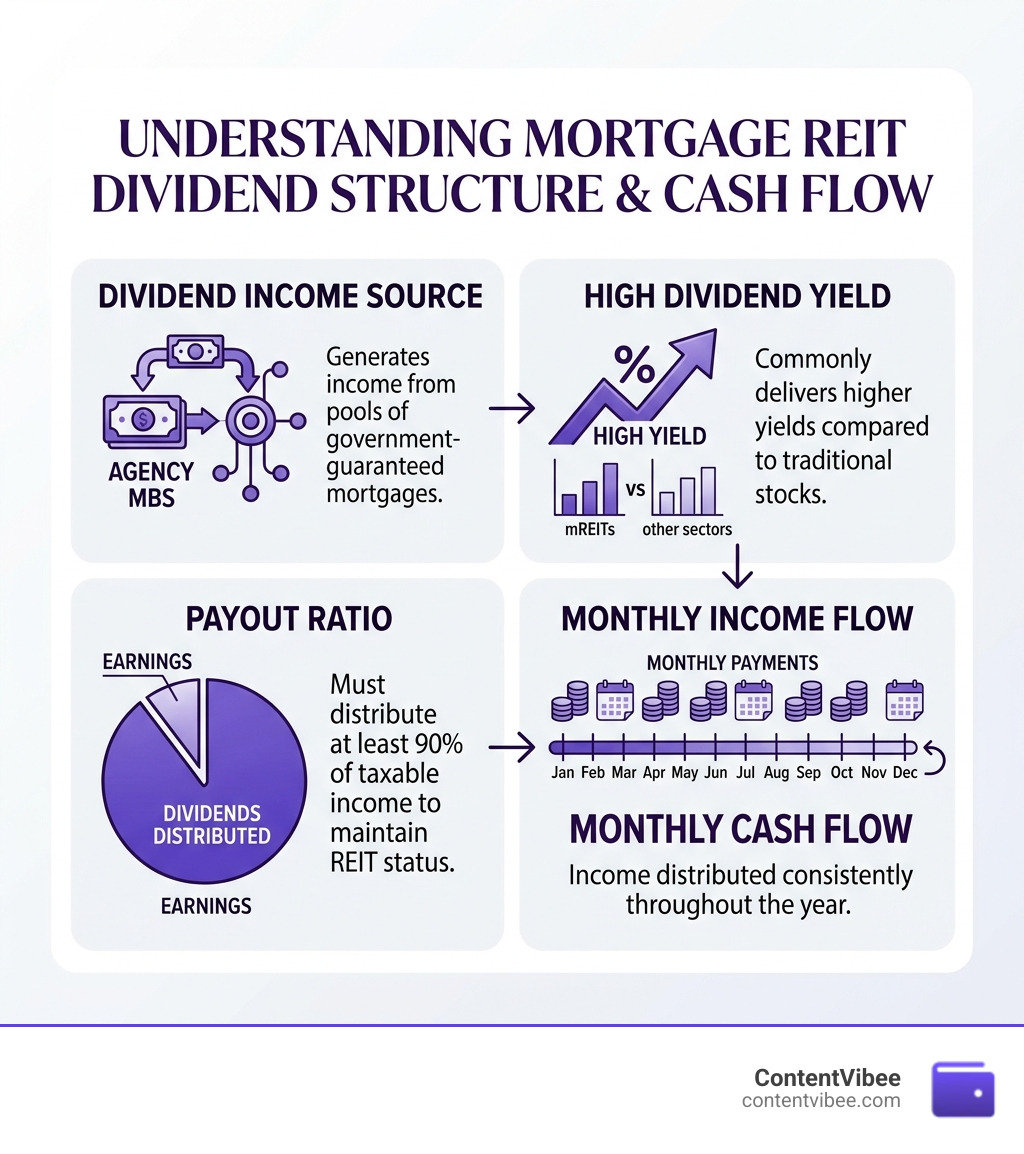
As we navigate through April 2026, the agnc investment corp dividend yield remains a standout feature for those of us seeking consistent cash flow. Currently, the yield sits at approximately 14.86%, though some market snapshots have placed it between 12.68% and 14.89% depending on recent price fluctuations. The core of this yield is an annual payout of $1.44 per share, distributed in reliable monthly increments of $0.12.
The board of directors recently reinforced this commitment to shareholders. According to the AGNC Investment Corp. Declares Monthly Common Stock Dividend of $0.12 per Common Share for April 2026, the dividend for April 2026 was declared at $0.12. For those tracking the calendar, the record date is April 30, 2026, with the actual payment reaching accounts on May 11, 2026. This follows the March declaration where the ex-dividend date was March 31 and the payment landed on April 10.
Analyzing the AGNC Investment Corp Dividend Yield Sustainability
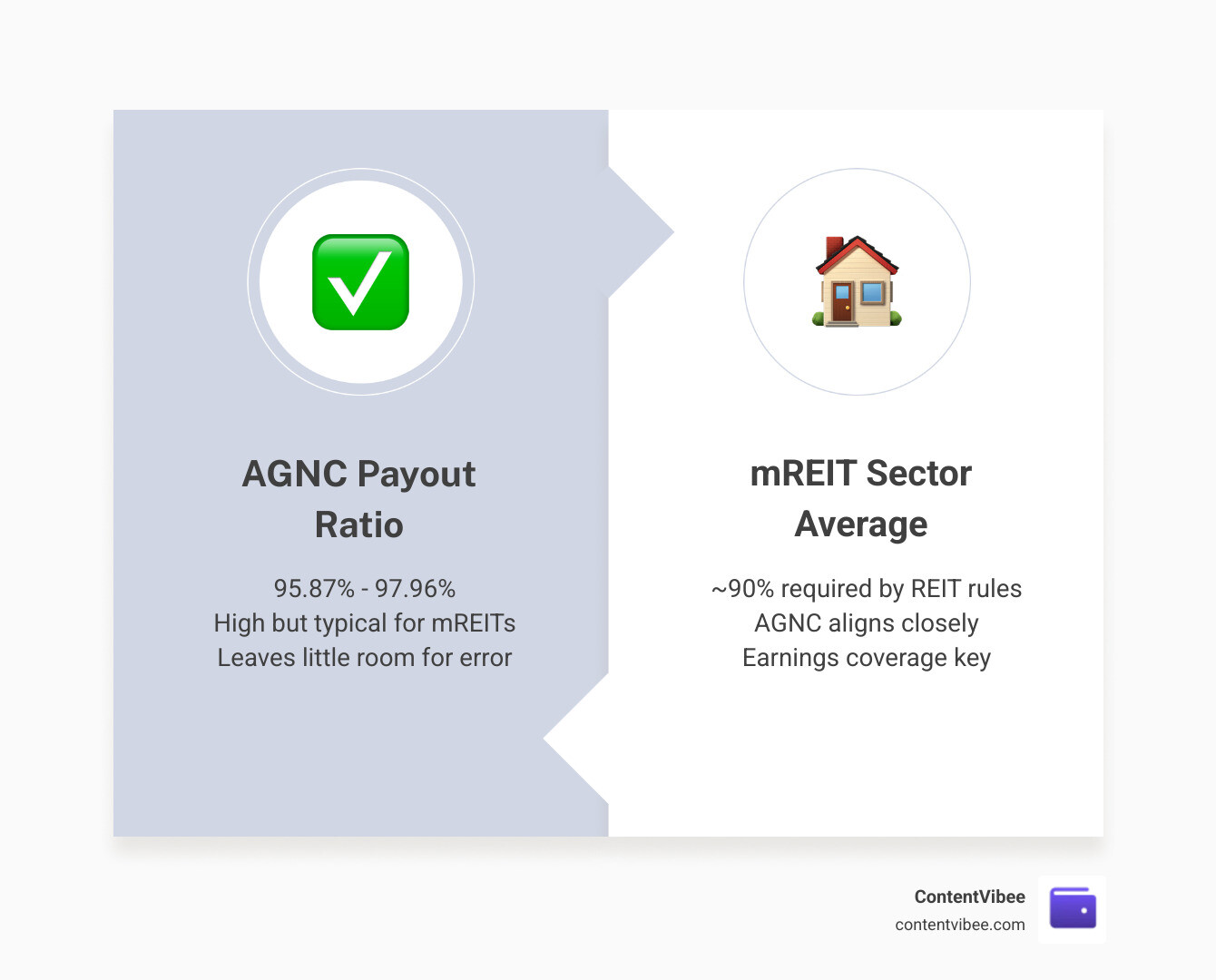
When we see a yield pushing toward 15%, our “too good to be true” alarm often starts ringing. To understand if this is sustainable, we have to look at the payout ratio. Currently, AGNC operates with a payout ratio of approximately 95.87% to 97.96%. In Mortgage REITs (mREITs), this is actually quite common because these companies are required by law to distribute at least 90% of their taxable income to shareholders to maintain their REIT status.
However, a payout ratio this high leaves very little room for error. If earnings dip, the dividend could be at risk. We’ve explored the mechanics of this in our deep dive on Why Agnc Investment Corp Dividend Yield stays so high. While interest coverage has shown improvement recently—climbing from 0.13 to 0.41—the company relies heavily on its ability to manage the “spread” between the interest it earns on mortgage-backed securities and the cost of its debt.
How AGNC Investment Corp Dividend Yield Compares to Mortgage REIT Peers
AGNC isn’t alone in the high-yield club, but it certainly sits at the head of the table. Its yield ranks in the 99th percentile worldwide. When we compare it to peers like Annaly Capital Management (NLY), which has seen yields as high as 22% in volatile periods, or ARMOUR Residential REIT (ARR) at 17.57%, AGNC often presents as a slightly more conservative “Agency-focused” play.
Unlike some peers that dabble in riskier commercial loans, AGNC focuses on Agency MBS, which are backed by the U.S. government. This focus often leads to a more stable—albeit still high—yield compared to peers that might take on more credit risk. For a broader look at how different high-yield sectors stack up, you might find our analysis on Et Vs Enbridge Dividend Yield And Risk Comparison helpful for context on yield vs. share price performance.
Historical Dividend Evolution and Shareholder Returns
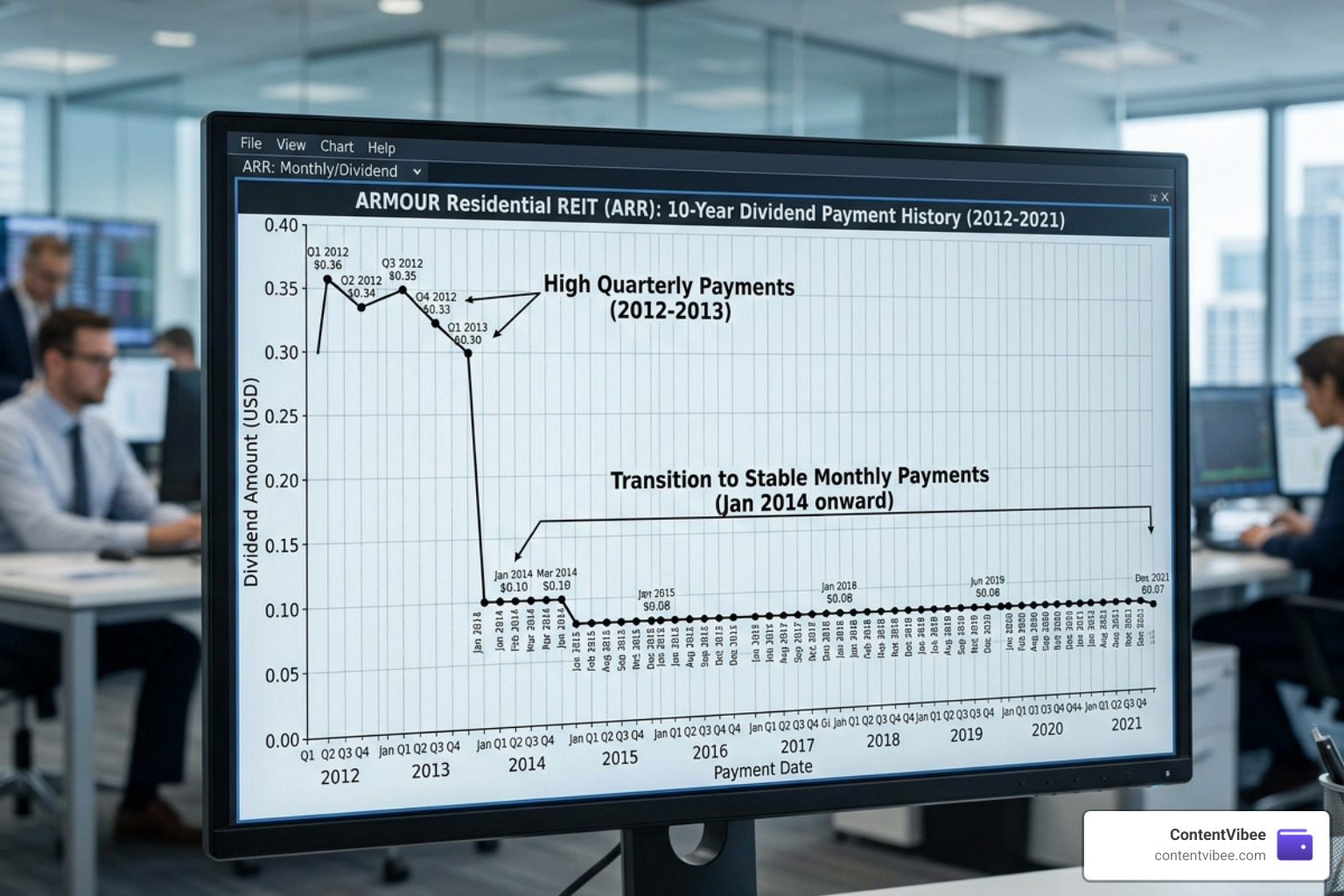
AGNC has a long and storied history, having paid out over $15 billion in common stock dividends since its inception in 2008. If you look at the Dividends | AGNC Investment Corp. records, you’ll see a significant evolution in how they return value. In the early days, specifically around 2009-2011, AGNC was paying massive quarterly dividends, sometimes as high as $1.40 or $1.50 per share per quarter.
However, as interest rate environments changed, the company shifted its strategy. Around 2014, AGNC transitioned from quarterly to monthly distributions. This was a win for income investors who prefer a “paycheck” style of investing. While the dividend per share has decreased from those early peaks to the current $0.12 monthly rate, it has remained remarkably consistent at this level since 2020. This stability is a key metric we look for, similar to the stability discussed in our Why Schd Dividend Etf Yield Analysis And Long Term guide, though the risk profiles are vastly different.
Long-Term AGNC Investment Corp Dividend Yield Trends
If we look at the 5-year and 10-year CAGR (Compound Annual Growth Rate), the numbers are actually negative. The 10-year dividend growth is roughly -5.29%, reflecting the cuts made as the era of “free money” and ultra-low interest rates came to an end.
Despite this, the AGNC Investment Corp. (AGNC) Dividend Date & History – Koyfin data shows that the “Total Shareholder Yield”—which includes dividends and buybacks—has been a major focus. Interestingly, AGNC has recently shown a negative buyback yield, which suggests they are issuing more shares rather than buying them back. This is a common way for REITs to raise capital to buy more mortgage assets, but it can dilute existing shareholders if not managed carefully.
Risks and Market Factors Influencing High-Yield REITs
Investing in AGNC isn’t like buying a utility stock. AGNC is a leveraged investor in Agency residential mortgage-backed securities (Agency MBS). These assets are guaranteed against credit losses by Fannie Mae, Freddie Mac, or Ginnie Mae. This means if a homeowner defaults on their mortgage, AGNC still gets paid.
So, where is the risk? The risk is in the interest rates. AGNC uses “repurchase agreements” (leverage) to buy these securities. They borrow money at short-term rates to buy assets that pay long-term rates. If interest rates spike suddenly, the value of their existing MBS holdings drops, and their borrowing costs go up. This “spread” is what funds your dividend.
As noted in the Investor Overview | AGNC Investment Corp., the company uses dynamic risk management to hedge against these fluctuations. They are essentially a massive hedge fund for mortgages, and their ability to navigate the Federal Reserve’s rate hikes is what determines if that 14.86% yield stays intact.
Unauthorized bank transaction how to dispute and recover money USA 2026
While we discuss high-level corporate finance, we shouldn’t ignore the digital risks to your own investment accounts. In 2026, digital account security is more critical than ever. If you notice an unauthorized bank transaction how to dispute and recover money USA 2026, the first step is immediate notification of your financial institution.
For those of us managing dividend portfolios, ensuring that your brokerage account has multi-factor authentication is a must. Fraud recovery services and credit monitoring tools are no longer optional extras; they are part of a sound financial strategy. We provide extensive resources on protecting your assets in our category/finance section, where we cover everything from disputing fraudulent wire transfers to securing your digital identity.
Frequently Asked Questions about AGNC Dividends
Is the AGNC dividend safe given current market conditions?
The word “safe” is relative. With a 95.87% payout ratio, the dividend is well-covered by current earnings, but there isn’t a large “cushion.” However, because AGNC invests in Agency MBS, they don’t have to worry about the credit quality of the underlying mortgages. Their main hurdle is interest rate volatility. If the Fed stabilizes rates, the dividend looks much safer than it did during the rapid hiking cycles of years past. You can find more updates on REIT safety in our category/investments archives.
Identity theft credit report fraud how to fix and protect your score USA
A high-yielding portfolio won’t do much good if your identity is compromised. If you are dealing with identity theft credit report fraud how to fix and protect your score USA, you need to act fast. Start by placing a fraud alert on your credit reports with Equifax, Experian, and TransUnion. Misuse of your SSN can lead to unauthorized accounts being opened in your name, which can derail your ability to use margin or open new brokerage accounts. Legal help for fraud victims is often available to help clear your name and restore your credit standing.
When is the next AGNC ex-dividend date?
AGNC follows a very predictable monthly schedule. Typically, the ex-dividend date falls on the last business day of the month. For example, the AGNC Investment Corp. Common Stock (AGNC) Dividend History shows the March 31 record date led to an April 10 payment. You can generally expect the ex-dividend date for the May payment to be at the end of April.
Conclusion
The agnc investment corp dividend yield remains one of the most compelling, yet complex, opportunities in the 2026 market. With a yield near 15% and a monthly payment structure, it’s a powerful tool for anyone looking to build a passive income stream. However, as we’ve discussed, that yield is a product of high leverage and sensitivity to the interest rate environment.
At ContentVibee, we believe that maximizing your returns isn’t just about finding the highest yield—it’s about keeping what you earn. Whether you are reinvesting these dividends or selling property to fund your portfolio, understanding capital gains tax strategies and profit maximization is essential. We focus on providing actionable tips to minimize your tax burden so you can boost your overall returns.
For more insights into managing your wealth and protecting your digital financial life, check out our More info about finance services page. Whether you’re disputing a fraud charge or calculating your next REIT payout, we’re here to help you navigate the complexities of real estate finance and investment education.


