Fidelity Investments Advisory Fees and Portfolio Management Cost vary widely depending on which service tier you choose — here’s a quick breakdown:
| Service | Minimum | Annual Fee |
|---|---|---|
| Fidelity Go (robo-advisor) | $0 to open / $10 to invest | $0 under $25K; 0.35%/yr above |
| Fidelity Personalized Planning & Advice | $25,000 | 0.50%/yr |
| Fidelity Portfolio Advisory Service | $50,000 | 0.60%–1.70%/yr |
| Fidelity Wealth Management | $500,000 | 0.50%–1.50%/yr |
| Fidelity Private Wealth Management | $2M managed / $10M total | 0.20%–1.04%/yr |
These fees may look small on paper. But they compound over time — just like your returns do.
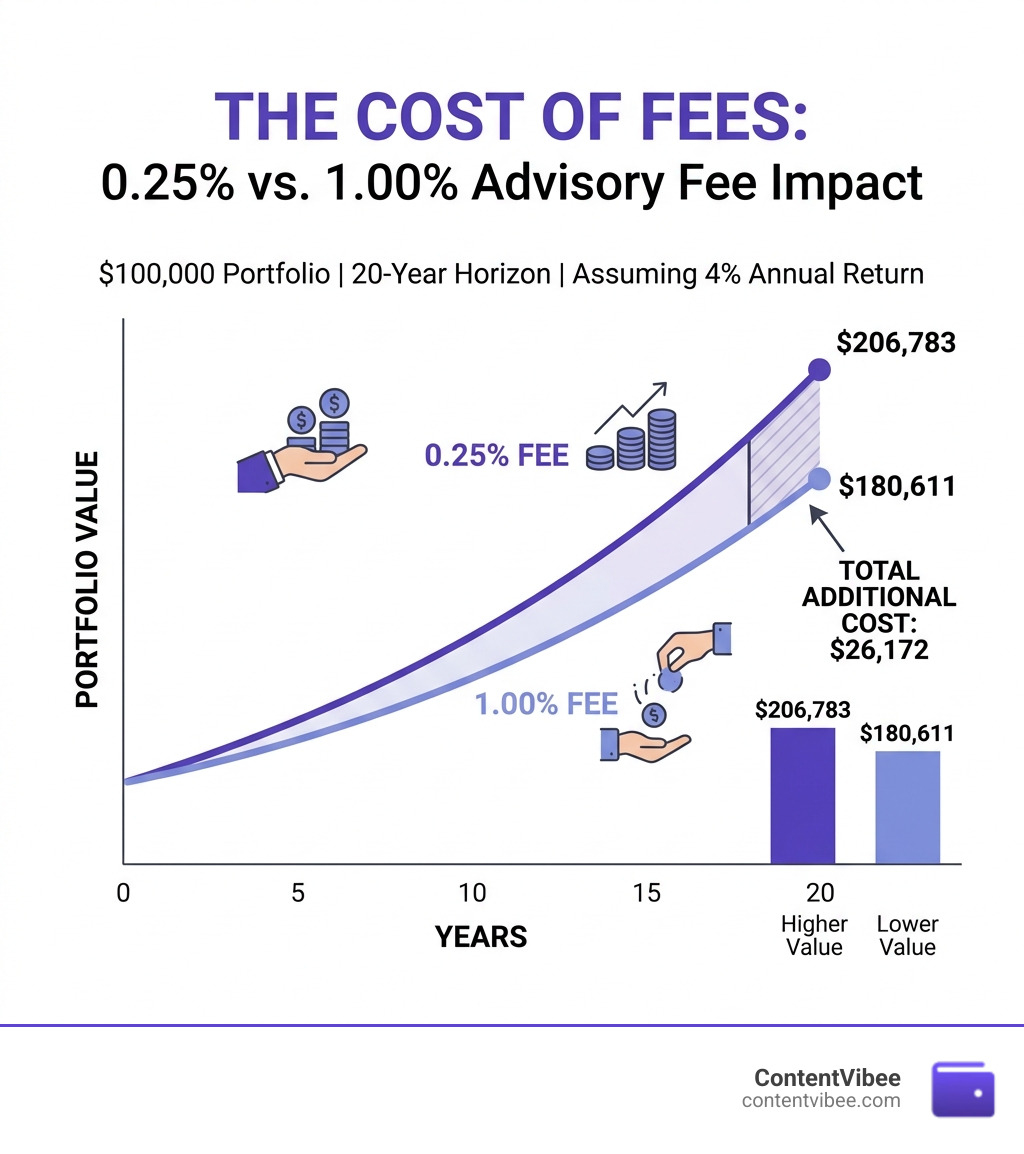
Here’s a number that puts it in perspective: on a $100,000 portfolio earning 4% annually, the difference between a 0.25% and a 1.00% advisory fee adds up to nearly $30,000 over 20 years. That’s money that either stays in your pocket or goes to your advisor.
For self-directed investors weighing whether a managed account is worth the cost, understanding exactly what you’re paying and what you’re getting is the starting point for every smart decision.
This guide breaks it all down — from Fidelity’s entry-level robo-advisor to its private wealth tier — so you can match the right service to your goals without overpaying.
Understanding Fidelity Investments Advisory Fees and Portfolio Management Cost Tiers
Navigating professional management can feel like deciphering a secret code. At Fidelity, the service you receive—and the price you pay—is largely dictated by the amount of money you’re looking to invest. As of April 2026, Fidelity has streamlined its offerings into distinct tiers, ranging from fully digital “robo” solutions to high-touch private wealth teams.
The core of the Fidelity Investments Advisory Fees and Portfolio Management Cost structure is designed around “Investment Services.” For those just starting, the digital-first approach offers a low barrier to entry. As your assets grow, you move into hybrid models that include human coaching, and eventually, into full-blown wealth management with dedicated advisors.
Understanding these Investment fees | Fidelity Investments is crucial because the “sticker price” (the gross fee) isn’t always what you end up paying. Fidelity often applies “Credit Amounts” to reduce your net cost, especially when their proprietary funds are used within your portfolio.
Fidelity Go vs. Wealth Management: Fidelity Investments Advisory Fees and Portfolio Management Cost Breakdown
If you’re looking for the most cost-effective way to get professional management, Fidelity Go® is the entry point. It’s a robo-advisor that handles the heavy lifting—choosing investments, rebalancing, and even tax-loss harvesting—for a very competitive price.
- Under $25,000: There is a $0 advisory fee. This makes it an incredible tool for beginners. (Note: For balances between $10,000 and $49,999, some older account structures may have seen a $3/month fee, but the current 2026 standard emphasizes the $25k threshold for the 0.35% fee).
- $25,000 and Above: You’ll pay an annual advisory fee of 0.35%. This tier also unlocks 1-on-1 coaching calls with financial professionals.
In contrast, Fidelity Wealth Management is designed for those with at least $500,000 in managed assets. Here, the Fidelity Investments Advisory Fees and Portfolio Management Cost generally range from 0.50% to 1.50%. For this higher price, you get a dedicated advisor who looks at your entire financial picture, including estate planning and complex tax strategies. You can learn more about how these digital and human services compare at Fidelity Go | Invest With Our Robo Advisor .
High-Net-Worth Solutions and Private Wealth Management
For the “Ultra-High-Net-Worth” crowd, Fidelity offers Private Wealth Management. This is the “white glove” service level, requiring a minimum of $2 million in assets managed through Fidelity and $10 million in total investable assets.
The fee structure here is tiered and actually becomes more cost-effective as a percentage as your wealth grows. Gross fees range from 0.20% to 1.04%. At this level, you aren’t just getting investment advice; you’re getting a dedicated team that coordinates with your attorneys and CPAs to manage legacy planning and sophisticated Asset Management vs Investment Management needs. You can explore these high-tier options at How we can work together .
How Fidelity Investments Advisory Fees and Portfolio Management Cost are Calculated
One of the most common questions we hear is: “How do they actually take the money?” Fidelity uses a calculated approach that is generally transparent but has a few moving parts.
Advisory fees are typically calculated daily based on the market value of your eligible assets. These fees are then billed quarterly in arrears. This means you are paying for the service after you have received it for that three-month period. The fee is usually deducted directly from your account, often by liquidating a small portion of your money market fund or other holdings.
The Impact of Fidelity Flex Funds and Zero Expense Ratios
A unique feature of Fidelity’s managed accounts is the use of Fidelity Flex® funds. These are proprietary mutual funds that have zero expense ratios and no management fees within the fund itself.
When Fidelity manages your money in a program like Fidelity Go, they primarily use these Flex funds. This is a win-win: Fidelity keeps the management simple, and you avoid the “double-dipping” of paying an advisory fee plus fund expense ratios. Furthermore, for services that use standard funds, Fidelity applies a Credit Amount. This credit reduces your gross advisory fee by the amount of compensation Fidelity affiliates receive from the funds in your account, ensuring you aren’t overcharged for using Fidelity-branded products. This is a key part of their Straightforward and Transparent Pricing – Fidelity Investments .
Underlying Expenses and SMA Sleeve Fees
While the advisory fee covers the “advice” and “management,” there are other costs to keep an eye on. Even with zero-commission trading for US stocks and ETFs, some portfolios—especially those in the Fidelity Managed FidFolios® or Wealth Services—might use “SMA Sleeves” (Separately Managed Accounts).
If your portfolio uses an unaffiliated third-party model provider to pick stocks, you might see an “SMA Sleeve Fee” of up to 0.40%. Additionally, while Fidelity Flex funds are free, if your advisor selects non-Fidelity funds or certain specialized ETFs, those will have their own underlying expense ratios. We always recommend checking the Beat hidden investment fees | Fidelity guide to ensure you’re seeing the full picture.
Digital Financial Security: Protecting Managed Assets from Fraud and Identity Theft USA 2026
When you have a significant portion of your net worth in a managed account, the “cost” of a security breach can far outweigh any advisory fee. In 2026, digital threats have become more sophisticated, making online investment fraud prevention a top priority for us and our readers.
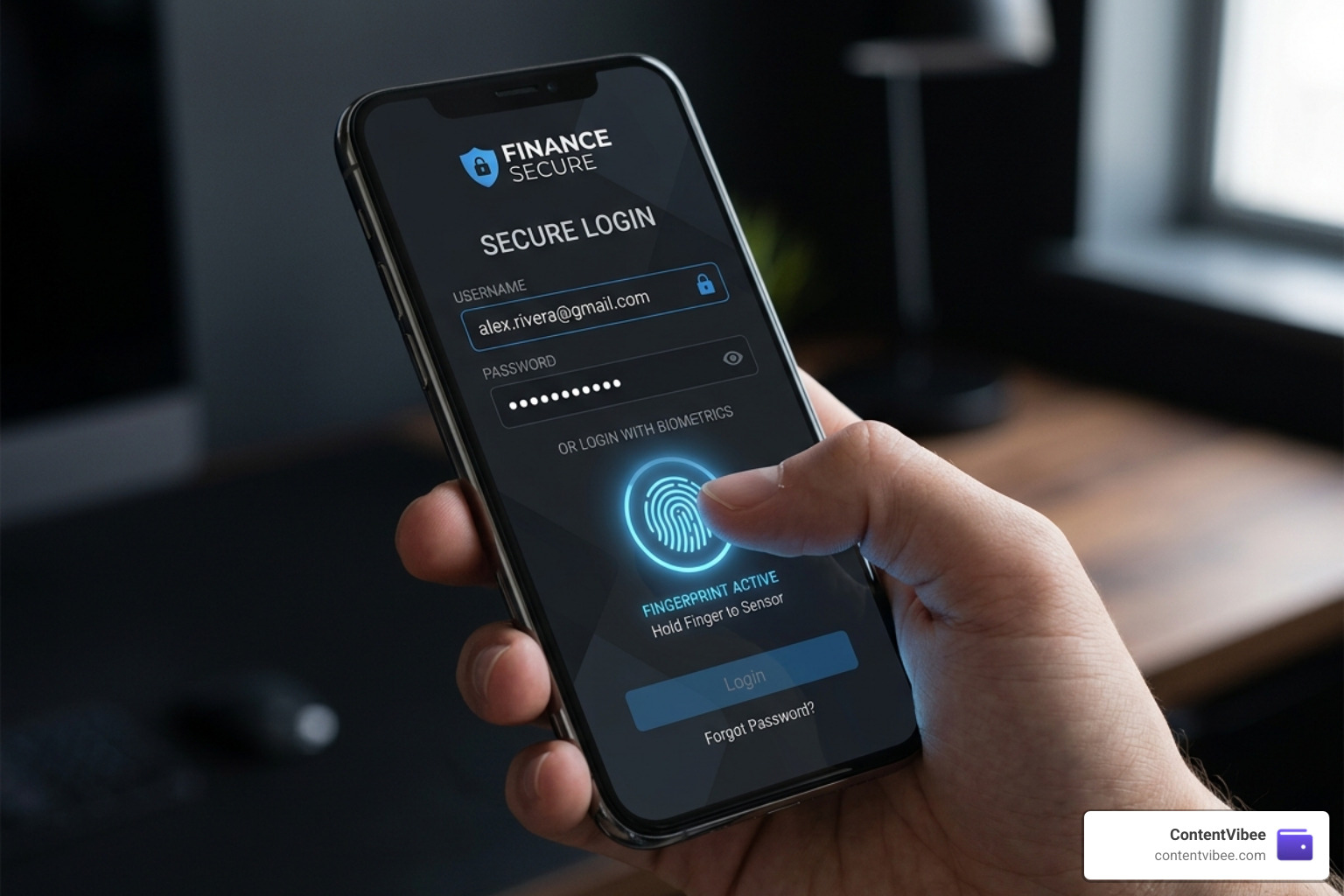
Protecting your Fidelity account involves more than just a strong password. You should be utilizing digital financial protection tools like two-factor authentication (2FA), security challenges, and Fidelity’s own “MyVoice” biometric encryption. Identity theft protection for financial accounts is no longer optional; it is a necessity. If you suspect your account has been compromised, knowing the fraud recovery steps for managed assets—such as immediately freezing your account and notifying Fidelity’s fraud department—is vital.
Unauthorized Bank Transaction Recovery Steps and Protection USA 2026
One of the biggest risks to your liquidity is an unauthorized transfer out of your brokerage or linked bank account. In the USA in 2026, the unauthorized transaction dispute process bank account USA is governed by strict federal regulations, but speed is of the essence.
To stay safe, we recommend:
- Bank fraud alerts how to set up and monitor USA: Enable real-time push notifications for every transaction over $0.
- Digital bank account security best practices USA: Never access your Fidelity account on public Wi-Fi and use a dedicated device for financial transactions if possible.
- Bank fraud reimbursement policies unauthorized charges USA: Familiarize yourself with Fidelity’s “Customer Protection Guarantee,” which generally reimburses for unauthorized activity if you’ve followed basic security steps.
Identity Theft Credit Report Fraud: How to Fix and Protect Your Score
Identity theft doesn’t just put your cash at risk; it can ruin your ability to borrow. Identity theft credit report fraud how to fix and protect your score USA starts with constant vigilance. If your SSN is misused, you need to know exactly what to do and report USA.
We suggest looking into the best credit monitoring services for identity theft protection USA to get alerts the second a new account is opened in your name. If you are a victim, knowing how to place a security freeze on a credit report after identity theft is your most powerful defense. These financial recovery steps after identity theft and fraud USA are essential for maintaining the integrity of your long-term financial plan.
Strategies to Optimize and Reduce Fidelity Investments Advisory Fees
You don’t have to just accept the fee schedule as written. There are active steps you can take to lower your effective Fidelity Investments Advisory Fees and Portfolio Management Cost.
- Tax-Loss Harvesting Strategies: In accounts like Fidelity Go (over $25k) and Wealth Management, Fidelity automatically sells losing positions to offset capital gains. This “tax alpha” can sometimes effectively “pay” for the advisory fee by reducing your IRS bill.
- Asset Allocation for Cost Reduction: By choosing “Index-Focused” universes within Fidelity’s managed services, you generally pay lower gross fees than you would for “Active” or “Blended” strategies.
- Consolidation: Since Fidelity’s fees are often tiered (meaning the percentage drops as your balance rises), consolidating multiple outside accounts into one Fidelity managed relationship can push you into a lower fee bracket.
- Fee Optimization Techniques: Regularly review your “Credit Amount” on your statements. If you’re paying for a high-touch service but only using basic index funds, you might be better off moving to a lower-cost tier like Fidelity Go or a self-directed approach.
Frequently Asked Questions about Fidelity Advisory Costs
What is the minimum investment for Fidelity advisory services?
Fidelity is very accessible compared to many traditional firms. You can open a Fidelity Go account with $0, though you need $10 to start the automated investing process. Personalized Planning & Advice requires $25,000. For more traditional “Wealth Management” with a human advisor, the threshold is typically $500,000, while Private Wealth Management starts at $2 million managed.
How does the Credit Amount reduce my total advisory fees?
The Credit Amount is Fidelity’s way of being fair. Because Fidelity (or its affiliates) earns money from the management fees of the mutual funds held in your account, they give you a credit back against your advisory fee. This prevents you from being charged twice for the same service. The credit is usually equal to the actual fees paid to Fidelity affiliates or a set percentage (like 0.75% in some legacy PPS accounts).
Are there hidden commissions for stock or ETF trades at Fidelity?
No. Fidelity offers $0 commissions for online US stock, ETF, and option trades. However, there is still a $0.65 fee per options contract. In managed accounts, these trading costs are typically wrapped into your advisory fee, so you won’t see individual “ticket charges” for the trades your advisor makes on your behalf.
Conclusion
At ContentVibee, we believe that transparency is the ultimate tool for investors. While Fidelity Investments Advisory Fees and Portfolio Management Cost are among the most competitive in the industry—especially with their $0-fee robo-advisor tier—no fee is “low” if it doesn’t provide value.
Whether you choose the automated precision of Fidelity Go or the comprehensive strategy of Private Wealth Management, always weigh the cost against the time you save and the professional expertise you gain. If you’re a self-directed investor who prefers picking your own path, you might find that a subscription to a service like Zacks Investment Research provides the data you need to manage your own portfolio for a fraction of the cost of a full-service advisor.
The key is to stay informed, keep your digital security tight, and regularly audit what you’re paying to ensure your money is working as hard for you as possible.
Explore more financial security and investment guides