


Zacks Investment Research Subscription Cost and Stock Advisory Value is one of the most searched topics among self-directed investors trying to decide if a paid research tool can actually beat free alternatives.
Here’s a fast breakdown before we dive deeper:
| Subscription Tier | Cost | Best For |
|---|---|---|
| Zacks Free | $0 | Basic Zacks Rank access |
| Zacks Premium | $249/year | Beginner to intermediate investors |
| Zacks Investor Collection | $59/month or $495/year | Intermediate investors wanting curated services |
| Zacks Ultimate | $299/month or $2,995/year | Advanced investors wanting full portfolio access |
Key performance claims (as of April 2026):
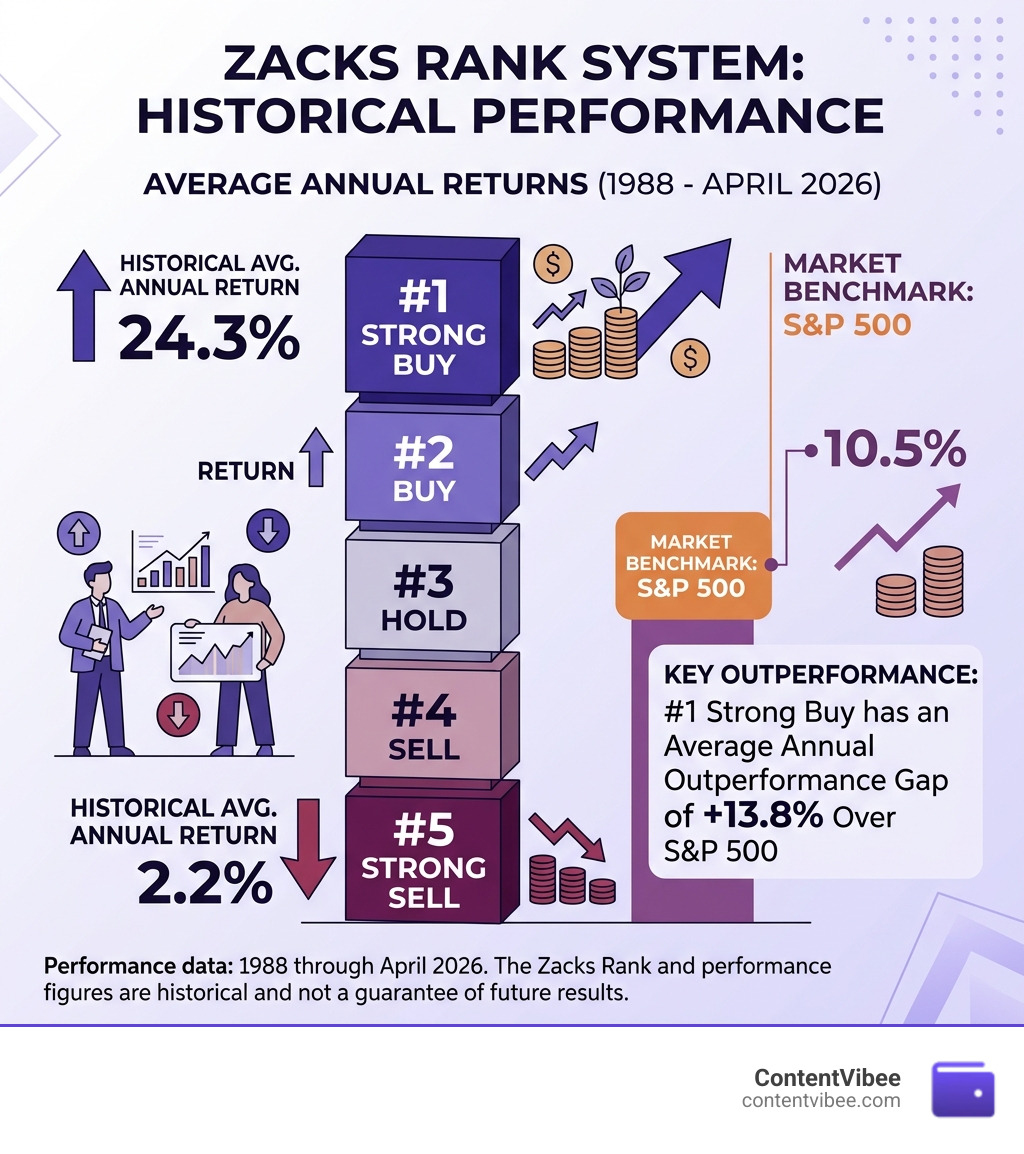
- Zacks #1 Strong Buy stocks have averaged 24.3% annual returns since 1988
- The S&P 500 averaged 10.5% over the same period
- That’s a 13.8% annual outperformance gap
- Zacks #5 Strong Sell stocks averaged just 2.2% annually
Zacks has been around since 1978. Its founder built the core system on a simple but powerful idea: earnings estimate revisions drive stock prices more than almost anything else.
That idea has held up remarkably well over decades. But whether paying for a premium subscription still delivers a real edge in 2026 — when financial data flows freely across the internet — is a much harder question to answer.
That’s exactly what this guide breaks down.
Zacks Investment Research Subscription Cost and Stock Advisory Value in 2026
When we look at the landscape of financial tools in April 2026, the question of Zacks Investment Research Subscription Cost and Stock Advisory Value remains at the forefront of the self-directed investor’s mind. We aren’t just talking about a few dollars here and there; for those looking at the higher tiers, it’s a multi-thousand dollar commitment.
Zacks operates on a quantitative model developed by Len Zacks, an MIT-trained researcher. The core philosophy is that “Earnings Estimate Revisions” are the single most important factor in determining where a stock price is headed. When analysts at major banks raise their expectations for a company’s profit, the stock tends to follow.

Currently, in 2026, the subscription tiers are structured to scale with your level of activity. The Membership Benefits – Zacks Investment Research (2026) include everything from basic rank access to deep-dive equity research reports. While the base Premium tier remains a popular entry point at $249 per year, the value proposition shifts as you move into the Investor Collection and Ultimate tiers, which provide access to private, managed portfolios.
How to Recover Investment Gains: Zacks Investment Research Subscription Cost and Stock Advisory Value
For many of us, the goal of using a service like Zacks isn’t just to “buy stocks,” but to recover from market volatility or portfolio stagnation. This is where the Earnings ESP (Expected Surprise Prediction) filter comes into play. By identifying stocks that are likely to post a positive earnings surprise, investors can position themselves ahead of the “pop.”
We have found that the ESP filter claims a 70% success rate in predicting positive surprises when combined with a Zacks Rank of #1, #2, or #3. This tool is a cornerstone of the Zacks Investment Research Subscription Cost and Stock Advisory Value discussion because it provides a tactical advantage that free news sites simply don’t offer. If you’ve suffered losses in a down market, using these quantitative filters can help identify high-probability recovery plays.
Protecting Your Portfolio: Zacks Investment Research Subscription Cost and Stock Advisory Value
Portfolio protection is just as critical as growth. One of the most underrated aspects of the Zacks system is the “Strong Sell” list. While everyone wants to find the next 500% winner, avoiding the losers is often what keeps a portfolio in the green. Historically, Zacks #5 Strong Sell stocks have averaged only a 2.2% annual return. In many years, this list has actually lost more than 50% of its value.
By paying the Zacks Investment Research Subscription Cost and Stock Advisory Value, you gain the ability to run your current holdings through the Zacks Rank and Style Scores. If you find your portfolio is heavy on #4 (Sell) or #5 (Strong Sell) stocks, the subscription essentially pays for itself by acting as a warning system. This level of financial security is vital for long-term wealth preservation.
Breaking Down Zacks Membership Tiers and Features
Navigating the different tiers can feel like looking at a complex trading terminal, but we can simplify it. Each tier is designed for a specific type of investor, from the hobbyist to the professional trader.

| Feature | Zacks Premium | Investor Collection | Zacks Ultimate |
|---|---|---|---|
| Annual Cost | $249 | $495 | $2,995 |
| Monthly Option | N/A | $59 | $299 |
| Zacks #1 Rank List | Yes | Yes | Yes |
| Focus List | Yes | Yes | Yes |
| Private Portfolios | No | 6 Services | All 20+ Services |
| Equity Research Reports | Yes | Yes | Yes |
The Zacks Review 2026: Pros, Cons, and Pricing highlights that Zacks Premium is the “bread and butter” service. It includes the Zacks #1 Rank List (updated daily with about 20+ stocks), the Focus List for long-term investors, and the Industry Rank, which sorts over 250 industry groups to help you find where the money is moving.
The Investor Collection adds a layer of curation. Instead of just giving you a list of 200 stocks, it gives you access to specific newsletters like Value Investor, Top 10 Stocks, and ETF Investor. For those of us who feel overwhelmed by “information overload,” this tier provides a more guided experience.
Zacks Ultimate is the “all-access pass.” It includes every single private portfolio Zacks offers, including specialized services like Inclusion of Options Trader, Blockchain Innovators, and Marijuana Innovators. This is built for the advanced investor who wants to see every move the Zacks analysts are making in real-time.
Analyzing Historical Performance and Stock Advisory Value
We cannot talk about Zacks without looking at the numbers. The company’s reputation is built on a 35-year track record of beating the market. Since 1988, the #1 Strong Buy stocks have averaged a 24.3% annual return. To put that in perspective, a $10,000 investment compounded at that rate over 30 years would theoretically grow into millions.
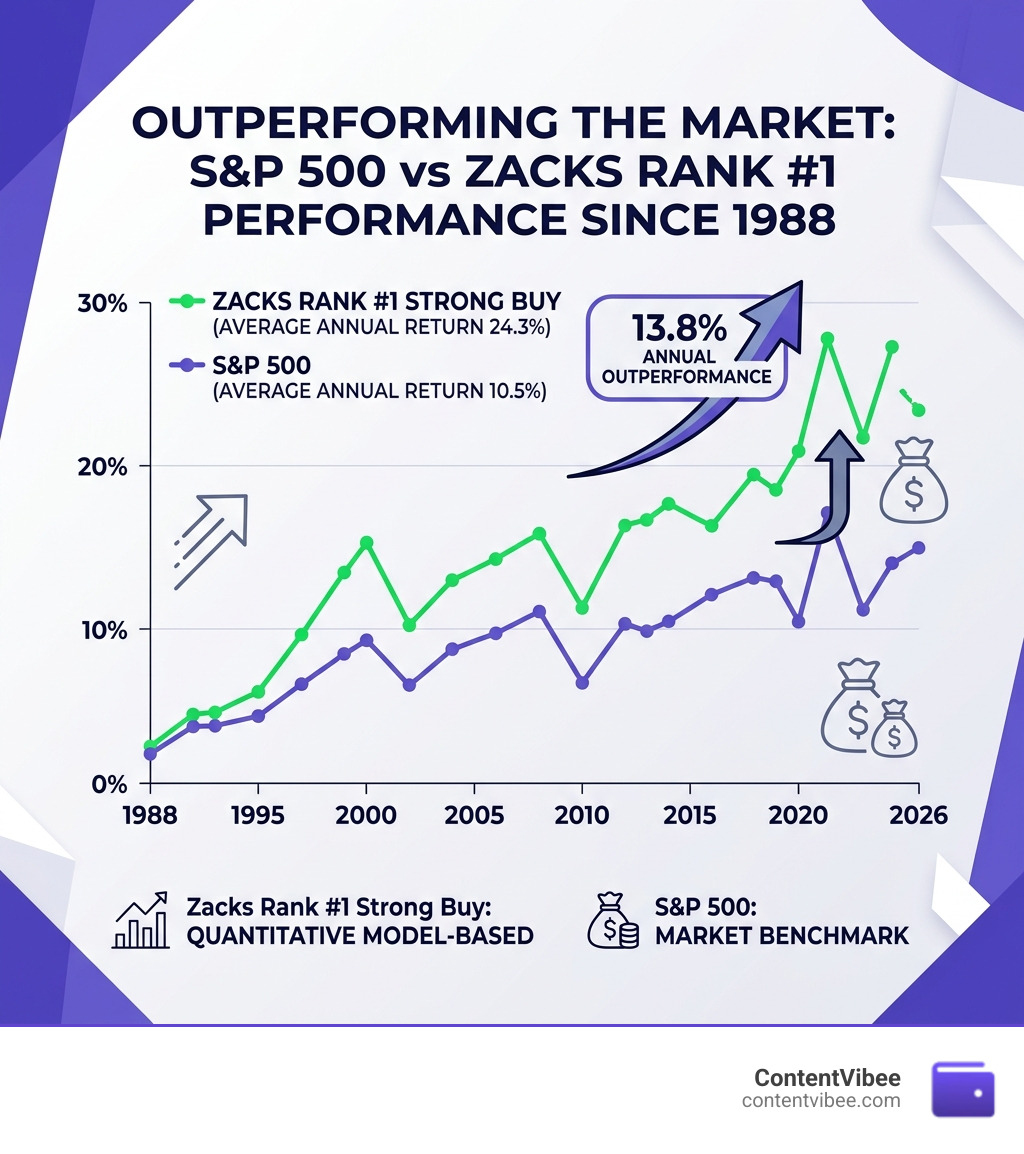
This 13.8% annual outperformance over the S&P 500 is the primary driver of the Zacks Investment Research Subscription Cost and Stock Advisory Value. However, it is important for us to note that this is based on a quantitative model that assumes daily rebalancing and ignores commissions or slippage. In the real world, your returns might vary depending on how strictly you follow the list.
The system is updated daily. Every morning, the quantitative model re-evaluates thousands of stocks based on new analyst reports. This means the #1 Rank List is dynamic—new stocks are added, and others are dropped every single day. This “freshness” of data is what gives Zacks its edge over static monthly newsletters.
Is the Zacks Premium Subscription Worth the Investment?
Is it worth the $249? For a beginner, the answer is often “yes,” but with a caveat: you have to actually use the tools. Zacks is not a “set it and forget it” service like some competitors. It is a research platform designed for the self-directed investor who wants to dig into the data.
Who it’s for:
- Intermediate Investors: Those who want to move beyond basic index funds and start picking individual stocks based on data rather than “gut feeling.”
- Active Traders: The Earnings ESP and Premium Screens are perfect for people looking for short-term swings around earnings season.
- Value and Growth Seekers: The Style Scores (A, B, C, D, F) allow you to filter the #1 Rank List to find stocks that specifically fit your strategy.
Who it’s NOT for:
- Passive Investors: If you just want to buy an ETF and check it in ten years, the $249/year is a waste of money.
- Day Traders: While the ESP filter is great, the Zacks Rank is generally better suited for a holding period of one to six months.
Zacks offers a 30-day free trial for most of its services, often for just $1. They also provide a 90-day money-back guarantee for the Premium tier, which significantly lowers the risk for those of us who are on the fence.
Frequently Asked Questions about Zacks Subscriptions
What is the current cost of Zacks Premium in 2026?
As of April 2026, Zacks Premium costs $249 per year. There is typically no monthly option for the base Premium tier, but new users can often access a 30-day trial for $1 to test the features before the annual charge kicks in.
How does the Zacks Rank system predict stock performance?
The system uses four main inputs related to earnings estimate revisions: Agreement (how many analysts are revising up), Magnitude (how much they are revising), Upside (the difference between the most accurate estimate and the consensus), and Surprise (the company’s history of beating estimates). These are processed through a quantitative formula to assign a rank from #1 (Strong Buy) to #5 (Strong Sell).
Can I cancel my Zacks subscription easily?
Yes. We’ve found that you can manage your subscription through the “My Account” section on the Zacks website. You can also contact their customer service to prevent auto-renewal. They are generally responsive, though it’s always wise to cancel at least a few days before your trial or annual term ends to avoid unwanted charges.
Conclusion
At ContentVibee, we believe that the right information is the foundation of any successful financial strategy. When evaluating the Zacks Investment Research Subscription Cost and Stock Advisory Value, it’s clear that the platform offers a powerful, data-driven edge for those willing to do the work. Whether you are looking to recover from market dips or protect your hard-earned gains, the quantitative power of the Zacks Rank remains a formidable tool in 2026.
If you are a self-directed investor who values objective data over flashy headlines, a Zacks subscription could be the key to unlocking your next level of market performance. Secure your financial future with expert insights and stay ahead of the curve in an ever-changing market.