


Choosing a Car Accident Compensation Lawyer After a Crash
A car accident compensation lawyer can help you protect your claim, deal with insurance companies, and pursue payment for crash-related losses.
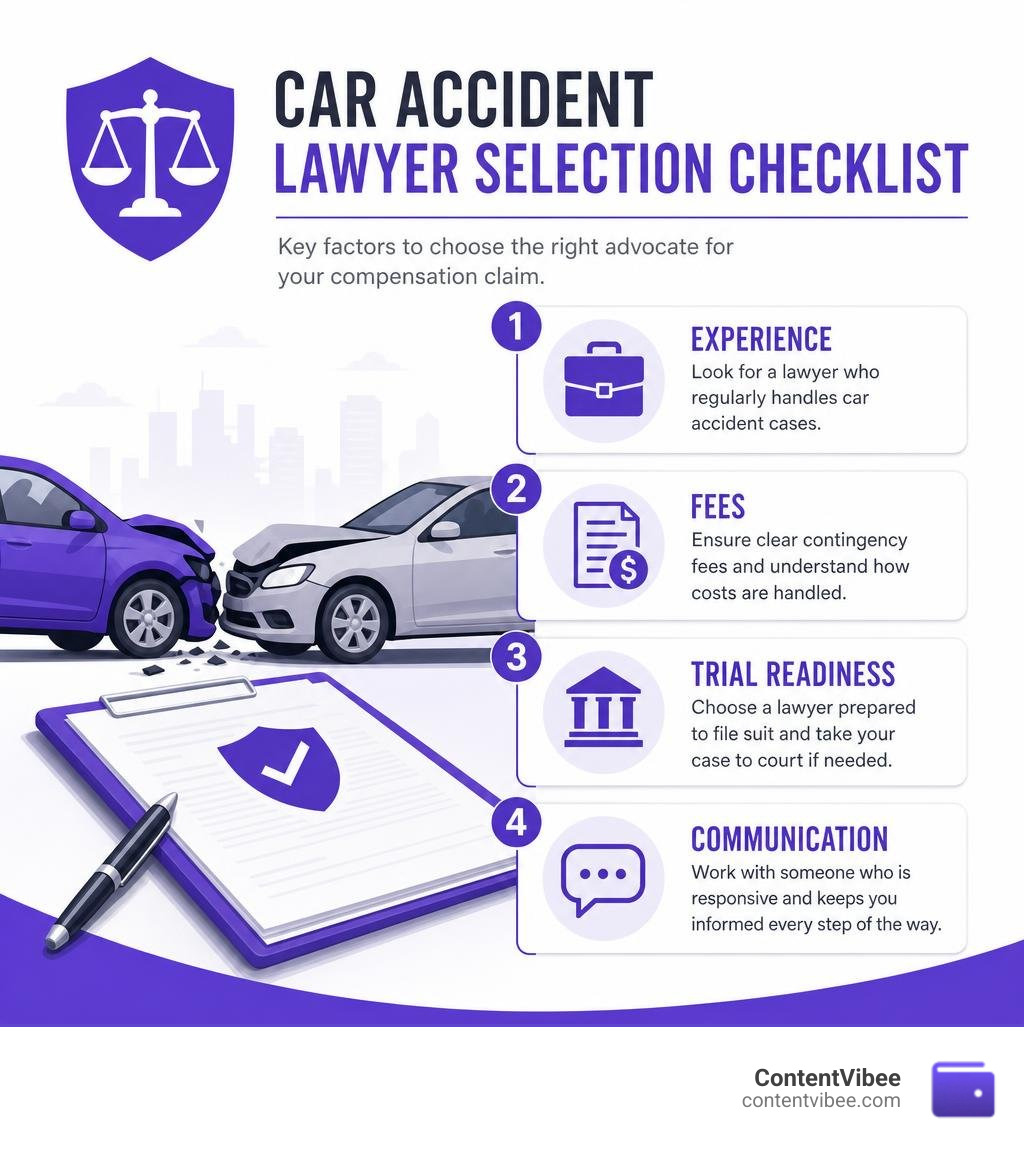
When choosing one, look for:
- Relevant car accident experience – They should regularly handle injury claims, not just general legal work.
- A clear fee agreement – Most work on contingency, often taking about 33% to 40% of a recovery. Ask how costs and trial fees are handled.
- Trial readiness – Insurers may take a claim more seriously when your lawyer can file suit and take a case to court if needed.
- Responsive communication – You should understand who will handle your case, when you will receive updates, and how to reach them.
- No pressure to settle early – A fast offer may not cover future treatment, lost income, or the full impact of an injury.
The right lawyer does more than submit paperwork. They help preserve evidence, assess fault, identify available insurance coverage, and put a realistic value on medical bills, lost wages, property damage, and pain and suffering.
Time matters after a collision. Evidence such as dashcam video, surveillance footage, witness memories, and vehicle data can disappear quickly. Deadlines also vary by state. For example, Nevada generally allows two years to file an injury lawsuit, while South Carolina generally allows three years.
This guide explains how to compare lawyers, understand fees, and make informed decisions before signing a settlement or legal contract.
What to Look For in a Car Accident Compensation Lawyer
Navigating the aftermath of a serious traffic collision can feel overwhelming. Between physical pain, medical bills, missed days from work, and aggressive calls from claims adjusters, it is easy to feel pressed into making quick decisions. Selecting the right car accident compensation lawyer is one of the most critical steps you can take to safeguard your financial recovery and protect your legal rights.
Not all attorneys bring the same level of focus or experience to motor vehicle accident claims. While many law offices advertise personal injury services, motor vehicle accidents involve nuanced insurance regulations, crash reconstruction science, and complex negotiations. You need a dedicated professional who understands how to build leverage against stubborn insurance carriers.
When evaluating potential representation, keep these five pillars in mind:
- Proven Track Record: Look for a law firm with a history of securing substantial settlements and verdicts specifically in personal injury cases.
- Reputation and Reviews: Check third-party rating platforms like Google, Avvo, and Martindale-Hubbell to see how previous clients describe their experience.
- Courtroom Experience: Insurance adjusters keep detailed records on legal counsel. If an attorney never takes cases to trial, insurers know they can offer smaller settlements without fear of litigation.
- Fee Transparency: A trustworthy advocate will clearly explain contingency fees, administrative expenses, and court costs upfront without hidden charges.
- Clear Communication: Your legal representative should be accessible, explain complex legal terms in plain English, and provide regular status updates.
Key Qualities and Red Flags in Legal Representation
When you sit down for an initial consultation, you are evaluating whether the attorney is the right partner for your journey. A qualified car accident compensation lawyer will give you an honest evaluation of your case rather than promising unrealistic multi-million-dollar guarantees.
Pay close attention to how the firm operates during your first contact. Here is a comparison of what to look for versus what to avoid:
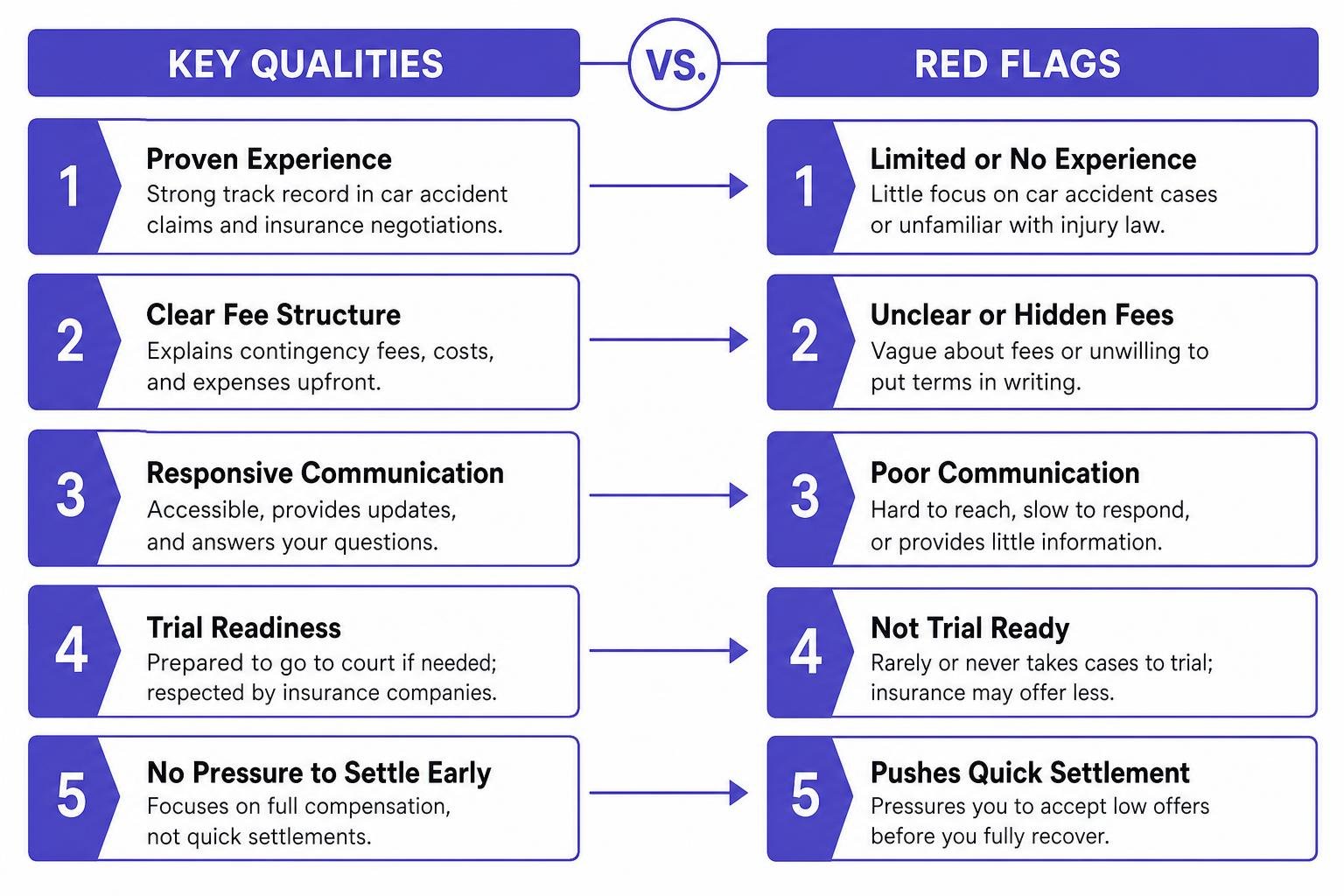
Watch out for red flags such as lawyers who push you to accept an immediate settlement before your medical treatments are even complete. Early settlement offers almost always serve the insurance company’s interests, not yours. Furthermore, ensure you understand who will handle your day-to-day case files. At some high-volume firms, senior partners conduct initial marketing calls, but junior staff or paralegals handle the actual work without adequate supervision.
Immediate Steps to Take After a Crash
What you do in the minutes, hours, and days following a motor vehicle collision directly affects the success of your personal injury claim. To ensure your safety and protect your legal rights, follow these vital steps immediately after a crash:
- Call 911 and Request Emergency Services: Always contact law enforcement so an official police report is created. Officers document scene conditions, gather driver statements, and issue citations when traffic laws are broken.
- Seek Immediate Medical Evaluation: Even if you feel fine due to post-crash adrenaline, visit an emergency room or urgent care facility right away. Hidden injuries like concussions, internal bleeding, and soft-tissue damage may take days to manifest. Delaying care gives insurance adjusters an excuse to claim your injuries were caused by something else.
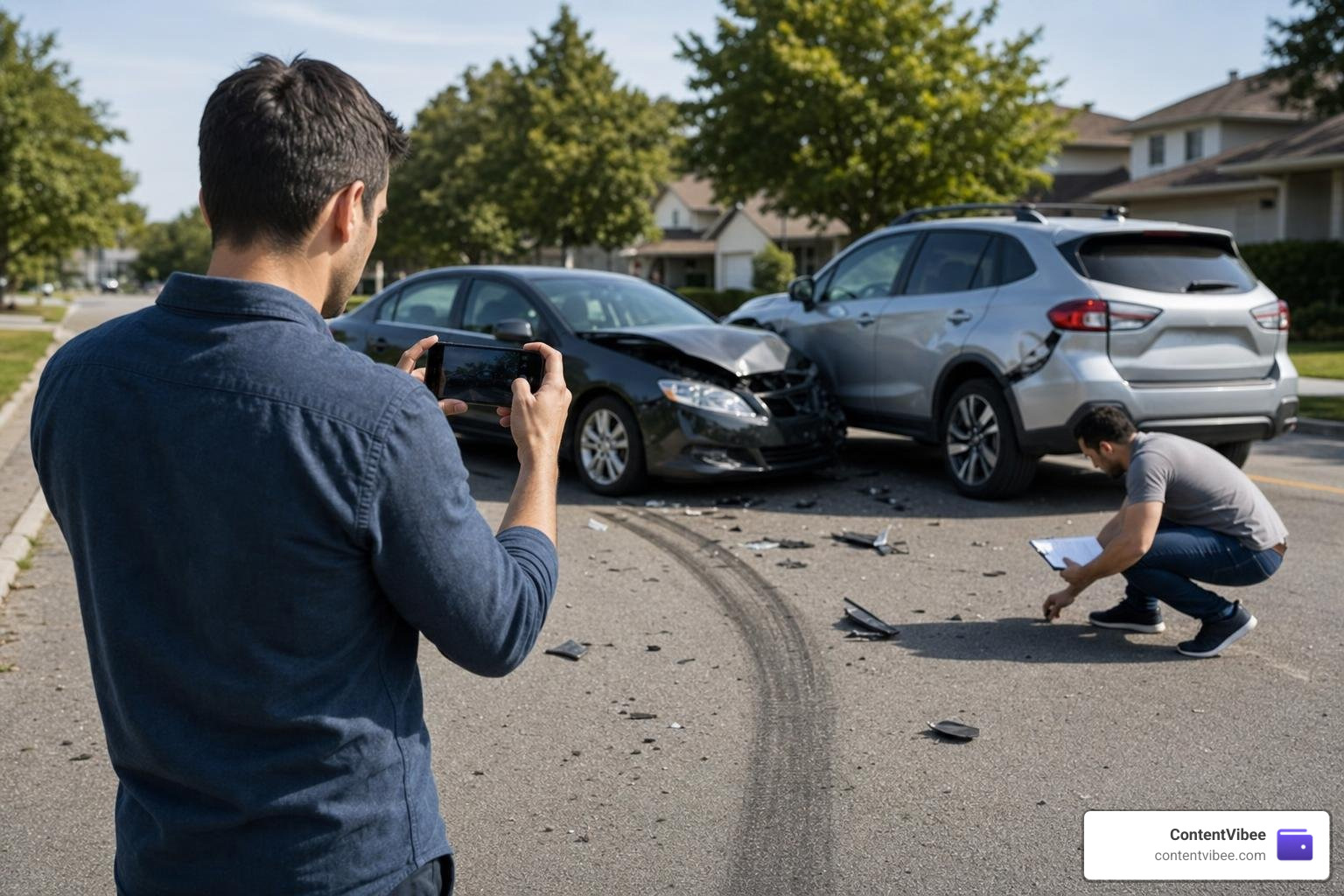
- Photograph the Scene and Evidence: Take detailed pictures and video of vehicle damage, skid marks, road hazards, traffic lights, weather conditions, and visible bodily injuries.
- Exchange Details but Limit Conversation: Exchange insurance and contact information with all drivers involved, as well as contact details from independent witnesses. Avoid discussing fault, apologizing, or making offhand comments like “I didn’t see you.”
- Decline Recorded Statements: Insurance adjusters represent the insurance company, not you. Politely decline to give a recorded statement until you have consulted with legal counsel.
- Consult a Legal Advocate: Taking advantage of a free case review allows you to understand your legal options before signing away your rights. Learn more about How a Car Accident Lawyer Free Consultation Can Help You.
How Claim Values and Damages Are Calculated
One of the most frequent questions crash victims ask is, “How much is my car accident case worth?” The short answer is that no universal baseline exists. The total value of a personal injury claim depends on the severity of your injuries, total financial losses, long-term care needs, available insurance policy limits, and clear evidence establishing liability.
Personal injury compensation falls into two primary categories: economic damages and non-economic damages. In rare cases involving gross negligence or intentional harm, courts may also award punitive damages.
| Damage Category | Examples Included | Proof Required |
|---|---|---|
| Economic Damages | Emergency room bills, surgeries, physical therapy, prescription drugs, lost wages, lost future earning capacity, vehicle repair/replacement costs. | Invoices, medical bills, pay stubs, tax returns, repair estimates, expert economic projections. |
| Non-Economic Damages | Physical pain and suffering, emotional distress, loss of enjoyment of life, permanent impairment, scarring, loss of consortium. | Medical records, mental health logs, pain journal, testimony from medical experts and loved ones. |
Working with a Car Accident Compensation Lawyer to Calculate Settlement Value
Calculating the full financial value of a crash requires far more than adding up your current hospital bills. An experienced car accident compensation lawyer works closely with medical providers, vocational rehabilitation specialists, and forensic economists to project your past, present, and future damages.
If your injuries prevent you from returning to your prior job, you are entitled to claim lost future earning capacity. For instance, if a traumatic spinal injury forces a construction worker into lower-paying desk work, the claim should capture the difference in earnings over the remainder of their career.
To estimate what your claim might be worth based on your medical bills and missed work time, check out our Car Accident Settlement Calculator.
Settlement Formulas and Reaching Maximum Medical Improvement
Insurance companies frequently use standardized software programs to generate lowball settlement offers. These algorithms apply basic multipliers to your economic damages, often failing to account for unique personal suffering or future medical expenses.
To combat these automated systems, it is essential to understand The Car Accident Settlement Formula and How to Beat It. Insurers typically apply a multiplier—usually between 1.5 and 5—to total medical costs depending on injury severity. However, a skilled attorney pushes past these simplistic formulas by gathering detailed medical evidence, expert testimony, and personal impact statements.
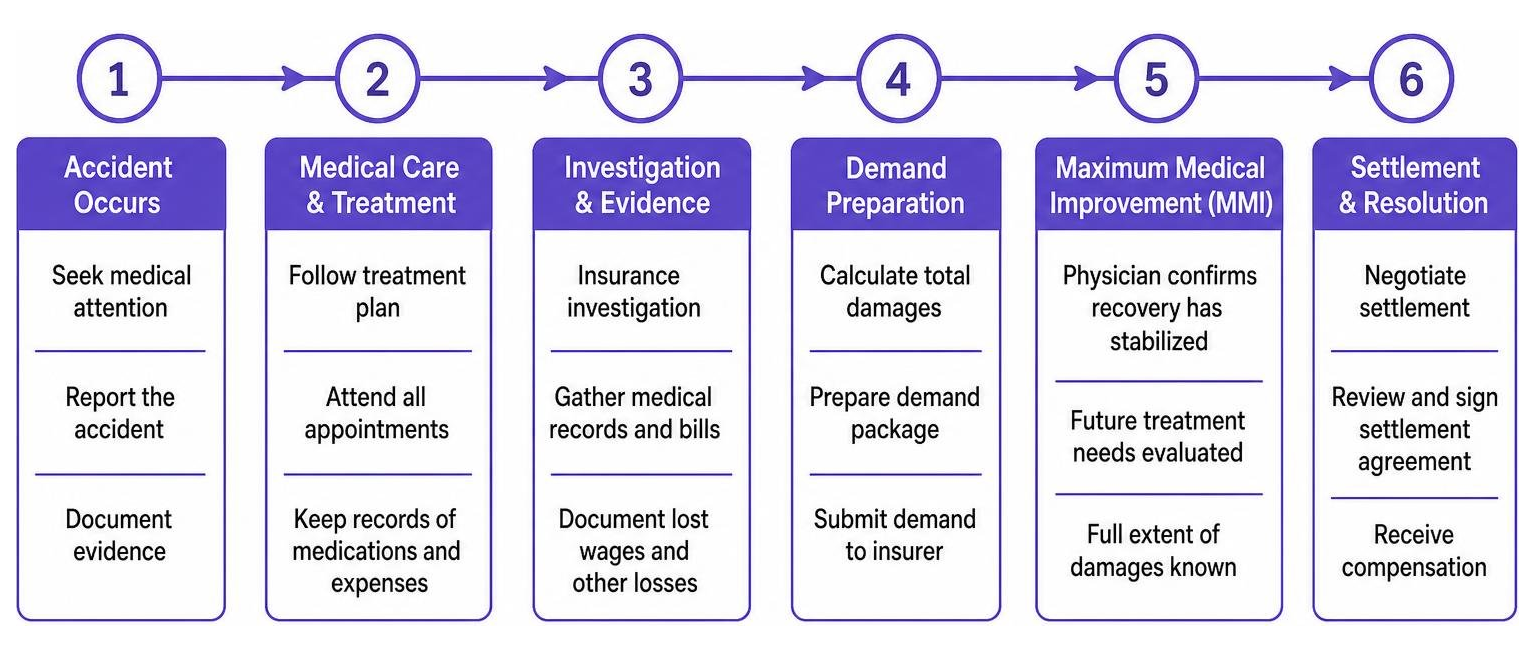
A vital principle in accident claims is waiting until you reach Maximum Medical Improvement (MMI) before finalizing any settlement. MMI is the point at which your treating physician determines your recovery has stabilized and further treatment is unlikely to result in significant additional progress.
If you sign a settlement release form before reaching MMI, you permanently forfeit the right to demand additional financial compensation—even if you later require expensive surgeries or long-term therapy related to the crash.
Proving Liability, Evidence, and Navigating Insurance Limits
Establishing who was at fault is the foundation of any personal injury claim. To receive compensation, you must prove that the other driver owed you a duty of care, breached that duty through negligent behavior (such as speeding, distracted driving, or drunk driving), and directly caused your injuries and financial damages.
Why You Need a Car Accident Compensation Lawyer During Insurance Negotiations
Insurance claims adjusters are trained professionals whose main objective is to minimize payouts and maximize their company’s profitability. Shortly after a crash, an adjuster may reach out acting friendly and concerned. They might offer a quick check to cover initial medical bills in exchange for signing a full liability release.
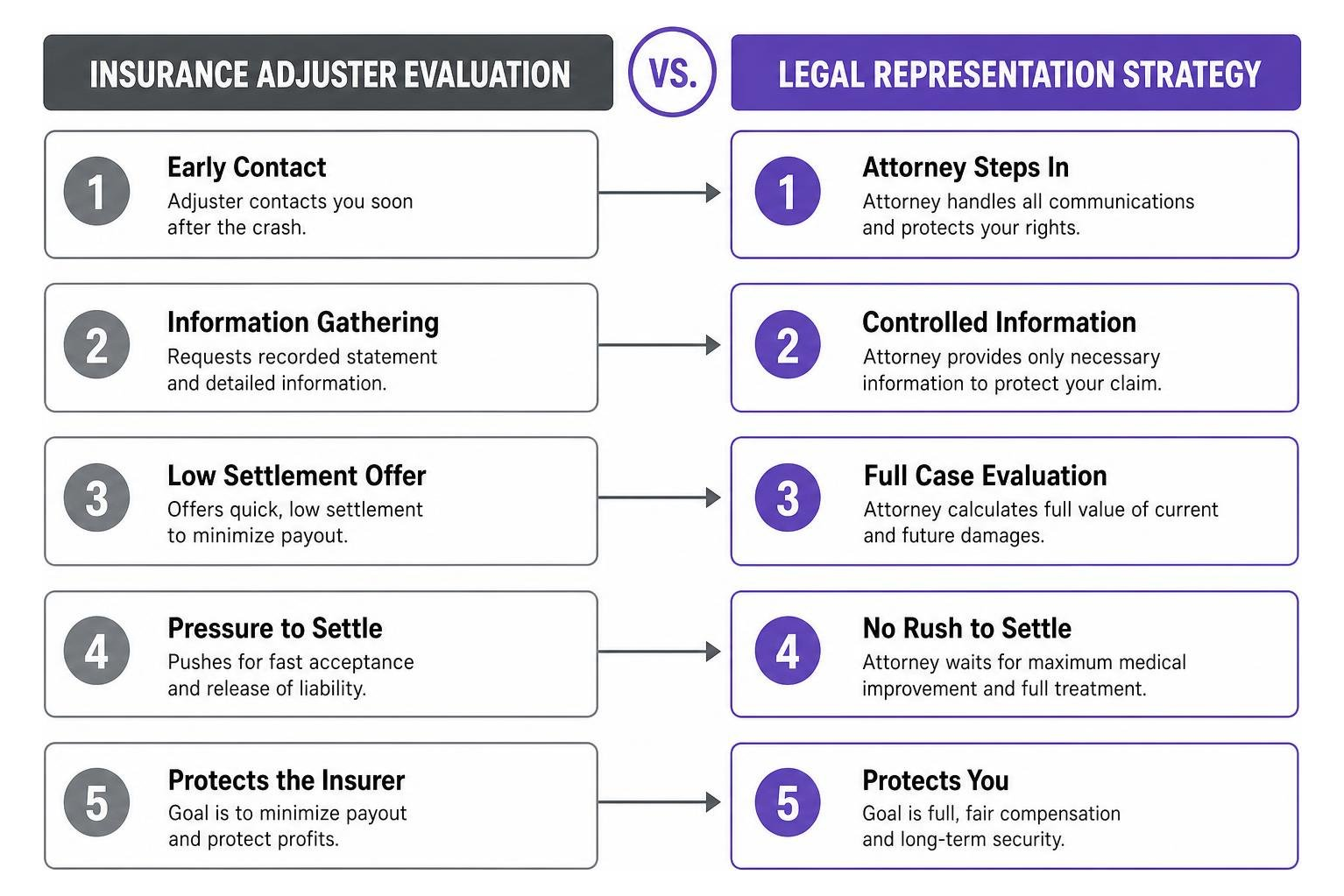
Without legal counsel, accident victims routinely accept early settlements that represent only a fraction of their long-term expenses. An experienced attorney steps between you and the insurance provider, handling all communications, refusing unfair lowball offers, and holding the insurer accountable to its legal obligations. For additional insights on legal representation across various jurisdictions, reviewing resources like the Car Accident Lawyer | Rodriguez Law Firm page offers helpful background on personal injury practices.
Gathering Critical Evidence to Establish Fault
Winning full compensation requires compiling compelling evidence long before entering settlement discussions. Critical forms of evidence include:
- Official Police Reports: Detailed collision reports containing officer assessments, traffic citations, driver admissions, and preliminary fault designations.
- Commercial Vehicle Data & Black Boxes: Commercial trucks and many modern passenger vehicles contain Event Data Recorders (EDRs) that store valuable telemetry data, such as vehicle speed, braking actions, steering input, and seatbelt usage right before impact.
- Dashcam and Surveillance Video: Video footage captured by vehicle dashcams, nearby business security cameras, or traffic signals provides objective proof of how the crash occurred.
- Eyewitness Testimony: Independent statements from bystanders who observed the crash help resolve conflicting driver stories.
- Accident Reconstruction Analysis: In complex collisions, engineering and crash reconstruction experts analyze physical vehicle damage, skid marks, and road dynamics to recreate the collision sequence.
Comparative Negligence Rules and Statute of Limitations
State laws significantly influence how much compensation you can collect if you were partially at fault for an accident, as well as how much time you have to file a claim.
Modified Comparative Negligence Rules
Many states, including Nevada, follow a modified comparative negligence rule with a 51% fault bar (NRS 41.141). Under this standard:
- You can recover damages as long as you are 50% or less at fault for the crash.
- Your final compensation payout is reduced by your percentage of fault. For example, if a court determines your total damages are $100,000 but assigns you 10% fault for driving slightly over the speed limit, your recovery is reduced by 10% to $90,000.
- If you are found 51% or more at fault, you are legally barred from recovering any compensation from the other driver.
Statutes of Limitations Deadlines
Every state imposes strict deadlines, known as statutes of limitations, for filing personal injury lawsuits:
- Nevada: Gives injured victims two years from the date of the crash to file a personal injury lawsuit under NRS 11.190(4)(e).
- South Carolina: Imposes a three-year statute of limitations for personal injury claims arising from car collisions. Victims seeking localized assistance in regions like South Carolina often research resources such as a Greer Car Accident Lawyer | Briggs Law Group.
If you miss your state’s statutory deadline, courts will dismiss your lawsuit, eliminating your legal right to pursue financial compensation regardless of how severe your injuries are.
Understanding Contingency Fees and Settlement Timelines
Financial stress is a primary worry for crash victims who are facing growing medical bills and missed paychecks. Fortunately, personal injury representation is structured to be accessible to everyone regardless of current income.
How Legal Fees and Expenses Work
Car accident lawyers typically operate under a contingency fee arrangement. This means you pay zero upfront costs or out-of-pocket retainer fees. Your attorney only gets paid if they successfully recover money for you through a negotiated settlement or courtroom trial verdict.
Standard contingency fee structures generally follow these norms:
- Pre-Litigation Settlement Fee: Usually between 33% and 40% of the gross recovery amount if the case resolves through negotiation before filing a lawsuit.
- Litigation and Trial Fee: May increase to 40% to 50% if formal court litigation, depositions, or a full jury trial become necessary due to insurer refusal to pay a fair amount.
To get a complete breakdown of legal billing models, fee agreements, and litigation costs, read our detailed guide on How Much Does a Personal Injury Lawyer Charge.
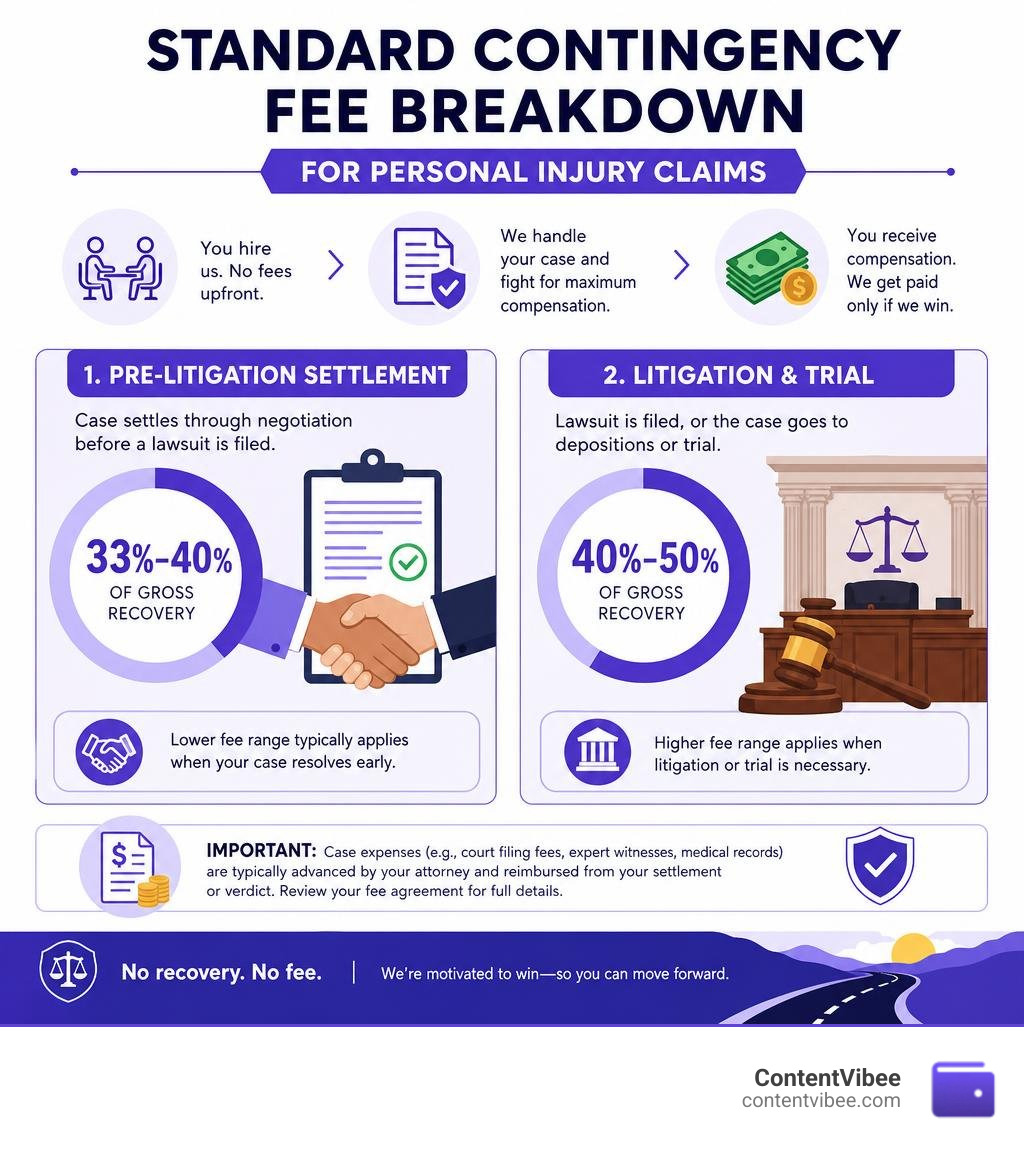
Always review retainer agreements carefully. Ensure your lawyer explains how administrative expenses (such as filing fees, expert witness charges, court reporter fees, and medical record retrieval fees) are handled upon successful recovery.
Handling Uninsured Motorists and Delay Tactics
A common challenge occurs when the negligent driver carries insufficient coverage or no insurance at all. State minimum insurance laws often fail to cover severe injuries. For example, Nevada law requires drivers to carry minimum liability limits of $25,000 for bodily injury per person, $50,000 per accident, and $20,000 for property damage. In severe collisions, hospital expenses can easily exceed these baseline limits within days.
When the at-fault driver has inadequate coverage, your legal team can pursue recovery through your own Uninsured/Underinsured Motorist (UM/UIM) coverage. UM/UIM policy coverage steps in to pay for remaining medical costs, lost income, and damages up to your policy limits.
Settlement Timelines
How long does it take to settle a car accident claim? The duration depends on case complexity:
- Simple Claims: Straightforward cases with clear liability, minor injuries, and full recovery can resolve within 3 to 6 months.
- Complex or High-Value Claims: Cases involving severe injuries, disputed fault, multiple parties, or stubborn insurers routinely take 12 to 24 months or longer, especially if formal court litigation is required.
For a full breakdown of the timeline and phases involved in resolving a claim, check out our Car Accident Settlement Guide 2026.
Frequently Asked Questions
Should I give a recorded statement to the insurance adjuster?
No, you should politely decline to give a recorded statement to the opposing driver’s insurance adjuster. Adjusters are trained to ask open-ended or misleading questions designed to coax you into making statements that minimize your injuries or suggest you were partially at fault. State that you prefer to communicate in writing or through your legal counsel.
What is the statute of limitations for a car accident claim?
The statute of limitations varies by state law. For example, Nevada gives crash victims two years from the exact date of the collision to file a lawsuit (NRS 11.190(4)(e)), while South Carolina sets a three-year deadline. Missing this strict legal cutoff permanently forfeits your right to recover financial compensation.
What happens if the at-fault driver has no insurance?
If the at-fault driver is uninsured or Flees the scene in a hit-and-run, you can seek recovery through your own Uninsured Motorist (UM) insurance coverage. If you do not have UM coverage, an attorney can evaluate whether third parties share liability or file a lawsuit against the driver’s personal assets.
Conclusion
Choosing the right car accident compensation lawyer can make all the difference in the outcome of your claim. An experienced legal advocate protects you from unfair insurance tactics, preserves crucial scene evidence, calculates the true lifetime cost of your injuries, and fights for every dollar you deserve.
At ContentVibee, our goal is to empower you with clear, practical guidance on financial and legal decisions so you can take confident action after an unexpected injury. Do not wait while insurance companies build a case against you. If you or a loved one were hurt in a crash, consult our comprehensive Car Accident Lawyer Guide to take the next step toward recovering full compensation today.


