


VXUS ETF International Exposure Risk and Portfolio Diversification Strategy is one of the most searched topics among self-directed investors right now — and for good reason.
Here’s the quick answer:
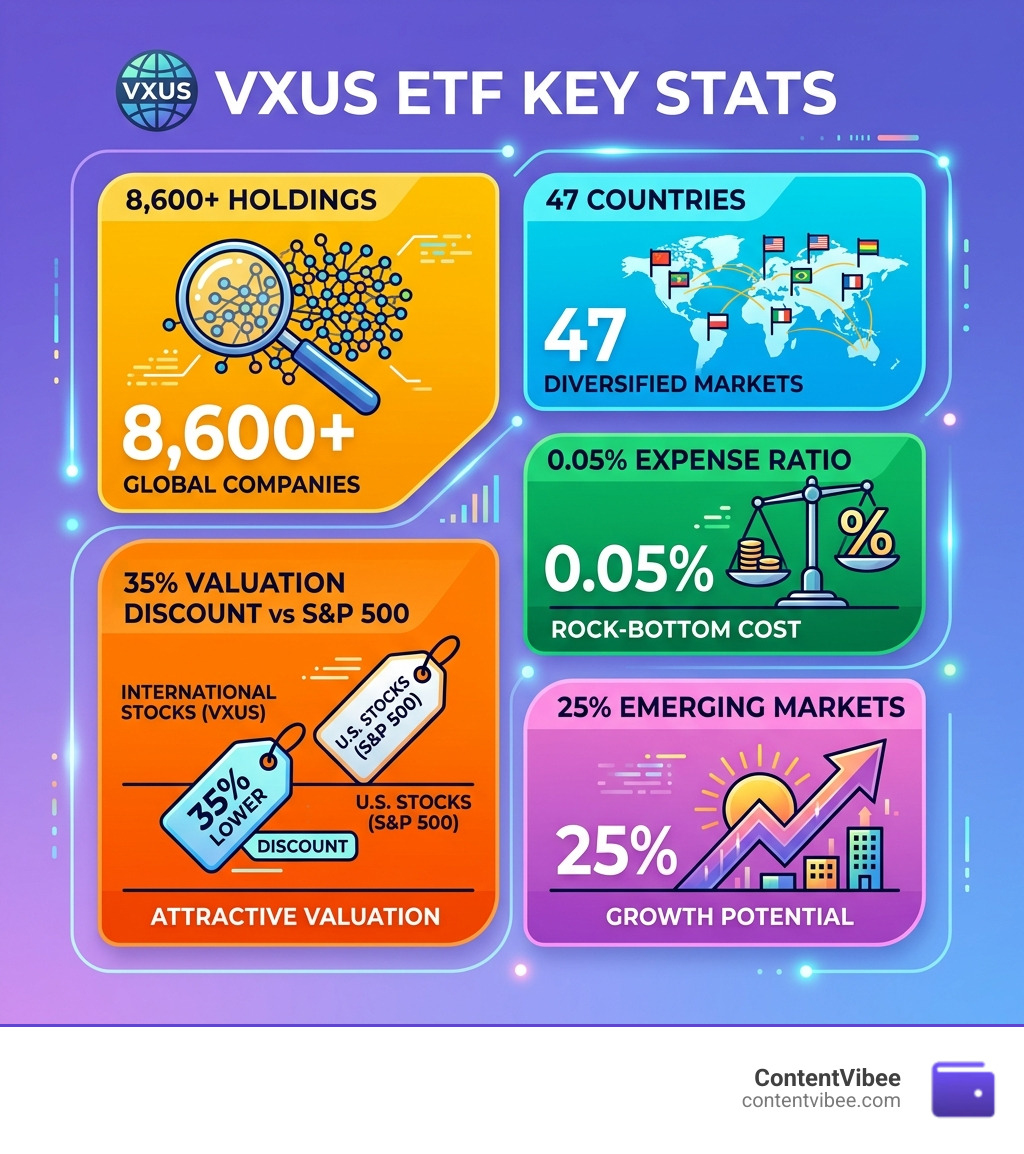
- What it is: VXUS is Vanguard’s Total International Stock ETF, tracking the FTSE Global All Cap ex US Index across 8,600+ stocks in 47 countries
- Why it matters: It gives your portfolio exposure outside the U.S. at a rock-bottom 0.05% expense ratio
- Key risks: Unhedged currency exposure, emerging market volatility (~25% of holdings), and geopolitical risk (including China)
- Diversification benefit: International stocks currently trade at a 35% valuation discount to the S&P 500, with analysts projecting 1.4% annual outperformance through 2035
- Recommended allocation: Most strategies suggest 20-40% of your equity portfolio in international stocks like VXUS
Most U.S. investors have portfolios heavily loaded toward domestic stocks. That worked well for the past decade. But concentration in a handful of U.S. mega-cap tech names carries real risk.
In 2026, VXUS is up roughly 26% over the trailing 12 months — outpacing the U.S. market by a wide margin. A weakening dollar and attractive international valuations are driving that gap.
This guide breaks down everything you need to know — the risks, the diversification math, the performance data, and how to actually use VXUS in a real portfolio.
Understanding the VXUS ETF: Broad Global Reach
When we talk about the Vanguard Total International Stock ETF (VXUS), we are talking about a massive net. It doesn’t just “dip a toe” into international waters; it jumps into the deep end with a full replication strategy. As of April 2026, VXUS holds over 8,600 stocks. To put that in perspective, that is more than double the holdings of many of its closest competitors.
The fund tracks the FTSE Global All Cap ex US Index, which covers approximately 98% of the investable market capitalization outside of the United States. This includes large-, mid-, and small-cap stocks. Because every investor faces risk, having over 8,000 “eggs” in your basket significantly reduces the impact if one particular company—or even one small country—faces a financial crisis.
Regional and Sector Breakdown
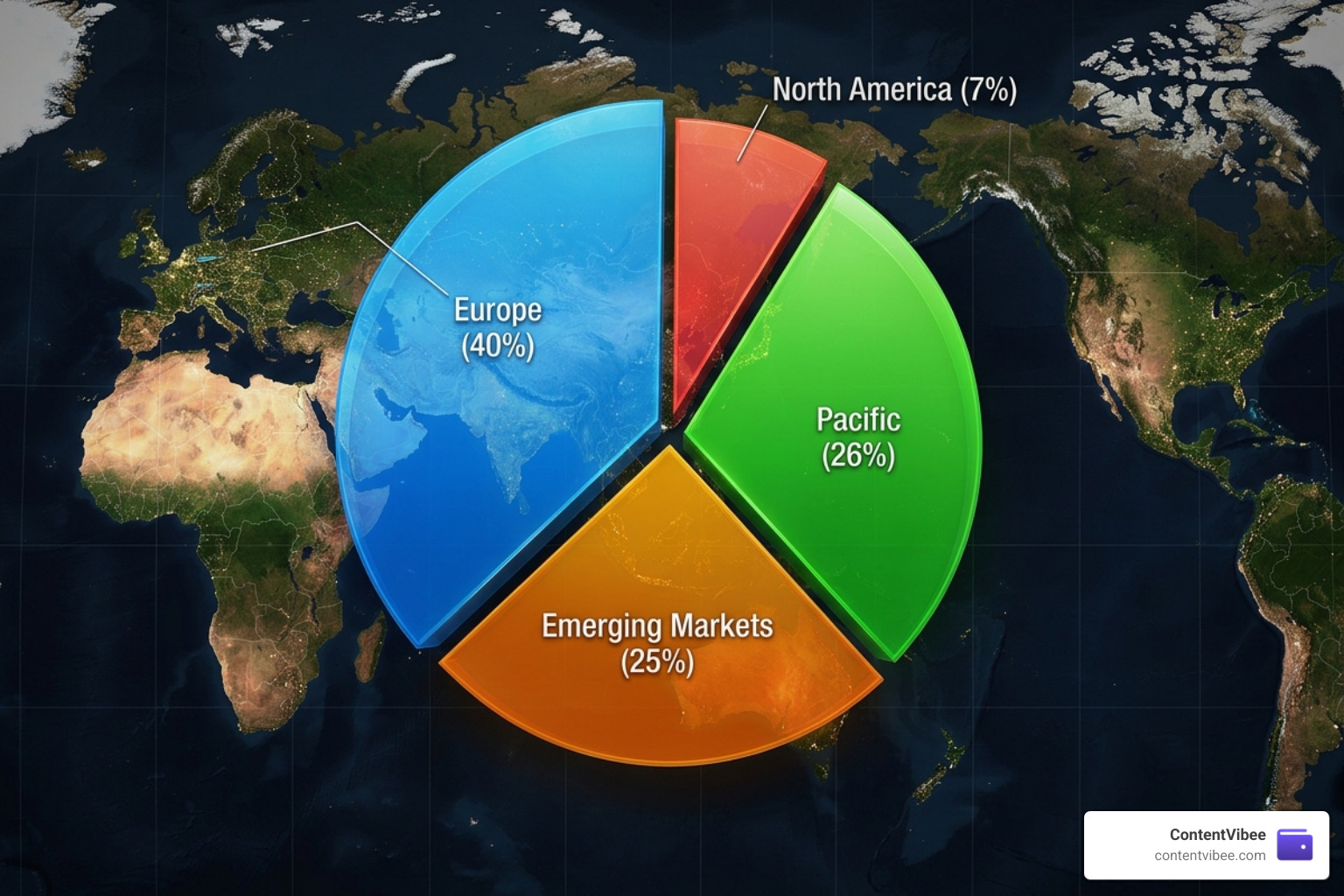
VXUS is designed to be a “one-stop shop” for everything non-U.S. Here is how the geography typically shakes out:
- Europe (40.40%): Home to giants like ASML, Nestle, and Novo Nordisk.
- Pacific (26.30%): Strong exposure to Japan and Australia.
- Emerging Markets (25.70%): This includes the high-growth but volatile regions of China, India, and Taiwan.
- North America (7.20%): Primarily Canadian stocks like Royal Bank of Canada and Shopify.
One of the standout features mentioned in VXUS: Vanguard International Stock ETF: Characteristics, Risk is its expense ratio. At just 0.05% to 0.08%, it is nearly 90% cheaper than the average international fund. For a long-term investor, those savings compound into thousands of dollars over a few decades.
VXUS ETF International Exposure Risk and Portfolio Diversification Strategy
Managing a global portfolio requires a balance between growth and stability. The VXUS ETF International Exposure Risk and Portfolio Diversification Strategy relies on a passive management approach with a low portfolio turnover of just 3%. This means the fund isn’t constantly buying and selling, which keeps tax costs low for you.
When we look at why choosing the right investment portfolio matters, we have to compare the heavy hitters. Below is a quick comparison of how VXUS stacks up against its peers:
| Metric | VXUS (Vanguard) | IXUS (iShares) | SCHF (Schwab) |
|---|---|---|---|
| Number of Holdings | 8,600+ | ~4,200 | ~1,500 |
| Expense Ratio | 0.05% | 0.07% | 0.06% |
| Small-Cap Inclusion | Yes | Yes | No (Large/Mid only) |
| Emerging Markets | ~25% | ~25% | 0% (Developed only) |
Effective investment asset allocation strategy risk management suggests that while VXUS is broad, it shouldn’t be your only holding. It functions best as a partner to a total U.S. stock market fund.
Mitigating Home-Country Bias and U.S. Concentration
Many of us suffer from “home-country bias”—the tendency to invest only in what we see outside our front door. While the U.S. market has been a powerhouse, it has become increasingly concentrated. In ETFs like VTI (Total U.S. Market), the top 10 holdings can represent a huge chunk of the total value, often dominated by five or six tech giants.
As noted in VXUS Vs. VTI: Rethinking Diversification In A Concentrated And Uncertain Market, VXUS provides a massive hedge against this concentration. In VXUS, the top 10 holdings represent less than 3% of the total portfolio. If U.S. big tech takes a breather, your international holdings in VXUS—which are spread across sectors like financials, industrials, and healthcare—can act as a stabilizer.
VXUS ETF International Exposure Risk and Portfolio Diversification Strategy for Retirement
For those of us planning for retirement, the goal is often consistent growth with a side of income. VXUS currently offers a dividend yield between 2.86% and 2.99%, paid out quarterly. This is often higher than the yield found in U.S. growth-heavy indices.
When considering why the investment time horizon impact is vital, international cycles can last a decade. Analysts currently project that because international stocks are so much cheaper than U.S. stocks (a 35% valuation discount), they could outperform by 1.4% annually through 2035. For a retirement account, an extra 1.4% per year is a game-changer.
Analyzing the Core Risks of International Investing
We wouldn’t be doing our job if we didn’t talk about the “scary” stuff. Investing abroad isn’t a free lunch. The biggest factor we keep an eye on is currency risk. VXUS is “unhedged.” This means if the U.S. Dollar gets stronger, your international investments actually lose value when converted back to dollars, even if the stocks themselves stayed flat.
Conversely, when the dollar weakens—as it did by about 9% in 2025—VXUS gets a massive tailwind. In 2025, this currency shift helped VXUS return nearly 19%, significantly boosting returns for U.S. investors. Using why a portfolio risk management tool is essential can help you visualize how these currency swings impact your total net worth.
Managing VXUS ETF International Exposure Risk and Portfolio Diversification Strategy during Volatility
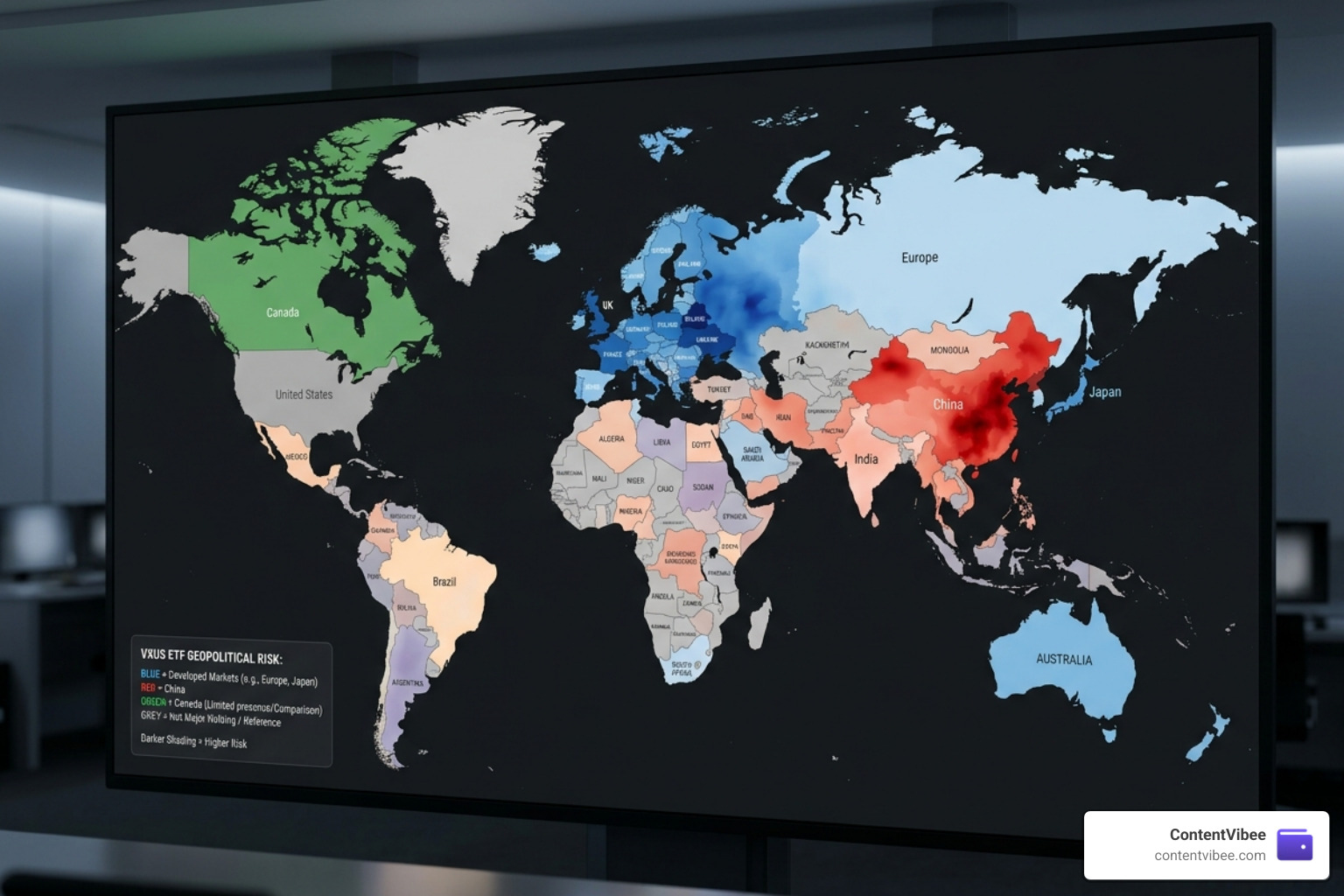
The 25% allocation to emerging markets is a double-edged sword. On one hand, you get access to the explosive growth of the middle class in India and the tech manufacturing of Taiwan. On the other hand, you face geopolitical risks.
- China Exposure: VXUS includes Chinese A-shares and Hong Kong listings. Tensions between the U.S. and China can cause sudden price drops in these holdings.
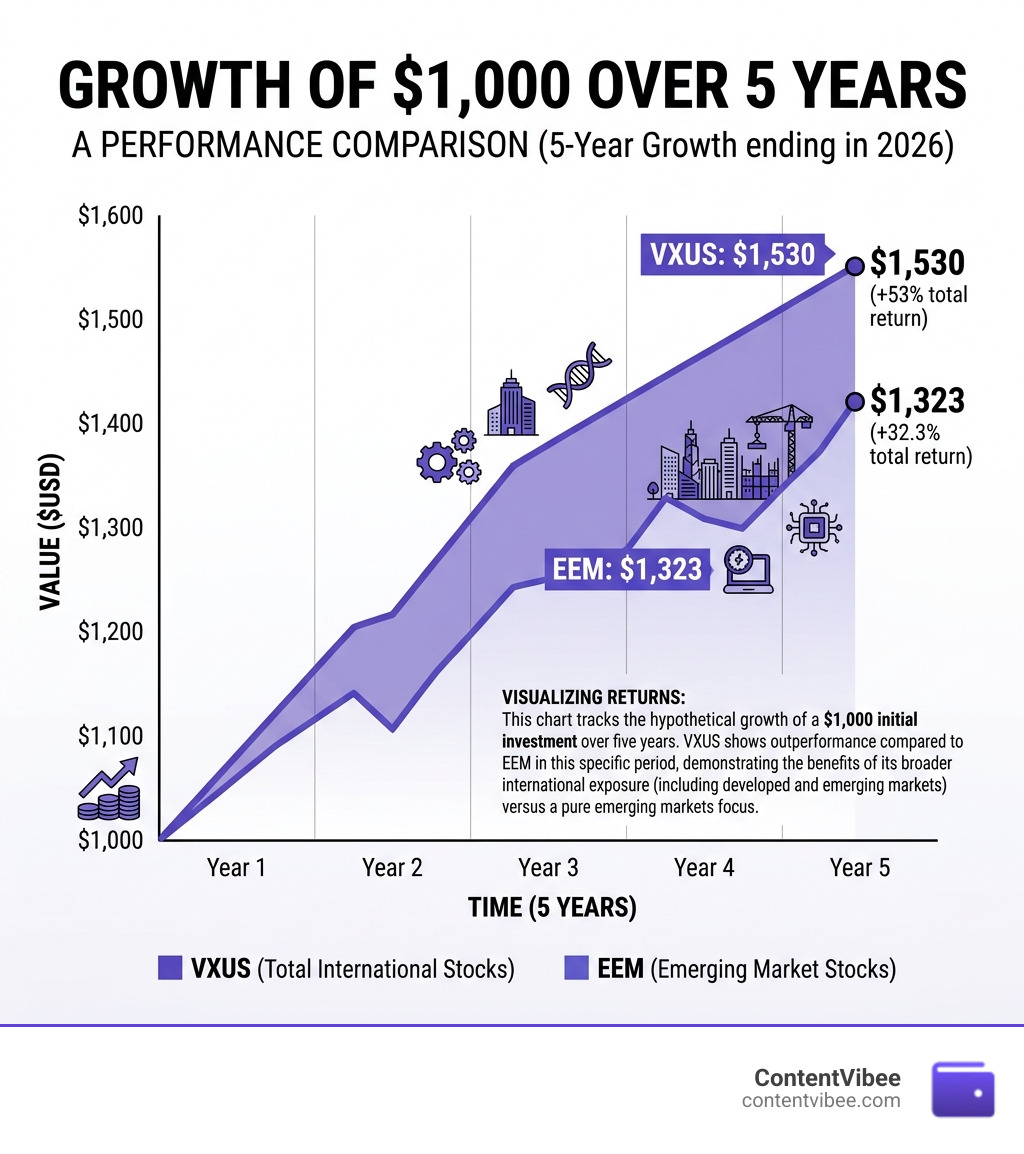
- Volatility: Emerging markets have a higher beta. During the 5-year period ending in 2026, the max drawdown for emerging-market-heavy funds was around -39%, whereas VXUS (buffered by stable European stocks) was closer to -29%.
Understanding the difference between traditional vs alternative investments is key here. While VXUS is a traditional equity fund, its behavior in a portfolio can sometimes feel “alternative” because it doesn’t always move in lockstep with the S&P 500.
Performance Benchmarks: VXUS vs. Domestic ETFs
The last couple of years have been a “coming out party” for international stocks. For years, U.S. investors asked, “Why bother with VXUS when the S&P 500 is doing so well?”
The answer arrived in 2025 and early 2026. While the U.S. market (VTI) saw a slight year-to-date decline of -1.4% in early 2026, VXUS was up +4.2% in the same period. Over the full year leading into April 2026, VXUS posted returns as high as 40.98% for some investors, fueled by a rotation out of expensive U.S. tech and into undervalued global sectors.
If you are managing your portfolio manually, these periods of outperformance are when you should look at rebalancing. If VXUS has grown to be 50% of your portfolio because of a great year, it might be time to sell some and move it back into U.S. stocks to maintain your target allocation.
Strategic Implementation: Allocation and Tax Efficiency
How much VXUS should you actually own? Most financial experts suggest an allocation of 20% to 40% of your total stock portfolio. This range is usually enough to capture the benefits of diversification without letting international volatility take over your entire experience.
There is also a “hidden” benefit to holding VXUS in a taxable brokerage account: the Foreign Tax Credit. Because foreign governments often take a cut of the dividends (dividend withholding taxes) before they reach Vanguard, the IRS allows U.S. investors to claim a credit for those taxes paid. This can effectively lower your tax bill at the end of the year.
If you are wondering is automated portfolio management right for you, consider that many automated tools (like Autopilot) handle this rebalancing and tax-loss harvesting for you. Choosing the right portfolio management approach ensures that you don’t miss out on these small but important percentage gains.
Frequently Asked Questions about VXUS
Does VXUS include exposure to China and Emerging Markets?
Yes. Approximately 25% of the fund is dedicated to emerging markets. This includes major positions in Taiwan Semiconductor (TSMC), Samsung Electronics, and various Chinese companies listed both in mainland China (A-shares) and Hong Kong. While this adds growth potential, it is the primary source of geopolitical risk within the fund.
How does the 0.05% expense ratio impact long-term returns?
It is a massive advantage. Many international mutual funds charge 0.70% or more. On a $100,000 portfolio, a 0.05% fee costs you $50 a year, while a 0.70% fee costs you $700. Over 30 years, that $650 difference—if invested—could grow into an extra $50,000 or more in your pocket rather than the fund manager’s.
Is VXUS a good hedge against a weakening U.S. Dollar?
Absolutely. Because VXUS is unhedged, it holds assets in Euros, Yen, Pounds, and Yuan. If the dollar loses value, those foreign currencies become worth more “dollars.” This was a major driver of the 18.95% surge seen in 2025 when the USD declined by 9%.
Conclusion
The VXUS ETF International Exposure Risk and Portfolio Diversification Strategy is no longer just a theoretical “good idea”—it has become a practical necessity for the modern investor. With U.S. markets showing high concentration and rich valuations, the 8,600+ companies inside VXUS offer a much-needed margin of safety and a lower entry price.
At ContentVibee, we believe that understanding these risks—from currency swings to geopolitical shifts—is the first step toward building a resilient wealth engine. If you find the manual management of global allocations daunting, the Autopilot app offers a streamlined solution. Autopilot provides automated portfolio management for self-directed investors, featuring comprehensive fee and risk reviews to ensure your strategy is always cost-worthy.
Ready to dive deeper into smart investing? Explore our investment categories to find more guides on building a portfolio that stands the test of time.


