


Why a No Fee Stocks and Shares ISA Could Save You Thousands
If you’re an American living in the UK or considering investing through the UK market, understanding the no fee stocks and shares ISA can be a game-changer. Here are the top options available in 2026:
| Provider | Account Fee | Trading Commission | Interest on Cash |
|---|---|---|---|
| Trading 212 | £0 | £0 | 3.8% AER |
| Robinhood UK | £0 | £0 (US stocks) | – |
| Freetrade (Basic) | £0 | £0 | 1% AER (up to £1,000) |
| Scottish Widows | £0 | £5 (UK/funds), £0 (international) | – |
Every pound you hand over in platform fees is a pound that isn’t compounding in your portfolio. For investors looking to reduce costs and keep more of their returns, this is a real problem – and it adds up faster than most people expect.
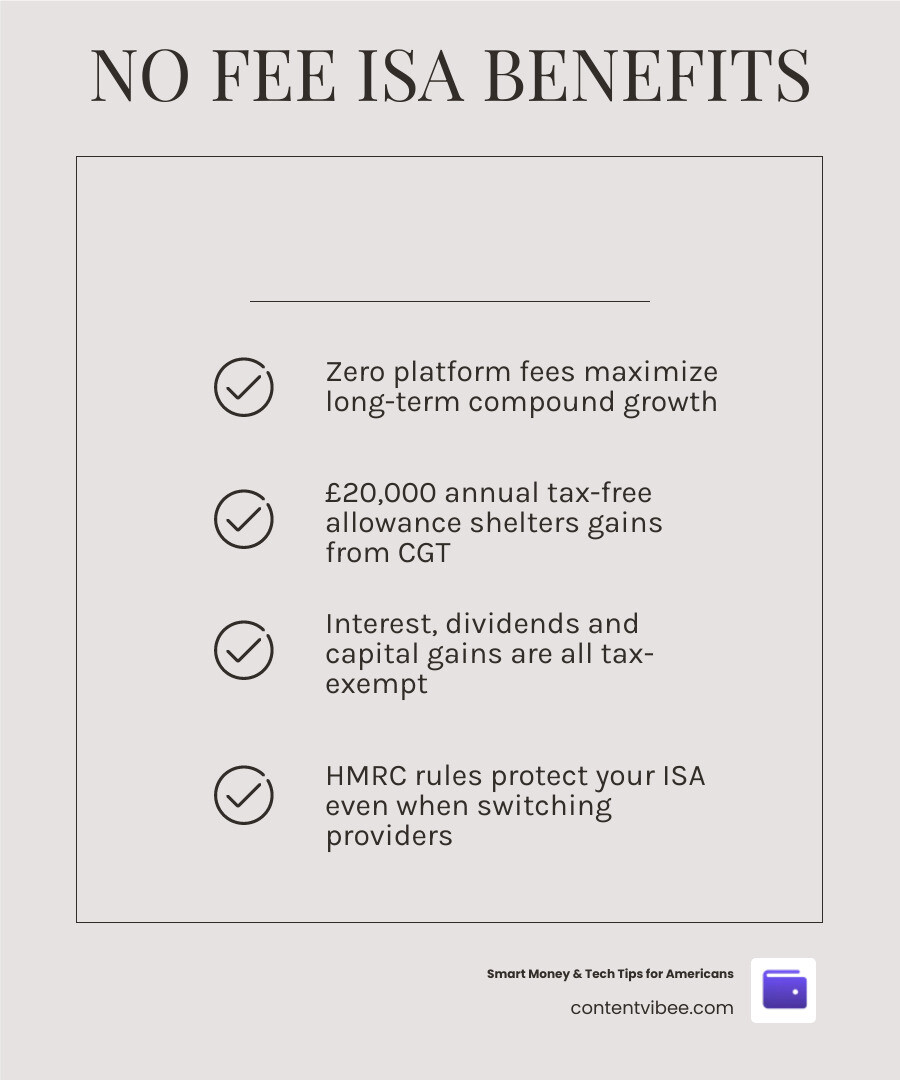
The good news: the UK’s Stocks and Shares ISA is one of the most generous tax breaks available to eligible investors. Any gains, dividends, or interest you earn inside one are completely sheltered from UK Income Tax and Capital Gains Tax. You can review the official rules on the UK government’s ISA guidance. And in 2026, a growing number of platforms offer this wrapper for zero account fees.
The annual ISA allowance is £20,000 per tax year. That’s £20,000 you can invest without HMRC taking a cut of your returns – ever. Outside an ISA, the Capital Gains Tax allowance is just £3,000 per year, making the ISA wrapper significantly more valuable for anyone building serious wealth.
For Americans who are UK tax residents – whether you’ve relocated for work, married a British spouse, or are building a life abroad – this is one of the most powerful wealth-building tools at your disposal. This guide cuts through the noise and compares the best no-fee options head to head, so you can stop overpaying and start keeping more of what you make.
Understanding the No Fee Stocks and Shares ISA
To truly grasp the value of a no fee stocks and shares ISA, we first need to understand the “ISA wrapper.” Think of an ISA (Individual Savings Account) not as an investment itself, but as a protective shield provided by HMRC. When you place investments like stocks, ETFs, or bonds inside this shield, they become invisible to the taxman. If you’re an American familiar with tax-advantaged accounts like a Roth IRA, the concept is similar – though the rules and contribution limits differ.
As of May 2026, the rules remain robust: you can contribute up to £20,000 each tax year. Within a Stocks and Shares ISA, any profit you make from selling an asset (Capital Gains) is yours to keep in full. Similarly, any dividends paid out by companies or interest earned on bonds are tax-exempt.
Choosing the right vehicle for these assets is crucial. If you are just starting out, Why Choosing the Right Investment Portfolio is a decision that will dictate your financial trajectory for decades.
Why Choose a No Fee Stocks and Shares ISA?
The primary enemy of the long-term investor isn’t market volatility – it’s the slow, silent erosion caused by fees. Many traditional brokers charge a “platform fee” or “account management fee,” often ranging from 0.25% to 0.45% of your total portfolio value every year.
While 0.45% sounds small, it is a massive drag on compound growth. Over 30 years, a platform fee can swallow tens of thousands of pounds that could have been reinvested. By opting for a no fee stocks and shares ISA, you ensure that 100% of your capital is working for you. This principle applies whether you’re investing in the UK, the US, or both. It’s especially vital for those using a Why a Compound Interest Calculator for Retirement to plan their exit from the workforce; the difference between a 5% net return and a 5.45% net return is life-changing over a long horizon.
Eligibility and Contribution Rules for 2026
To open a no fee stocks and shares ISA in the 2026/27 tax year, you must meet a few basic requirements:
- Residency: You must be a UK resident (or a Crown servant working abroad). This is particularly relevant for Americans who have relocated to the UK and established tax residency.
- Age: You must be at least 18 years old.
- Allowance: Your total contributions across all ISA types (Cash, Stocks & Shares, Innovative Finance, and Lifetime) cannot exceed £20,000 per tax year.
A significant update to the rules since April 2024 is the ability to pay into multiple ISAs of the same type in a single tax year. This means you could potentially have a “Self-Managed” ISA with one provider for your individual stock picks and a “Managed” ISA with another for a hands-off approach, provided your total deposits stay under the £20,000 limit. Understanding these limits is a key part of Why Investment Calculator Accuracy and Financial planning.
Important note for US citizens: Americans living in the UK should be aware that the US taxes its citizens on worldwide income regardless of where they live. While an ISA shields your investments from UK tax, the IRS may still require you to report and pay tax on ISA gains. Consult a cross-border tax advisor to understand how ISAs interact with your US tax obligations.
Top Zero-Commission and Fee-Free Providers in 2026
The landscape of UK investing has been disrupted by mobile-first platforms that have stripped away the traditional cost barriers.
Trading 212
Trading 212 is a heavyweight in the no fee stocks and shares ISA space. They offer a truly zero-fee experience: no account fees, no commission on trades, and no inactivity fees. One of their standout features is the “Autopilot” or “Pies” system, which allows you to create a diversified portfolio and automate your investments. They also offer a competitive 3.8% AER on uninvested cash held within the ISA, paid daily.
Robinhood UK
Bringing the US “zero-commission” revolution to the UK, Robinhood offers a Stocks & Shares ISA with no annual account fees. They focus heavily on US stocks, offering access to over 4,000 companies. Their platform is famous for being user-friendly, making it a strong contender for those who want to trade major US tech names without the burden of high platform costs.
Freetrade
Freetrade offers a “Basic” plan that includes a no fee stocks and shares ISA. While they do have paid tiers (Standard and Plus) that offer lower FX fees and more investment options, the Basic plan is an excellent entry point. It allows for commission-free trading and even provides 1% AER on uninvested cash (up to a £1,000 limit).
When considering these platforms, many investors ask: Is Automated Portfolio Management Right for You? If you prefer a “set and forget” style, Trading 212’s Pies or Freetrade’s recurring orders might be the perfect fit.
Key Features of a No Fee Stocks and Shares ISA
When comparing these providers, look beyond just the “£0” price tag. There are several features that can make or break your experience:
- Fractional Shares: This allows you to buy a portion of a share. If a single share of a major US tech company costs $500, you can still invest just £1 or £10. This is essential for proper diversification in smaller portfolios.
- Interest on Cash: In 2026, several providers pay interest on the money sitting in your account that hasn’t been invested yet. Trading 212’s 3.8% AER is currently one of the market leaders.
- US Stock Access: Not all “no fee” providers offer the same range of international markets.
Investment Options and Risk Profiles
The assets you choose to hold within your ISA determine your risk. Most no-fee providers offer:
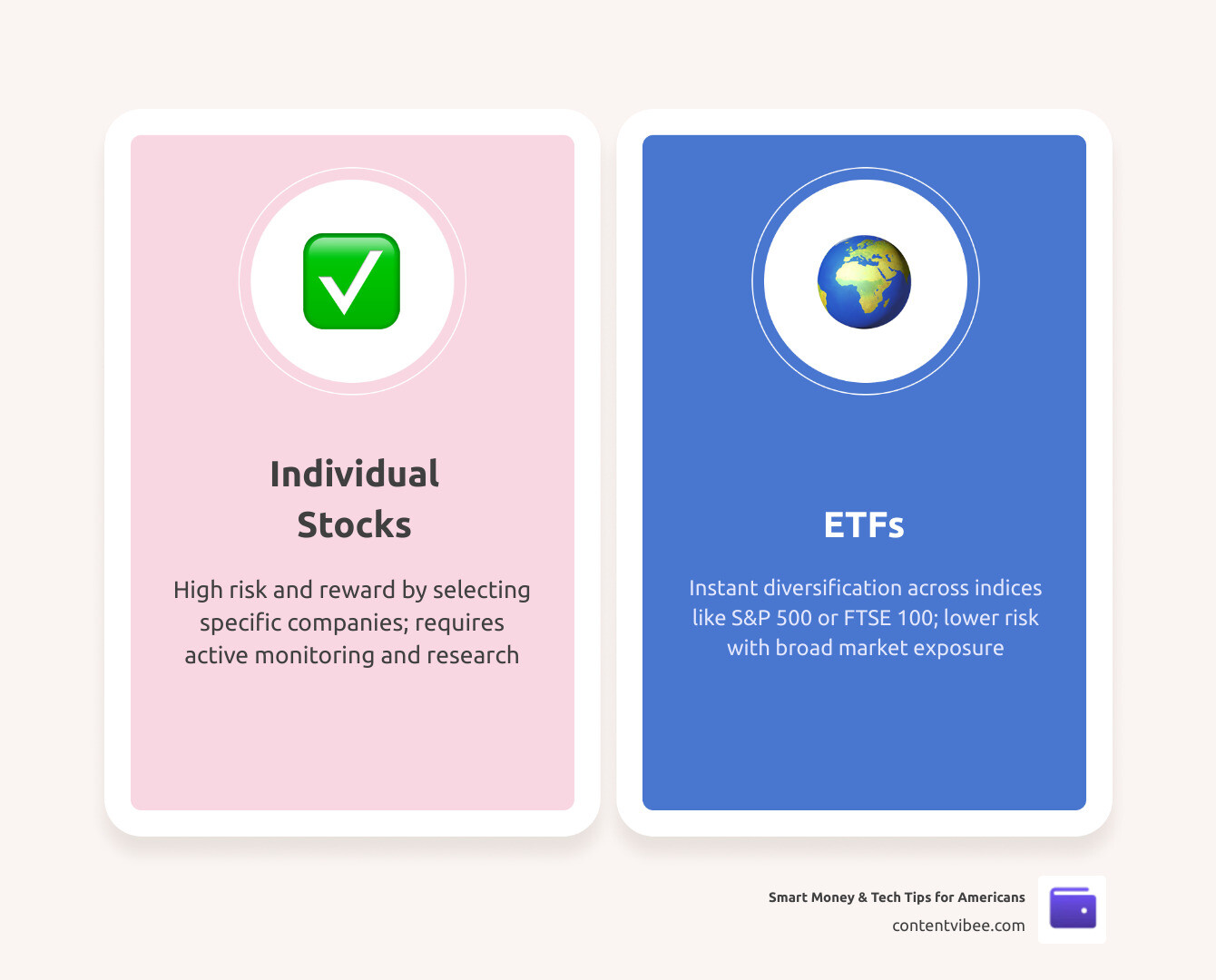
- Individual Stocks: High risk/reward, focusing on specific companies.
- ETFs (Exchange Traded Funds): These track indices (like the S&P 500 or FTSE 100) and provide instant diversification.
- UK Gilts: Government bonds that are generally considered lower risk.
Managing these assets requires a solid Investment Asset Allocation Strategy Risk Management plan to ensure you aren’t over-exposed to a single sector or country.
Hidden Costs: What “No Fee” Really Means
We love a bargain as much as anyone, but in finance, “no fee” rarely means “completely free.” Brokers are businesses, and they have to make money somehow.
When using a no fee stocks and shares ISA, keep an eye on these secondary costs:
- FX Conversion Fees: This is the most common “hidden” cost. If you buy a US stock in a GBP account, the broker will charge a fee to convert your currency. These range from 0.15% (Trading 212) to 0.99% (Freetrade Basic).
- Market Spread: This is the difference between the “buy” price and the “sell” price. Some brokers may have slightly wider spreads to recoup costs.
- Fund Management Costs (OCF): If you buy an ETF or a mutual fund, the fund provider (such as a major asset manager) will charge a fee. This is separate from the platform fee and is deducted from the fund’s performance.
- Stamp Duty: On UK share purchases (not ETFs), there is a government-mandated 0.5% Stamp Duty Reserve Tax. No broker can waive this.
Understanding the difference between these costs is part of Understanding Traditional vs. Alternative Investments. Even with these costs, a no-fee platform is almost always cheaper than a traditional high-street broker for the average investor.
How to Transfer Your ISA Without Losing Benefits
If you are currently paying 0.45% a year to a legacy provider, you might be itching to move to a no fee stocks and shares ISA. The process is straightforward, but you must follow one golden rule: Do not withdraw the money yourself.
If you withdraw the cash to your bank account and then deposit it into a new ISA, it counts against your £20,000 annual allowance. Instead, you must use the official “ISA Transfer Service.”
There are two ways to transfer:
- Cash Transfer: Your current provider sells your investments and moves the cash to the new provider.
- In-Specie Transfer: Your actual shares and ETFs are moved over without being sold. This is better if you want to stay “in the market,” but not all no-fee providers support this for all assets.
The transfer usually takes 4 to 6 weeks. Deciding whether to do this yourself or pay for a managed service is the classic debate of To Manage or Not to Manage Taking the Reins of Your Investments.
Frequently Asked Questions about No Fee ISAs
Can I have more than one Stocks and Shares ISA?
Yes! Since April 2024, you can open and pay into multiple Stocks and Shares ISAs in the same tax year. This is great if you want to test different platforms. Just remember that your total contributions across all of them must not exceed £20,000 per year.
Is my money protected in a no-fee account?
Generally, yes. Most reputable UK providers are regulated by the FCA and covered by the Financial Services Compensation Scheme (FSCS). This typically protects up to £85,000 per person, per institution, if the provider goes bust. Some providers, like Robinhood UK, even offer additional private insurance or higher protection limits on uninvested cash.
Can I withdraw money from my ISA at any time?
Yes, you can withdraw your money whenever you like, and you won’t pay tax on the withdrawal. However, unless your provider offers a “Flexible ISA,” withdrawing money does not “reset” your allowance. If you put in £20,000 and take out £5,000, you cannot put that £5,000 back in during the same tax year. Trading 212 is a notable provider that offers a flexible ISA, allowing you to replace withdrawn funds within the same tax year.
Conclusion
At Smart Money & Tech Tips for Americans, we believe that financial independence starts with making smart, cost-effective decisions – no matter where in the world you’re building your wealth. For Americans living in the UK, switching to a no fee stocks and shares ISA is one of the simplest ways to give your portfolio an immediate “raise.” By eliminating platform fees, you ensure that more of your money stays invested, benefiting from the incredible power of compound interest.
Whether you are a beginner looking to invest your first £100 or a seasoned pro consolidating a six-figure portfolio, the no-fee revolution in the UK market has made high-quality investing accessible to everyone. Don’t let outdated fee structures hold back your future. Stop paying high brokerage fees today and take control of your tax-free growth.

