


General motors v8 engine investment is one of the biggest manufacturing stories in the auto industry right now — and for good reason.
Here’s a quick summary of what’s happening:
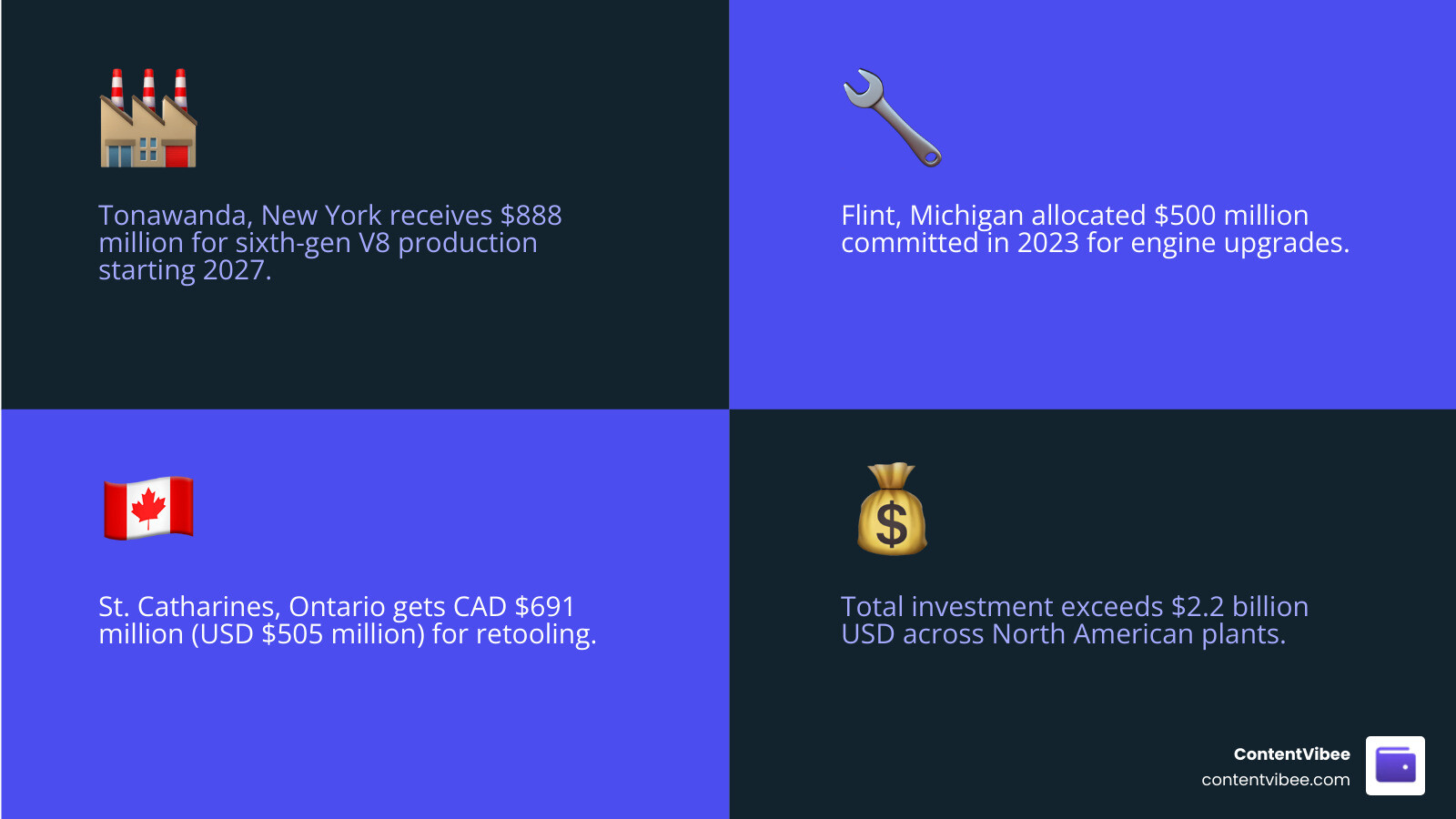
- Total investment: Over $2.2 billion USD across four North American plants
- Tonawanda, New York: $888 million for sixth-gen V8 production starting 2027
- Flint, Michigan: $500 million committed in 2023
- St. Catharines, Ontario: CAD $691 million (approx. USD $505 million)
- Saginaw, Michigan: $150 million for metal castings
- Sixth-generation debut vehicle: 2027 Chevrolet Silverado
- Key improvement areas: Performance, fuel efficiency, and reduced emissions
This isn’t a small bet. GM is pouring billions into internal combustion at the same time the industry keeps talking about going all-electric.
Why? Because the numbers tell a clear story. GM sold over 577,000 gas-powered Silverados and 348,000 GMC Sierras last year alone. Add in more than 315,000 full-size SUVs, and you’re looking at roughly a million V8-powered vehicles moving off lots every year.
As Mike Kociba, GM’s assistant chief engineer, put it: “There is no replacement for displacement.”
The sixth-generation small-block V8 is set to launch in 2027 — and the investment behind it signals that GM sees profitable, high-demand ICE vehicles as a core part of its business for years to come.
The $2.2 Billion General Motors V8 Engine Investment Strategy
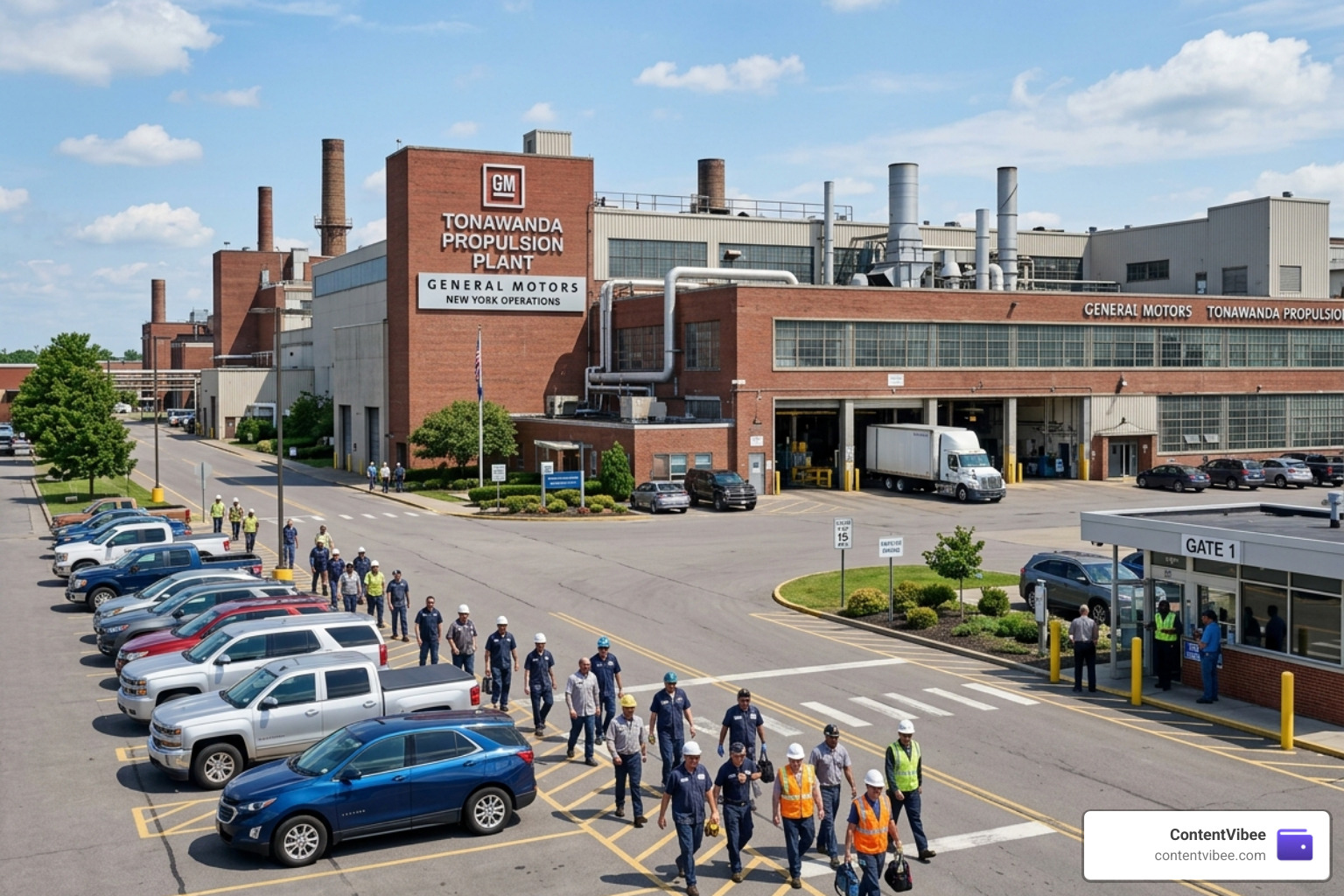
When we look at the sheer scale of the general motors v8 engine investment, it becomes clear that this is a multi-layered chess move. GM isn’t just updating an old engine; they are retooling the very backbone of their North American manufacturing footprint. By spreading over $2.2 billion across several key facilities, they are ensuring that the transition from the fifth-generation (Gen 5) to the sixth-generation (Gen 6) small-block V8 is seamless.
The capital is being deployed strategically. The GM Invests $888 Million in U.S. Plant for Next-Gen V-8 Production announcement highlighted that the Tonawanda plant is the centerpiece of this expansion. However, it takes a village — or in this case, a network of highly specialized plants — to bring a new engine architecture to life.
| Plant Location | Investment Amount | Primary Role for Gen 6 V8 |
|---|---|---|
| Tonawanda, NY | $888 Million | Main production hub for Gen 6 V8 engines |
| Flint, MI | $500 Million | Machining and assembly of engine components |
| St. Catharines, ON | ~$505 Million (USD) | Production of next-gen V8s for trucks/SUVs |
| Saginaw, MI | $150 Million | Metal castings for engine blocks and heads |
This diversified approach allows GM to maintain high-volume production of current engines while simultaneously installing the new machinery, tools, and renovations required for the 2027 launch.
Regional Economic Impact of the General Motors V8 Engine Investment
The economic ripples of this investment are felt most strongly in the local communities surrounding these plants. In Buffalo, New York, the Tonawanda Propulsion plant — represented by UAW Local 774 — is securing its future for another generation. This facility has been in operation for 87 years, and this record-breaking $888 million injection is the largest single investment GM has ever made in an engine plant.
In Michigan, the Flint and Saginaw investments reinforce the state’s status as the heart of American manufacturing. Meanwhile, in Ontario, the St. Catharines plant is undergoing a massive retooling. Interestingly, this plant was once rumored to be switching entirely to electric drive units, but GM reversed that decision to keep the V8 alive. For those looking at these moves through a financial lens, understanding Investment Asset Allocation Strategy Risk Management/ is key, as GM is essentially hedging its bets by keeping its most profitable internal combustion assets strong.
Long-Term Viability of the General Motors V8 Engine Investment
Is it risky to invest billions in gasoline engines in 2026? While the world moves toward electrification, Every Investor Faces Risk/, and GM’s risk management involves following the money. The profitability of the Chevrolet Silverado and GMC Sierra remains the primary engine of GM’s corporate growth.
By adopting a “dual-pathway” strategy, GM can fund its EV future using the massive margins generated by V8-powered trucks and SUVs. As long as regulations permit and customers demand the towing capacity and range of a V8, GM intends to be the market leader. This investment ensures they have the most modern, efficient, and powerful V8 on the market to maintain that dominance.
Technical Innovations in the Sixth-Generation Small-Block
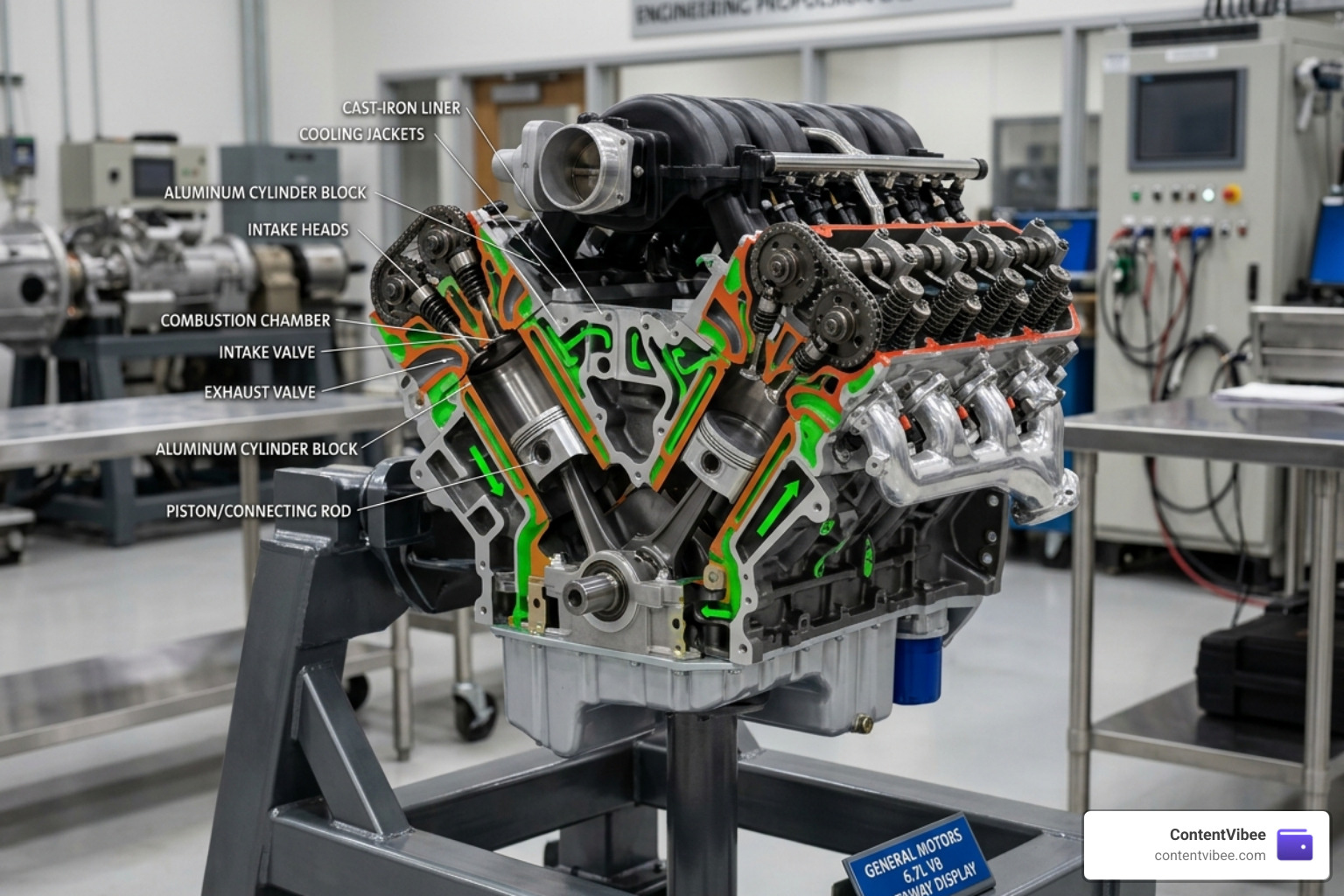
The sixth-generation small-block isn’t just a bored-out version of the old engine. It represents a significant leap in thermal management and combustion technology. According to GM’s Next-Gen V8 Engines Benefit From Another Huge Investment – The Car Guide, the new engines will feature advanced innovations designed to squeeze every bit of energy out of a drop of fuel while drastically reducing tailpipe emissions.
Key technical features include:
- Aluminum Blocks with Cast-Iron Liners: Providing a balance of lightweight performance and long-term durability.
- Improved Thermal Management: New cooling circuits that allow the engine to reach operating temperature faster and stay in the “sweet spot” for efficiency.
- New Combustion Systems: Redesigned cylinder heads and fuel delivery systems to optimize the air-fuel mixture.
Performance Specs of the General Motors V8 Engine Investment
While the full lineup of engines is still being finalized, the “halo” engine of this generation is expected to be the 6.7L LS6. Early reports suggest this beast will produce 535 horsepower and 520 lb-ft of torque.
For truck owners, the tuning will be slightly different. While the Corvette variants focus on high-RPM screaming, the truck-specific V8s will prioritize low-end torque. This is achieved through longer intake runners and specific camshaft profiles designed to help a Silverado pull a heavy trailer off the line without breaking a sweat. Much like Why The Apple Stock Forecast High Return Story/ focuses on long-term value, GM is focusing on the “high return” of torque and reliability that truck buyers crave.
Market Demand and the Strategic Pivot from Electrification
We have seen a fascinating shift in the automotive landscape over the last two years. While GM remains committed to an all-electric future eventually, the “eventually” part has become more flexible. The market demand for V8 engines remains insatiable. Last year, over 80% of the nearly 600,000 full-size pickups sold by GM featured a V8 engine.
This consumer preference is a powerful force. While EVs like the Chevy BrightDrop van have seen modest sales (around 4,971 units in 2025), the gas-powered Silverado and Sierra continue to move in massive volumes. Investors and analysts recognize that Googl Lly Long Term Investment Risk/ often involves misjudging how fast a market will transition; GM is making sure they don’t leave their core customers behind during the EV shift.
Production Timeline and Vehicle Integration
The rollout for the sixth-generation V8 is expected to begin in earnest for the 2027 model year, with production ramping up in late 2026. We expect to see these engines debut first in the heavy hitters:
- Chevrolet Silverado 1500 & GMC Sierra 1500: The volume leaders.
- Cadillac Escalade: The luxury standard-bearer.
- Chevrolet Tahoe & Suburban / GMC Yukon: The kings of the family road trip.
This timeline is critical for maintaining market share against rivals. Just as Why Avis Stock Investment Risk And Rental Market/ shows how fleet and rental markets depend on reliable vehicle cycles, GM’s production timeline is synchronized to replace the aging Gen 5 units just as the next-generation trucks hit showroom floors.
Manufacturing Excellence at St. Catharines and Tonawanda
The general motors v8 engine investment is also a testament to manufacturing heritage. The Tonawanda plant is poised to build its 77 millionth engine this summer — a staggering milestone that speaks to decades of excellence.
In Canada, the GM Makes a Huge Investment to Produce V-8 Engines in Canada news highlighted how the St. Catharines facility is managing a “dual production” strategy. They aren’t just shutting down to switch over; they are continuing to produce the current Gen 5 V8 (and the Corvette’s dual-clutch transmission) while simultaneously building out the lines for the Gen 6. This overlap is a complex logistical dance that ensures GM never runs out of engines for its most popular vehicles.
Frequently Asked Questions about GM’s V8 Future
When will the sixth-generation V8 engines enter production?
Production is slated to begin in 2027, though facility renovations and machinery installation are already well underway in 2026. Most consumers will see the first Gen 6 engines in vehicles arriving at dealerships in early 2027.
Which vehicles will feature the new 6.7L LS6 engine?
The 6.7L LS6 is expected to be the star of the Corvette Grand Sport and high-performance variants of full-size SUVs like the Cadillac Escalade-V. However, the core of the general motors v8 engine investment is aimed at the high-volume 5.3L and 6.2L replacements that power the Silverado and Sierra pickups.
Why is GM investing in V8s despite the push for electric vehicles?
It comes down to three things: profitability, capability, and customer demand. V8 engines provide the towing capacity and long-range convenience that current EV technology struggles to match at a competitive price point. Furthermore, the profits from these V8 vehicles are what actually fund GM’s research into future electric platforms. For more insights on how these types of corporate moves fit into broader financial strategies, you can explore our category/investments/ section.
Conclusion
At ContentVibee, we believe in equipping you with the insights needed to navigate complex market shifts. The general motors v8 engine investment is a masterclass in strategic asset allocation. By doubling down on a proven, profitable manufacturing legacy while others might be pivoting too quickly, GM is securing its financial health and its place at the top of the truck and SUV market.
Whether you are looking at this as an automotive enthusiast or as someone interested in the broader economic implications of American and Canadian manufacturing, the message is clear: the V8 isn’t going anywhere. It’s just getting better, stronger, and more efficient for a new generation of drivers.
More info about investment education


