


Why Finding the Best Budgeting Software 2026 Matters Today
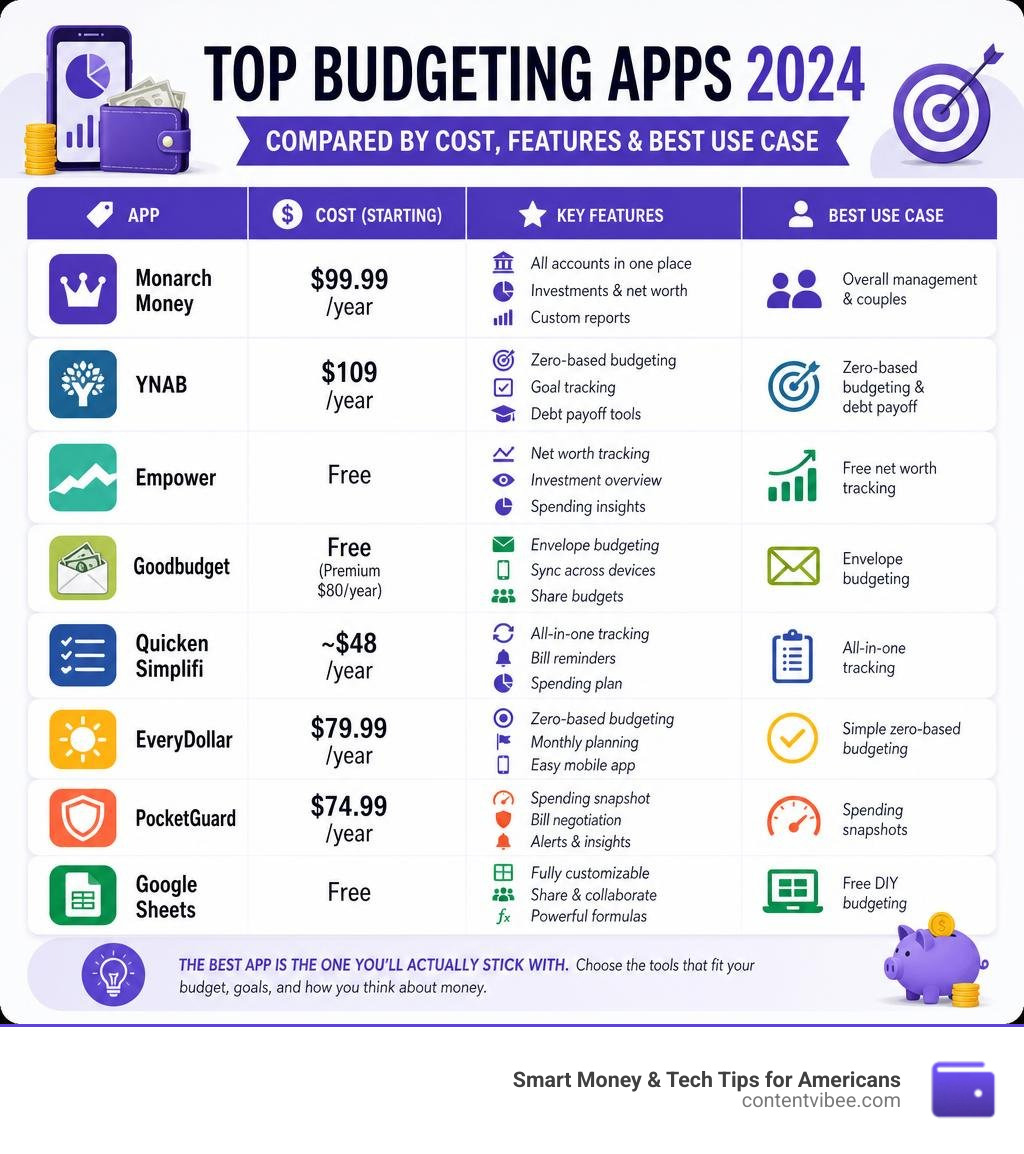
If you want a quick answer, here are the top budgeting apps based on expert reviews and user ratings:
| App | Best For | Starting Cost |
|---|---|---|
| Monarch Money | Overall / Couples | $99.99/year |
| YNAB | Zero-based budgeting / Debt payoff | $109/year |
| Empower | Free net worth tracking | Free |
| Goodbudget | Envelope budgeting | Free (Premium $80/year) |
| Quicken Simplifi | All-in-one tracking | ~$48/year |
| EveryDollar | Simple zero-based budgeting | $79.99/year |
| PocketGuard | Spending snapshots | $74.99/year |
| Google Sheets | Free DIY budgeting | Free |
Choosing a budgeting app feels overwhelming. There are dozens of options, all promising to fix your finances — at very different price points.
And the stakes are real. People who use digital budgeting tools save an average of $600 more per year than those who budget manually. They’re also 32% more likely to feel in control of their money.
But here’s the catch: the best app is the one you’ll actually stick with. Many people download a budgeting app, use it for two weeks, and quit — because the app didn’t match how they think about money.
This guide cuts through the noise. Whether you’re retired, approaching retirement, or simply trying to make every dollar count, we’ll match you to the right tool for your situation — paid, free, or somewhere in between.
Best budgeting software 2026 terms made easy:
Understanding Budgeting Philosophies and the Best Budgeting Software 2026
Before you link your bank accounts or pay for a subscription, we need to talk about your budgeting personality. Just like trying to squeeze into shoes that are two sizes too small, forcing yourself into a budgeting style that doesn’t fit your natural habits is a recipe for failure.
Over the years, personal finance experts have developed several core frameworks to help people manage their cash flow. The best budgeting software 2026 has to offer generally aligns with one of these three philosophies:
1. Zero-Based Budgeting (The Proactive Planner)
This method is built on a simple premise: give every dollar a job. At the start of the month, you take your total income and assign every single cent to a category—savings, rent, groceries, debt payoff, or even fun money—until you have exactly $0 left over.
This doesn’t mean your bank account is empty; it means every dollar has a pre-determined purpose. It prevents mindless spending because if you want to buy a new pair of shoes, you must actively move money out of another “job” (like your dining-out fund) to cover it. It is highly structured and incredibly effective for paying down debt and building up savings.
2. The Envelope System (The Visual Controller)
Traditionally, this involved putting physical cash into labeled paper envelopes (e.g., “Groceries,” “Gas,” “Entertainment”). Once the cash in the envelope was gone, you could not spend any more in that category until the next month.
In our digital-first world, top apps have modernized this process. Digital envelopes give you immediate emotional cues when a category empties, helping you visual-heavy spenders put up psychological guardrails without having to carry around stacks of actual cash.
3. The 50/30/20 Rule (The Structured Simplifier)
If tracking every single penny sounds like a nightmare, this is your sweet spot. Under this classic rule, you split your after-tax income into three massive buckets:
- 50% Needs: Crucial expenses like housing, utilities, insurance, and groceries.
- 30% Wants: Lifestyle choices like dining out, hobbies, and vacations.
- 20% Savings: Debt payoff, emergency funds, and retirement accounts.
If you live in a high-cost-of-living area, you might need to adjust this to a 60/20/20 or 60/30/10 split, but the core concept remains the same: high-level simplicity over granular tracking.
Managing Irregular Income and Cash Flow
For freelancers, contract workers, or anyone with commission-based pay, standard monthly budgeting templates can feel useless. If your income swings wildly from month to month, you cannot budget money you haven’t received yet.
The best tools for irregular income help you build a “buffer” or “hills and valleys” fund. Instead of budgeting projected earnings, you budget only the money currently sitting in your bank account today. This keeps your cash flow steady even when your paychecks are not.
If you want to see how consistent monthly contributions can compound over time alongside your budget, check out The Monthly Investment Calculator Guide to Making Your Money Work to visualize your long-term wealth trajectory.
Top Paid Budgeting Apps for Hands-On and Collaborative Tracking
While free tools have their place, premium budgeting software often pays for itself by offering seamless automation, deep customization, and collaborative features that keep households on the same page.
If you are managing family finances, coordinating with a partner, or trying to navigate a complex web of credit cards, investment accounts, and loans, paying a subscription fee can save you hours of administrative headache.
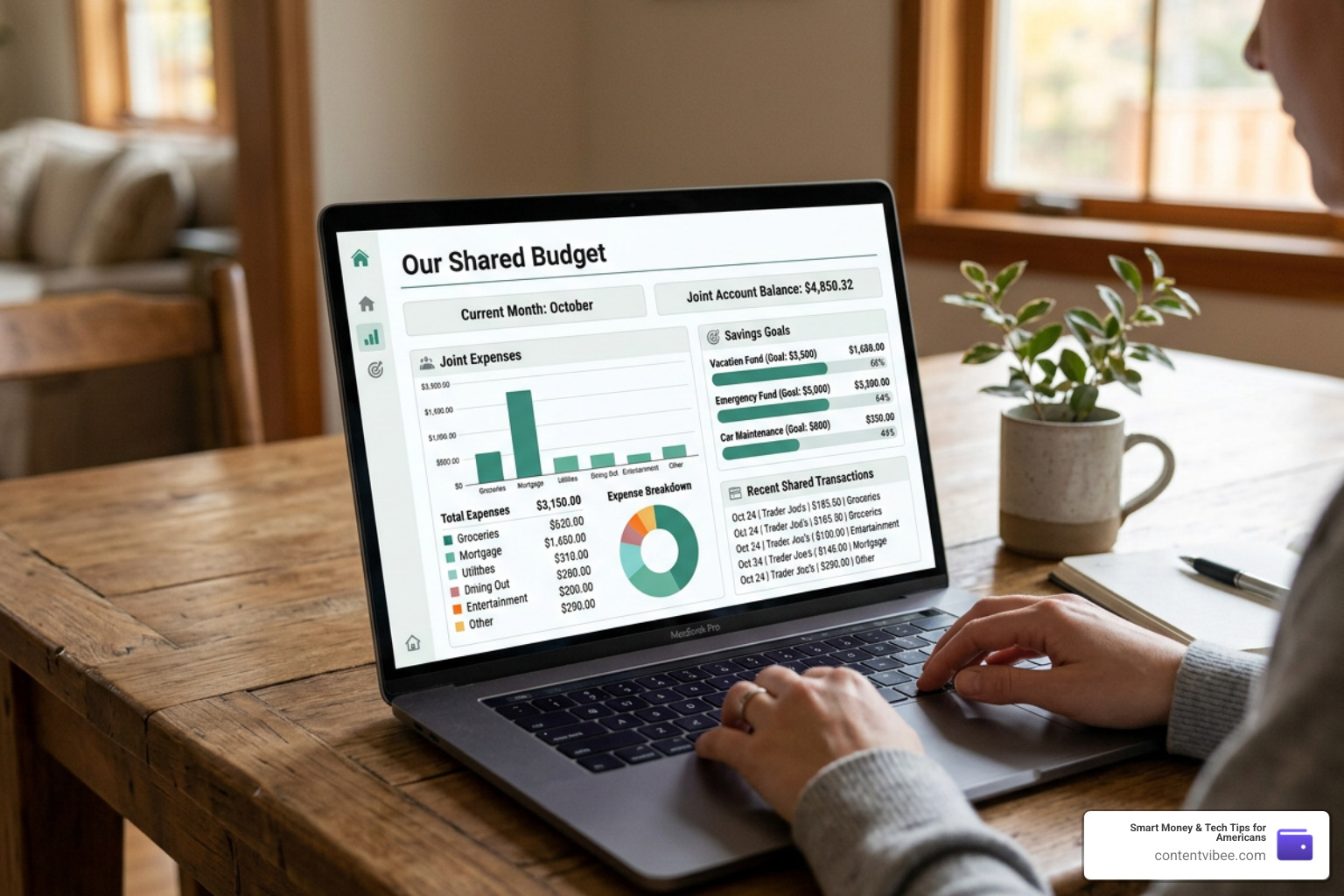
Many premium tools use advanced subscription models to invest back into their platforms, ensuring reliable bank connections and regular feature updates. Here is a breakdown of how the top paid options compare:
| Feature / Detail | YNAB (You Need A Budget) | Monarch Money | Goodbudget Premium |
|---|---|---|---|
| Core Philosophy | Zero-Based Budgeting | Flexible / Cash Flow | Digital Envelope System |
| Annual Price | $109/year | $99.99/year | $80/year |
| Free Trial | 34 Days | 7 Days | Free Tier Available |
| Best For | Proactive savers, debt payoff | Couples, multi-account users | Hands-on visual budgeters |
| Bank Syncing | Yes (Automated) | Yes (Multi-aggregator) | Manual (or file upload) |
| Partner Sharing | Included (YNAB Together) | Included (Free partner invite) | Syncs across multiple devices |
Let’s take a closer look at these heavy hitters to see which one deserves a spot on your phone.
Why YNAB is the Best Budgeting Software 2026 for Zero-Based Budgeting
If you ask personal finance enthusiasts on Reddit or YouTube to recommend a budgeting app, YNAB (You Need A Budget) is almost always the first name mentioned. It is more than just a software tool; it is a full financial coaching methodology.
YNAB operates on four core rules:
- Give Every Dollar a Job: Every time you get paid, you assign those funds to specific categories.
- Embrace Your True Expenses: Break down large, non-monthly payments (like semi-annual car insurance or holiday gifts) into manageable monthly “targets” so they don’t surprise you.
- Roll with the Punches: If you overspend on groceries, simply move money from your clothing budget to cover it. No guilt, just reality.
- Age Your Money: Aim to spend money you earned at least 30 days ago, effectively breaking the stressful paycheck-to-paycheck cycle.
This proactive approach is highly effective. The average YNAB user saves $600 in their first month and a staggering $6,000 in their first year. Additionally, 92% of YNAB users report feeling less stressed about money since they started using the app, and 70% could live for three months or more on savings alone.
While YNAB costs $14.99 per month or $109 annually, it offers a generous 34-day free trial. College students can even get a full year for free by verifying their enrollment. If you are serious about tackling debt and changing your relationship with money, we highly recommend reading the comprehensive Best budgeting app? YNAB (You Need a Budget) app review | Vox to see if this hands-on powerhouse is right for you.
Monarch Money: Flexible Tracking and Collaboration
When Intuit announced the shutdown of the beloved budgeting app Mint, Monarch Money quickly stepped up to become the go-to alternative. In fact, it was named the best budgeting app overall by major financial publications.
Monarch is designed for the modern household. It allows you to invite a partner or even a financial advisor to collaborate on your budget at no extra cost. This gives both of you a unified view of your shared cash flow, investment portfolios, and overall net worth.
Key features of Monarch Money include:
- Flexible Customization: Unlike YNAB, which forces you into zero-based budgeting, Monarch lets you choose between flexible cash-flow tracking and category budgeting.
- Robust Bank Syncing: Monarch connects to over 13,000 financial institutions using multiple data aggregators (like Plaid, Finicity, and MX), meaning if one connection drops, you can easily switch to another.
- Subscription Management: The app automatically identifies recurring bills and subscriptions, helping you spot and cancel forgotten services.
Monarch Money costs $99.99 annually or $14.99 monthly. It is an excellent choice for couples who want a beautiful, highly customizable dashboard to track their path toward financial freedom together.
Goodbudget: Digital Envelope Budgeting for Couples
If you love the concept of the physical envelope system but don’t want to carry around paper envelopes stuffed with dollar bills, Goodbudget: Best Home Budget App for Android, iPhone … is the perfect digital equivalent.
Goodbudget relies on manual transaction entry or file uploads rather than automatic bank syncing. While this might sound like a hassle, it is actually a massive benefit for hands-on budgeters. Manually inputting your purchases forces you to confront your spending habits in real time, creating an immediate emotional feedback loop.
With Goodbudget, you can:
- Set up “Envelopes” for your recurring monthly expenses.
- Allocate funds for irregular, long-term goals (like a new car or holiday shopping).
- Sync your budget across multiple iPhones, Android devices, and the web, making it incredibly easy for couples to stay on the same page.
The basic version of Goodbudget is completely free and includes 20 envelopes. The Premium version costs $80 annually and unlocks unlimited envelopes, detailed reports, and email support.
Best Free and Low-Cost Money Management Tools
You shouldn’t have to spend money just to learn how to manage it. If premium subscription fees don’t fit into your current financial plan, don’t worry—there are plenty of highly capable, free, and low-cost alternatives that can help you organize your cash flow.
Whether you want a fully automated net worth tracker or a completely private, open-source tool, these options prove you don’t need to pay a premium to get your finances in order.
Empower: The Best Budgeting Software 2026 for Wealth and Net Worth Tracking
If your primary goal is to watch your wealth grow rather than track daily grocery spending down to the penny, Empower Personal Dashboard (formerly Personal Capital) is the gold standard. Named the best budget app for tracking wealth and spending by NerdWallet, Empower is completely free to use.
Empower is built for big-picture financial tracking. By securely linking your bank accounts, credit cards, mortgages, and investment portfolios, the app provides a real-time snapshot of your net worth—everything you own minus everything you owe.
What makes Empower stand out:
- Investment & Fee Analyzers: It reviews your investment portfolios to spot hidden fees that could be eating away at your retirement savings. For a deeper understanding of how these costs impact your wealth, take a look at The Ultimate Guide to Robo Advisor Fees.
- Retirement Planning: Empower features robust retirement calculators that help you model different savings and spending scenarios.
- No Hidden Cost: The dashboard is entirely free because Empower makes money by offering optional, paid wealth management services to users with large portfolios. You are under no obligation to use these services.
Actual Budget and Open-Source Alternatives
For the privacy-focused tech enthusiasts who don’t want their financial data stored on corporate servers, Actual Budget: Your Finances — made simple is a brilliant solution.
Actual Budget is a free, open-source, local-first personal finance app. It uses the zero-based budgeting method (similar to YNAB) but gives you complete control over your data. You can run it entirely on your own computer or self-host it on a private server. It is fast, beautifully designed, and completely free of ads, upsells, and corporate tracking.
Spreadsheet Budgeting: Google Sheets and Excel
Sometimes, the old-school ways are still the best. If you want 100% customization without any software restrictions, building a budget in Google Sheets or Microsoft Excel is an excellent route.
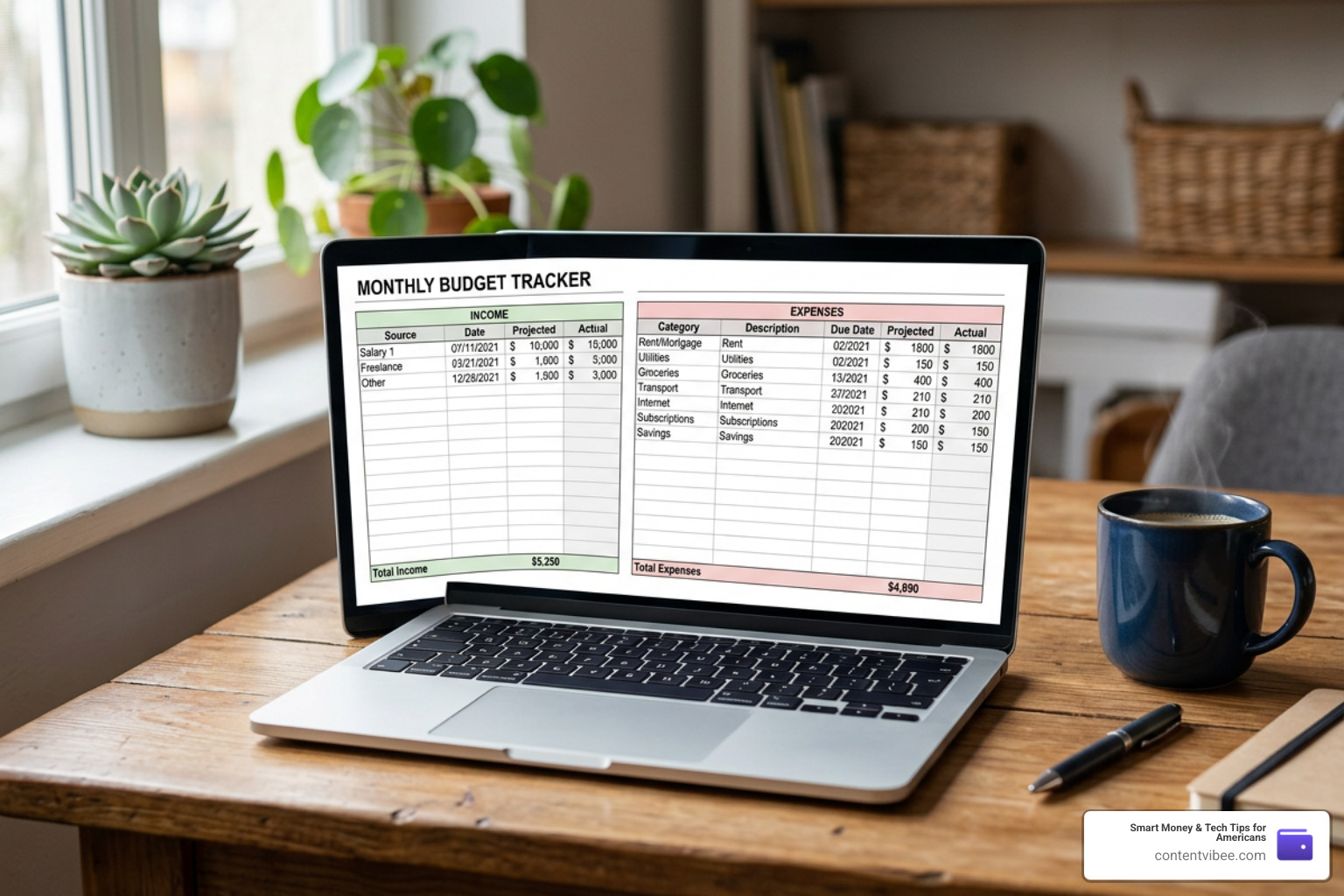
Using a spreadsheet means you don’t have to worry about third-party bank syncs breaking, and your data remains entirely yours. You can design custom formulas, create personalized charts, and adapt your template as your life changes—such as buying a home, getting married, or welcoming a baby.
If you are building your own DIY financial plan, keeping investment costs low is just as important as managing your daily budget. Be sure to check out The Complete Guide to Index Fund Expense Ratios to ensure your hard-earned savings aren’t being quietly eroded by high fund fees.
Key Criteria for Choosing Your Financial Software
With so many excellent options on the market, how do you narrow it down to the one? We suggest evaluating your choices based on three critical pillars:
1. Automation vs. Manual Entry
Do you want your transactions to import automatically, or do you prefer to enter them yourself?
- Automated apps (like Monarch, Simplifi, or Empower) save you hours of time by pulling in data from your accounts overnight.
- Manual apps (like Goodbudget or custom spreadsheets) require more effort but build incredible awareness around where your money actually goes.
2. Security and Data Privacy
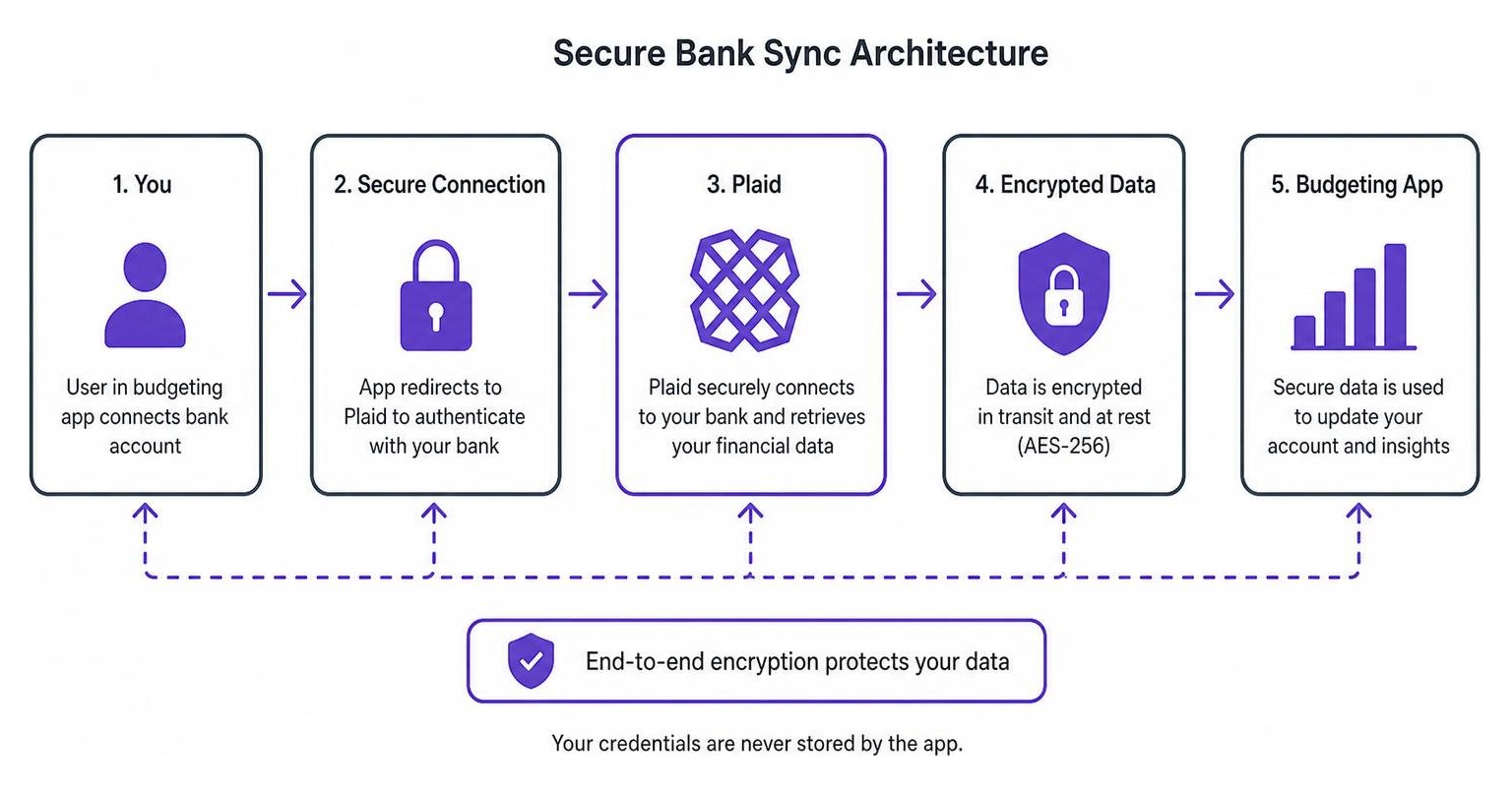
When you connect an app to your bank, you want to know your data is safe. Reputable budgeting apps use bank-grade 256-bit encryption and secure, read-only connections through third-party data aggregators like Plaid or Finicity. This means the app can never move your money or access your login credentials—it can only read the transaction history.
Always look for apps that offer Multi-Factor Authentication (MFA) to add an extra layer of security to your account.
3. Financial Complexity
Match your software to your life stage. If you have a simple financial setup, a free spreadsheet or a basic app like EveryDollar is plenty. However, if you are balancing multiple credit cards, a retirement portfolio, a mortgage, and joint household accounts, investing in a premium tool like Monarch or YNAB is well worth the subscription cost.
If you are mapping out your transition into retirement, matching your budgeting software with the best retirement planning tools can help you visualize your cash flow for decades to come.
Frequently Asked Questions About Budgeting Software
Are budgeting apps safe to link to my bank accounts?
Yes, reputable budgeting apps are highly secure. They use read-only connections, meaning they can only view your transaction history and balances—they cannot execute transfers, make withdrawals, or modify your accounts.
Additionally, they partner with secure data aggregators like Plaid, ensuring your actual bank login credentials are encrypted and never stored by the budgeting app itself. For maximum safety, always enable multi-factor authentication (MFA) on both your budgeting app and your personal bank accounts.
Is it worth paying for a premium budgeting app?
For many users, yes. While free tools are great, premium apps like YNAB or Monarch Money offer robust automation, reliable bank syncing, and collaborative features that can save you hours of manual work.
Because digital budgeting users save an average of $600 more annually than manual budgeters, a $100-per-year subscription often pays for itself many times over by helping you eliminate wasteful spending and stay on top of your financial goals.
How do I budget with an irregular income?
If your income fluctuates, the secret is to budget only the money you have in hand today, rather than forecasting future earnings.
Apps like YNAB are brilliant for this because they force you to allocate your current cash to cover your immediate needs until your next paycheck arrives. Over time, aim to build a “buffer fund” (equivalent to one month of average expenses) to smooth out the lean months and keep your cash flow steady.
Conclusion
At the end of the day, there is no single “perfect” budgeting app. The true winner is the one that fits your personal habits, keeps you motivated, and helps you feel in control of your financial future.
Whether you choose the structured, debt-busting approach of YNAB, the collaborative beauty of Monarch Money, the big-picture wealth tracking of Empower, or the absolute simplicity of a Google Sheet, taking that first step is what matters most.
If you are ready to crunch the numbers and see how your new budget can supercharge your long-term savings, check out our free Finance Calculator to start building your personalized path to financial freedom today!


