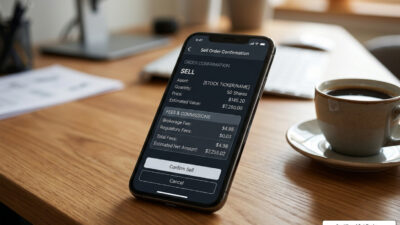
You Don’t Have to Be a Math Whiz to Grow Your Money
Investing on autopilot means using technology to manage your portfolio automatically — no spreadsheets, no daily stock-watching, no finance degree required.
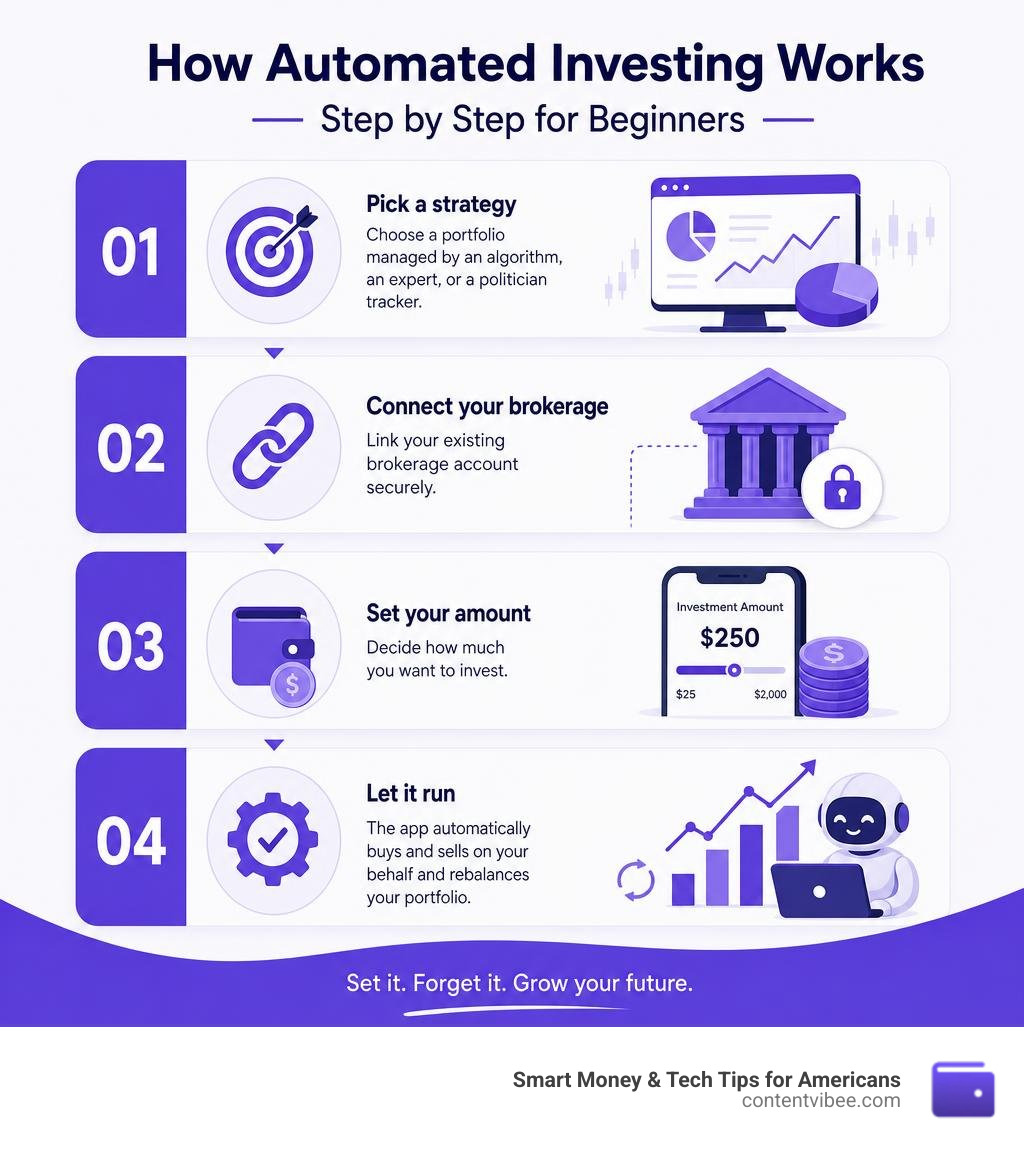
Here’s a quick look at how it works:
- Pick a strategy — choose a portfolio managed by an algorithm, an expert, or even a politician tracker
- Connect your brokerage — link an existing account like Robinhood, Schwab, or Fidelity
- Set your amount — decide how much to invest
- Let it run — the app automatically buys and sells on your behalf
That’s the core of it.
If you’ve ever felt like investing was only for people who love numbers and follow the market every day, you’re not alone. Most people don’t have the time — or the energy — especially when you’re already dealing with bigger financial stress like medical bills or unexpected expenses.
The good news? Automated investing platforms have made it genuinely easy to start building wealth without doing the heavy lifting yourself. Some apps even let you mirror the trades of politicians and hedge fund managers in real time. Others use algorithms to rebalance your portfolio quietly in the background.
The market for these tools has exploded. Platforms now report hundreds of thousands of users and billions of dollars in connected assets — which tells you this isn’t a niche trend anymore.
But easy to start doesn’t mean risk-free. Before you hand your portfolio over to any app, it helps to understand exactly what you’re signing up for.
What is Investing on Autopilot and How Does It Work?
At its heart, investing on autopilot is all about removing human emotion, math headaches, and daily chores from your financial life. Instead of logging into a brokerage account, analyzing price charts, and stressing over when to buy or sell, you let an automated system handle the execution.
This hands-off strategy is powered by software that connects directly to your personal investment accounts. Once set up, the system monitors your portfolio, executes trades, and manages your assets according to a predetermined set of rules. For a deeper look at setting up these systems, check out how to Set and Forget Your Way to Wealth with Automated Investing.
In the past, high-quality portfolio management was reserved for wealthy individuals who could afford personal financial planners. Today, technology has democratized this space. Whether you are using simple recurring deposits into index funds, algorithmic robo-advisors, or cutting-edge copy trading platforms, automation ensures your money is constantly working for you. If you are wondering if this hands-off approach suits your personal financial goals, you can explore our guide on Is Automated Portfolio Management Right for You?.
The scale of this shift is massive. For instance, the popular Autopilot app has grown rapidly, boasting over 3 million downloads, more than 185,000 active users, and a community of over 100,000 subscribers. By managing over $2.4 billion in assets and facilitating more than $2 billion in trade volume since its 2023 launch, platforms like this prove that everyday investors are eager to ditch the spreadsheets and let technology take the wheel.
The Mechanics of Copy Trading and Politician Trackers
One of the most intriguing innovations in the automated investing world is “copy trading” or “mirror trading.” Instead of relying on a computer program to build a standard basket of stocks, copy trading allows you to automatically duplicate the exact moves of real-world people—including prominent politicians, hedge fund legends, and top-performing traders.
How is this even possible? It all comes down to public disclosures. In the United States, politicians and institutional fund managers are legally required to disclose their financial transactions.
- Politician Trackers: Members of Congress must file periodic transaction reports detailing their stock purchases and sales.
- Hedge Fund Trackers: Large institutional investment managers must file quarterly 13F forms with the SEC, revealing their equity holdings.
Autopilot apps take this publicly available data, parse it instantly, and automatically execute the same trades within your linked brokerage account. For example, the famous Nancy Pelosi Tracker portfolio has over $519.6 million currently invested in it by retail users who want to ride the coattails of her historically high-performing stock selections. Similarly, users can follow the Burry Tracker to mirror the contrarian moves of Michael Burry, the famous investor who profited from predicting the 2008 housing market crash.
To see how these apps look and function on your device, you can check out the official listings on the Autopilot: Automated Investing – App Store or the Autopilot – Investment App – Apps on Google Play.
While this sounds like a foolproof shortcut to stock market success, it is important to remember that trade mirroring is not instantaneous. There is always a delay (often days or weeks) between when a politician or hedge fund manager makes a trade and when they are legally required to disclose it. By the time the app replicates the trade in your account, the market conditions or stock price may have already shifted.
Traditional Robo-Advisors vs. Modern Copy Trading
If copy trading is the flashy new kid on the block, traditional robo-advisors are the reliable, established veterans. Understanding the difference between the two is crucial for choosing the right path for your money.
Traditional robo-advisors rely on Modern Portfolio Theory (MPT). When you sign up, you answer a series of questions about your age, financial goals, and risk tolerance. The algorithm then builds a highly diversified portfolio made up of low-cost Exchange-Traded Funds (ETFs) spanning global stocks, bonds, and real estate. The system automatically rebalances your portfolio whenever market movements cause your asset mix to drift. To understand how these platforms evaluate your comfort with market ups and downs, read our Robo Advisor Asset Allocation: Can Robots Really Gauge Your Risk Tolerance? guide.
Modern copy trading apps, on the other hand, are much more dynamic—and concentrated. Instead of holding a broad index of thousands of global companies, your portfolio might only hold 10 to 20 individual stocks currently owned by a specific politician or hedge fund.
Here is a quick comparison to help you visualize the differences:
| Feature | Traditional Robo-Advisors | Modern Copy Trading Apps |
|---|---|---|
| Primary Goal | Steady, long-term wealth accumulation through diversification | Outperforming the market by copying expert/politician strategies |
| Core Holdings | Broad-market ETFs (Stocks, Bonds, Real Estate) | Concentrated individual stocks |
| Rebalancing | Algorithmic and scheduled (e.g., when drift exceeds 5%) | Event-driven (triggered when the tracked target buys or sells) |
| Risk Level | Low to Moderate (highly diversified) | High (concentrated in fewer individual stocks) |
| Customization | Low (typically pre-set risk portfolios) | Moderate (you choose which “pilots” or trackers to follow) |
The Pros and Cons of Automated Investment Apps
Like any financial tool, putting your investments on autopilot comes with trade-offs. While the convenience of automated execution and real-time syncing is incredibly appealing, you must weigh these benefits against the potential risks of handing over control. Before making a decision, it is highly beneficial to understand Why Choosing the Right Portfolio Management strategy is the foundation of long-term investing success.
Security and Brokerage Connections in Investing on Autopilot
One of the biggest hurdles for beginners is trust. How do you know an app won’t run off with your hard-earned money?
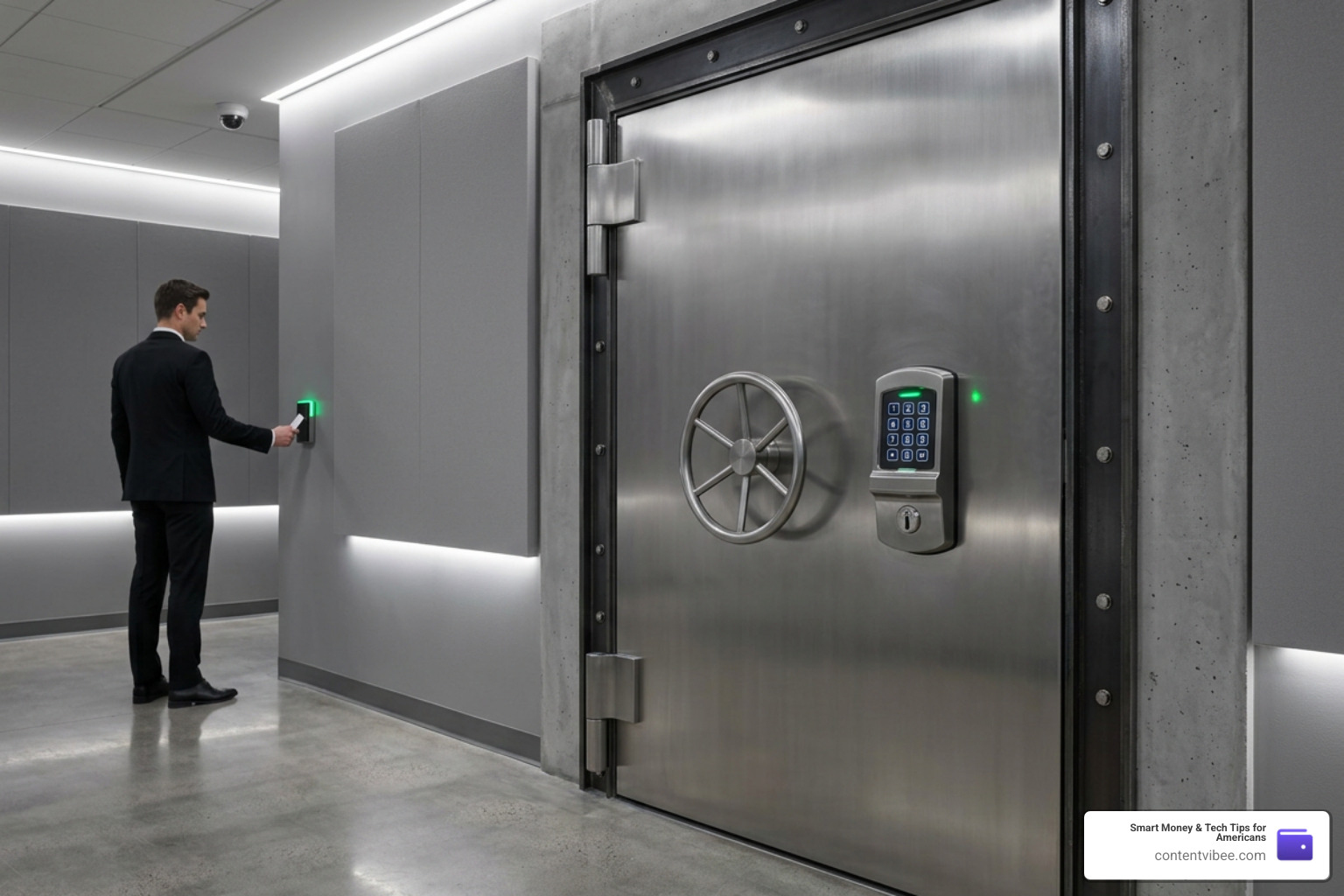
To understand this, you need to know where your cash actually lives. Autopilot apps do not actually hold your money. Instead, your funds remain secure inside your existing, heavily regulated brokerage account (such as Robinhood, Charles Schwab, or Fidelity).
The app connects to your brokerage using secure Application Programming Interfaces (APIs) and third-party financial data networks like Plaid. This setup uses bank-level security and multi-factor authentication to ensure your login credentials remain safe. The app is granted “read” and “trade” permissions—meaning it can view your balance and place buy/sell orders on your behalf—but it is strictly blocked from ever withdrawing or transferring money out of your account.
Many established financial institutions offer their own built-in automated services to keep everything under one roof. For example, you can look into Core Portfolios: Automatic Investment Management | E*TRADE, which combines professional, algorithmic portfolio management with the institutional security of a major global financial firm.
Understanding the Hidden Costs of Investing on Autopilot
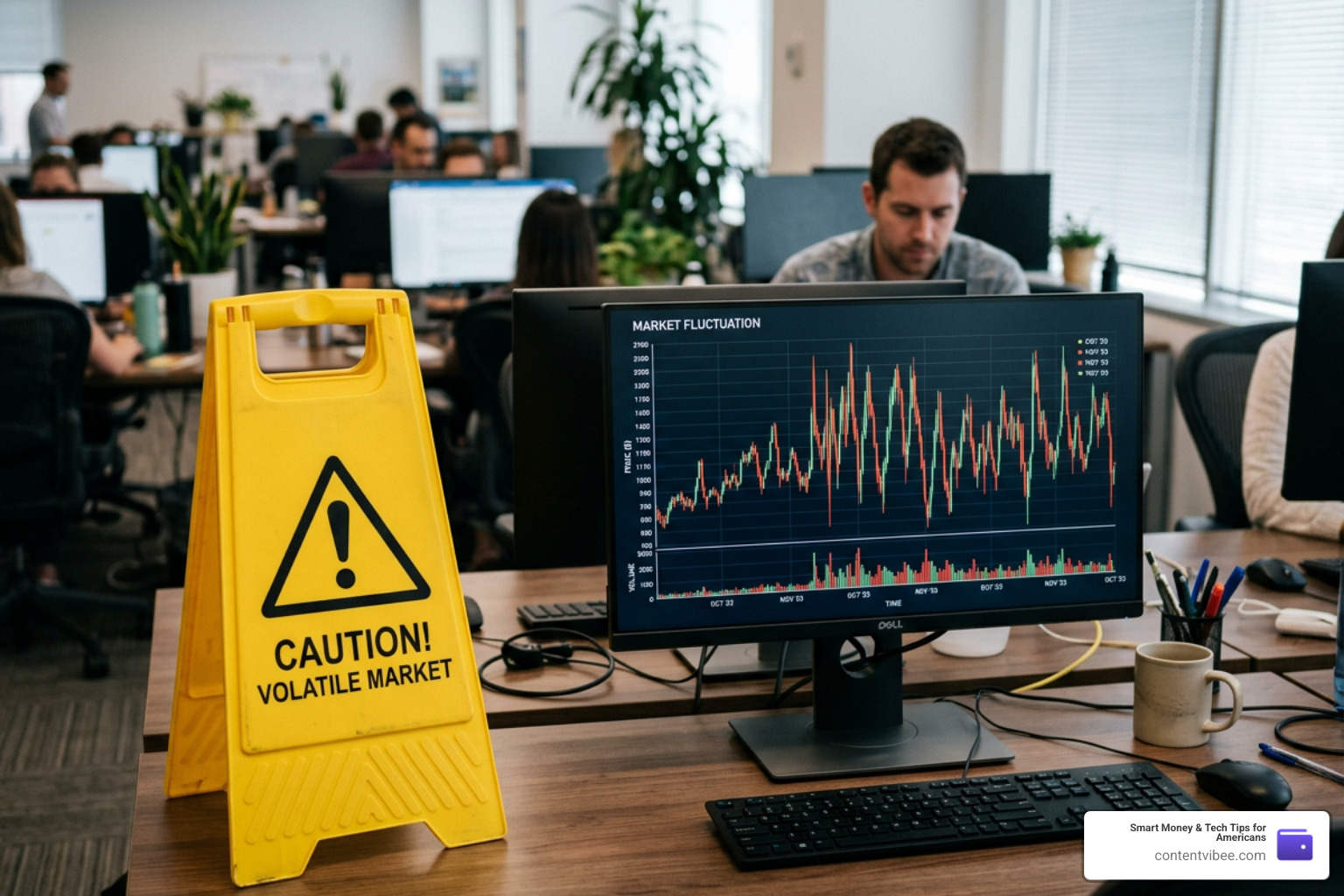
While the technology feels magical, it isn’t free. If you aren’t careful, hidden fees can quietly eat away at your investment returns over time. When investing on autopilot, you will generally encounter three types of fee structures:
- Flat Subscription Fees: Many modern copy-trading apps charge a flat monthly or annual subscription (e.g., $10 per month) regardless of how much money you have invested. This is highly cost-effective for larger accounts, but can be incredibly expensive for beginners with small balances.
- Asset-Based Management Fees: Traditional robo-advisors typically charge a percentage of your total assets under management (AUM), often ranging from 0.25% to 0.60% annually. For instance, you can review how platforms structure these costs by checking out the Get started with Automated Investing – Help Centre page, which details their 0.25% annual fee structure.
- Underlying ETF Expense Ratios: Even if a robo-advisor charges a low management fee, the individual ETFs they buy for you have their own built-in administrative costs, known as expense ratios, which are paid directly to the fund managers.
To make sure you aren’t overpaying for convenience, we highly recommend reading The Ultimate Guide to Robo Advisor Fees and learning Why Robo Advisor Fees Comparison Matters to protect your portfolio from unnecessary drag.
Regulatory Oversight and Investor Disclosures
Before diving headfirst into automated trading, it is vital to understand the regulatory landscape. In the United States, any platform offering automated investment advice or managing portfolios must be registered with the U.S. Securities and Exchange Commission (SEC) as a Registered Investment Adviser (RIA).
For example, while Autopilot Holdings itself is a technology company, its advisory services are run through Autopilot Advisers, LLC, which is an SEC-registered investment adviser. This registration means they have a fiduciary duty to act in your best financial interest.
However, SEC registration does not mean your investments are safe from market losses. Every financial platform is legally required to provide prominent risk disclosures. No matter how sophisticated an algorithm is, or how wealthy the politician you are copying is, investing in securities involves a significant risk of loss, including the potential loss of your principal. Past performance of any tracker, copy-portfolio, or algorithm is never a guarantee of future results.
For those looking for international comparisons or traditional bank-backed digital advisory services, you can look into how major institutions manage regulatory compliance by visiting SmartFolio: Online Investing – BMO Canada to see how established players handle automated portfolio management and disclosures.
How to Choose the Right Automated Strategy for You
Now that you know the landscape, how do you decide which autopilot strategy is right for you? It all comes down to finding the balance between your personal risk tolerance, your investment timeline, and how much control you want to retain.
Some investors want a completely “set-it-and-forget-it” experience where they never have to look at individual stocks, while others prefer a hybrid approach. To help you decide where you fall on this spectrum, read our guide on To Manage or Not to Manage: Taking the Reins of Your Investments, and make sure to master the basics of Investment Asset Allocation Strategy & Risk Management.
Setting Up Your First Automated Portfolio
Ready to take your first step? Setting up your first automated investing account is incredibly straightforward and can usually be completed in under ten minutes:
- Define Your Strategy: Decide whether you want to follow a diversified, algorithm-based robo-advisor or copy-trade specific public figures and hedge funds.
- Download the App & Sign Up: Create your account and complete the standard investor profile questionnaire to establish your risk comfort levels.
- Connect Your Brokerage: Link your existing brokerage account using secure, encrypted authentication.
- Fund and Automate: Set your initial investment amount, configure recurring weekly or monthly deposits, and turn on automatic trade execution.
If you are looking for advanced automation that goes beyond rigid schedules and uses artificial intelligence to actively monitor market fundamentals and earnings reports, you can explore the options available at AI Portfolio Management for Passive Investors | Tradezbird to see how modern AI agents are changing the passive investing game.
Frequently Asked Questions about Automated Investing
Is my money safe when using an autopilot app?
Yes, generally your money is safe from theft or platform failure because your funds remain inside your linked brokerage account (like Fidelity or Schwab), not the autopilot app itself. These major brokerages are members of the Securities Investor Protection Corporation (SIPC), which protects your custody assets up to $500,000 (including $250,000 for cash claims) if the brokerage firm fails. However, SIPC insurance does not protect you against normal market losses or bad investment decisions.
Do autopilot apps guarantee profits?
Absolutely not. No legitimate investment platform can ever guarantee a profit. While copying a successful politician or using a high-tech algorithm sounds like a winning strategy, the stock market is inherently volatile. Copy trading also carries execution delays, and algorithms can experience drawdowns during market corrections. Only invest capital that you can afford to lose.
How do automated apps handle taxes?
Automated platforms handle taxes differently depending on the strategy. Copy trading apps that buy and sell individual stocks frequently can trigger short-term capital gains taxes, which are taxed at higher ordinary income rates. On the other hand, high-quality robo-advisors often offer built-in tax-efficiency features. To learn how automated algorithms can actually help reduce your tax bill by selling losing assets to offset your gains, read our deep dive on Tax Loss Harvesting: The Secret Weapon of Robo Advisors.
Conclusion
At ContentVibee, we believe that smart personal finance shouldn’t require a master’s degree in mathematics. Investing on autopilot is one of the most powerful ways to build long-term wealth because it removes the friction of manual execution and the emotional hesitation that often causes beginners to buy high and sell low.
Whether you choose to ride the waves of political stock disclosures, mirror legendary Wall Street hedge funds, or quietly compound your wealth using a diversified robo-advisor, the key is simply to start. By automating your contributions and letting technology handle the daily management, you can focus your time on what truly matters to you.
Ready to take the plunge but still wondering if the subscription fees are worth it for your specific budget? Check out our detailed breakdown: Is the Autopilot Investment App Worth the Cost? to find the perfect fit for your financial journey.