


The $32.95 Fee Most Fidelity Users Don’t Know They’re Paying
The broker assisted trade fee at Fidelity is $32.95 per trade — and if you’re placing orders by phone or at a branch instead of online, that charge hits your account every single time.
Here’s the quick answer most people need:
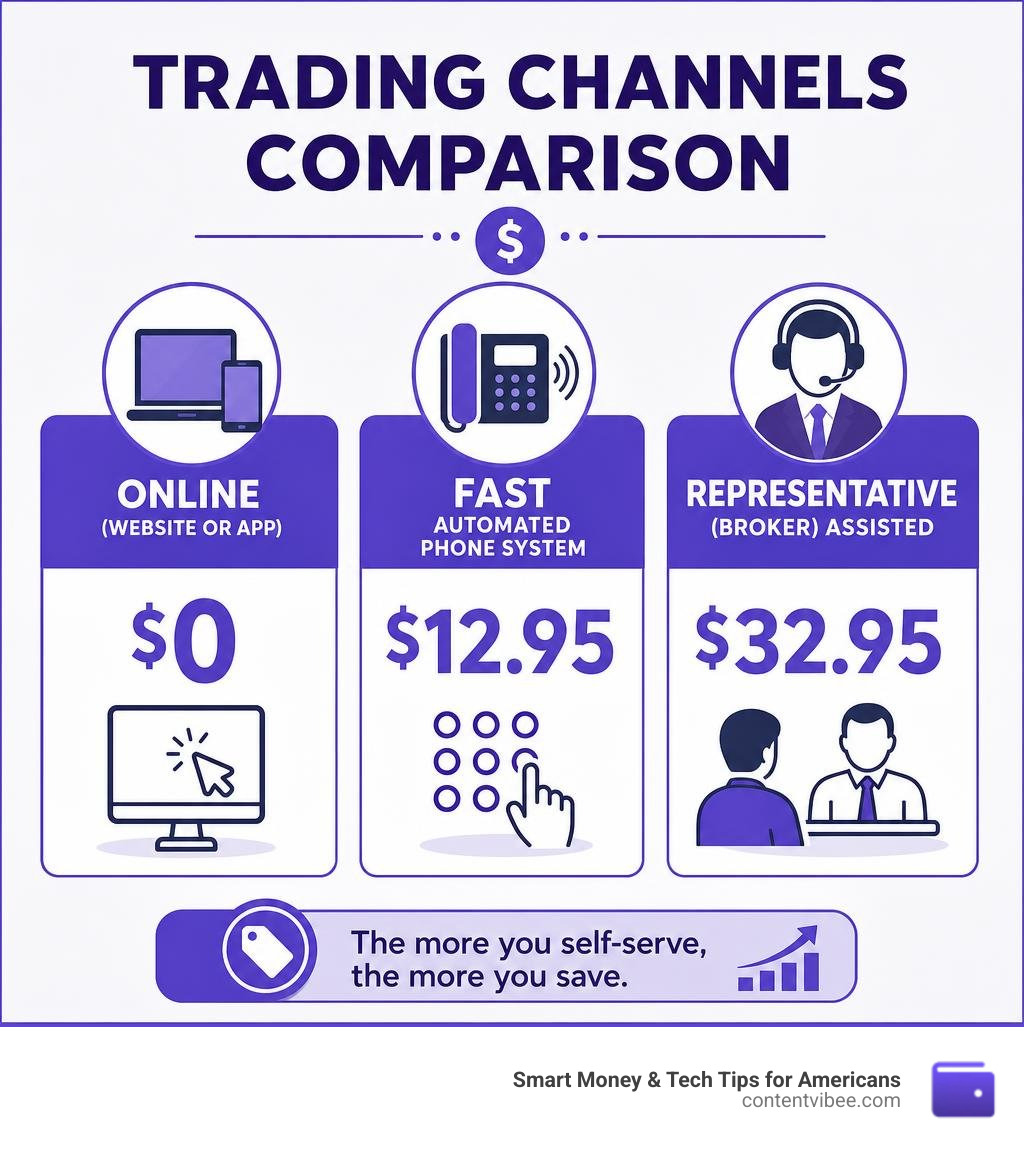
| Trading Channel | Fee Per Trade |
|---|---|
| Online (website or app) | $0 |
| FAST automated phone system | $12.95 |
| Representative (broker) assisted | $32.95 |
So if you call Fidelity to place a stock or ETF trade — even a simple one — you pay nearly $33 for the same transaction that costs nothing online.
For retirees making regular trades, that adds up fast. A handful of calls per year can quietly drain $100 or more straight from your portfolio with no warning.
The good news? This fee is almost always avoidable. Fidelity’s online tools are built to handle most trades you’d otherwise call about — and once you know the alternatives, you’ll rarely need to pay this charge again.
This guide walks you through exactly how the fee works, when it might actually be worth paying, and the simplest ways to skip it entirely.
Understanding the Broker Assisted Trade Fee Fidelity Structure
To navigate your investment costs effectively, it helps to understand how brokerage firms categorize their trading channels. In the modern financial world, we are accustomed to “commission-free” trading. However, this zero-dollar promise only applies to self-service digital platforms. When you involve a human being in the process, the cost structure changes dramatically.
At Fidelity, a representative-assisted trade is any transaction placed with the direct help of a live associate, whether over the phone or in person at one of their physical branch locations. This service incurs a flat broker assisted trade fee fidelity charge of $32.95 per transaction for equities and ETFs.
When we compare this to the standard online trading fee of $0.00, the contrast is stark. By executing your trades through the website or mobile app, you keep 100% of your capital working for you. The second you dial the phone and ask a representative to execute that exact same trade, you are hit with a $32.95 surcharge.
This fee structure is clearly outlined in the official Fidelity Brokerage and Commission Fee Schedule. To understand how this fits into the broader picture of what it costs to maintain an account, you can read our comprehensive Fidelity Cost Transparency Review.

The History of the Broker Assisted Trade Fee Fidelity Rate
The cost of trading has changed significantly over the years. Historically, all trades carried some form of commission. In the early days of online investing, even web-based trades cost money. Over the last couple of decades, a massive commission-lowering wave swept across the brokerage industry, eventually bringing online equity trades down to $0.
However, the fee for assisted trades has evolved differently. At one point, Fidelity offered certain representative-assisted transactions, such as secondary market bond trades, at a rate of $19.95. Over time, as operational costs rose and the industry shifted clients toward digital self-service, the standard representative-assisted fee for stocks and ETFs consolidated at the current $32.95 rate.
While online trades remain free for retail investors, live support for transaction execution remains a premium service. You can track current margin rates and standard trading commissions directly on the Trading Commissions and Margin Rates – Fidelity Investments page.
How the Broker Assisted Trade Fee Fidelity Charges Impacts Your Returns
Paying $32.95 per trade might not seem like a portfolio-killing event if you only do it once. But if you make multiple trades a month, these costs act as a severe drag on your long-term performance.
Let’s look at the math. If you invest $1,000 into a stock and pay a $32.95 fee, you are instantly down 3.3% on your investment before the market even moves. To break even, your stock has to rise by 3.3% just to cover the cost of entry. If you sell that stock later using a broker-assisted trade, you pay another $32.95, meaning your total transaction cost is nearly $66.
For long-term retirement planning, this portfolio drag compounds over time. Money spent on administrative fees is money that cannot benefit from compound interest. Over a 20- or 30-year horizon, a few dozen broker-assisted trades can cost you thousands of dollars in lost growth.
Understanding how these fees impact your overall returns is a crucial step in managing your wealth. For a deeper dive into how brokerage fees compare across the industry, read our guide on Why the Fidelity Investments Fees Comparison matters to your bottom line.
What Do You Get for a $32.95 Representative-Assisted Trade?
If you do decide to pay the $32.95 fee, what exactly are you paying for?
First and foremost, you are paying for direct, real-time access to a licensed professional who can navigate complex order types and volatile market conditions. When you place a trade with a representative, they don’t just click a button; they can help you understand the current bid-ask spread, explain the difference between a market order and a limit order, and ensure your trade is executed according to your precise instructions.
This is particularly useful during times of high market volatility, where a poorly placed market order can result in a filled price far from what you expected. A broker can help you set up limit orders or stop-loss orders to protect your capital.
The legal and operational framework of this relationship is detailed in the Client Relationship Summary | Fidelity Brokerage Services, which explains the standard of care and duties of broker-dealers versus investment advisers.
When is a Broker-Assisted Trade Actually Worth It?
While we generally advise avoiding unnecessary fees, there are specific situations where paying the $32.95 broker-assisted trade fee is highly logical:
- System Outages: If Fidelity’s website or mobile app experiences a rare technical outage during a major market event, calling a broker may be your only way to exit a volatile position and protect your funds.
- Complex Estate Accounts: Managing accounts for deceased relatives, executing trades within complex trusts, or handling estate distributions often requires manual verification and professional oversight to avoid costly legal or tax mistakes.
- Physical Stock Certificates: If you hold old, physical paper stock certificates that need to be deposited and liquidated, a representative must manually process the transaction.
- Inexperience with Large Orders: If you are executing a transaction worth hundreds of thousands of dollars and feel anxious about making a typo online, paying $32.95 for peace of mind and professional confirmation is a reasonable insurance policy.
How to Avoid the Broker-Assisted Fee: Self-Service Alternatives
Fortunately, you do not have to rely on phone representatives for the vast majority of your day-to-day investing needs. Fidelity provides several robust, highly secure, and completely free self-service channels.
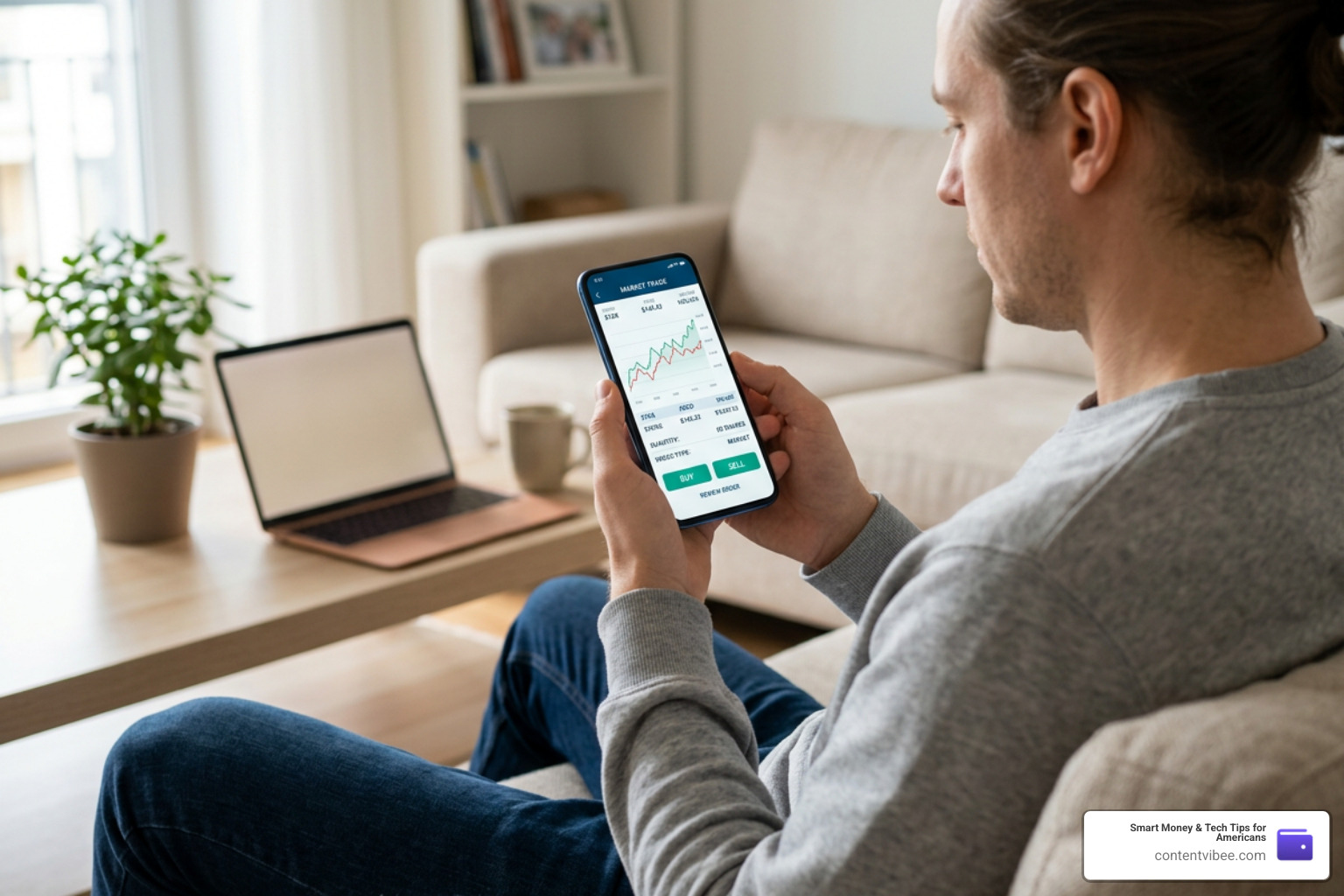
The easiest way to trade is through the standard online web portal or the Fidelity Mobile App. Both platforms are designed with intuitive interfaces that guide you step-by-step through the process of buying or selling stocks, ETFs, and mutual funds.
For more active traders who require real-time data, advanced charting, and rapid execution, Fidelity offers Active Trader Pro. This downloadable desktop platform provides professional-grade tools without any platform fees. If you are currently using older versions of their software or want to see what is changing, check out our analysis of the Fidelity Active Trader Pro Replacement options.
Using FAST (Fidelity Automated Service Telephone)
If you do not have access to a computer or smartphone but still want to avoid the high cost of a live representative, there is a middle-ground option: FAST (Fidelity Automated Service Telephone).
FAST is an automated voice and touch-tone phone menu system. Because it does not require a live representative to answer your call, the transaction costs are significantly lower.
Placing a stock or ETF trade through the automated FAST system costs $12.95 per trade. While this is still higher than the $0 online fee, it saves you exactly $20 compared to speaking with a live broker. It is an excellent backup plan for investors who prefer phone-based systems but want to keep costs reasonable.
Leveraging Free Educational Resources and Customer Support
Many investors call representatives because they are confused about how to use the platform or how certain investment products work. However, you can get answers to these questions for free without placing a broker-assisted trade.
Fidelity’s online Learning Center features thousands of articles, videos, and webinars covering everything from basic stock trading to advanced options strategies. Additionally, you can use the online Virtual Assistant or live chat features on the website to ask general questions about navigating the platform, completely free of charge.
If you are looking for automated hands-off management rather than self-directed trading, you might want to explore robo-advisors. To see how these costs compare, read our detailed guide on The No-Nonsense Guide to Fidelity Robo Advisor Fees.
Comparing Trading Channel Costs
To help you visualize how these different channels impact your wallet, let’s break down the costs of common transaction types across different methods.
| Asset Class | Online Channel Fee | FAST (Automated Phone) Fee | Representative-Assisted Fee |
|---|---|---|---|
| Stocks & ETFs | $0.00 | $12.95 | $32.95 |
| Options | $0.00 + $0.65/contract | $12.95 + $0.65/contract | $32.95 + $0.65/contract |
| Mutual Funds (NTF) | $0.00* | $12.95 | $32.95 |
| U.S. Treasuries (New Issue) | $0.00 | N/A | $19.95 |
*Note: While online No-Transaction-Fee (NTF) mutual funds are free to buy, holding them for less than 60 days can trigger a short-term redemption fee of $49.95.
For options traders, understanding contract fees and assignment costs is vital. If you want to dive deeper into how options pricing works, take a look at our article, Fidelity Options Fees Explained and Demystified.
For those utilizing managed accounts or professional advisory services, it is also helpful to understand how advisor-directed costs function. You can read more about this in our guide to A Complete Breakdown of Fidelity Advisor Directed Fees as well as our overview of The Price of Professionalism: Understanding Managed Investment Account Fees.
Frequently Asked Questions about Fidelity Trading Fees
What is the current broker-assisted trade fee at Fidelity in 2026?
As of June 2026, the standard broker assisted trade fee at Fidelity is $32.95 per trade for U.S. stocks and ETFs. This fee applies to trades executed over the phone with a live representative or in person at a Fidelity branch.
Are there broker-assisted fees for options or mutual funds?
Yes. If you place an options trade through a live representative, you will pay the $32.95 assisted fee plus the standard $0.65 per-contract fee. For mutual funds, representative-assisted trades can also carry commission charges depending on whether the fund is part of the No-Transaction-Fee (NTF) network or carries its own transactional loads.
How can I get help with a trade without paying a fee?
You can contact Fidelity customer service via the online chat tool or use their virtual assistant to help you navigate the website or mobile app. As long as the representative only explains how to use the tool and does not execute the trade for you on their end, you will not be charged the $32.95 fee. Always make sure to execute the final order yourself on your phone or computer to keep the transaction fee at $0.
Conclusion
Maximizing your retirement and investment returns requires keeping a close eye on administrative costs. The broker assisted trade fee at Fidelity is a prime example of a high fee that is easily avoided with a little digital self-service. By taking a few minutes to learn how to use Fidelity’s online portal or mobile app, you can completely bypass the $32.95 charge and keep your hard-earned money growing in your account.
At Smart Money & Tech Tips for Americans, we are committed to helping you make smart, efficient financial decisions. To see a complete breakdown of all hidden costs and how to keep your investment expenses as close to zero as possible, read our full Fidelity Cost Transparency Review.


