


Mental Health Coverage in California: What You Need to Know Before You Choose
Finding the best health insurance for mental health in California is more urgent than many people realize — roughly 1 in 6 California adults lives with a mental illness, and 8% meet the criteria for a substance use disorder.
Here are the top health insurance options for mental health coverage in California:
| Plan | Best For | Mental Health Copay | Telehealth |
|---|---|---|---|
| Kaiser Permanente | Integrated, no-referral care | $15/visit (outpatient) | Yes |
| Blue Shield of California | PPO flexibility + wellness tools | Varies by plan | Yes |
| Anthem Blue Cross | HMO value + $0 virtual care | $20/visit | Yes ($0) |
| Medi-Cal | Low-income Californians | $0 | Yes |
| CalPERS PERS Platinum PPO | State employees | $20/visit | Yes |
A few things worth knowing right away:
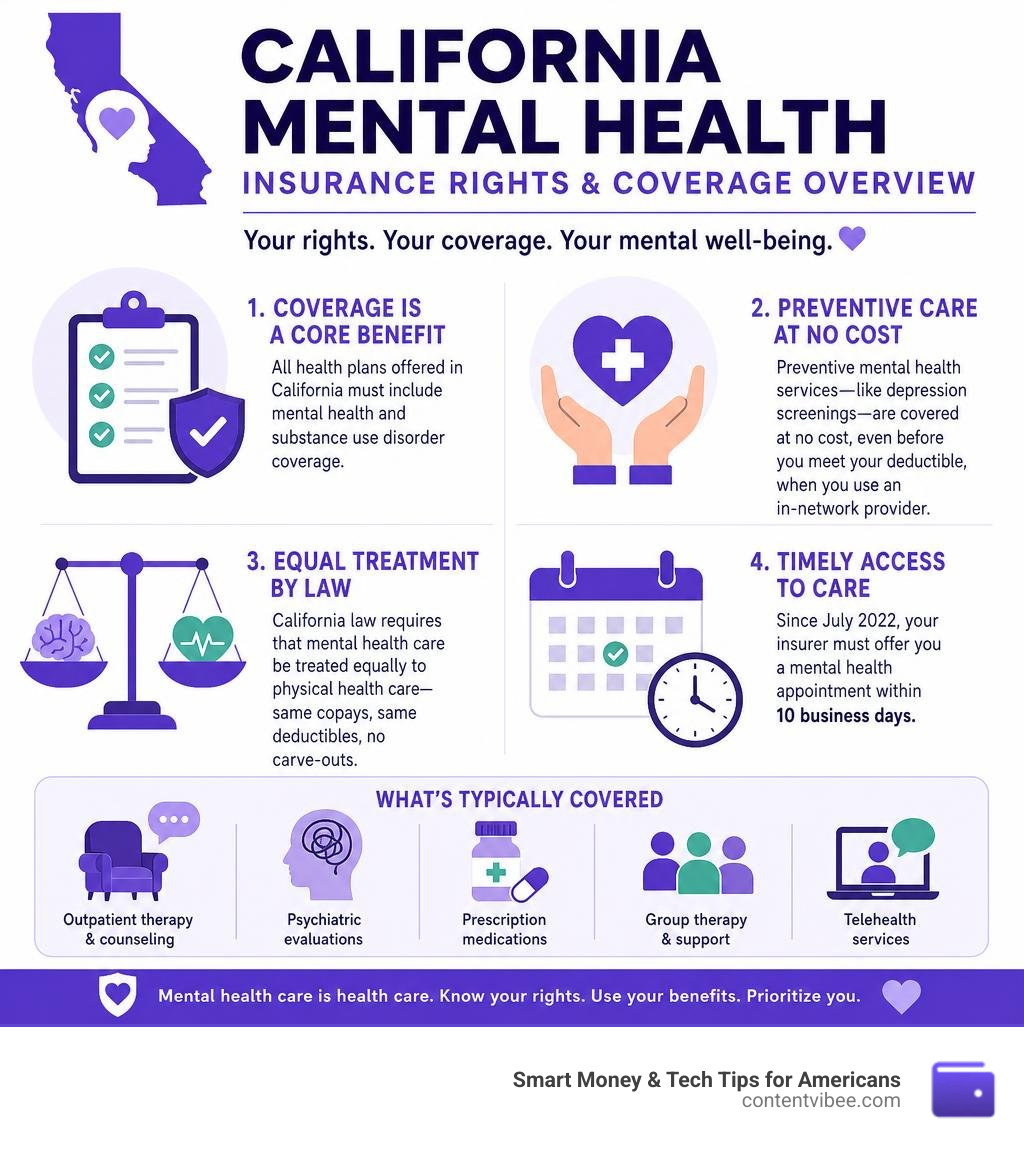
- All Covered California plans must include mental health and substance use disorder coverage as a core benefit.
- Preventive mental health services — like depression screenings — are covered at no cost, even before you meet your deductible, as long as you use an in-network provider.
- California law requires that mental health care be treated equally to physical health care — same copays, same deductibles, no carve-outs.
- Since July 2022, your insurer must offer you a mental health appointment within 10 business days.
Whether you’re newly retired, approaching Medicare eligibility, or helping a spouse navigate coverage, the plan you choose can make a real difference in the cost and quality of mental health care you receive.
Choosing the Best Health Insurance for Mental Health in California
Navigating health insurance documents can sometimes feel like trying to read a map in a heavy fog. However, finding the best health insurance for mental health in California starts with understanding how the state’s insurance landscape handles out-of-pocket costs like copays, deductibles, and coinsurance.
When you purchase a plan through Covered California, the state’s health insurance marketplace, you are protected by federal and state laws that mandate robust mental health coverage. Under the Covered California guidelines, all plans must cover essential health benefits, which include both mental health and substance use disorder services.
Understanding how these benefits are priced is crucial. If you are comparing plans, you will want to look closely at:
- Deductibles: The amount you pay out-of-pocket before your plan begins to pay.
- Copays: Fixed fees you pay at the time of your appointment (e.g., $15 or $20 per therapy session).
- Coinsurance: Your percentage share of the cost of a service after you have met your deductible.
For a deeper dive into how these general costs function, check out our A Comprehensive Guide to Health Insurance Plans Comparison and review Everything You Need to Know About Health Insurance Cost Per Month in California to see how monthly premiums align with your budget.
Why Finding the Best Health Insurance for Mental Health in California Matters
Prioritizing mental health isn’t just about finding a therapist when you’re in crisis; it’s about ongoing, preventive care. Preventive mental health services are covered at no cost to you under Covered California plans. This means that services like depression screenings, alcohol and substance use assessments, and behavioral evaluations for children and adolescents are completely free—with no copay and no deductible requirement—provided you see an in-network provider.
For those who run their own businesses, finding these benefits can be slightly more complex but is incredibly vital. If you fall into this category, we highly recommend reading our resource on A Comprehensive Guide to Best Health Insurance for Self-Employed California to learn how to secure these crucial protections.
How to Compare the Best Health Insurance for Mental Health in California
When shopping for the best health insurance for mental health in California, you will choose between different “metal tiers”: Bronze, Silver, Gold, and Platinum.
- Bronze Plans: Low monthly premiums but very high deductibles. These are ideal if you rarely need non-preventive care but want protection against major medical emergencies.
- Silver Plans: Moderate premiums and deductibles. These are the most popular plans and qualify for extra cost-sharing reductions if you meet certain income requirements.
- Gold & Platinum Plans: High monthly premiums but very low (or $0) deductibles and low copays. If you plan to see a therapist weekly or bi-weekly, paying a higher premium for a Platinum or Gold plan can actually save you thousands of dollars over the course of the year.
As you weigh these tiers, take a look at the various Anthem plan options to see how they structure their cost-sharing. Beyond the metal tiers, pay close attention to network size. An HMO plan may have lower out-of-pocket costs but will restrict you to a specific network of doctors and require a primary care referral. A PPO plan offers the flexibility to see out-of-network providers, though you will pay more for the privilege.
Comparing California’s Top Health Insurance Providers for Mental Health
Each major health insurance provider in California approaches mental health care differently. To help you evaluate your options, we have analyzed the networks, digital tools, and specific benefits of the state’s three largest carriers: Blue Shield of California, Anthem Blue Cross, and Kaiser Permanente.
Blue Shield of California
Blue Shield of California is a strong contender for those who value provider choice and flexible PPO networks. Their PPO plans allow you to see a wide variety of independent therapists and psychiatrists across the state.
They also offer excellent virtual therapy and mental health support programs, including access to their Wellvolution platform, which features digital therapeutic tools for stress, anxiety, and sleep. However, it is worth noting a recent administrative update: Blue Shield of California has begun notifying certain members of a data privacy incident that took place between February 24, 2026, and April 21, 2026.
If you want to compare how Blue Shield’s behavioral health infrastructure holds up against other regional giants, you can also explore the Health Net behavioral health guidelines, which outline similar statewide network structures. For more on Blue Shield’s specific wellness offerings, visit their official Blue Shield resources portal.
Anthem Blue Cross
Anthem Blue Cross offers a massive network of providers and a highly regarded HMO system. Under plans like the Anthem Blue Cross Select HMO, members must choose a primary care physician (PCP) to coordinate their medical care. However, if you require ongoing care for chronic mental health conditions, you can request a “standing referral” to avoid having to visit your PCP every time you need a new specialist authorization.
Anthem also excels in virtual care. Many of their plans offer $0 virtual care visits for mental health, allowing you to speak with a licensed therapist or psychiatrist from the comfort of your home without paying a dime. To see a direct breakdown of how an Anthem HMO structures its copays and deductibles, you can review this Summary of Benefits or check the official CaliforniaCare EOC – Filing Version for detailed plan rules.
Kaiser Permanente
Kaiser Permanente operates on an integrated care model, meaning your primary care doctors, specialists, therapists, and pharmacists all work within the same system and share the same electronic health records. This makes coordinating care incredibly simple.
With Kaiser, you do not need a referral from a primary care doctor to schedule an initial therapy or psychiatry assessment. They also provide members with free access to popular digital self-care apps like Calm and myStrength. According to the Kaiser Permanente 2026 benefits summary, individual outpatient therapy visits can be as low as $15, making it a highly cost-effective option for consistent care. Kaiser is excellent for mild-to-moderate mental health needs, though those with highly complex, long-term conditions may sometimes find their internal staffing networks to be structured more tightly around short-term treatment goals.
Understanding California Mental Health Parity and Timely Access Laws
California is home to some of the strongest patient advocacy laws in the nation. Under the California Mental Health Parity Act, which was significantly expanded by California Code, HSC 1374.72., state-regulated health insurance plans must provide coverage for the “medically necessary” treatment of all mental health conditions and substance use disorders.
This law ensures that:
- Your insurer cannot place arbitrary limits on your mental health benefits (such as capping the number of therapy sessions you can have per year) if those same limits do not apply to physical health services.
- Financial requirements, such as copays, deductibles, and out-of-pocket maximums for mental health care, must be completely equal to those for physical health care.
- If an insurer does not have an in-network mental health specialist available within a reasonable geographic distance, they are legally required to arrange and cover out-of-network care at the in-network cost-sharing rate.
Furthermore, California’s timely access laws require that when you request a return appointment with a mental health or substance abuse professional, you must be offered an appointment within 10 business days. This standard prevents insurance companies from delaying your therapy or psychiatric follow-ups.
Additionally, federal protections under the No Surprises Act shield you from unexpected “surprise bills” if you receive emergency mental health treatment at an out-of-network facility or are treated by an out-of-network provider at an in-network hospital.
Frequently Asked Questions about Mental Health Insurance in California
Navigating the intersection of health insurance and mental health care can bring up plenty of questions. Here are some of the most common queries we receive from Californians.
How do I access mental health care through Medi-Cal or Medicare in California?
If you have Medi-Cal, your mental health benefits are split depending on the severity of your needs. For mild-to-moderate conditions (like general anxiety or depression), you can access outpatient therapy and psychiatry directly through your Medi-Cal managed care plan. For severe, complex, or urgent mental health needs, services are coordinated through your county’s specialized mental health plans. If you run into issues navigating your Medi-Cal benefits, you can contact the Medi-Cal Mental Health Care Ombudsman at (800) 896-4042.
For Medicare beneficiaries, coverage is available for outpatient therapy, psychiatric evaluations, and inpatient care. However, it is important to note that the strict California Mental Health Parity Law and the federal MHPAEA do not apply to Medicare plans.
If you are a retired state employee covered under a CalPERS plan, such as the PERS Platinum PPO, you can access virtual and in-person mental health visits for a flat $20 copay. You can learn more about these specific PPO structures in the PERS Platinum Benefit Guide.
What should I do if my health plan denies mental health treatment?
If your health plan denies coverage for a treatment, therapy, or medication that your doctor deems medically necessary, you have the right to appeal.
- File an internal appeal: Contact your insurance provider and file a formal appeal. They are required to review the decision.
- File a complaint with the DMHC: If your insurer upholds the denial, you can file a complaint with the California Department of Managed Health Care (DMHC).
- Request an Independent Medical Review (IMR): The DMHC can coordinate an independent medical review where independent doctors evaluate your case. If they rule in your favor, your insurance company is legally obligated to cover the treatment.
Are prescription medications for mental health covered by California plans?
Yes, prescription drugs for mental health conditions are covered, but they are subject to your plan’s “formulary” (a list of covered medications). Formularies are split into tiers; generic medications (Tier 1) have the lowest copays, while brand-name or specialty medications (Tiers 2 and 3) will cost more.
If your doctor prescribes a medication that is not on the formulary, they can submit an exception request to your insurer explaining why the drug is medically necessary. If approved, the plan must cover it.
Conclusion
Taking care of your mental health is one of the most important financial and personal decisions you can make. Thanks to California’s strict parity laws and the robust options available through Covered California, finding quality, affordable mental health coverage is entirely within reach.
Whether you opt for the integrated ease of Kaiser Permanente, the PPO flexibility of Blue Shield, or the HMO value of Anthem Blue Cross, make sure to evaluate how each plan’s deductibles and copays align with your expected therapy and medication needs.
If you are ready to take the next step and secure a plan, read our comprehensive guide on The Ultimate Guide to Shopping for Health Insurance in California to learn how to navigate the enrollment process and maximize your savings.