

Why Social Security Substantial Gainful Activity Rules Matter More Than You Think
Understanding social security substantial gainful activity is one of the most important things you can do before applying for — or continuing to receive — disability benefits.
Quick Answer: What Is Substantial Gainful Activity (SGA)?
| Key Question | Answer |
|---|---|
| What is SGA? | A level of work and earnings the SSA uses to decide if you qualify as disabled |
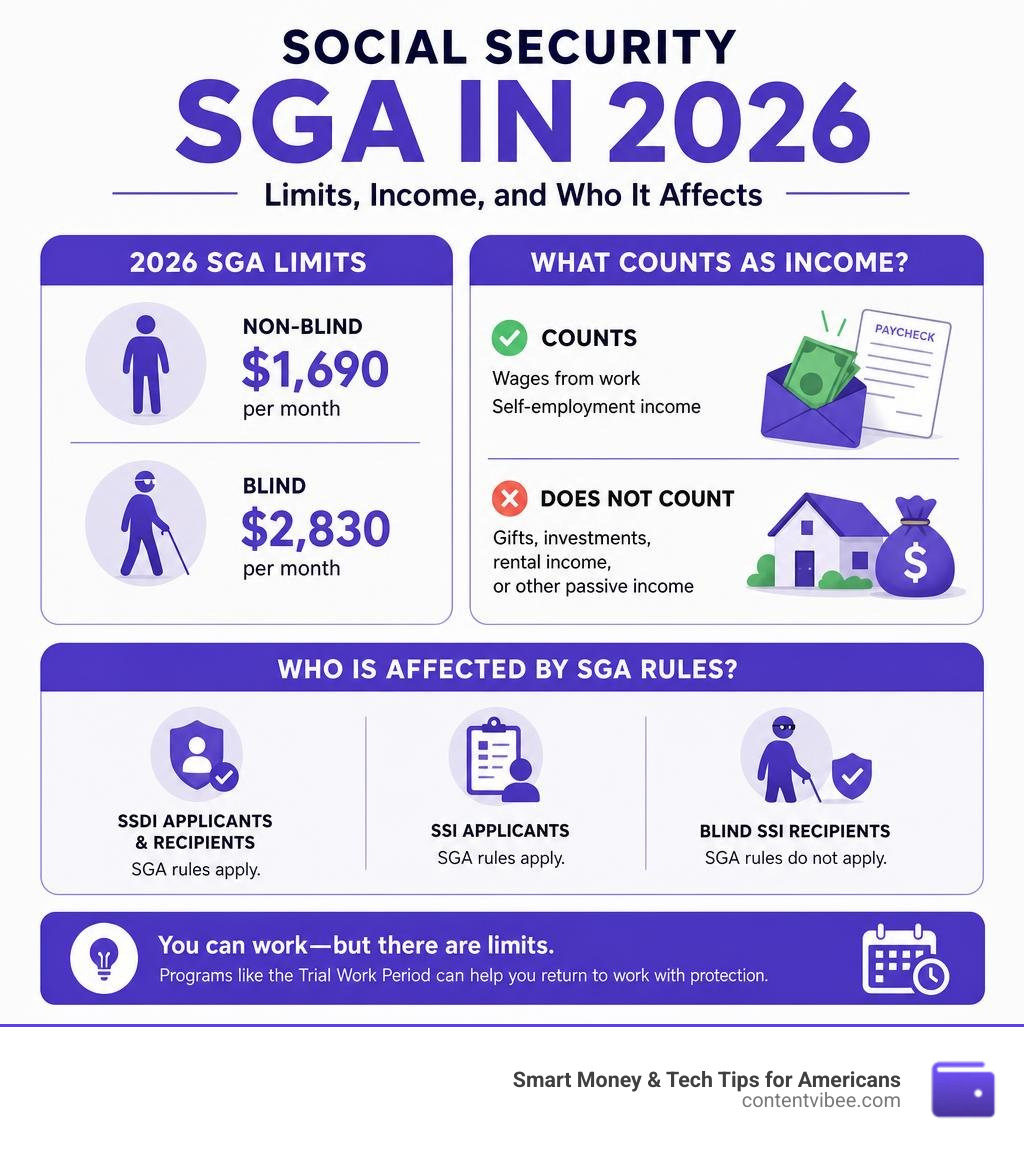
| 2026 limit (non-blind) | $1,690 per month in gross earnings |
| 2026 limit (blind) | $2,830 per month in gross earnings |
| Who does it affect? | All SSDI applicants and recipients; SSI applicants (but not blind SSI recipients) |
| Does passive income count? | No — gifts, investments, and rental income are excluded |
| Can you work at all? | Yes, with limits and work incentives like the Trial Work Period |
Here’s the core idea: if the SSA decides you can work at a substantial level, they consider you not disabled — and that means no benefits.
Work is considered “substantial” when it involves significant physical or mental effort. It’s considered “gainful” when it’s done for pay or profit — even part-time, even if you don’t actually make a profit.
This matters whether you’re applying for benefits or already receiving them. Earn too much in the wrong month, and your claim could be denied or your benefits stopped.
The rules aren’t always simple. There are exceptions, deductions, and special situations — for self-employed workers, for blind individuals, and for people who are trying to return to work. That’s exactly what this guide breaks down.
What Is Social Security Substantial Gainful Activity?
At its core, the Social Security Administration (SSA) uses the concept of social security substantial gainful activity to draw a line between who is considered “disabled” under federal law and who is not.
If you can work and earn above a specific monthly threshold, the SSA assumes your medical condition does not prevent you from supporting yourself. Consequently, you will not qualify for disability benefits, regardless of how severe your diagnosis is.
To understand why this rule exists, we must look at the Official Definition of Disability. Under the Social Security Act, disability is defined as the inability to engage in any SGA by reason of any medically determinable physical or mental impairment. This impairment must be expected to result in death, or must have lasted (or be expected to last) for a continuous period of at least 12 months.
SGA acts as the very first gatekeeper in the SSA’s five-step sequential evaluation process. If you are earning over the limit when you apply, the SSA will deny your claim right then and there, without even reviewing your medical records.
Defining Substantial and Gainful Work
The SSA does not just look at your paycheck; they look at the nature of your activities.
- Substantial Work: This involves performing significant physical or mental activities, or a combination of both. Even if you work part-time, have fewer responsibilities than you used to, or make less money than you did before your impairment, your work can still be deemed “substantial.”
- Gainful Work: This refers to work performed for pay or profit. Crucially, the SSA’s definition of gainful work includes activities that are normally performed for pay, even if you do not receive a paycheck. If you are doing work intended for profit—even if your business ends up losing money—it is still considered gainful activity.
For example, if you work 15 hours a week performing complex bookkeeping tasks, the SSA will likely view this as substantial work due to the mental effort required, even if your total earnings are modest.
How the National Average Wage Index Shapes Annual Limits
SGA limits are not static. The SSA adjusts these thresholds every year to keep pace with the economy. This adjustment is calculated using a formula tied directly to the national average wage index.
When national wages rise, the SGA limits increase, usually rounded to the nearest multiple of $10. These adjustments are typically announced in October and take effect on January 1 of the following year.
To see how the formula plays out in real-time, you can examine the official SGA Determination Methodology. This indexing ensures that disabled workers are not unfairly penalized by inflation and wage growth over time.
The 2026 SGA Income Limits and How They Apply
As we navigate through June 2026, we are operating under the latest annual adjustments. The table below outlines how these limits have changed from the previous year:
| Category | 2025 Monthly Limit | 2026 Monthly Limit |
|---|---|---|
| Non-Blind Individuals | $1,620 | $1,690 |
| Statutorily Blind Individuals | $2,700 | $2,830 |
It is vital to understand that the SSA evaluates these limits based on gross monthly earnings (your earnings before taxes are deducted), not your take-home pay. However, the SSA does not simply look at your raw wages; they calculate your countable income, which allows for certain deductions we will discuss later.
Non-Blind vs. Statutorily Blind Thresholds
As shown in the table, individuals who meet the legal definition of statutory blindness are allowed to earn significantly more each month before their work is considered SGA. For 2026, the blind SGA limit is $2,830, compared to $1,690 for non-blind individuals.
Statutory blindness is defined by the SSA as central visual acuity of 20/200 or less in the better eye with the use of a correcting lens, or a limitation in the fields of vision such that the widest diameter of the visual field subtends an angle no greater than 20 degrees.
Additionally, there are special age-based rules. If you are blind and aged 55 or older, your benefits will not be terminated if you exceed the SGA limit. Instead, they will be suspended for any month you engage in SGA, provided the work requires skills or abilities comparable to those of your prior occupation. This acts as a protective safety net for older blind beneficiaries.
Social Security Substantial Gainful Activity Rules: SSDI vs. SSI
SGA rules apply very differently depending on whether you receive Social Security Disability Insurance (SSDI) or Supplemental Security Income (SSI):
- SSDI (Title II): The SGA limit is an ongoing requirement. If you are receiving SSDI and earn more than the SGA limit after completing your Trial Work Period, your monthly cash benefits will be stopped.
- SSI (Title XVI): The SGA rule is only used as an eligibility test when you initially apply for benefits. Once you are approved for SSI, the SGA limit no longer applies to your ongoing eligibility (except for determining if you are still disabled during periodic medical reviews). Instead, your SSI payment is reduced using a different formula: the SSA excludes the first $20 of unearned income, the first $65 of earned income, and half of your remaining earned income over $65.
- Blind SSI Exception: Statutorily blind individuals who receive SSI are completely exempt from the SGA test, even at the initial application stage.
For a deeper look into how work affects your monthly payments under these different programs, read our comprehensive guide on How Much Can You Earn On Disability Pension.
Work Incentives, Deductions, and the Trial Work Period
The SSA does not want you to feel trapped. To encourage beneficiaries to test their ability to work, they have created several “work incentives” designed to protect your benefits while you transition back into the workforce.
Navigating the Trial Work Period and Extended Period of Eligibility
For SSDI recipients, the most powerful work incentive is the Trial Work Period (TWP).
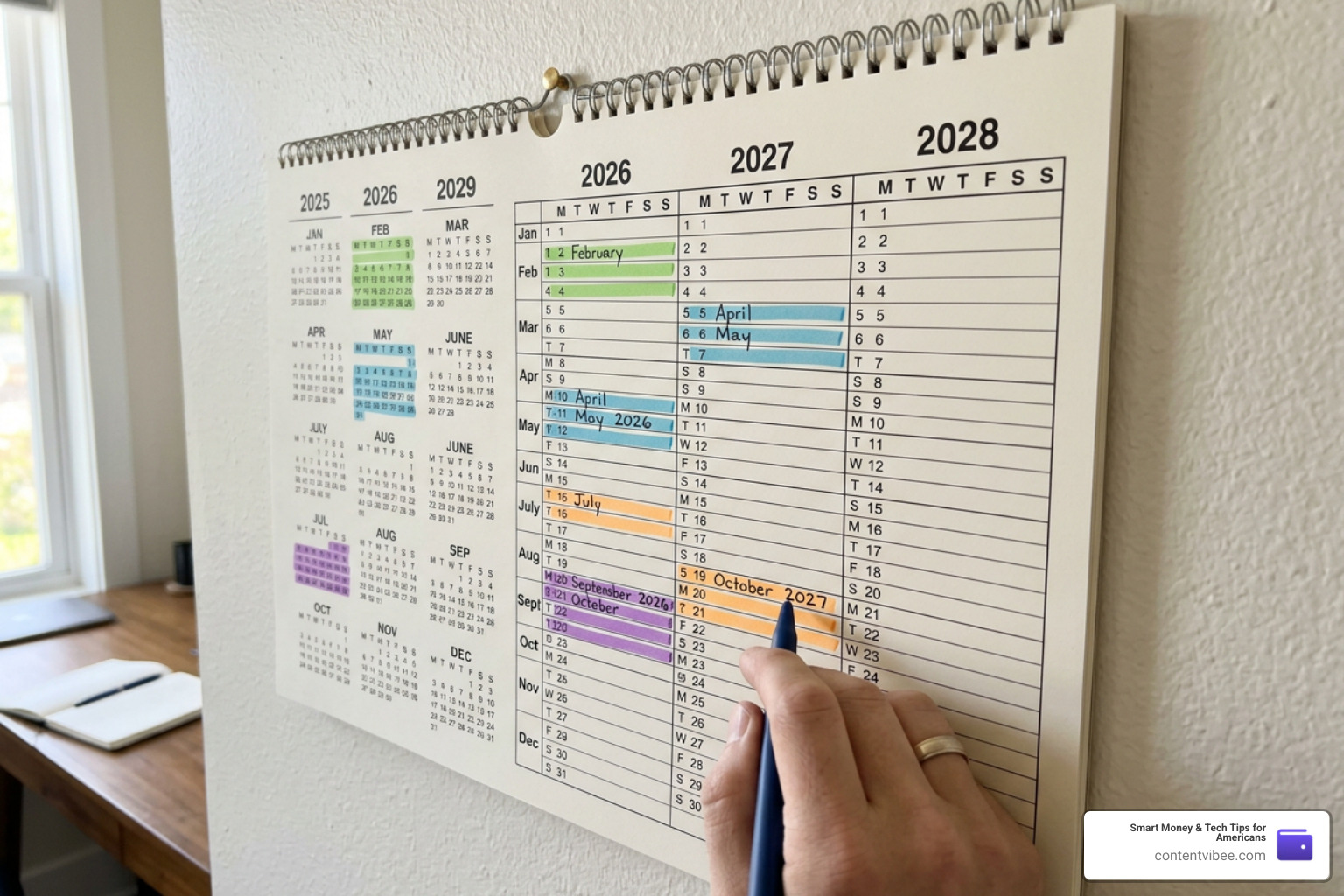
The TWP allows you to work and earn an unlimited amount for up to 9 non-consecutive months within a rolling 60-month (5-year) window without losing your SSDI benefits. During these 9 months, you will receive your full SSDI check regardless of how much money you make.
It is important to know that a “TWP service month” is triggered by earning a relatively low amount, which is also adjusted annually (significantly lower than the SGA limit).
Once you exhaust your 9 TWP months, you enter the Extended Period of Eligibility (EPE), which lasts for 36 consecutive months. During the EPE:
- The SSA will pay you benefits for any month your countable earnings fall below the 2026 SGA limit ($1,690 for non-blind).
- Your benefits will be suspended (but not terminated) for any month your earnings exceed the SGA limit.
- If your benefits are suspended because of SGA, but your earnings drop below the limit again, the SSA can reinstate your benefits immediately without requiring a new application.
Reducing Countable Income with IRWEs and Subsidies
What if your gross earnings are slightly over the 2026 limit of $1,690, but you face massive costs just to be able to work? The SSA allows you to deduct certain expenses to lower your countable income below the SGA threshold:
- Impairment-Related Work Expenses (IRWE): If you must pay out-of-pocket for items or services because of your disability to enable you to work, you can deduct these costs from your gross earnings. Examples include specialized transportation (like paratransit), co-pays for necessary medications, medical devices, assistive technology, or even service animals.
- Employer Subsidies and Sheltered Workshops: If your employer accommodates your disability by giving you extra supervision, fewer duties, or more rest breaks than non-disabled coworkers, your work may be “subsidized.” The SSA will calculate the monetary value of this accommodation (e.g., if you are paid $1,000 but only do $600 worth of work, the $400 difference is a subsidy) and deduct it from your gross earnings.
Special Rules: Self-Employment, Volunteer Work, and Multiple Jobs
If you are self-employed, work multiple part-time jobs, or volunteer, the SSA does not just look at your tax returns. They look closely at your actual contribution to the business or organization.

Evaluating Self-Employment with the Three Tests and Countable Income Test
Because business owners can manipulate their net earnings through deductions and accounting strategies, the SSA uses more sophisticated methods to evaluate self-employment.
If you are applying for SSDI or have been receiving benefits for less than 24 months, the SSA evaluates your work using the Three Tests:
- Significant Services and Substantial Income: Do you provide “significant services” to the business (such as being the sole manager or performing more than half the total management time), and do you receive a substantial income from it?
- Comparability of Work: Is your work activity comparable to that of unimpaired individuals in your community who are in the same or similar businesses?
- Worth of Work: Is your work activity worth more than the SGA threshold when measured by what it would cost to hire an employee to do your job?
If you have received SSDI benefits for at least 24 months, the rules become simpler. The SSA will only apply the Countable Income Test to determine if your net earnings from self-employment exceed the monthly SGA limit, unless there is evidence that you are intentionally suppressing your earnings.
Can Volunteer Work or Part-Time Jobs Trigger a Social Security Substantial Gainful Activity Review?
Yes. A common misconception is that unpaid volunteer work is always “safe.”
If you volunteer 30 hours a week stocking shelves at a local library or managing a family member’s business, the SSA may argue that your physical or mental efforts are comparable to a paid position. If the work you do for free is work that people are normally paid to do, the SSA can determine that you have the capacity to engage in SGA, which can trigger a Continuing Disability Review (CDR).
If you have multiple part-time jobs, the SSA will evaluate each job individually. However, if no single job exceeds the SGA limit, they will combine your total countable earnings across all jobs to see if the sum exceeds the monthly threshold.
If your earnings fluctuate wildly from month to month, the SSA may average your earnings over the period of work to see if the overall pattern represents SGA. This process is highly detailed and governed by strict administrative rules, which you can explore in the official POMS DI 25501.390 Onset Date Rules.
Frequently Asked Questions About SGA
What is an Unsuccessful Work Attempt (UWA)?
An Unsuccessful Work Attempt occurs when you attempt to return to work at the SGA level, but are forced to stop or reduce your earnings below the SGA limit within 6 months because of your medical impairment or the removal of special accommodations.
If the SSA classifies your brief return to work as a UWA, they will not count those earnings against you, and it will not disrupt your established disability onset date.
Does passive income like investments count toward SGA?
No. The SSA only counts earned income—money you receive from active physical or mental labor (wages or net self-employment earnings). Passive income sources are excluded from SGA calculations. This includes:
- Stock dividends and interest
- Rental property income (unless you are a real estate professional actively managing the properties)
- Gifts, inheritances, and insurance payouts
- Pensions and other retirement benefits
What happens if I accidentally exceed the SGA limit?
If you exceed the SGA limit outside of an approved Trial Work Period, the SSA may suspend or terminate your cash benefits. If you fail to report these earnings promptly, you will likely receive an Overpayment Notice, meaning you will be legally required to pay back any benefits you received during the months you were earning above the limit.
To prevent this, you must report all changes in your work status and monthly income to the SSA immediately. You can do this online through your My Social Security account, by calling 1-800-772-1213, or by visiting your local Field Office.
Conclusion
Navigating the rules of social security substantial gainful activity can feel like walking through a financial minefield, but it doesn’t have to be. By understanding the 2026 limits—$1,690 for non-blind and $2,830 for blind individuals—and keeping meticulous records of your gross earnings, you can make informed decisions about your career and financial future.
At ContentVibee, we believe that maximizing your benefits starts with having the right tools. If you are planning your financial future or trying to understand how disability benefits fit into your long-term retirement roadmap, we encourage you to explore our other step-by-step guides:
- Learn how to structure your income: How Much Can You Earn On Disability Pension
- Map out your future retirement benefits: How To Calculate Your Social Security Benefit In 5 Simple Steps
- Get a customized estimate: Estimate Your Monthly Retirement Benefits In 5 Easy Steps
- Plan your optimal retirement timeline: The Definitive Guide To Social Security Claiming Age
- Find the best planning tools online: Best Free Social Security Calculator Options Your No Cost Retirement Roadmap
Keep tracking your earnings, report your income on time, and take full advantage of the work incentives built into the system!