


Retirement Tax Preparer Jobs: What You Need to Know Before You Apply
Retirement tax preparer jobs are one of the most practical ways for retirees and near-retirees to keep earning without committing to a full-time grind. Here’s a quick look at what’s available:
Most common retirement tax preparer jobs:
- Seasonal Tax Preparer – Work January through April, part-time or full-time, often from home
- Remote Tax Advisor – Year-round role with flexible hours, often $60K–$80K/year
- Part-Time Bookkeeper – Ongoing work with small businesses, highly flexible
- Accounting Consultant – Project-based work using your existing expertise
- Interim Controller or CFO – Short-term senior roles during business transitions
The demand is real. 85% of financial services managers say they struggle to find skilled accounting professionals. That shortage works in your favor if you have a background in finance or tax.
And the timing couldn’t be better. Whether you’re trying to supplement Social Security, stay mentally sharp, or simply keep doing work you enjoy on your own terms — tax preparation roles offer a level of flexibility that most post-retirement jobs don’t.
This guide covers the best roles available, what qualifications you’ll need, how much you can earn, and how to get started even if your experience isn’t recent.
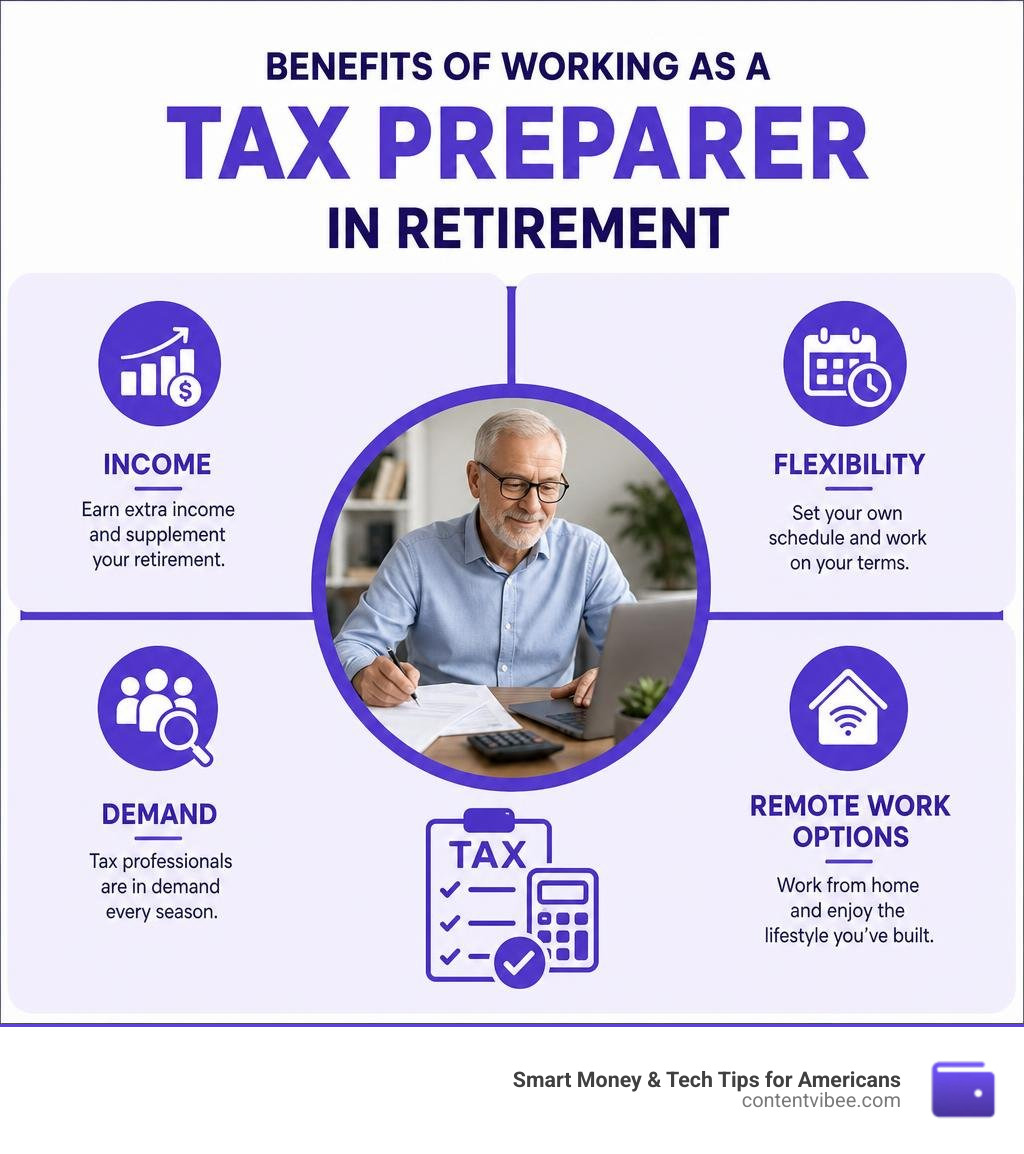
Why Retirement Tax Preparer Jobs Are Ideal for Seniors

Stepping away from the traditional 9-to-5 doesn’t mean you have to shut down your professional life entirely. In fact, many seniors find that retiring from a grueling corporate schedule opens the door to much more rewarding, self-directed work. Among the various options available, retirement tax preparer jobs stand out as an incredibly practical choice for older adults.
For starters, tax preparation provides a steady stream of supplemental income. Whether you want to fund travel, pay off remaining debts, or simply build a larger financial cushion, working a few months out of the year can make a massive difference. Additionally, staying active in tax preparation and bookkeeping keeps your mind incredibly sharp. Navigating complex IRS codes, solving client problems, and organizing detailed financial data act as excellent cognitive exercise.
Many seniors also love the social aspect. You get to interact with a diverse range of clients, helping them solve real-world problems and save money. It’s a great way to feel connected to your community without the stress of managing a full-time team. If you are planning your transition out of the traditional workforce, it helps to understand the rules around your retirement timeline. You can Learn more about when you can stop working and retire in California to help map out your transition.
Flexible Schedules and Remote Work Options
One of the biggest hurdles of working in retirement is finding a role that respects your time. Nobody wants to retire only to end up chained to an office desk for 50 hours a week. This is where tax preparation shines. Because the industry is highly seasonal, you can work intensively during the busy tax season (January through April) and enjoy the rest of the year completely off.
Furthermore, the rise of secure cloud technology has made remote work the norm. Many modern firms use platforms like Drake software, allowing you to prepare and file returns right from your living room. You can choose to work part-time, taking on only 15 to 20 hours a week, or scale up to full-time during peak weeks if you want to maximize your earnings.
This level of control over your schedule means you can plan vacations, spend time with grandchildren, and enjoy your hobbies without asking a boss for permission. If you have a strong background in public accounting and want to see what these remote setups look like in practice, you can Explore remote senior tax accountant roles that offer flexible hours.
Financial Benefits of Retirement Tax Preparer Jobs
While staying busy is great, the primary motivator for many retirees is financial security. With inflation and changing economic conditions, having an extra stream of income can protect your nest egg from premature depletion.
Working as a tax preparer allows you to bring in a healthy hourly wage or salary without committing to year-round labor. This extra cash can cover unexpected healthcare expenses, home repairs, or leisure activities. However, earning money in retirement requires careful planning, especially when it comes to how your income interacts with your retirement savings and government benefits. To get a clear picture of your financial standing, you can Calculate your retirement savings needs with our estimator to see how much extra income you actually need to generate.
Once you have a target in mind, finding these opportunities is easier than ever. Online platforms host thousands of temporary and seasonal positions perfect for older adults. For a broad look at what is currently open across the country, you can Check out open tax preparer positions on LinkedIn.
Top Roles and Career Paths for Retired Tax Professionals
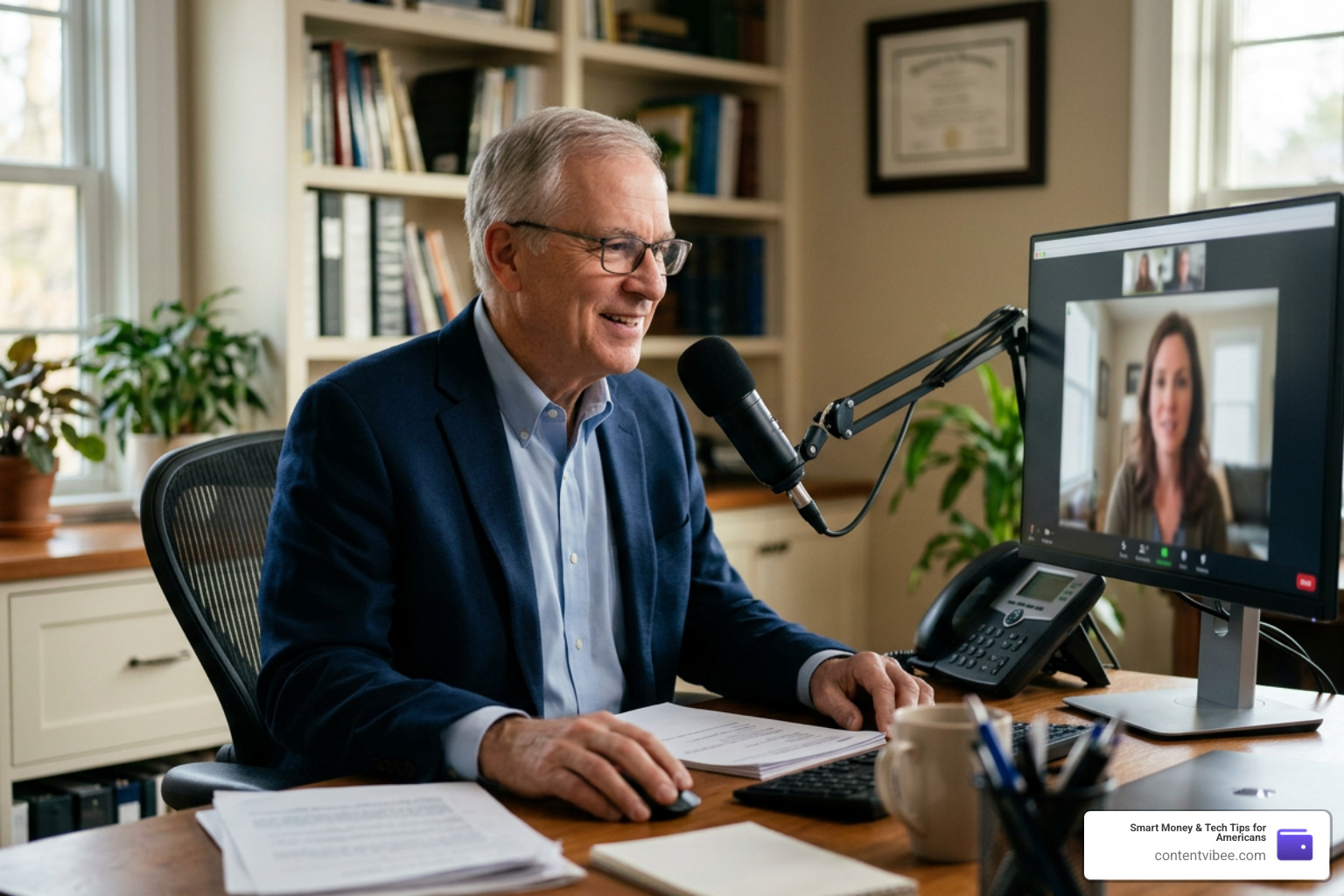
If you decide to step into this field, you aren’t limited to a single type of position. The tax and accounting landscape offers several distinct paths depending on your background, credentials, and how many hours you want to commit. Some retirees prefer simple, high-volume seasonal work, while others leverage their deep corporate experience to act as high-level consultants or interim executives.
Before diving into a specific role, it is always wise to look at your overall retirement strategy. If you are looking for ways to build up your funds before making the leap, you can Discover alternative ways to save for retirement to ensure your bases are covered.
Seasonal Tax Preparer
The most common entry point for seniors is the seasonal tax preparer role. In this position, your primary focus is helping individuals and small businesses file their annual returns. You will spend your days inputting data, analyzing deductions, and ensuring compliance with federal and state laws.
This role is heavily focused on the Form 1040 series, though you may also handle basic corporate returns. It requires strong attention to detail and a friendly, client-first attitude. Because firms experience a massive surge in demand between January and April, they are highly motivated to hire experienced professionals who can hit the ground running. If you want to explore these seasonal opportunities, you can Find seasonal tax preparer jobs via Robert Half to match with local or remote firms.
Remote Tax Advisor and Planner
For those who want a more strategic, year-round role, becoming a remote tax advisor or planner is an excellent option. Instead of simply entering data onto forms, advisors work closely with high-net-worth individuals and small business owners to develop proactive tax strategies.
This role is less about seasonal data entry and more about year-round relationship building. You might help a client structure their business entity, plan out their retirement contributions, or manage real estate transactions to minimize their tax liabilities. This career path typically requires an active credential, such as an Enrolled Agent (EA) or CPA, but it pays significantly more and offers highly professional, engaging work. If this strategic side of tax appeals to you, you can View remote tax planning and advisor roles to see what firms are looking for.
Qualifications and Training for Post-Retirement Tax Roles
You might be wondering if you need a wall full of degrees to land one of these positions. The short answer is: it depends on the role. While high-level advisory positions require active credentials, there are plenty of entry-level and mid-level seasonal roles that only require basic certifications and a willingness to learn.
Regardless of where you start, understanding how your earnings are taxed is crucial. For example, knowing how to balance your active income with your retirement accounts can save you thousands. You can Understand after-tax contributions to maximize your nest egg to make sure you are managing your new income streams as efficiently as possible.
Essential Certifications and Credentials
To legally prepare federal tax returns for compensation, you must obtain a Preparer Tax Identification Number (PTIN) from the IRS. This is a straightforward online process that must be renewed annually.
If you want to unlock higher-paying roles, holding an active CPA (Certified Public Accountant) license or an Enrolled Agent (EA) credential is the gold standard. These credentials allow you to represent clients before the IRS and handle complex business and trust returns. Even if you do not have these advanced credentials, keeping up with continuing education is highly valued by employers. To see how these credentials translate to real-world job requirements and pay scales, you can Learn about professional tax advisor and accountant roles.
Transitioning into Retirement Tax Preparer Jobs with No Recent Experience
What if you have an accounting background but haven’t looked at a tax form in ten years? Or what if you are transitioning from an entirely different field, like teaching or administrative work?
The good news is that the tax industry is incredibly supportive of career changers and returning professionals. Many larger tax preparation companies offer comprehensive, free on-the-job training programs. They will teach you how to use their proprietary tax software, walk you through the latest tax law updates, and pair you with an experienced mentor for your first few weeks.
For instance, firms like Peak Retirement Planning, Inc. frequently hire and train individuals who have strong soft skills and a basic comfort with numbers, focusing on values alignment and long-term commitment. You can read about tax preparer roles at Peak Retirement Planning by checking out the job listings on the University of Miami Careers Page or the Villanova University Career Connections Portal to see how modern firms onboard and support their team members.
Frequently Asked Questions about Retirement Tax Preparation
Choosing a post-retirement career path comes with plenty of practical questions. To help you weigh your options, we’ve put together a quick comparison of the two most common financial paths for retirees:
| Feature | Seasonal Tax Preparation | Year-Round Bookkeeping |
|---|---|---|
| Primary Work Window | January to April (Highly concentrated) | Consistent monthly workload |
| Typical Hourly Pay | $25 – $45+ (Depending on credentials) | $20 – $35+ (Depending on experience) |
| Client Interaction | High (Direct consultations and meetings) | Low to Medium (Mostly data and reports) |
| Training Required | Intensive tax law updates | Software certification (e.g., QuickBooks) |
| Remote Flexibility | Extremely high | High |
Do I need a CPA license to work as a retired tax preparer?
No, you do not need a CPA license. While a CPA license certainly opens doors to senior roles and higher hourly rates, anyone can prepare taxes as long as they obtain a PTIN from the IRS.
Many successful retired tax preparers choose to become Enrolled Agents (EAs), which is a federally-licensed credential focused entirely on taxation. Others work as tax associates, utilizing user-friendly tax software that guides them through the filing process step-by-step. To get a better sense of the specific requirements for different experience levels, you can Review tax preparer job requirements on Villanova’s career network.
How many hours do seasonal tax preparers typically work?
The hours are highly customizable. During the off-season (May through December), your hours might drop to zero, giving you complete freedom to travel or relax.
During the tax season, most firms ask for a minimum commitment of 15 to 20 hours per week, with some remote roles requiring set core hours (such as EST business hours) to ensure client coverage. If you want to maximize your earnings, full-time schedules of 40 or more hours per week are readily available during peak weeks in March and April.
Will working in retirement affect my Social Security benefits?
It can, depending on your age. If you have already reached your Full Retirement Age (FRA), you can earn as much as you want without any reduction in your Social Security benefits.
However, if you claim benefits early and continue to work, the IRS enforces an annual earnings limit. If you exceed this limit, a portion of your benefits will be temporarily withheld. Because of these rules, many retirees choose to work part-time or seasonally specifically to keep their earnings below the threshold. To see how your overall withdrawal strategy fits together with your earned income, you can Demystify the 4 percent retirement withdrawal rule to keep your financial plan on track.
Conclusion
At ContentVibee, we believe that retirement shouldn’t mean choosing between financial security and your personal freedom. Finding the right balance allows you to enjoy the fruits of your career while keeping your mind active and your wallet full.
Pursuing retirement tax preparer jobs is one of the smartest ways to achieve this balance. It offers excellent pay, the comfort of working from home, and the flexibility to keep your summers entirely free.
If you are married and planning to work part-time, it is also highly beneficial to understand how your continued employment might impact your family’s benefits. To make sure you aren’t leaving money on the table, Find out if working in retirement reduces your spousal benefits and take control of your financial future today.