


The New Reality: Why Seniors Are Staying in the Workforce
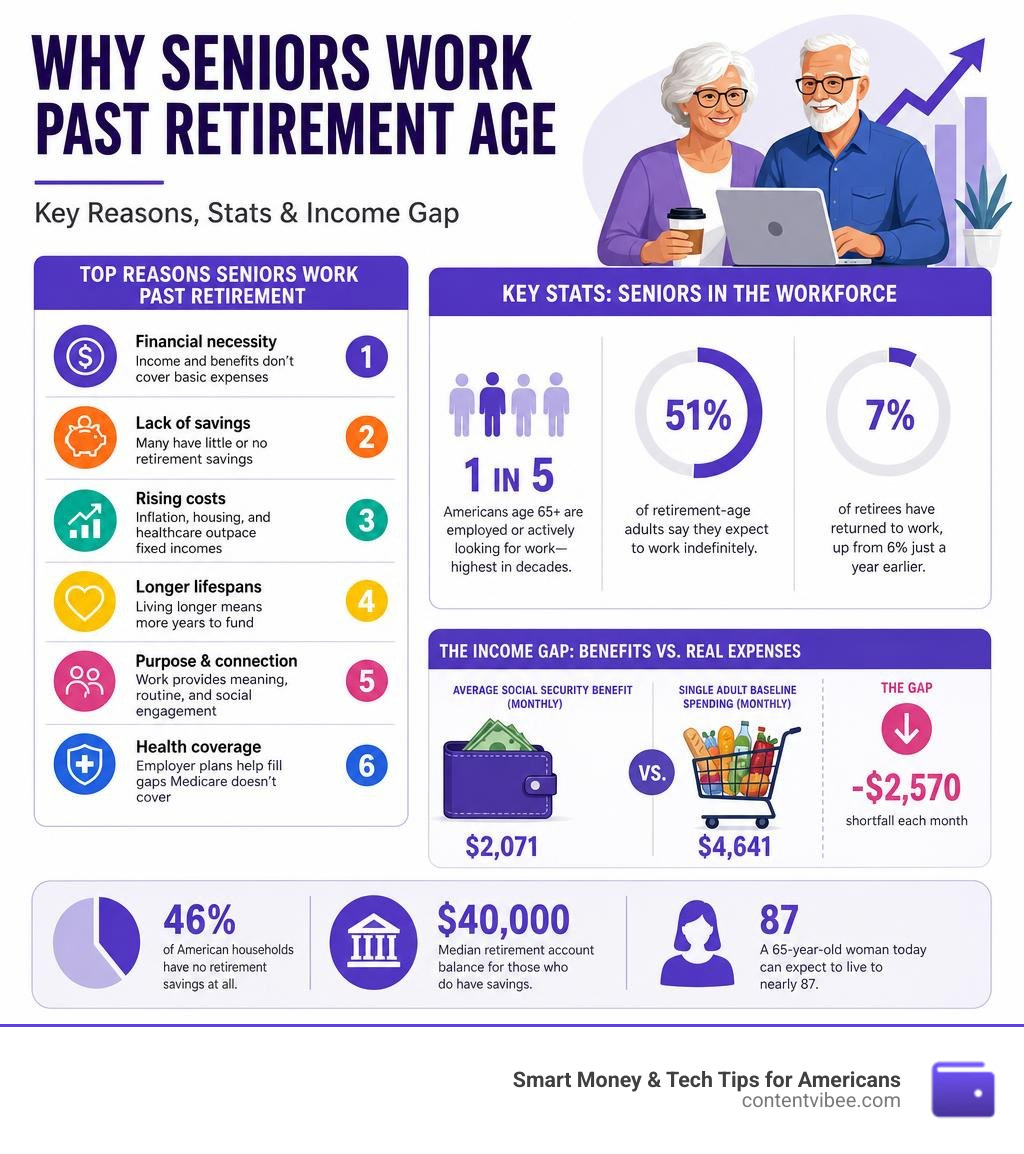
Seniors working past retirement age is no longer the exception — it’s becoming the norm. Nearly 1 in 5 Americans aged 65 and older are now employed or actively looking for work, the highest share in decades.
Why are seniors working past retirement? Here are the main reasons:
- Financial necessity — Social Security covers only a fraction of real expenses. The average benefit runs about $2,071/month, while a single adult’s baseline spending averages $4,641/month.
- Lack of savings — 46% of American households have no retirement savings at all. The median retirement account balance for those who do have savings is just $40,000.
- Rising costs — Inflation, housing, and healthcare expenses have outpaced what fixed incomes can cover.
- Longer lifespans — A 65-year-old woman today can expect to live to nearly 87. That’s a long time to fund without a paycheck.
- Purpose and connection — Many seniors simply want to work. Social engagement, routine, and identity all play a role.
- Health coverage — Employer health plans can fill gaps that Medicare doesn’t cover.
The old image of retirement — a hard stop at 65, followed by leisure — has quietly faded. Today, 51% of retirement-age adults say they expect to work indefinitely. And 7% of retirees have already returned to work, up from 6% just a year earlier, according to a recent AARP survey.
The shift is driven by real economic pressure, structural changes in how Americans save (the move from pensions to 401(k)s), and a growing recognition that work can actually be good for older adults — mentally, physically, and socially.
The Realities of Seniors Working Past Retirement
As we navigate the economic landscape of June 2026, the traditional milestone of retirement has undergone a dramatic rewrite. For many older Americans, the concept of a “hard stop” at age 65 has been replaced by a fluid transition. According to recent data, 48% of those who choose to unretire cite financial necessity or a poor economic outlook as their primary motivator. Daily living costs, heavily impacted by years of persistent inflation, are the biggest driver for 41% of older workers.
Yet, the decision is rarely one-dimensional. While financial pressures are undeniable, personal fulfillment, a desire to stay mentally active, and social connection play massive roles. In fact, 15% of unretired seniors return to the workforce simply to beat boredom, and 14% do so to stay physically and socially active.
This blend of financial pressure and personal choice is highlighted in recent coverage by Some older Americans are ‘unretiring’ to keep up with cost of living: AARP, which notes how sensitive older households remain to inflation. Even when Social Security benefits receive annual cost-of-living adjustments (COLAs), these adjustments often lag behind the real-world price increases of groceries, utilities, and insurance.
Furthermore, as discussed in For some older Americans, retirement today means unretiring – CBS News, the gap between baseline single adult spending ($4,641 per month) and the average Social Security benefit ($2,071 per month) forces many to recognize that their “golden years” cannot be fully self-sustaining without supplemental wages. This reality is prompting a record-high percentage of older adults to plan to work indefinitely, a trend explored in depth by Most Retirement Age Americans Plan to Work Indefinitely – Newsweek.
Whether rejoining the workforce is an active choice to maintain professional identity or a mandatory step to keep up with basic expenses, we are seeing a structural shift. This is further documented in analyses of why older Americans rejoin the workforce, such as Your privacy choices, emphasizing that economic survival and personal dignity are deeply intertwined for today’s working seniors.
Shifting Demographics: Labor Force Participation and Urban Poverty
The demographic landscape of the American workforce has transformed over the past decade. Nationally, the labor force participation rate for adults aged 65 and older increased from 17.2% in 2013 to 19.2% in 2023. What is even more striking is the geographic concentration of this trend in major U.S. cities.
In urban environments, the rise of seniors working past retirement is even more pronounced. In 18 major cities studied by researchers, the average labor force participation rate for older residents jumped from 17.3% to 20.7% over the same ten-year period. In 2013, only eight major cities had senior labor force participation rates above the national average; by 2023, that number had nearly doubled to 15 cities.
This urban workforce surge is directly tied to the severe economic pressures faced by seniors living in metropolitan areas. Rising housing costs, higher local taxes, and elevated costs of services in cities make urban living incredibly challenging on a fixed income.
To illustrate how urban and national senior economic metrics diverge, let us look at the data compiled in the table below:
| Economic Metric (Ages 65+) | National Average | Major U.S. Cities Average |
|---|---|---|
| Labor Force Participation Rate (2013) | 17.2% | 17.3% |
| Labor Force Participation Rate (2023) | 19.2% | 20.7% |
| Seniors Living Below Poverty Level | 11.3% | 16.5% |
| Seniors with “Low Income” (Near Poverty) | 8.2% | 10.1% |
| Median Household Income (Older Households) | $56,000 | $51,000 |
| Average Employment Income (Working Older Households) | $74,800 | $78,100 |
This data, highlighted in the Pew research report More U.S. Residents Are Working Past Retirement Age, reveals a stark paradox: while older urban households command higher average employment incomes ($78,100 vs. $74,800 nationally) when they do work, they also experience significantly higher poverty rates (16.5% vs. 11.3% nationally) and lower median household incomes overall ($51,000 vs. $56,000). This indicates that for urban seniors, continuing to work is frequently a direct response to systemic economic vulnerability.
Income Sources and the Structural Shift in Retirement Savings
The financial architecture of retirement in America has experienced a foundational shift over the past forty years. The era of the reliable, employer-funded defined benefit pension has largely drawn to a close, replaced by employee-funded defined contribution plans like 401(k)s and IRAs. This transition has shifted the investment risk and the responsibility of retirement planning entirely onto the individual.
Unfortunately, many workers have been left behind by this structural change. According to data analyzed in The Aging of America: A Changing Picture of Work and Retirement, roughly half of all households aged 55 and older have zero retirement savings in a defined contribution plan or IRA. For the half that does have savings, the median retirement account balance is a modest $40,000.
At the same time, senior debt has risen significantly. Between 1998 and 2012, the percentage of older adults carrying household debt increased from 30% to 44%, with mortgage debt jumping from 16% to 24%. During this time, median debt levels among older Americans surged by 74%, leaving many seniors entering their late 60s and 70s with significant monthly debt obligations.
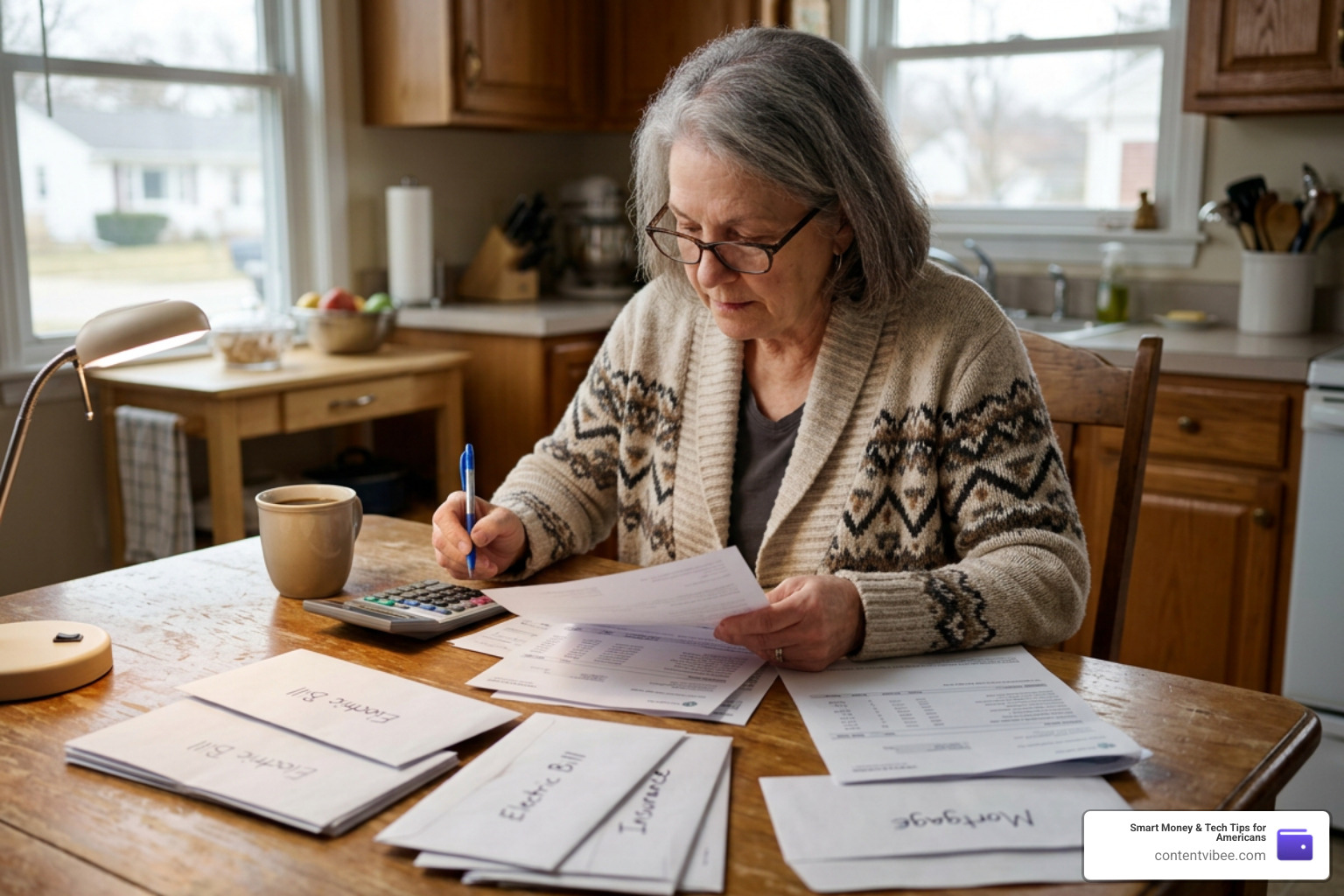
To cope, older households rely on a mix of income sources:
- Social Security: Social Security remains the bedrock of senior income, with 87% of older households receiving benefits.
- Retirement Accounts: Nationally, 58% of older households draw from retirement accounts, compared to only 49% in major cities.
- Employment Earnings: To fill the gap, 39% of older households nationwide and 42% in major cities rely on active employment earnings.
For an extensive look at how these dynamics affect the Baby Boomer generation, the analysis in Baby Boomers and Beyond: Working Far Past Retirement Age shows that longer lifespans require these retirement funds to stretch further than ever before, turning employment into an essential financial bridge.
Financial Planning for Seniors Working Past Retirement
If you choose to keep working while claiming Social Security benefits, you must pay close attention to the Social Security Administration’s (SSA) earnings rules. If you have not yet reached your Full Retirement Age (FRA), your benefits may be temporarily reduced if your earned income exceeds certain annual limits.
This is particularly critical when coordinating spousal benefits. We outline how work earnings interact with these rules in our comprehensive guide, Working In Retirement Are Spousal Benefits Reduced By Working. Understanding these limits prevents unexpected benefit suspensions and helps you structure your work hours effectively. For spouses looking to maximize their joint lifetime benefits, we also recommend checking out Double Dipping The Working Spouses Guide To Social Security to master the coordination of dual work histories.
Social Security Optimization for Seniors Working Past Retirement
One of the greatest financial incentives for seniors working past retirement is the ability to delay claiming Social Security benefits. For every year you delay claiming your benefits past your Full Retirement Age (up until age 70), your monthly benefit increases by 8% due to delayed retirement credits.
This means that if your FRA is 67 and you wait until age 70 to claim, your monthly benefit will be 24% higher for the rest of your life. We break down the math and strategy behind this decision in Why Waiting For Social Security Age 70 Benefits Might Be Your Best Move.
However, delaying is not always the right choice for everyone. Factors such as immediate cash flow needs, health status, and life expectancy must be carefully weighed. To understand the potential downsides of waiting too long, read our analysis on Patience Is A Virtue But Is It A Payoff The Cons Of Late Social Security Claiming.
Navigating Taxes, RMDs, and Medicare While Employed
Continuing to work past traditional retirement age introduces several complex tax and benefit coordination rules. Navigating these rules successfully requires proactive planning to avoid costly penalties and unnecessary tax burdens.

1. Social Security Benefit Taxation
Many working seniors are surprised to learn that their earned income can make their Social Security benefits taxable. If your “combined income” (adjusted gross income + nontaxable interest + half of your Social Security benefits) exceeds $25,000 for an individual or $32,000 for a married couple filing jointly, up to 50% of your benefits may be subject to federal income tax. If your combined income exceeds $34,000 (individual) or $44,000 (joint), up to 85% of your benefits can be taxed.
2. Required Minimum Distributions (RMDs)
Under current tax law, you must begin taking Required Minimum Distributions (RMDs) from your traditional IRAs and 401(k)s starting at age 73. These distributions count as taxable income, which, when combined with your wages, can push you into a higher tax bracket.
However, if you are still actively employed and do not own 5% or more of the company you work for, you may qualify for the “still-working exception.” This exception allows you to delay RMDs from your current employer’s 401(k) plan until you actually retire, though you must still take RMDs from older, legacy accounts.
3. Medicare Coordination
When you turn 65, you become eligible for Medicare. If you are still working and have coverage through an employer-sponsored group health plan, how you handle Medicare depends on the size of your employer:
- Employers with 20 or more employees: Your employer’s group health plan is the primary payer, and Medicare is secondary. You can typically delay enrolling in Medicare Part B without penalty, saving on monthly premiums.
- Employers with fewer than 20 employees: Medicare becomes the primary payer. In this case, you must enroll in Medicare Parts A and B at age 65 to avoid permanent late-enrollment penalties and coverage gaps.
Overcoming Age Discrimination and Accessing Employment Resources
Despite the immense value, experience, and strong work ethic that older workers bring to the table, ageism remains a significant barrier in the modern job market. Many older job seekers face subtle or overt discrimination during hiring processes, or find themselves passed over for promotions and training opportunities.
The Age Discrimination in Employment Act (ADEA) protects workers aged 40 and older from discrimination in hiring, firing, promotion, and compensation. However, proving age discrimination can be difficult, and many seniors still report feeling shut out of tech-heavy or rapidly evolving industries.
To combat this, as discussed in Older Americans often compelled to keep working — and face criticism for doing so | PBS News, society often sends mixed signals: encouraging seniors to stay active and self-sufficient, yet criticizing them when they remain in competitive or high-level roles.
Fortunately, there are dedicated programs and resources designed to help older adults find and secure meaningful employment:
- Senior Community Service Employment Program (SCSEP): Established under the Older Americans Act, SCSEP is a federally funded program that provides part-time, paid community service training for low-income, unemployed seniors aged 55 and older.
- AARP Back to Work Initiative: AARP offers specialized job boards, resume-tailoring tools, and digital skills training programs designed to help older workers transition into new industries or secure remote work.
- Local Workforce Services: Most states operate local career centers (such as American Job Centers) that offer free computer literacy classes, interview coaching, and age-friendly employer matchmaking.
Regional Differences and Retirement Timelines
Where you live plays a massive role in determining when—and if—you can afford to stop working. High-cost states present unique financial challenges that often extend a senior’s working years far past the national average.
Take California, for example. With some of the highest housing, utility, and fuel costs in the nation, the baseline income required to live comfortably in retirement is significantly elevated. A senior who might retire comfortably on a $40,000 annual budget in the Midwest would find themselves struggling to cover basic rent and healthcare in California.
Because of this, retirement timelines in high-cost regions are often pushed back by several years. For a detailed breakdown of how to evaluate your financial readiness and determine your ideal timeline in high-cost environments, read our guide on When Can You Stop Working And Retire In California.
Frequently Asked Questions about Working in Retirement
Why are so many seniors unretiring in 2026?
Many seniors are returning to work in 2026 due to a combination of persistent inflation, rising housing costs, and inadequate retirement savings. With Social Security covering only a fraction of daily living expenses, working part-time or full-time provides essential financial stability. Additionally, many seniors unretire to maintain social connections, avoid boredom, and keep their minds active.
How does working past retirement age affect Social Security?
If you work past your Full Retirement Age (FRA), your earnings will not reduce your Social Security benefits, regardless of how much you earn. If you work before reaching your FRA and earn more than the annual limit, the SSA will temporarily withhold a portion of your benefits, which will then be added back to increase your monthly checks once you reach FRA. Furthermore, continuing to work can increase your lifetime benefit if your current earnings are high enough to replace lower-earning years in your 35-year earnings record.
What programs help older adults find employment?
The Senior Community Service Employment Program (SCSEP) is an excellent federal resource providing paid job training for low-income seniors aged 55+. AARP also offers specialized job search tools, resume assistance, and skills training. Additionally, local American Job Centers provide free career counseling and workshops tailored to older workers.
Conclusion
The trend of seniors working past retirement is reshaping the American economy, workplace culture, and the very definition of the “golden years.” Whether driven by financial necessity, a desire for personal fulfillment, or a combination of both, older adults are proving that age is just a number when it comes to professional contribution.
At ContentVibee, we are dedicated to providing you with clear, actionable advice to help you navigate these complex transitions. From optimizing your Social Security benefits to managing your tax liabilities and investment strategies, our goal is to help you achieve long-term financial security.
If you are planning your working retirement, make sure you understand how your income will impact your family’s benefits by reading our essential guide: Working In Retirement Are Spousal Benefits Reduced By Working.