Why Retirement Gig Economy Jobs Are Reshaping How Americans Retire
Retirement gig economy jobs are flexible, short-term work arrangements that let retirees earn income on their own schedule — without returning to a traditional 9-to-5.
Quick answer — the most popular gig jobs for retirees in 2026:
| Gig Role | Estimated Earnings | Best For |
|---|---|---|
| Consulting / Freelancing | $50–$150/hour | Former professionals |
| Online Tutoring | $20–$80/hour | Retired educators |
| Pet Sitting / Dog Walking | $1,000–$2,000/month | Active, animal lovers |
| Rideshare Driving | $20–$30/hour (after expenses) | Social, flexible schedules |
| Remote Fitness Training | $75K+ avg (full-time) | Health and wellness pros |
| Seasonal / Tour Guide Work | $19–$30/hour + tips | Outdoorsy retirees |
| Remote Admin / Tax Prep | $23–$60/hour | Detail-oriented retirees |
The old image of retirement — a full stop, a gold watch, a quiet life — is changing fast.
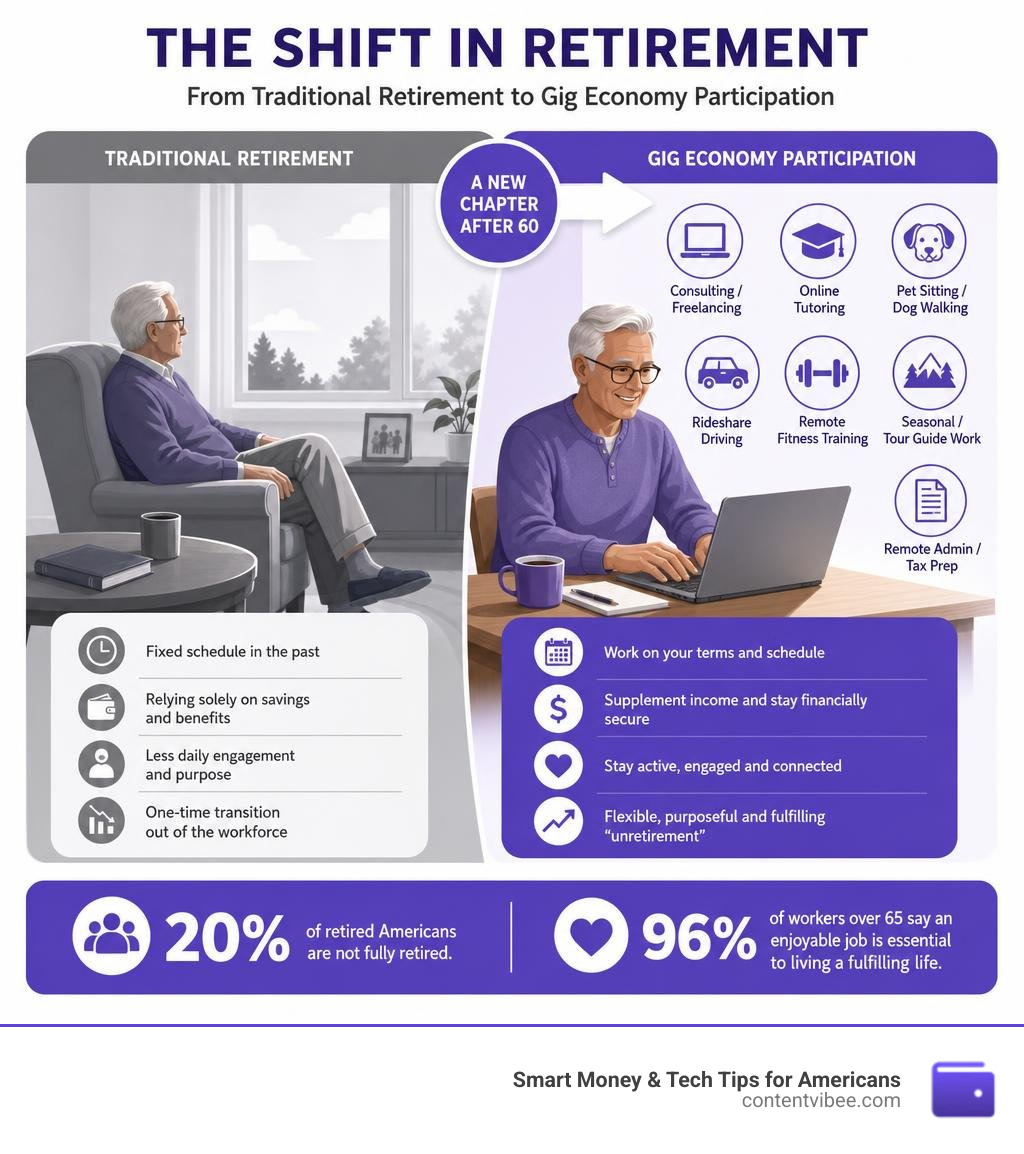
According to the American Enterprise Institute’s American Perspectives Survey, 20% of retired Americans are not fully retired. Instead, they are picking up flexible work through gig platforms, freelance marketplaces, and app-based services. This trend even has a name now: unretirement.
The reasons are real and varied. Rising living costs, longer lifespans, and gaps in retirement savings are pushing many older adults back into the workforce. But it is not only about money. Research shows that 96% of workers over 65 say an enjoyable job is essential to living a fulfilling life, and 54% feel their job is part of their identity.
As the poet Richard Armour once observed, “retired is being twice tired — first tired of working, then tired of not.” For many Americans today, gig work is solving exactly that problem.
This guide breaks down the best retirement gig roles, the financial and tax considerations you need to know, and how to protect your Social Security benefits while earning on the side.
The Rise of “Unretirement” and Retirement Gig Economy Jobs
To understand why so many of us are returning to work, we have to look at how the economic landscape has shifted over the last few years. The traditional concept of retirement as a sudden “cliff event” — where you work until 65 and then completely stop — is rapidly becoming outdated. Instead, older Americans are opting for a gradual transition, often referred to as “unretirement.”
A major catalyst for this shift occurred during the COVID-19 pandemic. Between August 2020 and January 2021, approximately 1.1 million workers aged 55 and older exited the workforce. This sudden departure was driven by health fears, initial stock market drops, and early retirement packages. However, as inflation climbed by more than 22% since 2020 and medical costs reached record highs, many of those who retired early found their savings stretched thin.
According to an AARP survey, about 1 in 5 Americans over the age of 50 who are not yet retired have zero retirement savings. For those who are already retired, the reality of funding an extended lifespan has led them straight back to work. If you are wondering how your location affects your retirement timeline, you might find our guide on When Can You Stop Working And Retire In California helpful.

This is where retirement gig economy jobs differ significantly from traditional “bridge jobs.” Historically, a retiree looking for extra income might have taken a structured part-time position as a retail cashier or a local bank teller. While these roles provided steady pay, they lacked autonomy.
Gig work, by contrast, gives older adults complete control over their schedules. Whether you are driving for a rideshare service, walking dogs, or consulting, you choose when to log on and when to take time off. This flexibility is invaluable for seniors who need to balance work with health needs, travel plans, or family emergencies. For a deeper look into why seniors are choosing these roles, you can read more about how Why ‘unretired’ seniors are picking up gig work to pay the bills has become a defining trend of our time.
Top Flexible and High-Paying Gig Roles for Older Adults
Modern platform technology has made finding work easier than ever. With a smartphone or laptop, you can immediately connect with local clients or global businesses. This digital safety net allows you to monetize decades of hard-earned skills or explore entirely new, low-stress interests.
To help you compare the most common avenues, we have outlined the top gig categories below:
| Gig Category | Key Platforms | Top Advantages | Primary Challenges |
|---|---|---|---|
| Professional / Consulting | Upwork, LinkedIn, UnRetire | High hourly pay, low physical strain, intellectual engagement | Client acquisition, self-marketing, administrative overhead |
| Pet Care & Sitting | Rover, Meowtel | Physical activity, companionship, highly flexible | Physical strain with large animals, platform commission fees |
| Online Tutoring | Wyzant, VIPKid | Work from home, structured hours, rewarding social interaction | Unpaid preparation time, platform-specific scheduling rules |
| Active Aging Fitness | StayPrime | High demand, great physical health benefits, specialized niche | Requires professional certification and liability insurance |

High-Paying Consulting and Professional Retirement Gig Economy Jobs
If you spent your career in corporate management, accounting, engineering, or administration, you possess a wealth of knowledge that startups and mid-sized companies desperately need. Instead of committing to a stressful 40-hour workweek, you can package your expertise into project-based freelance roles.
Consulting is arguably the highest-paying gig option for retirees, with hourly rates ranging from $50 to $150 (and often much higher for specialized roles). Platforms designed specifically for experienced professionals, such as UnRetire, connect retired specialists with companies looking to fill critical talent gaps. This is especially true in industries like insurance, compliance, risk assessment, and enterprise risk management (ERM).
On these platforms, you can set up a “service card” detailing your expertise, choose your preferred hours, and match with project-based work. Best of all, because these contracts are handled directly between you and the hiring company, you retain complete professional autonomy. If you are looking to secure your financial future through these avenues, check out our resource on Alternative Ways To Save For Retirement That Actually Work.
Low-Stress and Active Retirement Gig Economy Jobs
If you prefer to step away from screens and desks, the gig economy offers plenty of active, low-stress opportunities that keep you moving and socially connected.
Pet sitting and dog walking through apps like Rover have become incredibly popular among retirees. Many animal-loving seniors find that walking dogs provides both physical exercise and mental joy. Active retirees can easily earn $1,000 or more per month by taking care of local pets while their owners are at work or traveling.
Another rapidly growing sector is remote fitness training, specifically targeting the “active aging” demographic. As the baby boomer generation seeks to maintain mobility and strength, there is a massive demand for trainers over 50 who understand the unique physical needs of older bodies.
Platforms like StayPrime connect certified personal trainers specializing in active aging and mobility with older clients. By joining a specialized directory, you can set your own rates, work from the comfort of your home via video sessions, and secure a steady stream of clients. For those qualified, you can explore opportunities like the Remote Personal Trainer (Specializing in Active Aging / 50+) – Founding Roster to see how professionals are monetizing their passion for wellness.
Financial Implications: Balancing Gig Income and Retirement Benefits
While earning extra cash is incredibly empowering, navigating the financial and tax implications of gig work requires careful planning. Unlike traditional employment, where taxes are automatically withheld and retirement accounts are managed by HR, gig workers must act as their own finance department.
According to a report by Betterment, there is a stark savings gap within the gig economy. Nearly 40% of gig workers feel unprepared to save enough to maintain their lifestyle in retirement. Furthermore, 57% of full-time gig workers and 47% of side-hustlers have less than $5,000 in accumulated savings.
This financial vulnerability makes understanding your income streams vital. The closer people get to retirement age, the more likely they are to rely on gig work to build their nest egg: 76% of those aged 55+ plan to use gig jobs to save for retirement, compared to 65% of those aged 35–54.
One critical risk highlighted by the Retirement and Gig Workers – American Academy of Actuaries policy paper is the underreporting of income. Because platforms only issue a Form 1099-K for earnings over specific thresholds, some gig workers fail to report their full earnings. While this might seem like a short-term tax shortcut, it actually reduces your net lifetime earnings reported to the government, which can permanently lower your future Social Security payouts.
Working in retirement can also be a brilliant strategy to delay claiming your Social Security benefits, allowing your monthly check to grow. For more on how this strategy can maximize your wealth, read our guide on Why Waiting For Social Security Age 70 Benefits Might Be Your Best Move. Additionally, you can easily project your future income by learning how to Estimate Your Monthly Retirement Benefits In 5 Easy Steps.
Strategic Best Practices for Older Gig Workers
To succeed in the gig economy without burning out, you must protect your health, your time, and your peace of mind. The most successful retired gig workers follow a set of strategic rules to ensure their side hustle remains a source of joy rather than a burden.
- Prioritize “Boring” and Low-Strain Gigs: High-intensity delivery or rideshare jobs can be physically punishing. Lifting heavy grocery bags up apartment stairs or driving for hours in heavy traffic can lead to back and knee strain. “Boring” gigs — like virtual bookkeeping, contract editing, or online tutoring — are often far safer and more sustainable.
- Factor in Real Costs: If you choose a driving-based gig, the wear and tear on your vehicle is a real expense. Fuel, depreciation, and frequent maintenance (such as replacing tires damaged by potholes) will eat into your net profits. Always calculate your actual earnings after subtracting these expenses.
- Do Not Monetize Your Sacred Hobbies: It is tempting to try to turn your favorite hobby — whether it is woodworking, knitting, or baking — into an Etsy business. However, once you introduce customer deadlines, shipping hassles, and platform fees, the activity that kept you sane can quickly start to feel like a stressful job. Keep your favorite hobbies sacred and focus your gig work on skills you can perform objectively.
- Automate Your Savings: Because gig income is naturally volatile, avoid the trap of storing cash at home or leaving it in a checking account. Use automated savings tools or set up recurring transfers to deposit a percentage of every gig payment directly into a dedicated high-yield savings account or IRA. To see exactly how much you should be setting aside, try using our Retirement Calculator Estimate Savings Needed.
Frequently Asked Questions about Retirement Gig Work
How does gig work affect my Social Security benefits?
If you have already reached your Full Retirement Age (FRA), you can earn as much as you want from gig work without any reduction in your Social Security benefits.
However, if you claim benefits before reaching your FRA, your earnings are subject to the Social Security earnings test. For 2026, if your gig earnings exceed the annual limit (approximately $22,320), the Social Security Administration will deduct $1 from your benefit payments for every $2 you earn above that limit. To make sure you claim at the perfect time for your financial situation, read The Definitive Guide To Social Security Claiming Age.
What are the tax requirements for gig-working retirees?
When you work as an independent contractor or gig worker, you are considered self-employed by the IRS. This means you are responsible for paying a 15.3% self-employment tax (which covers Medicare and Social Security taxes) on any net earnings over $400.
To avoid underpayment penalties, you will likely need to make quarterly estimated tax payments. On the bright side, you can write off legitimate business expenses on Schedule C, including a standard mileage deduction (which is $0.56 per mile) and a portion of your home internet or phone bills used for work.
How can I find legitimate, age-friendly gig platforms?
To avoid scams and find legitimate work, look for established platforms that vet their listings. For professional and remote work, platforms like FlexJobs and Upwork are excellent. For pet care, Rover is the industry standard. If you want to leverage specialized career experience, look into niche platforms like UnRetire or StayPrime that actively market to older, experienced professionals.
Conclusion
At ContentVibee, we believe the long-term outlook for retirement is incredibly exciting. The gig economy has turned retirement from a rigid, final destination into a flexible, customizable chapter of life. By choosing roles that align with your physical limits, professional strengths, and financial goals, you can successfully bridge any savings gaps while staying socially connected and mentally sharp.
If you are planning your household’s retirement strategy, it is also essential to know how your working income might impact your partner. To learn more, read our detailed guide on Are Spousal Benefits Reduced by Working in Retirement? to ensure your household maximizes every dollar.