


Why the Right Retirement Passive Income Ideas Can Change Everything
The best retirement passive income ideas — ranked by reliability, yield, and effort — are:
| Income Source | Typical Yield | Risk Level | Effort Required |
|---|---|---|---|
| Annuities | 6%–10% payout rate | Very Low | Very Low |
| Dividend Stocks/ETFs | 1.3%–9% | Low–Medium | Low |
| REITs | ~3.7% average | Medium | Very Low |
| Rental Properties | Varies widely | Medium–High | Medium–High |
| High-Yield Savings/CDs | 3.5%–4.3% | Very Low | Very Low |
| Bonds/Bond Ladders | 4%–5% | Low | Low |
Most retirees need more than one of these. A single stream rarely covers everything.
Here’s the core reality: generating meaningful retirement income takes real capital. To pull in $60,000 a year from investments alone, you typically need somewhere between $1.2 million and $1.5 million generating a 4–5% yield. That’s a big number — but it’s not the only path.
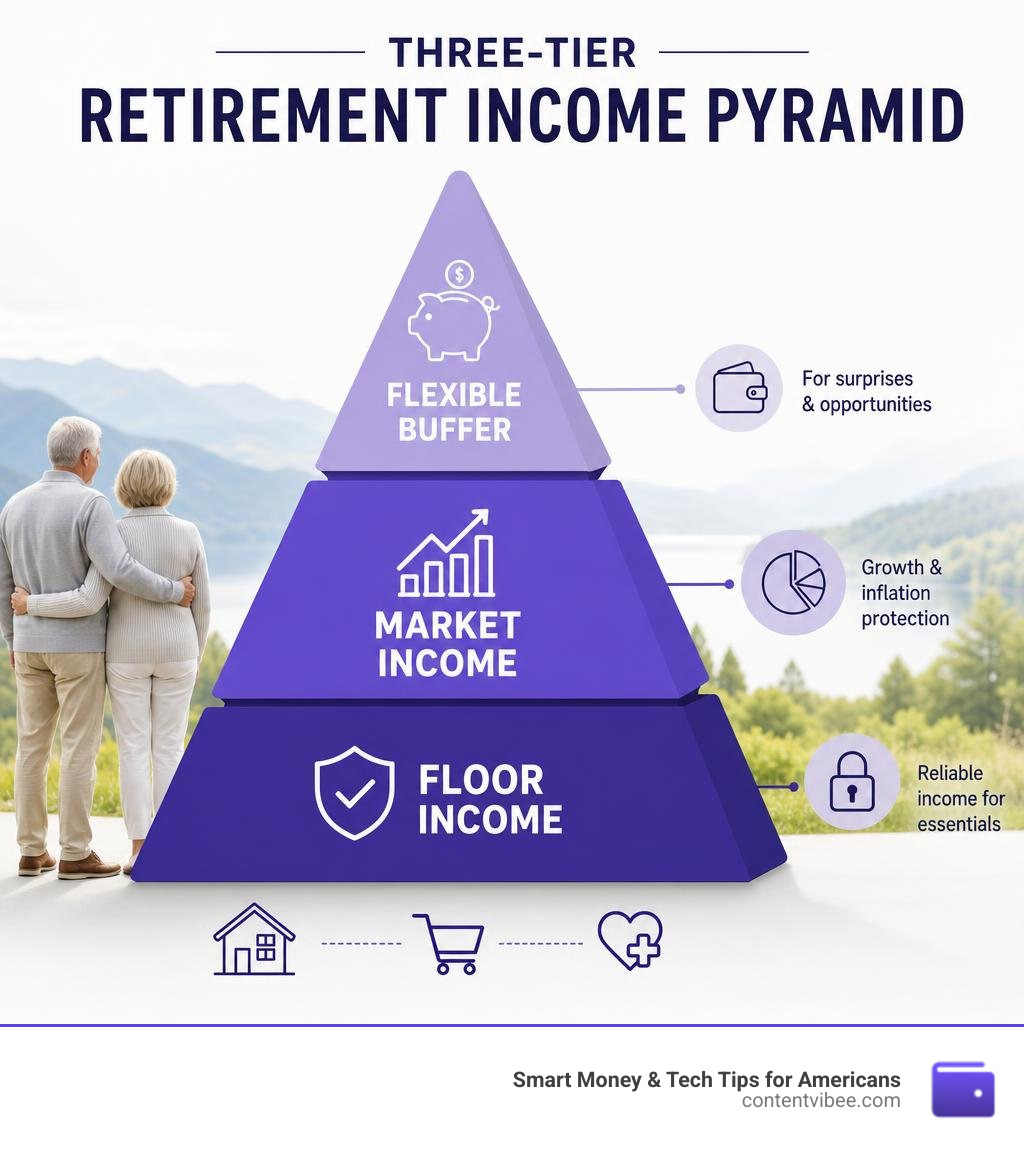
The good news? You don’t have to pick just one strategy. The retirees who sleep best at night usually combine a guaranteed income floor (like an annuity or Social Security) with market-linked income (like dividends or REITs) and a small flexible buffer (like a high-yield savings account).
That’s the framework this article is built around.
Related content about retirement passive income ideas:
Evaluating the Top Retirement Passive Income Ideas
When we look at the landscape of retirement passive income ideas, we cannot simply chase the highest yield. If a strategy yields 12% but keeps you awake at 3:00 AM wondering if your principal is vanishing, it is not a retirement strategy—it is a second job as a stress tester.
To evaluate these options properly, we must weigh three critical pillars: Income Stability, Risk-Adjusted Returns, and Liquidity.
| Income Strategy | Capital Required (for $50k/yr) | Key Advantage | Major Downside |
|---|---|---|---|
| Annuities | $500,000 – $830,000 | Unmatched longevity protection | Complete loss of liquidity |
| Dividend Stocks & ETFs | $1.0M – $1.5M | Rising payments beat inflation | Market volatility risks principal |
| REITs | $1.35M (at 3.7% yield) | High yield without property work | Highly sensitive to interest rates |
| Rental Properties | $500,000 (leveraged) | High cash flow & tax write-offs | Active landlord duties / management costs |
In retirement, our primary objective transitions from wealth accumulation to cash flow reliability. We want to construct a “financial Swiss army knife”—a diversified mix where each tool serves a specific purpose.
A balanced asset allocation protects against market downturns, prevents us from being forced to sell equities at a loss, and ensures we do not outlive our money.
Dividend Stocks and ETFs: Scalable Retirement Passive Income Ideas
Dividend investing is a favorite among retirees because it allows you to collect regular cash payouts while keeping your underlying shares intact. Instead of constantly checking stock prices and selling off pieces of your nest egg, you simply let corporate profits flow directly into your bank account.

To succeed here, we must understand the three distinct yield tiers available in the market:
- The Conservative Tier (1.5% – 3.5%): This is anchored by Dividend Aristocrats—companies that have increased their dividend payouts for at least 25 consecutive years. These are stable, blue-chip giants with healthy payout ratios (often below 60%), indicating that their dividends are backed by genuine corporate earnings.
- The Moderate Tier (4% – 7%): This tier includes high-quality dividend equity ETFs, such as the Schwab U.S. Dividend Equity ETF (SCHD), and blue-chip Real Estate Investment Trusts. They offer a comfortable middle ground of solid current income with modest growth potential.
- The Aggressive/High-Yield Tier (8% – 12%): This includes covered-call ETFs (like JEPI or JEPQ) and Business Development Companies (BDCs). While covered-call funds generate fantastic monthly distributions by selling options on underlying indexes, they cap your upside potential during bull markets and can suffer from principal erosion during prolonged downturns.
For a hands-off approach, we highly recommend broad dividend ETFs. They provide instant diversification across hundreds of companies, saving you from the risk of a single company cutting its dividend.
Real Estate: Direct Rentals vs. Hands-Off REITs
Real estate has long been praised as an excellent inflation hedge. When consumer prices go up, rents and property values generally follow. However, the path you choose to access real estate income will determine how much actual “work” your passive income requires.

Direct Rental Properties
Owning physical properties can yield excellent cash flow and offers fantastic tax benefits, such as depreciation. However, direct ownership is rarely 100% passive. Between broken water heaters, tenant turnovers, and property maintenance, it can easily turn into a part-time job.
To make direct rentals viable for retirement, we recommend hiring a professional property manager to handle day-to-day operations.
Additionally, retirees can use specialized financing like Debt Service Coverage Ratio (DSCR) loans. These mortgages qualify you based on the property’s projected rental income rather than your personal employment history or tax returns. This is incredibly helpful for retirees who no longer have a traditional W-2 paycheck.
To learn more about this strategy, read DSCR Loans for Retirement: Building Passive Income with Rental Properties | HonestCasa.
Real Estate Investment Trusts (REITs)
If the thought of dealing with tenants makes you break out in a cold sweat, REITs are the perfect alternative. REITs are companies that own, operate, or finance income-producing real estate. By law, they must distribute at least 90% of their taxable income to shareholders in the form of dividends.
As of early 2026, the average yield across all equity REITs hovered around 3.7%, though some high-quality retail and industrial REITs yield significantly more. They trade on major stock exchanges just like regular stocks, providing the liquidity that physical real estate lacks.
Annuities: Guaranteed Lifetime Income Floors
An annuity is a contract with an insurance company: you hand over a lump sum of capital, and in exchange, they promise to pay you a guaranteed stream of income for the rest of your life.
For retirees concerned about outliving their savings—a risk known as longevity risk—annuities can act as an invaluable financial safety net.
Currently, for retirees in their mid-60s to mid-80s shopping for immediate annuities, payout rates range from roughly 6% to 10% of the initial premium per year, depending on your age and the specific terms of the contract.
We like to think of annuities as an “income floor.” If your basic living expenses (housing, healthcare, food) total $4,000 a month, and Social Security covers $2,500, you can use a portion of your savings to purchase a lifetime annuity that covers the remaining $1,500 gap.
Once your floor is secured, you can invest the rest of your portfolio more confidently in market-linked assets like dividend stocks and REITs, knowing your daily survival is never at risk.
Managing Risks: Inflation, Taxes, and Sequence of Returns
No retirement plan exists in a vacuum. Even the most beautifully constructed portfolio must contend with the “three horsemen” of retirement planning: sequence-of-returns risk, inflation, and taxes.
If you retire right before a major market crash and are forced to sell depreciated stocks to pay your bills, your portfolio may never recover. This is sequence-of-returns risk.
To protect your hard-earned savings, it is vital to explore Alternative Ways To Save For Retirement That Actually Work to build a resilient foundation before you make the leap.
Tax Implications of Different Income Streams
How much passive income you make is only half the equation; what truly matters is how much you get to keep after Uncle Sam takes his cut. Different passive income streams are taxed in vastly different ways:
- Qualified Dividends: These are taxed at preferential long-term capital gains rates (0%, 15%, or 20% depending on your income level), which are significantly lower than ordinary income tax brackets.
- Ordinary Income / REIT Distributions: Standard REIT dividends, interest from high-yield savings accounts, and traditional annuity payouts (excluding the portion representing your return of principal) are taxed at your ordinary income tax rate.
- Rental Income: While taxed as ordinary income, rental revenue can be heavily offset by writing off mortgage interest, property taxes, maintenance expenses, and non-cash depreciation.
To maximize your net returns, place your tax-efficient investments (like dividend growth stocks) in taxable brokerage accounts, and keep your heavily taxed income generators (like high-yield REITs or taxable bonds) inside tax-deferred accounts like traditional IRAs.
Additionally, making strategic After Tax Contributions How To Maximize Your Retirement Nest Egg during your working years can create tax-free withdrawal pipelines, such as Roth accounts, that keep your retirement tax burden incredibly low.
Mitigating Sequence-of-Returns and Inflation Risks
To survive market downturns without depleting your principal, we recommend keeping a 12-to-24-month cash reserve in high-yield savings accounts or short-term U.S. Treasuries. If the stock market takes a dive, you can live off this cash buffer rather than selling your dividend-paying stocks at a loss.
Additionally, we must design our portfolios to combat inflation. If you rely on a flat, non-increasing income stream, a 3% inflation rate will erode half your purchasing power in about 24 years.
To prevent this, ensure a portion of your portfolio is allocated to assets with growing payouts, such as dividend growth ETFs or rental properties with annual rent escalation clauses.
To see how these moving parts fit together over a multi-decade retirement, utilize our guide on Demystifying The 4 Percent Retirement Withdrawal Calculator.
Building Your Income Portfolio: Capital Requirements and Allocation
How do you turn these concepts into a concrete, actionable plan? It all starts with knowing your numbers.
To determine exactly how much capital you need to accumulate before launching your passive income streams, start by using our Retirement Calculator Estimate Savings Needed.
Let’s look at how a retiree with a $750,000 portfolio can deliberately engineer a 5% blended yield to generate a steady $37,500 annual paycheck without selling a single share of stock:
- $350,000 in SCHD (Schwab U.S. Dividend Equity ETF): Yielding roughly 3.34%, this allocation provides a highly stable, growing income of $11,690 per year to protect against inflation.
- $200,000 in JEPI (JPMorgan Equity Premium Income ETF): Yielding approximately 8.46% through its covered-call strategy, this serves as our high-yield engine, contributing $16,920 per year.
- $200,000 in VCSH (Vanguard Short-Term Corporate Bond ETF): Yielding around 4.44%, this low-volatility fixed-income layer acts as our portfolio stabilizer while paying $8,880 per year.
Combined, this deliberate three-part allocation delivers reliable monthly income while balancing safety, current yield, and long-term dividend growth.
Low-Capital Retirement Passive Income Ideas for Beginners
If you do not have a massive nest egg yet, do not worry. You can start small with highly accessible, low-capital passive income ideas:
- High-Yield Savings Accounts (HYSAs): Offering yields around 3.5% to 4% in early 2026, HYSAs are completely liquid, FDIC-insured, and require zero effort.
- Certificates of Deposit (CDs): If you can lock up your cash for a few months to a year, CDs can secure slightly higher fixed rates with zero market risk.
- Peer-to-Peer (P2P) Lending: Platforms allow you to act as the bank, lending small amounts of money to individual borrowers. While it offers yields of 5% or more, it carries higher default risks and limited liquidity.
- Digital Products: If you have professional expertise, writing an e-book or creating an online course can generate passive royalties for years after the initial creation process is complete.
These low-capital options allow you to start building momentum and generating cash flow even with a modest initial investment, helping you build the habits needed for larger-scale investing later on.
Adjusting Your Asset Mix as You Age
Your passive income strategy should not remain static. As you age, your financial needs, health status, and risk tolerance will naturally shift:
In your late 50s and early 60s, you may build a high-yielding “bridge portfolio” designed to carry you comfortably until you decide to claim Social Security. If you plan to retire early, securing healthcare is crucial. Be sure to consult our Retiring Early Here Is Your Health Care Coverage Guide.
By your mid-70s, you may want to simplify your life. This is the time to transition out of hands-on rental properties and shift capital into hands-off REITs, annuities, or short-term bonds to reduce stress and ensure your income remains completely automatic.
Frequently Asked Questions about Passive Retirement Income
How much capital do I need to generate $50,000 a year in passive income?
The amount of capital required depends entirely on your target portfolio yield:
- At a 3.5% conservative yield (focused on high-grade bonds and Dividend Aristocrats), you would need approximately $1,428,500.
- At a 5.0% blended yield (a balanced mix of dividend ETFs, REITs, and corporate bonds), you would need $1,000,000.
- At an 8.0% high-yield/aggressive yield (utilizing covered-call ETFs and BDCs), you would need $625,000—though this comes with higher risk of principal erosion.
Is rental income truly passive for retirees?
No, direct rental income is rarely truly passive. Even with a property manager, you must still oversee major financial decisions, approve expensive repairs, and manage the property manager themselves.
For a completely hands-off real estate experience, retirees should look to publicly traded REITs or real estate mutual funds.
How does passive income affect my Social Security benefits?
Passive income (such as dividends, interest, rental income, and annuity payments) does not count toward the Social Security earnings limit, meaning it will never trigger a reduction in your monthly benefits.
However, passive income does contribute to your Modified Adjusted Gross Income (MAGI). If your combined income exceeds certain thresholds ($25,000 for single filers; $32,000 for joint filers), up to 85% of your Social Security benefits may become subject to federal income tax.
Understanding these rules helps you plan your income streams strategically to minimize taxes and maximize your overall retirement lifestyle.
Conclusion
At ContentVibee, we believe that a successful retirement is not about crossing your fingers and hoping the stock market behaves. It is about taking control of your financial destiny by constructing a robust, multi-layered passive income machine that pays you cash flow month after month, year after year.
Whether you choose to anchor your retirement with the guaranteed safety of an annuity, the inflation-beating power of dividend stocks, or the tangible cash flow of real estate, strategic planning is the key to absolute peace of mind.
If you find yourself wanting to stay active or wishing to supplement your passive income with light, fulfilling work, take a look at The Best Retirement Jobs For Seniors To Stay Active And Earn.
And if you do choose to work a bit during your golden years, make sure to Learn more about how working in retirement affects your spousal benefits so you can keep your financial plan running as efficiently as possible!


