


Why Finding the Right Investment App Can Change Your Financial Future
The best investment apps for beginners in 2026 make it easy to start building wealth with as little as $1. Here are the top picks at a glance:
- Acorns – Best for automated spare-change investing
- Stash – Best for personalized stock advice and automation
- Robinhood – Best for commission-free self-directed trading
- Charles Schwab – Best for educational resources and research tools
- Stockpile – Best for families and teen investors
- Bloom – Best for gamified investing education
- Alinea – Best for values-based and themed portfolios
Not long ago, starting to invest meant calling a broker, filling out paperwork, and having thousands of dollars ready to go. Today, it’s a few taps on your phone.
Nearly 9 in 10 Americans already use mobile apps for banking. The leap to investing through an app is a small one — and for retirees and pre-retirees looking for steady income without the headaches of managing rental properties or riding out market swings alone, the right app can make a real difference.
But not every app is built the same. Some are designed for hands-off automation. Others give you full control over every trade. Some are built specifically for families and younger investors just getting started.
The tricky part isn’t finding an investing app — it’s knowing which one fits your goals, your comfort level, and your budget.
This guide breaks down the easiest and most beginner-friendly options available right now, so you can stop second-guessing and start building.
Essential investment apps for beginners terms:
Key Features of Top Investment Apps for Beginners
When you are starting your financial journey, downloading your first app can feel incredibly exciting. However, before you link your bank account and start trading, we need to look under the hood. Not all investment apps for beginners are created equal. The best platforms share a few non-negotiable features that protect your money, help you learn, and keep your costs low.
1. Simple and Intuitive User Interface
A clunky, overly complex interface can lead to expensive mistakes. Beginners need an app that clearly displays portfolio performance, makes buying and selling straightforward, and doesn’t overwhelm them with advanced technical charts. However, be cautious of platforms that “gamify” trading. Features like digital confetti or constant push notifications can tempt you into impulsive, short-term trading rather than long-term building.
2. Robust Educational Tools
The ultimate goal of using beginner platforms is to eventually understand what you are doing. Look for apps that offer bite-sized lessons, clear glossaries, and real-time market news written in plain English. If you want to understand how your money is divided among different assets, check out our guide on Investment Asset Allocation Strategy & Risk Management.
3. Transparent Fee Structures
Fees are the silent killers of long-term investment growth. While many apps advertise “commission-free trading,” they might still charge monthly subscription fees, outbound transfer fees, or paper statement fees. If you choose an app that manages your portfolio automatically, you will also want to keep an eye on management fees. To get a clear picture of how these expenses impact your returns, read The Ultimate Guide to Robo Advisor Fees.
4. Advanced Security and SIPC Protection
Never compromise on security. Any app you choose should feature bank-level security, 256-bit encryption, and mandatory two-factor authentication (2FA). Furthermore, ensure the brokerage is a member of the Securities Investor Protection Corporation (SIPC). This protects the securities and cash in your account up to $500,000 (including a $250,000 limit for cash) if the brokerage firm fails.
Easiest Investing Apps for Beginners in 2026
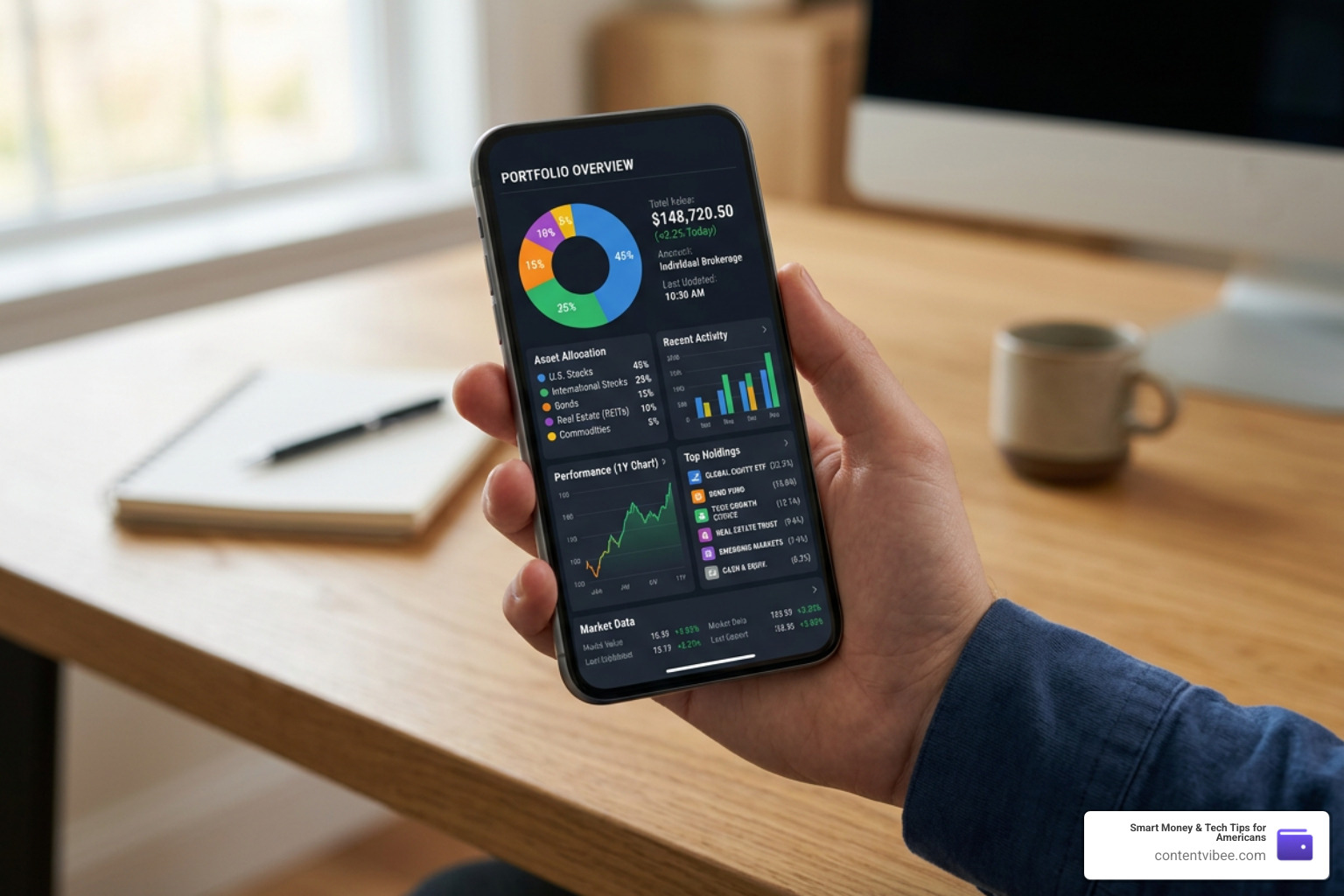
To help you find the right fit for your financial goals, let’s compare the leading platforms across the most critical categories:
When choosing a platform, you must decide between two primary pathways: automated investing (where an algorithm or expert manages your portfolio) and self-directed trading (where you choose individual stocks and ETFs yourself). Let’s take a closer look at the best options for both.
Automated Investment Apps for Beginners
If you prefer a hands-off approach where your money is put on autopilot, automated apps are your best bet. These apps help you build a diversified portfolio without needing to research individual stocks.
Acorns: The King of Passive Micro-Investing
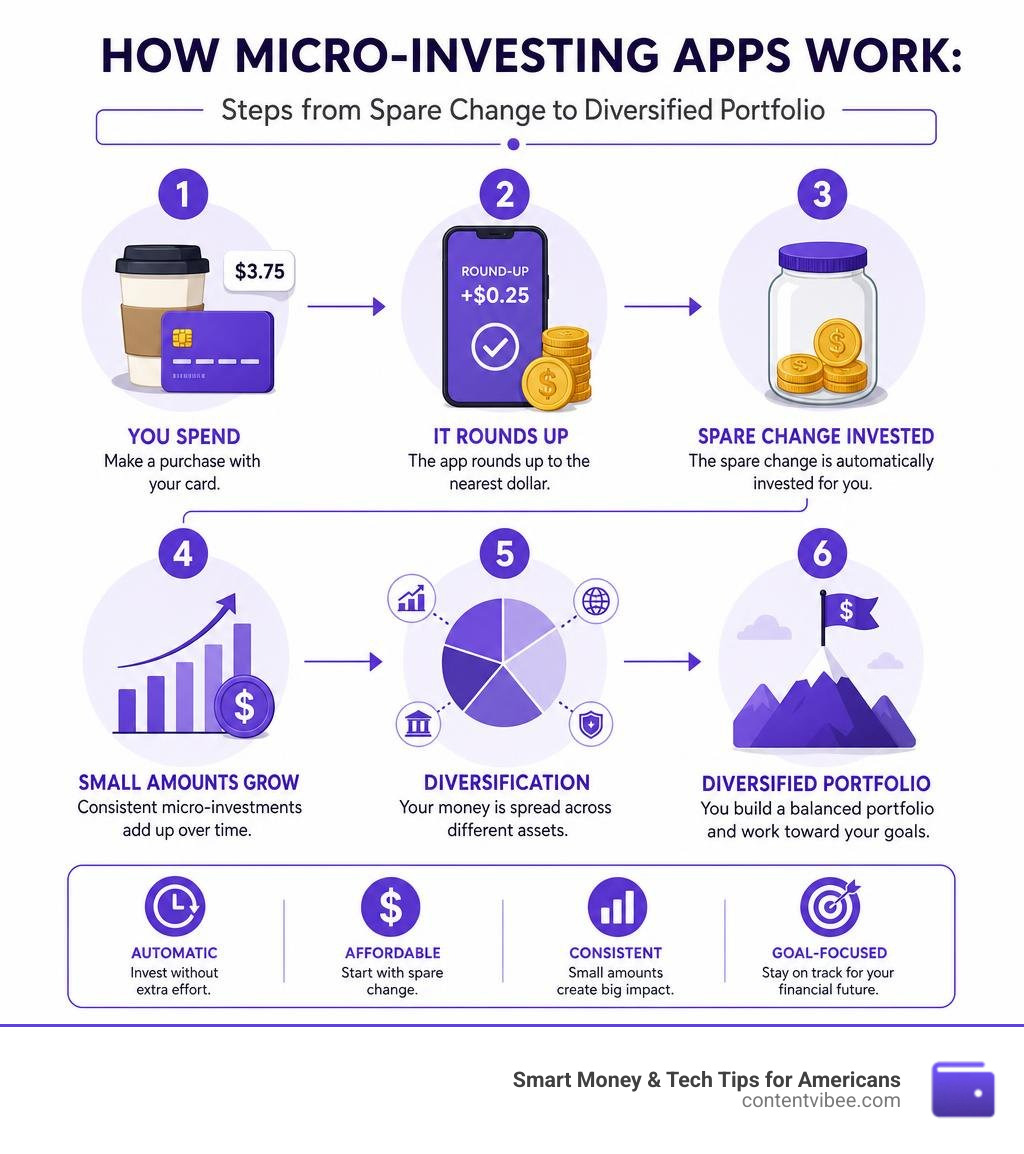
Acorns is famous for its “Round-Ups” feature. Every time you buy a cup of coffee for $4.50, Acorns rounds the transaction up to $5.00 and automatically sweeps the $0.50 difference into a diversified portfolio of Exchange-Traded Funds (ETFs).
- How it works: You link your debit or credit cards, and the app runs in the background. It’s an excellent way to build an investment habit without feeling any financial pinch.
- Key Features: Acorns Gold offers automated tax filing, a 3% IRA match on new contributions for the first year, and “Acorns Early” custodial accounts.
- The Verdict: Perfect for absolute beginners who struggle to save. However, the flat monthly subscription fee (starting at $3/month) can represent a high percentage of your portfolio if you only have a small balance.
Stash: Personalized Advice with Automated Power
If you want a middle ground between automated management and personal choice, Stash | Investing App for Beginners is an exceptional choice. Stash helps you build a “Smart Portfolio” managed by experts, but also allows you to buy individual stocks and ETFs through fractional shares.
- How it works: Stash guides you through setting up recurring investments (Auto-Stash) on a schedule that fits your budget. It also offers a “Stock-Back” Debit Card, which rewards your everyday spending with fractional shares of stock from the companies you buy from.
- Key Features: Personalized financial advice, automated portfolio rebalancing, and retirement account options (IRAs).
- The Verdict: Stash is fantastic for building consistent habits, as customers who invest on a schedule set aside an average of 9 times more than those who don’t.
If you are wondering whether hands-off management fits your financial style, take a look at our analysis on Is Automated Portfolio Management Right for You? and explore the Stop Manual Investing with These Top Automated Investing Tools.
Self-Directed and Low-Fee Trading Platforms
If you want to choose your own stocks, ETFs, or even cryptocurrencies, you need a self-directed platform with low fees and robust execution.
Robinhood: The Pioneer of Commission-Free Trading
Robinhood revolutionized the industry by introducing commission-free stock trading. It remains one of the sleekest, most user-friendly mobile interfaces on the market.
- Pros: True zero-commission trading on stocks, ETFs, options, and cryptocurrencies. No account minimums and easy fractional share trading.
- Cons: The ultra-simplified, gamified interface can sometimes encourage risky, short-term trading. Educational resources are relatively basic compared to traditional brokers.
Charles Schwab: Traditional Powerhouse with Beginner Appeal
For beginners who want access to world-class research, extensive educational resources, and reliable customer service, Charles Schwab is tough to beat.
- Pros: Outstanding educational materials, 24/7 customer support, and access to the powerful “thinkorswim” charting platform if you eventually want to learn advanced trading.
- Cons: The mobile app can feel slightly clunky and overwhelming compared to modern, mobile-first platforms like Robinhood.
Lightyear: Multi-Currency Flexibility
If you are looking for low fees on international assets, Lightyear: Stocks and ETFs – Apps on Google Play has gained popularity for its multi-currency accounts (USD, EUR, GBP) and lack of foreign exchange markups. It provides access to thousands of global stocks and ETFs with a clean, modern interface, making it a strong contender for beginners seeking international market exposure.
To see how these platforms stack up against other leading options, read through the 5 Best Investing Apps for Beginners in 2026 – NerdWallet review, or explore Top investing apps for beginners – Betterment for automated alternatives.
Understanding Custodial Accounts and Investing for Teens

Many parents in 2026 are realizing that teaching financial literacy early is one of the greatest gifts they can give their children. Fortunately, modern technology makes it incredibly easy for minors to start investing under parental supervision.
This is accomplished through custodial accounts (typically UGMA or UTMA accounts). A custodial account is opened and managed by an adult (the custodian) for a minor under the age of 18 (or 21, depending on the state). All assets in the account legally belong to the minor, but the adult controls the account and must approve all transactions until the teen reaches the age of majority.
When helping your teen start their investing journey, keep these best practices in mind:
- Set up trade approvals: Choose an app that requires parental approval before any order is executed.
- Connect lessons to real life: Encourage your teen to invest in brands they know and use (like Apple, Disney, or Nike) to keep them engaged.
- Emphasize long-term growth: Teach them that investing is about patience, not overnight riches.
Custodial Investment Apps for Beginners and Teens
Several specialized apps make family investing safe, educational, and fun.
Stockpile: Money for Families
With a stellar 4.7 out of 5 rating from over 56,000 reviews, Stockpile is a premier family-focused platform. It allows kids and teens to browse over 3,000 stocks and ETFs, request trades with as little as $5, and send those trade requests directly to their parents’ phones for instant approval. Stockpile also features automated allowance settings, savings vaults earning competitive APYs, and unique college tuition rewards.
Bloom: Learn to Invest
Bloom takes a heavily educational, gamified approach to teen investing. Boasting a 4.8 out of 5 rating on the App Store, it features over 300 interactive financial lessons. Teens earn “Oinks” (in-app points) for completing quizzes and modules, which they can redeem for real stock rewards. Parents retain full monitoring privileges, trade approvals, and asset restrictions to ensure their kids stay on a safe path.
If you are comparing different platforms to find the absolute safest environment for young investors, check out the curated list on Investment Apps for Beginners | Raisin.
Frequently Asked Questions About Beginner Investing
How much money do I need to start investing?
Historically, you needed hundreds or thousands of dollars to open a brokerage account. Today, thanks to fractional shares and micro-investing, you can start with as little as $1 to $5. Fractional shares allow you to buy a tiny slice of an expensive stock. If a single share of a company costs $500, you can still buy $5 worth of it. To learn how to build a hands-off portfolio with minimal starting capital, explore the Best Autopilot Investing Strategies for Beginners Who Hate Math.
Are investment apps safe and secure?
Yes, provided you choose regulated, reputable platforms. Look for apps that secure your data using 256-bit encryption, integrate with bank-level linking services like Plaid, and offer SIPC protection up to $500,000. That SIPC insurance protects you against the failure of the brokerage firm itself, not against normal market losses.
What is the difference between a robo-advisor and self-directed trading?
A robo-advisor uses algorithms to build and manage a diversified portfolio for you based on your risk tolerance and goals. It handles all the buying, selling, and rebalancing automatically. Self-directed trading, on the other hand, gives you complete control to buy and sell individual stocks and ETFs yourself. If you want to dive deeper into how automated platforms work, read our comprehensive guide on What is Robo Advisor?.
Conclusion
Starting your investing journey doesn’t have to be intimidating, expensive, or overly complicated. Whether you choose the automated, spare-change simplicity of Acorns, the personalized guidance of Stash, or the educational, family-focused features of Stockpile and Bloom, the most important step is simply getting started.
By prioritizing low fees, strong security, and consistent, long-term habits, you can take complete control of your financial future. Wealth isn’t built overnight by chasing hot stock tips — it is built through steady consistency and smart money decisions.
Ready to see how your consistent contributions can grow over time? Use our Smart Money Finance Calculator to project your future portfolio growth and take your first step toward financial freedom today!


